Connect with us

Banking

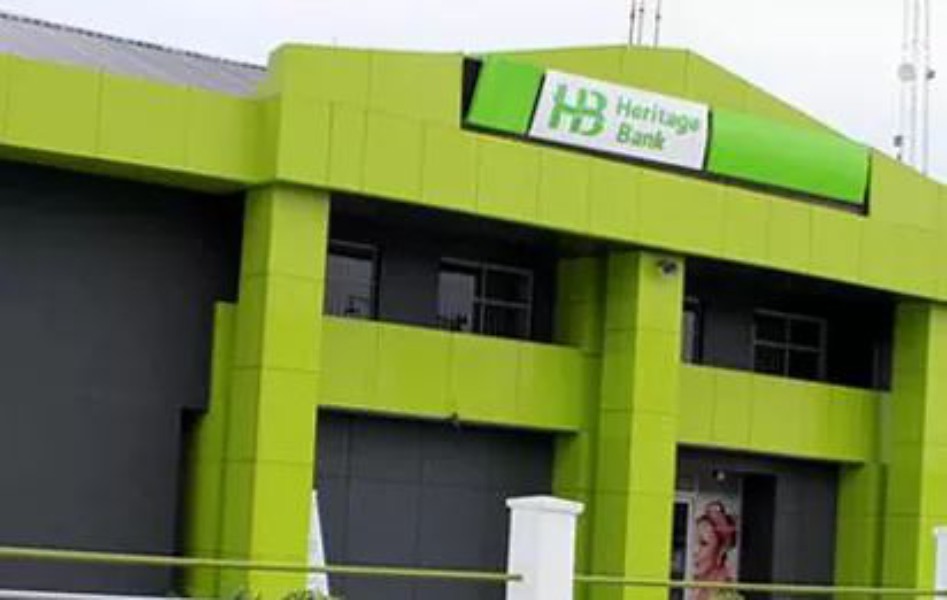
Heritage Bank Empowers 2000 Female Entrepreneurs

Published

on

heritage-bank.jpg

Taking into consideration the importance of Micro, Small and Medium Enterprises (MSMEs) to the economy, Heritage Bank Plc has continued to structure financial inclusivity initiatives in empowering over 2000 female entrepreneurs towards economic enablement and self-realization.

This move is in line with the people-oriented policies of the Central Bank of Nigeria (CBN), Heritage Bank Plc is partnering with a Non-Governmental Organization, Prime Women Builders Foundation of Nigeria (PWOBFON) in providing skills training to the female entrepreneurs.

At the graduation ceremony/certificate award ceremony held at Ikeja Local Government headquarters over the weekend, the MD/CEO of Heritage Bank, Mr Ifie Sekibo, said the bank is keen in cultivating real partnerships with Micro, Small and Medium Enterprises (MSMEs).

Mr Sekibo, who was represented by the Head, Brand Management & Sustainability, Ozena Utulu, explained that the lender is interested in initiatives that encourage people to start their own businesses and gradually grow them into conglomerates.

According to him, the partnership with PWOBFON is vital in many ways particularly in the area of job creation, economic empowerment and financial inclusion.

His words, “Apart from skills training, the women have been told the importance of record keeping in business, savings culture and the benefits of having bank accounts as a gateway to accessing other financial services.”

He said Heritage Bank has been a leading Nigerian bank with an excellent service culture hinged on working with each customer to create a name, wealth and heritage.

Also speaking, President/Convener Prime women Builders Foundation of Nigeria, Ms Kemi Olofinkua, applauded the bank for its support, and urged other corporate organizations to take a cue from the lender in supporting grassroots women empowerment.

She explained that through the support from the Heritage Bank and the Ikeja Local government, the women, based on their choices, have been equipped with 15 vocational skills covering event decoration, small chops making, baking, pastries, bead making, computer training, soap making, makeup, tailoring, digital marketing, photography, hairdressing among others.

To underscore the importance of women empowerment, the CBN had earlier set aside 60 per cent of its N220 billion MSMED Fund for providing financial services to women.

According to Ms Olofinkua, this training is important because when women are positively occupied, the level of poverty will reduce and great achievements will be recorded not only on the home front, but on several sectors of “our national life.”

“Heritage Bank has been very supportive and our desire is to see participants of PWOBFON Empowerment Day, doing great in their various vocations. Each and every one of us must deliberately find something to occupy us and bring good profit. There are lots of vocations that each and every one of us can excel in; so that we will not be frustrated along the part of life,” Ms Olofinkua stated.

The executive chairman, Ikeja Local Government Development Council, Dr Mojeed Alabi Balogun, represented by his vice, Yomi Mayungba said the local government is interested in the initiative because it is in line with its grassroots skills training program. According to him, this is a way of keeping not only women, but men also out of the streets.

He disclosed that the first batch of trainees started from Ikeja and this is the 10th year anniversary. “The local government is delighted to partner with the NGO, Heritage Bank and other interested parties,” Mr Balogun said.


Modupe Gbadeyanka is a fast-rising journalist with Business Post Nigeria. Her passion for journalism is amazing. She is willing to learn more with a view to becoming one of the best pen-pushers in Nigeria. Her role models are the duo of CNN's Richard Quest and Christiane Amanpour.

Banking

5 Smart Saving Hacks Nigerian Freelancers Need to Survive Rising Living Costs

Published

on

Margaret Banasko Smart Saving Hacks

By Margaret Banasko

Nigeria is at the forefront of Africa’s digital labour shift. According to the World Bank, the country leads a cohort of 17.5 million online gig workers across sub-Saharan Africa, with over 65% of the population under age 35 who make up the digital-native workforce. According to recent data from 2023, the Nigerian Bureau of Statistics (NBS) indicated that approximately 87.3% of employed Nigerians are primarily self-employed, reflecting a deep-seated culture of entrepreneurship.

The Nigerian freelancer’s life isn’t without its hurdles. Between the biting impact of inflation, a volatile exchange rate, and the soaring costs of power and data, many digital professionals are finding their margins squeezed like never before. Surviving this economic climate requires more than just hard work; it demands a shift in mindset. Success now hinges on thinking outside the box and maintaining the discipline to save.

Here are 5 actionable saving hacks that prove that financial discipline is the ultimate hedge against uncertainty. Whether you’re saving a little or a lot, consistency is the key to surviving in a volatile market.

  1. Build a “Dry Month” Emergency Fund

In the world of freelancing, some months are lucrative while others are quiet. A dedicated ‘Dry Month’ fund is your insurance against the unpredictable nature of client work. By automating your savings until you have a three-to-six-month cushion, you’re essentially paying your future self in advance. Treating this fund as a fixed monthly expense creates a rock-solid safety net, ensuring that a slow season never dictates your professional worth.

  1. Work From Home to Cut Fuel and Transport Costs

With the removal of fuel subsidies and the subsequent hike in transport fares, commuting to co-working spaces or client offices every day can drain your profits. Transitioning to a fully remote setup—or limiting outings to a single ‘errand day’—can save you tens of thousands of Naira monthly. Consistently diverting that transport money into a FairSave account will help you build a substantial buffer for a rainy day.

  1. Replace Physical Meetings with Virtual Calls

Beyond the transport cost, physical meetings consume your most valuable resource – time. Transitioning to video conferencing tools allows you to manage multiple clients across different time zones without leaving your desk. If a face-to-face meeting isn’t strictly necessary for closing a deal, opt for a virtual touchpoint. The data cost of a 30-minute video call is a mere fraction of the cost of a cross-town ride.

  1. Automate Your Savings

Manual saving rarely wins against the temptation of daily spending. Switching to FairMoney’s digital tools changes the game. By using FairSave for accessible interest or FairLock to secure a lump sum at a fixed rate, protecting your funds from impulsive spending. For goals like a new laptop or certification, FairTarget automates your progress toward the finish line. Letting money sit idle in an inflationary economy is a cost in itself; putting it into high-yield accounts ensures your money keeps pace with your hustle.

  1. Leverage Group Subscriptions

Internet data is the lifeblood of the digital professional, but as overheads rise, collective bargaining becomes a strategy. Many telecommunications providers now offer “family” or “group” data plans that are significantly cheaper per gigabyte than individual monthly subscriptions. By partnering with a few trusted fellow freelancers to share a large data pool, you can slash your monthly “office” overhead. It’s a simple collaborative hack that keeps everyone online for less.

In Nigeria’s volatile gig economy, the true measure of a freelancer’s success is not gross revenue, but capital retention. Amidst significant inflationary headwinds, these strategic financial levers serve as a critical buffer for your enterprise. By prioritising incremental, disciplined saving, digital professionals can insulate themselves against macroeconomic shocks and secure a competitive advantage in the long-term wealth game.

Margaret Banasko is the Head of Marketing at FairMoney Microfinance Bank

Continue Reading

Banking

Ecobank Adire Lagos Experience Returns in June

Published

on

Ecobank Adire Lagos Experience 2026

By Modupe Gbadeyanka

The 2026 edition of the glamorous Adire Lagos Experience, organised by Ecobank Nigeria, a subsidiary of the leading Pan‑African financial services group, Ecobank Group, will hold from June 11 to 14.

The four‑day event will feature over 100 vendors, with the exhibition remaining predominantly Nigerian, reflecting the country’s leadership as the home and heartland of Adire production.

To enrich diversity and continental collaboration, 10 per cent of participating vendors will come from outside Nigeria, offering complementary African textile expressions and creative perspectives that foster knowledge exchange and cross‑border partnerships.

Giving details of the forthcoming event, the Head of SMEs, Partnerships and Collaborations at Ecobank Nigeria, Mrs Omoboye Odu, said participants would converge on Ecobank Pan African Centre (EPAC), Victoria Island, Lagos, for the programme.

She noted that the theme for the company’s flagship cultural and creative industry showcase is Threads Across Borders, specifically chosen to celebrate the depth and global resonance of Adire as a uniquely Nigerian art form, while positioning it within Africa’s broader textile and cultural narrative.

Rooted in Nigeria’s rich heritage, the Adire Lagos Experience continues to serve as a gateway for cross‑border cultural exchange, reinforcing Ecobank’s Pan‑African vision through culture‑led commerce.

“Adire is proudly Nigerian, and this platform remains firmly anchored in celebrating our local artisans and creative enterprises. At the same time, Ecobank’s Pan‑African mandate allows us to thoughtfully open the space to creators from other African markets, encouraging collaboration, shared learning, and trade connections that elevate African craftsmanship as a whole,” she said.

Beyond the exhibition booths, the Adire Lagos Experience 2026 will offer indigenous cuisine, African music and cultural performances, alongside curated networking and business engagement sessions designed to strengthen linkages across the Adire and wider creative value chain—from artisans and designers to merchants, buyers, and cultural enthusiasts.

As part of its ongoing commitment to supporting SMEs and the creative economy, Ecobank has opened registration for prospective exhibitors, with selected applicants eligible to receive complimentary exhibition booths. Applications close on April 28, 2026.

Through the Adire Lagos Experience, Ecobank continues to champion Nigeria’s cultural leadership while advancing Pan‑African collaboration—transforming heritage into enterprise and reinforcing its role as a truly Pan‑African institution driving impact beyond banking.

Continue Reading

Banking

Fidelity Bank Equips 100 Ogun Women With Sewing, Grinding Machines

Published

on

Fidelity Bank sewing grinding machines

By Modupe Gbadeyanka

No fewer than 100 women in Ogun State have been empowered with vocational tools designed to strengthen their economic independence and boost household income.

The items were distributed to the beneficiaries by Fidelity Bank Plc through its recently launched Give Her Power initiative, created to foster inclusive growth and sustainable development.

The outreach is part of the bank’s nationwide rollout of the initiative, which was unveiled earlier in March during the signing of strategic Memoranda of Understanding (MoUs) with partner organisations to commemorate 2026 International Women’s Day.

Business Post gathered that 50 sewing machines and 50 grinding machines were given to the women engaged in microbusinesses at the MKO Abiola Sports Arena in Abeokuta, the state capital.

The Regional Bank Head for Southwest 1 at Fidelity Bank, Mr Folaranmi Jemirin, noted that the scheme aligns with the lender’s broader commitment to delivering practical, measurable empowerment interventions.

“At Fidelity Bank, our approach to empowerment is simple; it must be practical, inclusive, and sustainable. When you empower a woman economically, the benefits extend to her family, her business, and the wider community.

“This outreach in Abeokuta is a continuation of the momentum created with the launch of the ‘Give Her Power’ initiative earlier in March,” Mr Jemirin stated.

He explained that the Give Her Power initiative is anchored on HerFidelity, the company’s women-focused proposition, which provides financial literacy, business support, vocational training, mentorship, and wellness initiatives for women-led enterprises.

Mr Jemirin further revealed that the bank had scaled its women-focused interventions nationwide, including the distribution of 1,000 sewing and grinding machines, the rollout of the HerFidelity Apprenticeship Programme 2.0, financial literacy sessions for girls, mentorship engagements, and hands-on skills training.

“This is more than a donation, it’s our vote of confidence in your ability to earn, grow, and create value within your communities,” he added, urging beneficiaries to make productive use of the items.

Commending the initiative, the Ogun State Commissioner for Women Affairs and Social Development, Mrs Adijat Adeleye-Oladapo, described the programme as a meaningful shift from symbolic celebrations to tangible empowerment.

“This initiative goes beyond celebrating International Women’s Day. It delivers real opportunities for transformation. When you empower a woman, you empower a family and, ultimately, society,” she stated.

 She further praised Fidelity Bank for complementing the efforts of the Ogun State government, urging beneficiaries to make productive use of the equipment, stressing that the true value of the initiative lies in its long-term impact on livelihoods and community development.

Continue Reading

Trending