Connect with us

Banking

Heritage Bank Partners CBN, LCFE to Disburse N41bn to Wheat Farmers

Published

on

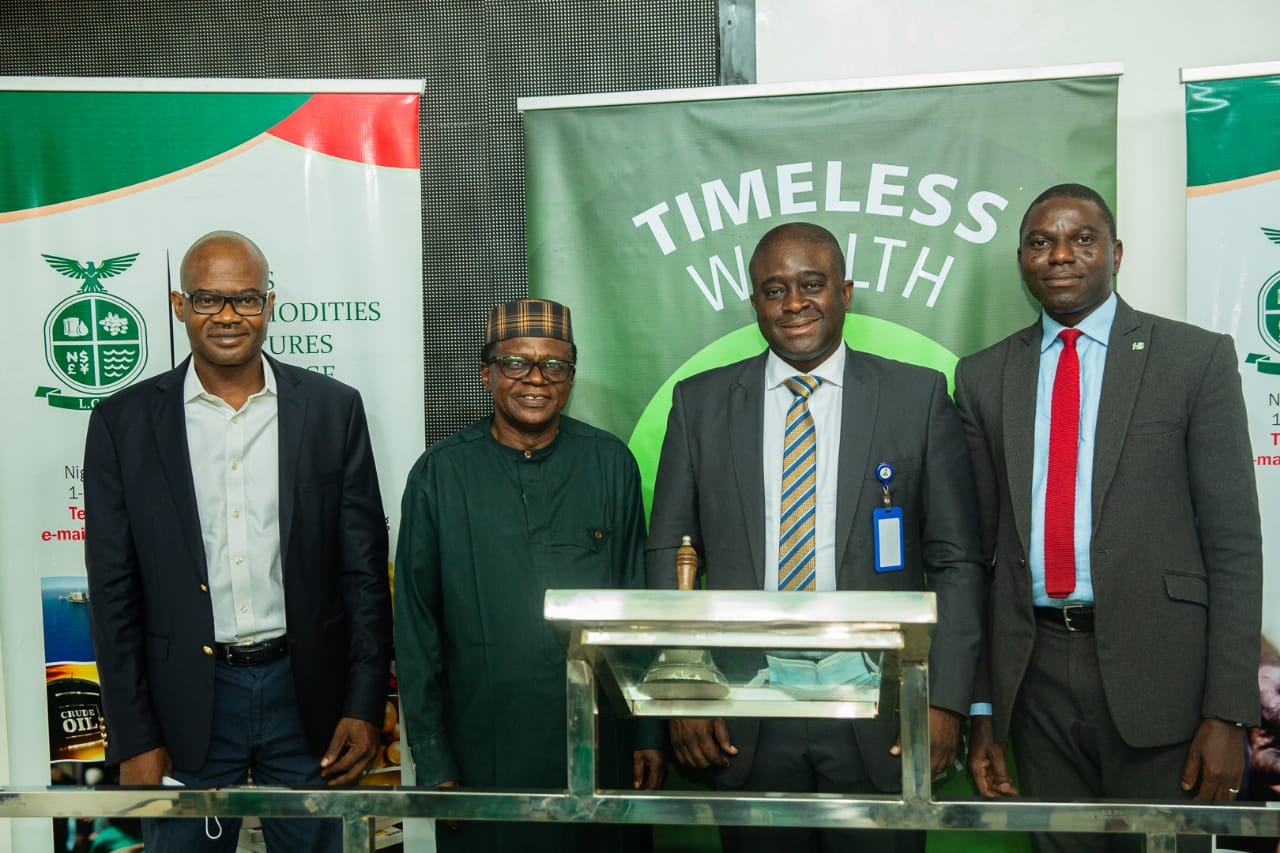
Heritage Bank Partners

By Modupe Gbadeyanka

Farmers in 14 states of the federation will soon receive N41 billion to grow wheat on about 111,025 hectares of land as part of efforts to expand the production of the crop in the country.

The money will be disbursed to the wheat farmers by Heritage Bank Plc in partnership with the Central Bank of Nigeria (CBN).

To make the programme seamless, Heritage Bank has commenced the registration of the farmers and this is done through the Lagos Commodities and Futures Exchange (LCFE).

The MD/CEO of Heritage Bank, Mr Ifie Sekibo, while addressing newsmen, expressed optimism that the scheme would help reduce the nation’s food import bill by increasing wheat production, create market linkages between smallholders farmers and anchors/processors, create an ecosystem that drives value chain financing, improve access to credit by the smallholder farmers by developing credit history through the initiative and many more.

Mr Sekibo who was represented by the Divisional Head, Agribusiness, Natural Resources & Project Development, Heritage Bank, Olugbenga Awe, stated that the partnership was basically to consummate Wheat Seed Multiplication Project under the CBN’s Brown Revolution Initiative, in order to ensure due diligence on loan administration, monitoring and recovery, which would bring about increase in the domestic production of wheat and close the wide supply gap in the Nigerian agricultural space.

“What we want to achieve is to end importation of seeds and make Nigeria self-sufficient in wheat production.

“We are working with about 30 firms focusing only on seed production and also working with CBN to make sure we register all farmers. We believe working with LCFE will move Nigerian farmers from an informal approach to a structured approach”, he said.

He further explained that whilst riding on the success of the wet season, “we decided to focus on the dry season which comes naturally to our people. As a bank, we are working on two things; one is to ensure the continuous multiplication of seeds and the other is to focus on the grains.

Former Executive Director of Lake Chad Research Institute (LCRI), Dr Oluwasina Olabanji commended Heritage Bank for its efforts in reducing wheat importation and saving the country from the $2 billion spent annually on the importation of wheat, calling on other banks to emulate the lender in efforts to achieving wheat sufficiency in the country.

“If this money is saved it could be used for infrastructural development. It is true that there are a lot of linkages not only on financial institutions but also in the value chain, these linkages have been moulded together with the intervention of the CBN and Heritage Bank,” he said.

He explained that the CBN and Heritage Bank’s intervention has become critical due to the high demand for wheat in Nigeria and the inability to meet that demand.

Speaking also, the Managing Director of LCFE, Mr Akinsola Akeredolu-Ale, commended the CBN and Heritage Bank for their support, which have leveraged Nigeria to be on the right track for self-sufficiency in food production.

He said the commodity exchange in partnership with Heritage Bank would provide an enabling environment for farmers, warehouse owners, commodity middlemen and commodity merchants, to be able to trade Wheat.

He noted that LCFE has created a platform that enhances liquidity in the commodity market, enhances the revenue base of the country and enables commodity traders to manage risk.

Business Post reports that Heritage Bank is throwing its weight behind this scheme as one of the participating financial institutions (PFIs) under the CBN’s Anchor Borrowers’ Programme IABP).


Modupe Gbadeyanka is a fast-rising journalist with Business Post Nigeria. Her passion for journalism is amazing. She is willing to learn more with a view to becoming one of the best pen-pushers in Nigeria. Her role models are the duo of CNN's Richard Quest and Christiane Amanpour.

Advertisement
1 Comment

Leave a Reply

Your email address will not be published. Required fields are marked *

Banking

CBN Approves BDCs Participation in FX Market, Caps Sale at $150,000 Weekly

Published

on

street FX traders

By Adedapo Adesanya

The Central Bank of Nigeria (CBN) has approved weekly foreign exchange (FX) purchases for Bureaux de Change (BDC) operators, with a cap of $150,000, as part of efforts to improve foreign exchange liquidity in the retail segment of the market and meet the legitimate needs of end users.

This comes as the apex bank once again approved the participation of licensed BDCs in the Nigerian Foreign Exchange Market (NFEM), noting that utilisation complies with existing BDC operational guidelines.

Under the new directive contained in a circular signed by the Director of the Trade and Exchange Department, Mr Musa Nakorji, all BDCs duly licensed by the CBN are permitted to access foreign exchange through any Authorised Dealer Bank of their choice, at the prevailing market rates.

The move, according to the circular, aims to deepen market efficiency and ensure broader access to foreign exchange across the economy.

The central bank, however, imposed strict compliance and risk-management conditions on the transactions. Authorised dealers are required to conduct full Know-Your-Customer (KYC) and due diligence checks on BDC clients before any FX sale.

To strengthen transparency and accountability, the CBN directed that all licensed BDCs must submit timely and accurate electronic returns in line with extant regulations. Any unutilised foreign exchange must be sold back to the market within 24 hours, as BDCs are prohibited from holding FX positions purchased from the NFEM.

The circular further restricts settlement practices, mandating that all FX transactions be conducted through settlement accounts with licensed financial institutions. Third-party transactions are prohibited, while cash settlement is limited to a maximum of 25 per cent of each transaction amount.

Overall, the directive reflects the CBN’s broader strategy to balance market access with strong regulatory oversight, ensuring liquidity in the foreign exchange market while safeguarding financial system integrity.

Recall that earlier this week, the Governor of the Central Bank of Nigeria (CBN), Mr Yemi Cardoso, explained that the central bank now allows the foreign exchange market to largely determine prices, while the bank steps in to buy foreign exchange when necessary.

The CBN boss said recent reforms have also made foreign exchange more accessible to ordinary Nigerians, especially those travelling abroad, while warning that Nigerians who are holding foreign currency without real need that such actions could lead to losses.

Continue Reading

Banking

Proposed Bidvest Bank Acquisition by Access Bank Hits Regulatory Brick Wall

Published

on

roosevelt ogbonna access bank

By Aduragbemi Omiyale

The proposed acquisition of South African financial institution, Bidvest Bank by a Nigerian lender, Access Bank Plc, has hit a brick wall.

Access Holdings Plc, the parent company of the Nigerian bank, had announced on December 12, 2024, its intention to completely takeover Bidvest Bank.

Talks regarding the 100 per cent stake acquisition began between the two banks and January 26, 2026, was fixed as the long-stop date by which all conditions required for the completion of the deal.

However, the day has come and gone with the conclusion of the transaction still hanging, according to Access Bank in a statement on Tuesday, February 10, 2026.

The company disclosed that certain conditions, including regulatory requirements, were not fully met as of the expiration of the long-stop date.

While Access Bank thanked the board and management of Bidvest for their patience and support throughout this process, it noted that the brick wall experienced in the transaction “reflects the complexities and extended timelines associated with multi-jurisdictional regulatory and transactional processes.”

However, the chief executive of Access Bank, Mr Roosevelt Ogbonna, said the organisation remains “constructively engaged with stakeholders on this transaction towards finding a potential path to closure.”

“This initial outcome does not diminish our confidence in South Africa’s financial ecosystem,” he declared, pointing out that the lender remains “focused on building Africa’s most respected financial institution, strengthening our trade finance capabilities and delivering long-term value to customers, partners and communities across all our markets.”

Continue Reading

Banking

CBN Grants Bank of Industry Approval to Operate Non-Interest Banking

Published

on

Bank of Industry BoI MSMEs

By Adedapo Adesanya

The Bank of Industry (BoI) has secured regulatory approval from the Central Bank of Nigeria (CBN) to offer Non-Interest Banking (NIB) services, marking a major expansion of its financing framework.

The approval was disclosed in a statement by the BoI Managing Director, Mr Olasupo Olusi, on Sunday, February 8, 2026.

The move is expected to strengthen the bank’s role in promoting sustainable industrial development and improving access to finance for underserved and high-impact business segments across Nigeria.

With the approval, BoI is authorised to commence non-interest banking operations, providing ethical, asset-backed financing options that prohibit interest and promote risk-sharing.

The initiative aligns with growing demand for alternative financing structures that support inclusive growth and social development objectives.

Mr Olusi described the approval as a significant milestone in the bank’s growth and long-term development agenda, adding that it positions BoI to deepen its contribution to Nigeria’s industrialisation drive through tailored financial solutions.

“This development marks a significant milestone in the Bank of Industry’s growth and long-term development agenda,” Olusi said.
“It positions the bank to further advance Nigeria’s sustainable and inclusive industrial development through tailored financial solutions for underserved and high-impact business segments.”

“Under this framework, BoI will be able to finance assets and raw materials for customers using approved non-interest banking products,” he added.

Mr Olusi noted that the approval underscores the CBN’s confidence in BoI’s governance and commitment to responsible financing.

He said the licence would allow the bank to scale its operations, introduce innovative financing solutions, deepen support for Micro, Small and Medium Enterprises (MSMEs), and reach a new category of borrowers who were previously unable to access BoI’s funding.

Reconstructed in 2001 from the former Nigerian Industrial Development Bank (NIDB) Limited, BoI was originally incorporated in 1959 to transform the country’s industrial sector by providing long-term, low-interest financing and advisory support to various enterprises.

The introduction of a non-interest banking window is expected to broaden BoI’s financing toolkit and attract new pools of ethical and faith-based capital.

Continue Reading

Trending