Banking
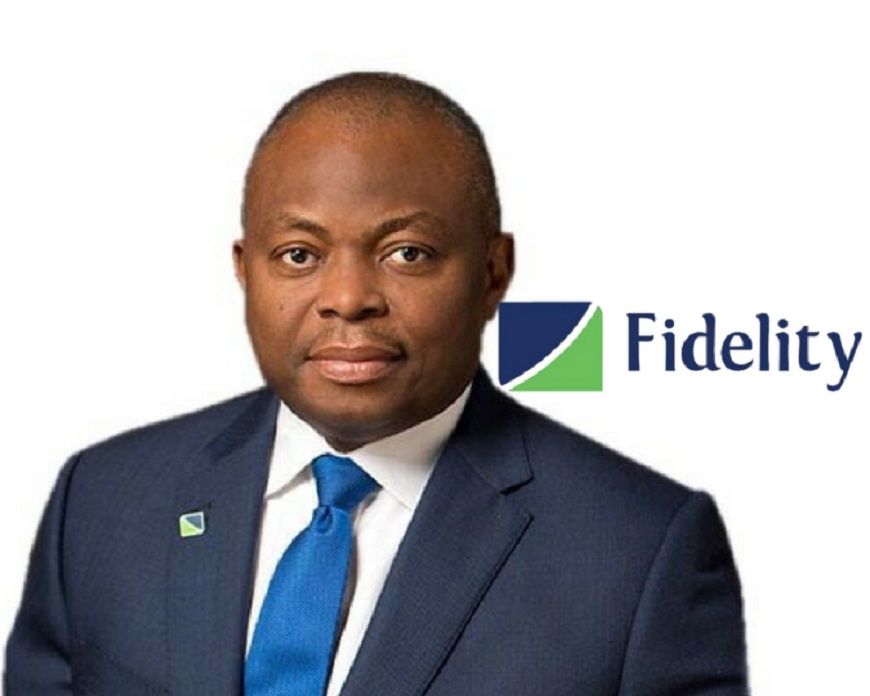
How We Recorded Impressive Half Year Results—Fidelity Bank CEO
By Modupe Gbadeyanka
In the first six months of 2020, Fidelity Bank Plc sustained the financial performance trajectory of recent years despite the economic challenges occasioned by the COVID-19 pandemic.
In the half-year results filed to the Nigerian Stock Exchange (NSE) last week, the top Nigerian lender churned another set of impressive performance, with strong growth in profits and other indices.
For instance, the bank printed a 22 per cent surge in pre-tax profit of N12.0 billion as against N9.8 billion in 2019, while the net profits grew by 33 per cent from N8.5 billion to N11.3 billion in the reporting period.
In other indices, the total assets rose by 13.7 per cent from N2.1 trillion in 2019 to N2.4 trillion this year whilst total deposits increased by 14.8 per cent from N1.2 trillion to N1.4 trillion during the same period.
According to the CEO of Fidelity Bank, Mr Nnamdi Okonkwo, the strong performance achieved in the first half of the year was as a result of the resilience of the bank’s business model.
“Due to the global and domestic headwinds witnessed in H1 2020, we proactively increased our cost of risk as the impact of the pandemic slowed down economic activities whilst adapting our business model to the new risks and opportunities of the new normal,” the banker stated.
Mr Okonkwo disclosed that Fidelity Bank re-stated its H1 2019 figures from N15.1 billion to N9.8 billion to reflect the impact of IFRIC 21- Levies, which was adopted for the first time on the H1 2020 financials.
“The key impact of IFRIC 21 was that our 2020FY AMCON Cost was recognized 100 per cent in our H1 2020 accounts rather than been amortized over 12 months as was done previously on our financials,” said the Fidelity CEO.
He further revealed that without implementing IFRIC 21, profit for the period would have been N17.9 billion compared to the N15.1 billion reported in H1 2019.
Fidelity Bank has been implementing a digital-led retail strategy and digital banking gained further traction during the period with 87.3 per cent of the bank’s customers now transacting on digital platforms.
The figures are up from 82.0 per cent in 2019FY while 51.2 per cent of the bank’s customers are now enrolled on the bank’s mobile/internet banking products.
“Though digital banking income dropped by 29.1 per cent due to the downward fee revisions for electronic transactions in line with the new bankers’ tariff, we have continued to receive positive reviews on our digital channels.
“IVY, the bank’s chatbox is rated as the clear leader, among virtual assistants in the industry, just as our flagship instant banking product (*770#) was also rated in the top tier category in the recently released 2020 KPMG Digital Channels Scorecard,” he explained.
Retail Banking in Fidelity Bank has continued to also deliver impressive results. Savings deposits in H1 2020 increased by 32.2 per cent to N363.9 billion with the bank on course to achieving the 7th consecutive year of double-digit growth in savings.
Savings deposits accounted for 49.1 per cent of the total growth in customer deposits and now represent 25.9 per cent of total deposits compared to 22.5 per cent in 2019FY.
In reflection of the bank’s early conservative assessment of the sectors that were affected by the COVID-19 pandemic, the bank’s Non-Performing Loans (NPL) ratio increased to 4.8 per cent from 3.3 per cent in 2019FY.
Regulatory ratios, however, remained above the required thresholds with Capital Adequacy Ratio increasing to 18.8 per cent from 18.3 per cent due to the capitalisation of H1 2020 audited profits while liquidity ratio stood at 32.1 per cent.
Buoyed by the H1 performance, the bank said it is optimistic about the remaining part of the year as Mr Okonkwo said, “We believe the new phase of normalcy will unveil some growth opportunities.
“We will continue to monitor and pro-actively manage any evolving risks as the Nigerian economy gradually reopens and economic activities pick-up in key sectors.”
Banking
Fidelity Bank Gives Boats, Relief Materials to Makoko Community
By Modupe Gbadeyanka
Some educational materials, food items, boats and other essential relief materials have been donated to some schools and orphanages in the Makoko area of Lagos State by Fidelity Bank Plc.
The items were given by the lender through by the Achievers Inductees Class of 2025 under the Fidelity Helping Hands Programme (FHHP), the bank’s staff-led CSR initiative where members of staff identify areas of critical interventions in their communities, raise funds and receive matching support from the bank’s management to execute the projects.
This is in a demonstration of its commitment to corporate social responsibility. Through FHHP, the organisation empowers communities across Nigeria by addressing key social issues in education, health, and welfare.
The Makoko outreach comes off the back of a similar FHHP outreach to Old People’s Home in Yaba, Lagos, reaffirming Fidelity Bank’s commitment to the sustainable development that begins with genuine care for people and their environment.
“At Fidelity Bank, we believe that when communities thrive, businesses prosper. Our commitment goes beyond banking, it is about improving lives, supporting education, and creating opportunities for growth.
“This donation reflects our dedication to nurturing the next generation and contributing to a better, more sustainable future,” the Divisional Head for Brand and Communications at Fidelity Bank, Mr Meksley Nwagboh, stated.
Expressing appreciation on behalf of the community, the traditional leader of Makoko, Mr Shemede Emmanuel Ajakaekun, commended Fidelity Bank for its compassionate donation.
“We are grateful that Fidelity Bank came down here to support us. May their work continue to flourish, and may God lift them higher. We hope they will not forget us but come back again to support our people,” he said.
Similarly, the Proprietor of Part of Solution Orphanage, Nursery and Primary School, Mr Shemede Taiwo, described the donation as life-changing for the children and residents.
“Many children here struggle to attend school because boats are expensive to build or hire. Fidelity Bank’s donation will make a huge difference in ensuring our children get to school safely and in ensuring the improved welfare of the residents of this community. We truly appreciate this gesture,” he remarked.
Banking
Loan Apps: FCCPC Sets January 5 Deadline for Compliance, Registration
By Adedapo Adesanya
The Federal Competition and Consumer Protection Commission (FCCPC) has set January 5, 2026, as the deadline for full compliance with the Digital, Electronic, Online and Non-Traditional Consumer Lending Regulations, 2025.
The regulations, which came into effect on July 21, 2025, under the Federal Competition and Consumer Protection Act (FCCPA) 2018, aims to promote fairness, transparency, and accountability across Nigeria’s growing digital lending market.
Recall that the regulations threaten non-compliant operators which risk fines of up to N100 million or 1 per cent of turnover, as well as potential disqualification of directors for up to five years.
The regulator noted that all affected operators, including lending platforms, service partners, and intermediaries, are expected to complete their compliance obligations by the date, adding that enforcement will begin immediately after the deadline.
To support operators in meeting the required standards, the commission in a statement on Thursday, issued an additional instrument, the guidelines on the Digital, Electronic, Online and Non-Traditional Consumer Lending Regulations, 2025, made under Sections 17 and 163 of the FCCPA. This document provides practical direction for lenders and intermediaries, explains the documentation required, and introduces updated Forms 1 and 3 based on feedback received from stakeholders.
The FCCPC said applicants with pending submissions may provide any additional information required under the new Guidelines without waiting for a formal request.
“The commission will continue to process applications promptly and maintain a transparent review process,” he said.
Speaking on this, the Executive Vice Chairman of the FCCPC, Mr Tunji Bello, stressed the importance of meeting this timeline, noting that “full compliance is not only a legal requirement but an important step in protecting consumers and ensuring that the sector continues to grow in a fair and responsible manner.”
“Operators have had ample time to adjust to the Regulations and the additional guidance now provided. We expect all obligations to be met before the deadline,” he added.
If registration is not met, FCCPC says measures may include restricting non-compliant entities from operating, directing partners or platforms to cease dealing with them, and applying other sanctions permitted under the law.
“The FCCPC is committed to promoting responsible digital lending practices that protect consumers and support confidence in the financial technology sector,” the statement added.
Banking
Why Fair Digital Access is the Foundation of Nigeria’s 2030 $1trn Roadmap Ambition
By Henry Obiekea
Nigeria’s pursuit of a $1 trillion Gross Domestic Product (GDP) by 2030 is perhaps the most significant economic objective in the nation’s history. This goal is audacious, yet wholly achievable, rooted in the nation’s greatest asset: its dynamic and youthful population. With a median age well below the global average, this demographic dividend is a reservoir of creativity, entrepreneurship, and innovation—the very fuel for an economic explosion.
However, harnessing this potential requires more than just ambition; it demands inclusive capital. Today, the brilliant ideas generated by young Nigerians—from tech startups to agri-business ventures—often stall due to a fundamental challenge: access to finance.
The Finance Minister, Mr. Wale Edun, recently amplified this imperative, urging financial institutions to actively finance the ideas of young Nigerians, warning that failure to do so risks pushing this talent into unregulated, unproductive ecosystems. This official focus underscores a critical truth: financial inclusion is the priority driver for meeting the $1 Trillion target.
Despite Nigeria’s status as a continental leader in technology adoption, a significant portion of its adult population remains financially underserved. Recent surveys show that the total gap—those entirely excluded or reliant only on informal systems—stands at 36%, representing approximately 40 million productive individuals.
This population includes 26% of adults who are fully cut off from the formal system, while another 10% rely solely on informal services. Persistent gaps are especially pronounced across regional and demographic lines, particularly in the North and among low-income groups.
Relegated largely to the informal economy, these millions of people are unable to save securely, build credit, or access the capital needed for scale. While mobile penetration, agent networks, and digital onboarding are actively narrowing the divide, sustained progress in inclusion-driven growth fundamentally demands access to credit.
Despite an observed increase in account ownership, Nigeria’s credit penetration remains notably shallow, registering between 13% and 19% of GDP, which is among the lowest globally and limits critical economic growth vectors, particularly for MSMEs and household consumption. This low credit-to-GDP ratio highlights a significant underdevelopment in the domestic credit market.
In contrast, regional African peers like Kenya and Egypt have credit ratios roughly twice as high, sitting between approximately 31% and 37%, supported by increasingly data-driven lending models that are more effective at reaching small businesses. Emerging global economies such as India and Brazil boast deep credit markets, where penetration reaches between 53% and 62%, providing the financial leverage necessary for robust private-sector expansion.
The extreme of the scale is occupied by nations with mature financial infrastructure, like South Africa, where the credit penetration rate is approximately 90% of GDP, underscoring the distance Nigeria must travel to unlock its full economic potential through a diversified and accessible lending base.
The opportunity lies in the digital revolution. With mobile phone usage soaring (over 93% of adults), the physical barrier of the bank branch has been rendered obsolete. Fintech companies in Nigeria have brilliantly seized this moment, leveraging mobile technology and data science to catalyze inclusion.
Digital access alone, however, is insufficient. The engine for sustained economic growth is authentic financial inclusion, characterised by fairness and transparency. Without these twin values, digital finance risks replacing physical exclusion with predatory models, characterised by hidden charges and opaque terms that ultimately erode trust, leading to financial distress and a retreat from the formal economy. To truly empower the populace and grow the GDP, every transaction must build, not break, the customer’s financial life. This is the principle that elevates financial services from a mere utility to a foundation of national economic strength.
This commitment to fairness is precisely where FairMoney acts as a crucial lever for the national ambition. Operating as a licensed microfinance bank providing financial services through our mobile app, FairMoney’s model directly tackles the barriers to entry by making every interaction transparent and efficient.
Our commitment to “no hidden charges” means customers understand the full cost of credit upfront, fostering a responsible borrowing culture. We leverage innovation to serve the excluded. We focus on accessibility and speed to enable instant account opening and rapid loan approvals by leveraging alternative data and advanced scoring algorithms, using technology for operational efficiency, such as Maps for remote operational address verification.
Beyond loans, we offer full-service banking with bank account numbers, competitive Fixed Deposits with good interest rates on savings, instant bill payments, and specialized services like POS services for small businesses. Our savings products, designed to track and build wealth, incentivize long-term financial health.
By providing these robust services with speed and transparency, FairMoney is not just offering a product; we are committed to digitally onboarding millions of Nigerians into a trusted, formal economic identity.
The impact of this fair digital model ripples across the economy, directly powering the $1 Trillion objective. A small business owner who secures a transparent, low-friction loan can instantly purchase inventory, hire staff, and expand operations. This immediate injection of capital and increased velocity of money—made possible by digital speed and trust—translates directly into higher output and taxable revenue, boosting GDP.
Also, by offering competitive savings and fixed deposit rates, we successfully mobilise capital that might otherwise sit dormant or be held in informal, non-productive assets. This pooled capital becomes the investment bedrock needed to fund the larger infrastructure and industrial projects essential for the 2030 target.
When entrepreneurs can access transparent loans or savings in a crisis, they prevent business collapse, maintaining employment and economic continuity. This resilience ensures that economic shocks do not derail the cumulative progress toward the national goal.
Authentic financial inclusion acts as a social safety net. Fairness in finance, therefore, is not a philanthropic ideal; it is a sound economic strategy. It ensures that the millions of productive economic units, especially the youth and the underbanked, are not just spectators but active, invested contributors to the nation’s growth story.
The path to a $1 Trillion economy is clear: it must be built on the principle of inclusion. This ambition will be realized by empowering the underbanked financially and leveraging digital solutions to dramatically improve access to finance across Nigeria. Financial institutions must champion Fair Digital Access—a commitment to innovation that FairMoney is already pioneering.
In the digital age, trust is the new currency. To fully unlock Nigeria’s trillion-dollar destiny, we must earn this trust through consistent value, transparency, and the fair and equitable deployment of financial capital.
Henry Obiekea is the Managing Director of FairMoney Microfinance Bank Nigeria
-
Feature/OPED6 years agoDavos was Different this year
-
Travel/Tourism9 years ago
Lagos Seals Western Lodge Hotel In Ikorodu
-
Showbiz3 years agoEstranged Lover Releases Videos of Empress Njamah Bathing
-
Banking7 years agoSort Codes of GTBank Branches in Nigeria
-
Economy2 years agoSubsidy Removal: CNG at N130 Per Litre Cheaper Than Petrol—IPMAN
-
Banking3 years agoFirst Bank Announces Planned Downtime
-
Sports3 years agoHighest Paid Nigerian Footballer – How Much Do Nigerian Footballers Earn
-
Banking3 years agoSort Codes of UBA Branches in Nigeria