
Banking
NITDA Sanctions Soko Loan over Data Privacy Invasion

By Adedapo Adesanya
The National Information Technology Development Agency (NITDA) has sanctioned an online lending platform, Soko Lending Company Limited (Soko Loan), for data privacy invasion.
The agency through its Head, Corporate Affairs and External Relations, Mrs Hadiza Umar, in a statement on Tuesday, said the action was taken following series of complaints against the company for unauthorised disclosures, failure to protect customers’ personal data, defamation of character and violation of the provisions of the Nigeria Data Protection Regulation (NDPR).
According to her, one of such complaints filed by Bloomgate Solicitors on behalf of its client, the data subject, was received on Monday, November 11, 2019, which prompted the agency to investigate the claims.
Mrs Umar explained that Soko Loan granted its customers uncollateralised loans which required a loanee to download its mobile application on the phone and activate a direct debit in the company’s favour.
“In such manner, the application gains access to the loanee’s phone contacts,” she said.
According to one of the complainants, when he failed to meet up with his repayment obligations due to insufficient credit in his account on the date the direct debit was to take effect, the company unilaterally sent privacy-invading messages to the complainant’s contacts.
She said NITDA’s investigation revealed that the complainants’ contacts who were neither parties to the loan transaction nor consented to the processing of their data had confirmed the receipt of such messages.
The agency also made efforts to get Soko Loan to change the unethical practise but to no avail.
She added that following the investigation, it secured a lien order on one of the company’s accounts by which it could come up with privacy-enhancing solutions for its business model.
Mrs Umar said instead, Soko Loan decided to rebrand and direct its customers to pay into its other business accounts.
She said: “The agency’s investigation further revealed that the company embeds trackers that share data with third parties inside its mobile application without providing users information about it or using the appropriate lawful basis.
“NITDA has, therefore, found Soko Loan and its entities in violation of use of non-conforming privacy notice, contrary to the content of the NDPR, insufficient lawful basis for processing personal data, contrary to Articles 2.2 and 2.3 of the NDPR.”
It said the company was involved in “illegal data sharing without appropriate lawful basis, contrary to Article 2.2 of the NDPR, unwillingness to cooperate with the Data Protection Authority, contrary to Article 3.1 (1) of Data Protection Implementation Framework and non-filing of NDPR audit reports through a licensed Data Protection Compliance Organisation (DPCO).
“In view of the foregoing and in consideration of its implication on the privacy of Nigerians and erosion of trust in the digital economy, NITDA hereby imposes a monetary sanction of N10 million on Soko Lending Company Ltd.
“NITDA also directs that no further privacy-invading messages be sent to any Nigerian until the company and its entities show full compliance with the NDPR.”
She said the agency also directed the company to pay for the conduct of a Data Protection Impact Assessment by a NITDA appointed DPCO on its operation and placement on a mandatory IT and Data Protection oversight for nine months.
The agency clarified that the incriminating aspects of the investigation were deposited with the Nigerian Police to determine if the executives of the company were liable to imprisonment for violating Section 17 of the NITDA Act, 2007.


By Adedapo Adesanya
The Central Bank of Nigeria (CBN) has rolled out fresh technology-driven rules compelling banks and other financial institutions to deploy automated anti-money laundering systems capable of detecting suspicious transactions in real time.
The directive, contained in a circular issued on March 10, 2026, applies to deposit money banks, mobile money operators, international money transfer operators, payment service providers, and other institutions under the apex bank’s supervision.
According to the regulator, the new framework sets minimum standards for automated anti-money laundering solutions designed to strengthen the detection and reporting of financial crimes within Nigeria’s rapidly digitising financial ecosystem.
In the circular, the CBN explained that the guidelines establish a baseline structure for financial institutions to deploy advanced monitoring tools capable of flagging suspicious financial activities instantly.
“The baseline standards provide a framework for implementing automated solutions that strengthen the detection and reporting of suspicious transactions in real time and enhance compliance with applicable AML/CFT/CPF laws and regulations, while also supporting the use of emerging technologies to improve overall financial crime risk management,” it stated.
The circular was jointly signed by the Director of Banking Supervision, Mrs Akinwunmi A. Olubukola, and Mrs Olubunmi Ayodele-Oni, acting for the Director of the Compliance Department.
Under the new policy, financial institutions must deploy automated anti-money laundering platforms that combine customer identification systems, transaction monitoring, sanctions screening, and risk assessment tools into a single integrated framework.
The CBN said the guidelines apply to all institutions operating within the financial system under its regulatory authority, including banks, payment companies, and other licensed financial service providers.
While the new rules take effect immediately, institutions have been given specific timelines to fully implement the required technology infrastructure.
Deposit money banks are expected to achieve full compliance within 18 months, while other financial institutions have 24 months to meet the regulatory requirements.
In addition, all institutions are required to submit detailed implementation roadmaps within three months of the issuance of the circular.
“The implementation of these guidelines shall start from the date of issuance, while full compliance shall be 18 months (for Deposit Money Banks) and 24-months (for Other Financial Institutions) from the date of issuance,” the apex bank added.
A major highlight of the framework is the emphasis on advanced technology tools such as artificial intelligence, machine learning, predictive analytics, and behavioural monitoring to identify unusual financial patterns that may indicate criminal activity.
Under the guidelines, institutions must deploy systems capable of conducting risk-based customer due diligence, monitoring transactions across multiple financial channels, and screening customers against sanctions databases and lists of politically exposed persons.
The CBN also directed that these automated systems must integrate seamlessly with core banking infrastructure and customer identity databases, enabling continuous real-time analysis of transaction flows and behavioural patterns.
According to the apex bank, traditional manual monitoring processes are increasingly inadequate in a financial environment that is becoming more complex and heavily driven by digital payments, fintech platforms, and mobile banking.
The regulator said automated surveillance systems would enable institutions to identify potential financial crimes earlier and report suspicious transactions promptly to authorities such as the CBN and the Nigerian Financial Intelligence Unit (NFIU).
The guidelines further require financial institutions to establish governance structures to oversee the performance of automated systems, validate artificial intelligence models, and ensure that data protection safeguards comply with Nigeria’s privacy regulations.
Beyond technology deployment, institutions must maintain detailed audit trails and case management systems that document investigations into suspicious financial activity and track regulatory reporting obligations.
The central bank warned that institutions that fail to comply with the new standards or operate ineffective anti-money laundering frameworks could face regulatory penalties.
Compliance will be monitored through a combination of off-site regulatory surveillance, on-site examinations, and targeted thematic reviews conducted by the banking regulator.
The CBN emphasised that the newly issued standards represent only the minimum compliance benchmark, adding that institutions may be required to implement stronger controls depending on their operational scale, transaction volumes, and risk exposure.

By Aduragbemi Omiyale
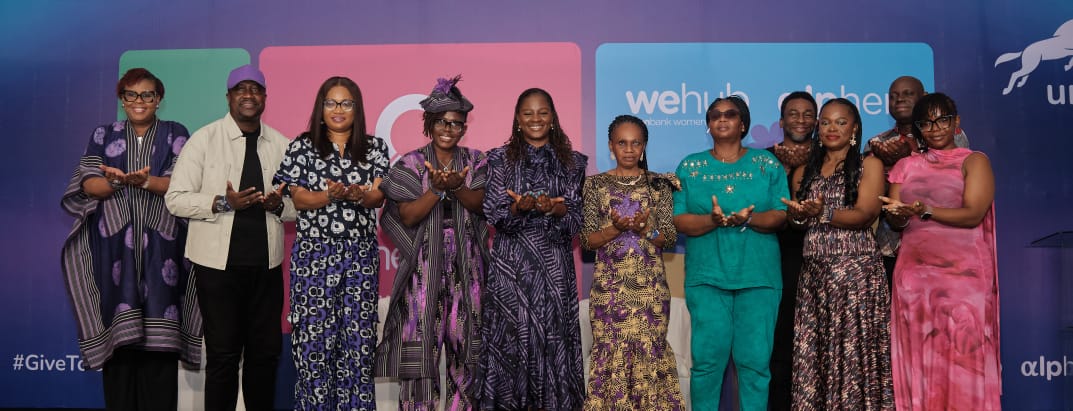
Union Bank of Nigeria is commemorating International Women’s Month 2026 with an initiative centred on women living with disabilities and women raising children with disabilities.
Throughout March, Union Bank will implement targeted initiatives to expand access, foster inclusion, and unlock sustainable opportunities.
Activities include a flagship event slated for The Stable, its multipurpose venue in Surulere, Lagos, on Saturday. The event convened women with disabilities, caregivers, supporting organisations, and advocates for dialogue, mentorship, and resource sharing.
Complementary efforts include outreach to disability support facilities and collaboration with educational institutions to distribute learning materials to female students with disabilities.
Tailored mentorship programmes will build confidence and capability in education, entrepreneurship, and careers.
Through its women’s banking proposition alpher and strategic partnerships, the bank will also deliver business sustainability training specifically designed for women living with disabilities and women raising children with disabilities.
Aligned with the global theme Give to Gain, the lender’s campaign Give to Gain: Creating Pathways for Inclusion and Endless Opportunities centres the lived experiences of women living with disabilities and underscores the need for intentional systems of support for social and economic advancement.
Internally, Union Bank will activate WeHub — its employee-led women’s network — to strengthen inclusive culture and support professional growth across the organisation.
“At Union Bank, inclusion is not an abstract ideal; it is a deliberate choice. While many conversations around women’s empowerment are important and necessary, women living with disabilities and women raising children with disabilities are too often left out entirely.
“This year’s theme, Give to Gain, reflects exactly what we believe: that when we intentionally open access, support, and opportunity to these women, the value created extends to families, communities, and society at large,” the Chief Brand and Marketing Officer for Union Bank, Ms Olufunmilola Aluko, stated.


By Modupe Gbadeyanka
A Federal High Court sitting in Ikoyi, Lagos, has ordered the final forfeiture of N81.1 million to the Federal Government of Nigeria in favour of Sterling Bank.
The money was part of the N2.5 billion stolen by some customers of Sterling Bank and transferred to their own use as well as to the use of some third-party beneficiaries, owing to a system glitch experienced by the bank.
On October 2, 2025, the court granted an interim forfeiture order of the fund and also directed the publication of the same in a national newspaper for any interested party to show cause why the money should not be finally forfeited to the federal government.
When no one came forward to claim the money, Justice Yelim Bogoro on Monday, March 9, 2026, ordered the final forfeiture of the funds.
The matter was brought before the court by the Economic and Financial Crimes Commission (EFCC) after a petition from the financial institution on July 18, 2022.
The anti-graft agency, in its investigations, traced the stolen funds to various accounts, including that of a customer, Sulaiman Kehinde Ojora, who was one of the major beneficiaries of the monumental fraud.
Investigation further revealed that Sulaiman Kehinde Ojora fraudulently concealed the sum of N43.0 million in the account of his friend, Taiwo Oluwaseyi Alawode (Account No. 1233126860), domiciled in Access Bank, and the sum of N122.2 million in the account of his wife, Aminat Olatanwa Ojora (Account No. 0072889319), domiciled in Sterling Bank.











-
 Feature/OPED6 years ago
Davos was Different this year
-
Travel/Tourism10 years ago
Lagos Seals Western Lodge Hotel In Ikorodu
-

 Showbiz3 years ago
Estranged Lover Releases Videos of Empress Njamah Bathing
-
 Banking8 years ago
Sort Codes of GTBank Branches in Nigeria
-

 Economy3 years ago
Subsidy Removal: CNG at N130 Per Litre Cheaper Than Petrol—IPMAN
-

 Banking3 years ago
Sort Codes of UBA Branches in Nigeria
-

 Banking3 years ago
First Bank Announces Planned Downtime
-

 Sports3 years ago
Highest Paid Nigerian Footballer – How Much Do Nigerian Footballers Earn