Banking
Senate Seeks Stronger CBN Oversight in Fintech Regulation
By Adedapo Adesanya
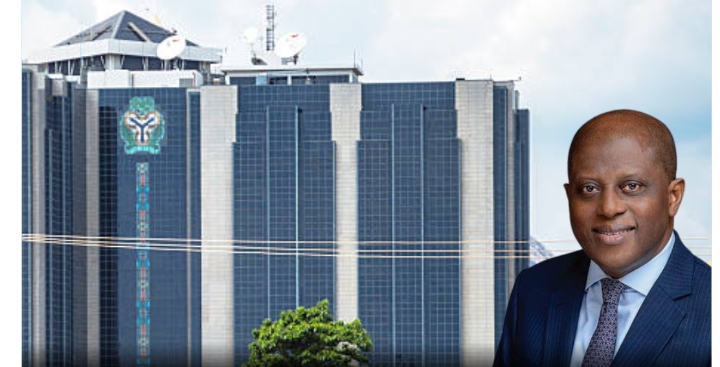
The Senate has called for a strengthened regulatory framework that positions the Central Bank of Nigeria (CBN) at the centre of oversight of the country’s fast-growing fintech sector.
The recommendation was made by Chairman of the Senate Committee on Banking, Insurance, and Other Financial Institutions, Mr Adetokunbo Abiru, during a one-day public hearing at the National Assembly complex on Wednesday.
The event focused on the proposed amendment to the Banks and Other Financial Institutions Act (BOFIA) 2020 (SB. 959) and included an investigative session into fraudulent investment platforms, notably the recent Crypto Bullion Exchange (CBEX) incident.
Mr Abiru, who is a former Group Managing Director of Polaris Bank and Executive Director at First Bank Nigeria, emphasised that fintechs, including mobile money operators, digital lenders, payment platforms, and settlement companies, have become systemically important to Nigeria’s financial ecosystem.
While their growth has expanded financial inclusion, existing laws, he said, do not fully address the scale, data sensitivity, and systemic impact of these technology-driven institutions.
“The question has arisen as to whether a new standalone regulatory agency would be preferable for supervising fintechs,” Mr Abiru said.
“However, creating a separate agency would duplicate functions, fragment oversight, and increase bureaucratic costs. It is far more effective to strengthen the BOFIA framework, modernise CBN supervisory powers, and mandate coordination with key agencies such as the Securities and Exchange Commission, Nigerian Communications Commission, Corporate Affairs Commission, Federal Competition and Consumer Protection Commission, and the Office of the National Security Adviser,” he added.
The lawmaker proposed that the amendment should explicitly empower the CBN to designate qualifying fintechs as Systemically Important Institutions, establish a national registry for transparency and beneficial ownership disclosure, and strengthen risk-based supervision tailored to technology-driven financial services.
Beyond fintech regulation, the Senate intensified scrutiny on Ponzi schemes and fraudulent investment platforms.
Mr Abiru described the rising prevalence of such schemes as a threat to financial stability and public trust, citing the CBEX debacle, which reportedly caused severe financial losses to individuals across Nigeria, including professionals, traders, students, and retirees.
Banking
Fidelity Bank Equips 100 Ogun Women With Sewing, Grinding Machines
By Modupe Gbadeyanka
No fewer than 100 women in Ogun State have been empowered with vocational tools designed to strengthen their economic independence and boost household income.
The items were distributed to the beneficiaries by Fidelity Bank Plc through its recently launched Give Her Power initiative, created to foster inclusive growth and sustainable development.
The outreach is part of the bank’s nationwide rollout of the initiative, which was unveiled earlier in March during the signing of strategic Memoranda of Understanding (MoUs) with partner organisations to commemorate 2026 International Women’s Day.
Business Post gathered that 50 sewing machines and 50 grinding machines were given to the women engaged in microbusinesses at the MKO Abiola Sports Arena in Abeokuta, the state capital.
The Regional Bank Head for Southwest 1 at Fidelity Bank, Mr Folaranmi Jemirin, noted that the scheme aligns with the lender’s broader commitment to delivering practical, measurable empowerment interventions.
“At Fidelity Bank, our approach to empowerment is simple; it must be practical, inclusive, and sustainable. When you empower a woman economically, the benefits extend to her family, her business, and the wider community.
“This outreach in Abeokuta is a continuation of the momentum created with the launch of the ‘Give Her Power’ initiative earlier in March,” Mr Jemirin stated.
He explained that the Give Her Power initiative is anchored on HerFidelity, the company’s women-focused proposition, which provides financial literacy, business support, vocational training, mentorship, and wellness initiatives for women-led enterprises.
Mr Jemirin further revealed that the bank had scaled its women-focused interventions nationwide, including the distribution of 1,000 sewing and grinding machines, the rollout of the HerFidelity Apprenticeship Programme 2.0, financial literacy sessions for girls, mentorship engagements, and hands-on skills training.
“This is more than a donation, it’s our vote of confidence in your ability to earn, grow, and create value within your communities,” he added, urging beneficiaries to make productive use of the items.
Commending the initiative, the Ogun State Commissioner for Women Affairs and Social Development, Mrs Adijat Adeleye-Oladapo, described the programme as a meaningful shift from symbolic celebrations to tangible empowerment.
“This initiative goes beyond celebrating International Women’s Day. It delivers real opportunities for transformation. When you empower a woman, you empower a family and, ultimately, society,” she stated.
She further praised Fidelity Bank for complementing the efforts of the Ogun State government, urging beneficiaries to make productive use of the equipment, stressing that the true value of the initiative lies in its long-term impact on livelihoods and community development.
Banking
NDIC Begins Final Liquidation of 89 Microfinance Banks, Mortgage Banks
By Adedapo Adesanya
The Nigeria Deposit Insurance Corporation (NDIC) has commenced the final phase of liquidating 89 defunct Microfinance Banks (MFBs) and Primary Mortgage Banks (PMBs) nationwide after their takeover by new operators under its resolution framework.
The corporation said the action follows the revocation of licences by the Central Bank of Nigeria (CBN) in May 2023, which affected 179 microfinance banks and four primary mortgage banks.
In a statement by its Head of Communication and Public Affairs, Mrs Hawwua Gambo, the NDIC explained that under the Purchase and Assumption (P&A) model, 89 new institutions were licensed to assume the assets and liabilities of the failed banks, adding that the acquiring institutions have since commenced operations under new identities.
The agency said the transition enabled the new institutions to assume control of the assets and liabilities of the defunct banks, with operations already ongoing under new identities.
With the operational handover completed, the NDIC said it was now proceeding to formally wind up the old entities. As part of this process, the corporation, acting as liquidator, will approach various divisions of the Federal High Court to secure orders for their dissolution and to be discharged from its responsibilities.
It disclosed that the exercise is designed to conclude the resolution process, noting that “the exercise aims to bring closure to the resolution process while ensuring depositors’ interests remain protected, and the financial system remains stable.”
According to the NDIC, the P&A arrangement has ensured uninterrupted access to banking services in the affected communities, as acquiring institutions have fully taken over the operations of the defunct banks.
The Affected Lenders
A state-by-state breakdown indicates that Lagos recorded the highest number of affected institutions, with 27 banks undergoing the winding-down process. Osun followed with seven, while Anambra had six. The Federal Capital Territory accounted for five, and Akwa Ibom, Ogun, and Adamawa recorded four each.
Oyo, Kaduna, Edo, and Niger had three institutions each, while Benue, Delta, Imo, and Ondo recorded two apiece. Other states, including Abia, Ekiti, Enugu, Rivers, Plateau, Nasarawa, Kano, Kwara, Jigawa, and Katsina, had one institution each affected.
Among them are Mouau Vasmucs Microfinance Bank, Eduek Microfinance Bank, Ini Microfinance Bank, and Nsehe Microfinance Bank. Others include Zawadi Microfinance Bank, Akpo Microfinance Bank, Anya Microfinance Bank, Awka Microfinance Bank, and Enugwu-Ukwu Microfinance Bank.
The list also features Isi-Aku Microfinance Bank, Obosi Microfinance Bank, Cub Microfinance Bank, Umejei Microfinance Bank, ABC Microfinance Bank, Ehor Microfinance Bank, and Esan Microfinance Bank. Amoye Microfinance Bank, Goldenfunds Microfinance Bank, Evangel Microfinance Bank, Greenland Microfinance Bank, and Arise Microfinance Bank are also affected.
Banccorp Microfinance Bank, Bishopgate Microfinance Bank, Bridgeway Microfinance Bank, and Briyth Covenant Microfinance Bank are on the list. Credit Afrique Microfinance Bank, Echo Microfinance Bank, Eyowo Microfinance Bank, and Fiyinfolu Microfinance Bank are also included.
Other affected lenders are Hackman Microfinance Bank, Halmond Microfinance Bank, Manna Microfinance Bank, Manny Microfinance Bank, and Mayfair Microfinance Bank. Mercury Microfinance Bank, Moneywise Microfinance Bank, Network Microfinance Bank, Nuture Microfinance Bank, Onyx Microfinance Bank, and Oros Capital Microfinance Bank are also listed.
The list further includes Peniel Microfinance Bank, Primera Microfinance Bank, Purple Money Microfinance Bank, Stallion Microfinance Bank, Sunrise Microfinance Bank, Surbpolitan Microfinance Bank, Verdant-Capital Microfinance Bank, and Zikado Microfinance Bank.
Also affected are Aiyepe Microfinance Bank, Interland Microfinance Bank, Star Microfinance Bank, Zigate Microfinance Bank, Fasilidapo Microfinance Bank, and Newage Microfinance Bank. Boluwaduro Microfinance Bank, Iba Microfinance Bank, Idese Microfinance Bank, Ola Microfinance Bank, Olofin Microfinance Bank, and Olofin-Owena Microfinance Bank are included.
Osogbo Microfinance Bank, Firstindex Microfinance Bank, Joint Farmers Microfinance Bank, Ologbon Microfinance Bank, and Iwoama Microfinance Bank also made the list. Adamawa Homes & Savings, Mautech Microfinance Bank, Michika Microfinance Bank, Biyama Microfinance Bank, and Musharaka Microfinance Bank are affected as well.
The remaining institutions include Dangizhi Microfinance Bank, Edumana Microfinance Bank, Mainsail Microfinance Bank, Ally Microfinance Bank, and Business Support Microfinance Bank. Daniels Global Microfinance Bank, First Multiple Microfinance Bank, Grassroots Microfinance Bank, Bluewhales Microfinance Bank, and Josad Microfinance Bank are also listed.
Others are BIPC Microfinance Bank, Jamis Microfinance Bank, Narict Microfinance Bank, Fahimta Microfinance Bank, Mabinas Microfinance Bank, New World Microfinance Bank, Northbridge Microfinance Bank, Omu-Aran Microfinance Bank, and Cherish Microfinance Bank.
Banking
Court Restrains FCCPC From Enforcing Key Loan Provisions
By Adedapo Adesanya
The Federal High Court sitting in Lagos has granted an interim injunction restraining the Federal Competition and Consumer Protection Commission (FCCPC) from enforcing key provisions of its Digital, Electronic, Online and Non-Traditional Consumer Lending Regulations, 2025, pending the determination of a substantive suit before the court.
Justice Ambrose Lewis-Allagoa granted the order following an ex-parte application filed by the Wireless Application Service Providers Association of Nigeria (WASPA Nigeria), which is challenging the legality and applicability of the regulations.
The association had approached the court on April 14, 2026, seeking urgent judicial intervention to halt the implementation of what it described as ultra vires provisions of the regulatory framework, also referred to as the “DEON Consumer Lending Regulations.”
In the ruling, the court held that the applicant had demonstrated sufficient urgency and legal grounds to warrant temporary protection pending the hearing of the motion on notice for an interlocutory injunction.
WASPA Nigeria, represented by Mrs Kemi Pinheiro, SAN, argued that several provisions of the regulations impose obligations on its members operating in the telecommunications and digital services ecosystem.
The group further contended that the FCCPC lacked statutory authority to regulate technical and operational aspects of telecommunications services, which it said fall under the mandate of the Nigerian Communications Commission (NCC).
In its motion, WASPA urged the court to restrain the FCCPC from enforcing specific provisions of the regulations, including paragraphs 3, 7, 10, 12, 13, 14, 15, 16, 24, 27, 29 and 32, as well as from imposing sanctions, penalties, or compliance directives on its members.
The court, after reviewing the supporting affidavit deposed to by Ayo Stuffman, granted interim relief preserving the status quo.
Justice Lewis-Allagoa, in his ruling, restrained the FCCPC from implementing or giving effect to the contested provisions of the regulations, taking enforcement steps against WASPA members, or issuing further directives under the disputed framework.
The judge also barred the commission from imposing sanctions or penalties on affected entities pending the determination of the substantive application.
The matter was adjourned to April 27, 2026, for the hearing of the motion on notice.
The ruling represents a temporary setback for the FCCPC, which recently introduced the regulations as part of efforts to strengthen oversight of Nigeria’s fast-growing digital lending and fintech ecosystem.
The regulations were designed to address consumer protection concerns, data privacy issues, and unregulated lending practices within the sector.
-
Feature/OPED6 years agoDavos was Different this year
-
Travel/Tourism10 years ago
Lagos Seals Western Lodge Hotel In Ikorodu
-
Showbiz3 years agoEstranged Lover Releases Videos of Empress Njamah Bathing
-
Banking8 years agoSort Codes of GTBank Branches in Nigeria
-
Economy3 years agoSubsidy Removal: CNG at N130 Per Litre Cheaper Than Petrol—IPMAN
-
Banking3 years agoSort Codes of UBA Branches in Nigeria
-
Banking3 years agoFirst Bank Announces Planned Downtime
-
Sports3 years agoHighest Paid Nigerian Footballer – How Much Do Nigerian Footballers Earn