Connect with us

Banking

Seven Banks Make CBN’s ‘Too Big to Fail’ List

Published

on

Nigerian Banks

By Dipo Olowookere

The Central Bank of Nigeria (CBN) has categorised seven Deposit Money Banks (DMBs) as Domestic Systemically Important Banks (D-SIBs).

D-SIB is a term used for banks that are believed to be too big to fail and if they plunge into crisis, government is expected to support them because of their importance to the economy and the wrong signal they could send to foreign investors.

On Thursday, the central bank released its Financial Stability Report for the 2018 financial year and the CBN said during the review period, seven banks were categorised as D-SIBs.

The report explained that the banks were selected based on the D-SIB supervisory framework, given their size, interconnectedness, substitutability and complexity.

According to the apex bank, the D-SIBs accounted for 63.80 percent of the industry total assets of N35.10 trillion and 65.23 percent of the industry total deposit of N21.73 trillion as well as 66.00 percent of the industry total loans of N15.34 trillion.

“The examination revealed that the D-SIBs were largely in compliance with the regulatory requirements, including capital adequacy and liquidity ratios,” the report said.

It said further that the average CAR for the D-SIBs stood at 19.82 percent, while liquidity ratio stood at 46.29 percent. There was an improvement in non-performing loans ratio from 11.31 percent at end-June 2018 to 9.82 percent at end December 2018.

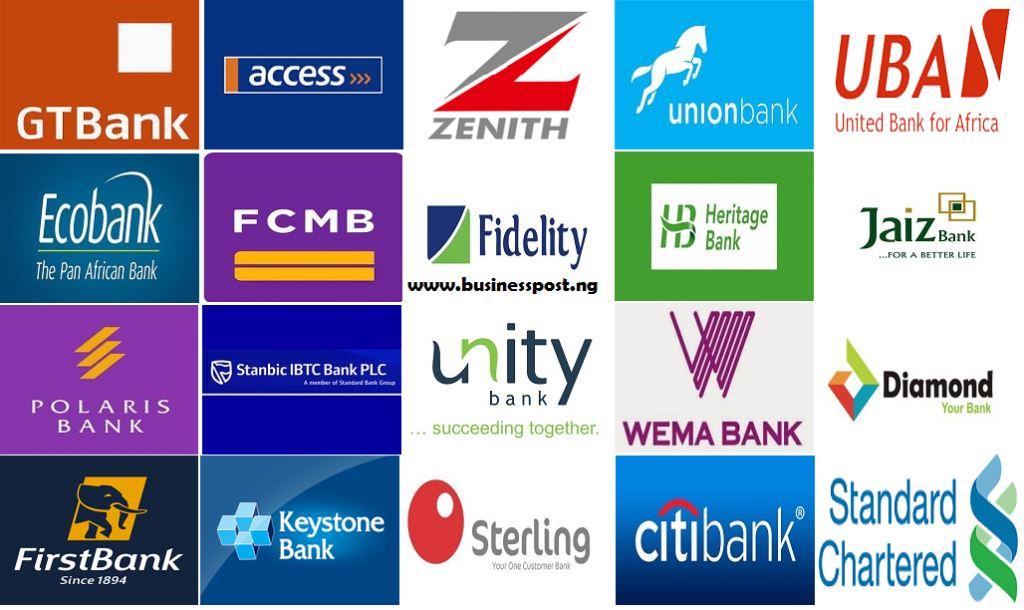
Though the seven banks were not mentioned by the CBN, Business Post reports that five of the 24 banks in Nigeria are in the tier-one category and they are Zenith Bank, Access Bank, GTBank, UBA and First Bank, which were term the ZAGUF Banks.

Also, the report released by Director in charge of Financial Policy and Regulation Department at the CBN, Mr Kevin Amugo, further stated that seven commercial banks failed the CBN stress test, indicating that their funding positions were inadequate. Like in the first cast, the identities of these lenders were not revealed in the document obtained by Business Post.

In addition, the report said the CBN and NDIC carried out the examination of banks with composite risk ratings of ‘High’ and ‘Above Average’ and the three financial holding companies during the second half of 2018.

It said the outcome of the examination showed that the composite risk rating of two banks improved from ‘Above Average’ to ‘Moderate’, while one bank improved from ‘High’ to ‘Above Average’, adding that the examination of banks with composite risk rating of ‘Moderate’ and ‘Low’ was also conducted between October and November 2018.


Dipo Olowookere is a journalist based in Nigeria that has passion for reporting business news stories. At his leisure time, he watches football and supports 3SC of Ibadan. Mr Olowookere can be reached via [email protected]

Click to comment

Leave a Reply

Your email address will not be published. Required fields are marked *

Banking

ASBON Honours Union Bank for Advancing Growth of Nigerian SMEs

Published

on

union bank nigeria

By Modupe Gbadeyanka

In recognition of its strategic leadership in advancing the growth and resilience of small and medium-sized enterprises (SMEs), Union Bank of Nigeria Plc has been honoured by the Association of Small Business Owners of Nigeria (ASBON).

The lender was rewarded by the group for its suite of solutions designed to enable business expansion and long-term value creation.

At the Nigeria National SME Business Awards, held recently in Lagos, Union Bank was given the Best SME Growth Banking Initiatives Award for 2025.

The ceremony was organised by ASBON in partnership with the Lagos State government through the Ministry of Commerce, Cooperatives, Trade and Investment.

The event convened stakeholders from the public and private sectors to recognise individuals and organisations driving meaningful impact across Nigeria’s SME ecosystem.

Receiving the award on behalf of the bank, its Head of SME Segment, Mr Ayokunnumi Abraham, described the recognition as a strong endorsement of the organisation’s commitment to supporting small and medium-sized businesses.

“We are honoured to receive this recognition, which reflects Union Bank’s continued commitment to helping SMEs grow by making banking simpler, faster, and more accessible.

“Through enhancements to our specialised platforms such as Union360, we have meaningfully reduced the time it takes for businesses to come on board and begin transacting.

“These improvements have shortened onboarding, increased digital adoption among our SME customers, and supported the acquisition of new business clients. Our focus remains on delivering practical solutions that help Nigerian businesses thrive,” he stated.

Continue Reading

Banking

Jobberman Recognises Polaris Bank’s Contributions to Talent Development, Others

Published

on

Polaris Bank Rewards Customers

By Modupe Gbadeyanka

The stellar contributions of Polaris Bank Limited to youth employment, talent development, and workforce empowerment across Nigeria have not gone unnoticed, as the company was recently recognised at an event in Lagos.

At the 2026 Jobberman Partners’ Convening, the financial institution was bestowed with the Private Sector Champion Award.

The award recognises private sector organisations that have demonstrated exceptional commitment and leadership in advancing youth employability through impactful recruitment initiatives, graduate trainee programmes, executive hiring support, candidate assessment programmes, and strategic partnerships that create sustainable career opportunities for young Nigerians.

Themed From Impact to Action: Collectively Designing the Future of Youth Employment in Nigeria, the convening focused on fostering collaboration between the private sector and other stakeholders to expand access to meaningful employment opportunities and equip young Nigerians with the skills and opportunities required to succeed in an evolving economy.

On the recognition, Jobberman commended Polaris Bank for consistently going beyond transactional partnerships to deliver measurable impact within Nigeria’s employment ecosystem. The renowned recruitment firm described Polaris Bank as a credible and purpose-driven institution committed to advancing youth employability and supporting the future of work in Nigeria.

The Head of Talent Management at Polaris Bank, Ms Cynthia Sanyaolu, reaffirmed the lender’s commitment to empowering young Nigerians and strengthening the nation’s workforce through strategic people-focused initiatives designed to create long-term economic and social impact.

“This recognition reflects Polaris Bank’s unwavering belief in the potential of the Nigerian youths and our commitment to building platforms that enable them to thrive professionally and economically.

“At Polaris Bank, we see talent development and youth empowerment as critical drivers of national growth and sustainable development,” she stated.

Over the years, Polaris Bank has continued to invest in initiatives that promote learning, career growth, workforce inclusion, and economic empowerment.

Through strategic Graduate Trainee recruitment programmes via its flagship Polaris Graduate Intensive Training (PGIT) and Polaris Tech Ignite Training (TechIGNITE), among other talent development initiatives, and collaborative partnerships, the bank remains committed to supporting the next generation of Nigerian professionals while contributing to national development.

Continue Reading

Banking

Ecobank to Approach Offshore Investors for $350m Bond Refinancing

Published

on

Ecobank Business Account

By Aduragbemi Omiyale

Plans are underway by Ecobank Transnational Incorporated (ETI) to approach the international debt market for a capital raise.

The parent company of the Ecobank Group intends to use proceeds from the proposed exercise to refinance “the concurrent any-and-all tender offer of the ETI $350 million 8.750 per cent tier 2 notes due June 2031.”

However, the issuance of the notes is subject to prevailing market conditions and the conclusion of the necessary transaction documentation, a statement signed by the organisation’s chief financial officer, Mr Ayo Adepoju, stressed.

After issuance, the debt instrument may be listed on the London Stock Exchange, with the expectation that the bonds will be traded on its regulated market.

Ecobank noted that it would allocate an amount equivalent to the full net proceeds of the issue of the notes to finance or refinance, in part or in full, new and/or existing eligible assets as described in its Green Bond Framework (Ecobank-Sustainability), as amended and supplemented from time to time.

Ecobank, which has banking operations in 34 countries in Africa, is listed on the Nigerian Exchange (NGX) Limited, the Ghana Stock Exchange and the Bourse Régionale des Valeurs Mobilières (Stock Exchanges).

Continue Reading

Trending