Banking
Stanbic IBTC Clocks 30, Assures Clients Quality Service
By Modupe Gbadeyanka
Stanbic IBTC, a member of the Standard Bank Group, which has been in operation for over 155 years, is celebrating 30 years of providing quality financial services to its clients.
The company has grown from its early days as a merchant bank to become the leading end-to-end financial services provider in the country, with a balance sheet size close to N2 trillion and a market capitalisation valued at approximately N500 billion in December 2018.
In 30 years, Stanbic IBTC has built a culture of excellence in providing its clients with innovative financial products and services as well as contributing to the attainment of the developmental aspirations of the country.
Today, many of its subsidiaries are market leaders in their segments; these include Stanbic IBTC Bank PLC, Stanbic IBTC Pension Managers Limited, Stanbic IBTC Stockbrokers Limited, Stanbic IBTC Asset Management Limited, Stanbic IBTC Capital, and Stanbic IBTC Nominees.
“It gives me immense pride celebrating this milestone with the Stanbic IBTC family, our clients, who have believed in us and entrusted us with their financial needs all these years, our partners, shareholders, and Nigerians.
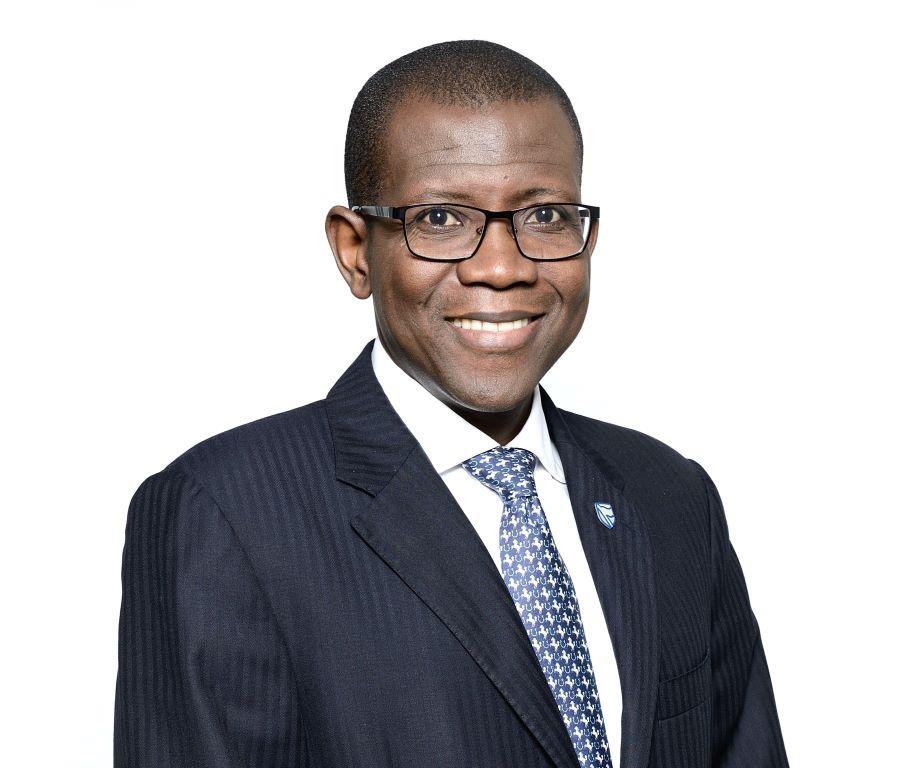
“We have come a long way since 1989 when the business was started in Lagos to having a strong presence in the 36 states and Abuja and becoming part of a multinational concern and one of the top seven most capitalised companies on the Nigerian Stock Exchange,” Chief Executive of Stanbic IBTC Holdings PLC, Mr Yinka Sanni, said.
“We are indeed very excited about our future prospects, the economic and environmental challenges notwithstanding, as we continue to work with our clients to provide relevant and top quality financial solutions aimed at enabling real growth for individuals and businesses,” Mr Sanni added.
The financial services institution has experienced several transformations in its 30-year history. Investment Banking & Trust Company Limited (IBTC) was incorporated on 02 February, 1989 as a merchant bank.
Following the introduction of universal banking and a regulatory requirement for financial institutions to have a N25 billion minimum capital base, IBTC merged with Chartered Bank PLC and Regent Bank PLC in 2005 to become IBTC Chartered Bank PLC, which effectively transformed it into a universal bank.
Two years later in 2007, IBTC Chartered Bank PLC merged with Stanbic Bank Nigeria Limited, the Nigerian subsidiary of Standard Bank of South Africa, to become Stanbic IBTC Bank PLC.
The reforms in the Nigerian financial system, which led to the review of the Universal Banking Policy of the CBN and the introduction of a holding company model, led to the adoption of a HoldCo structure by Stanbic IBTC in 2012 to retain its non-core banking businesses.
Stanbic IBTC is the only triple A rated financial institution in the country, which reflects its financial strength, strong leadership and heritage. Four of its subsidiaries are ISO certified, a mark of consistent quality service delivery. It has also continued to burnish its image as a good corporate citizen with a robust corporate social investment policy. Its flagship CSI initiative, Together4ALimb, continues to provide prostheses, healthcare and education to children from disadvantaged areas of the society.
“We remain committed to operating to the highest level of corporate governance standards while delivering sustainable long term value to clients and other stakeholders through world-class innovative operations and our customer-centric approach,” Mr Sanni assured. According to the chief executive, the Group’s achievements are an indication that its strategy is delivering on set goals and objectives. He assured that the organisation will continue to invest in its people, processes, and its communities.
Banking
Strict CBN Framework Dampens New BVN Registrations Despite Marginal Rise
By Adedapo Adesanya
Nigeria’s Bank Verification Number (BVN) enrolment has slowed significantly in 2026 following the introduction of a stricter regulatory framework by the Central Bank of Nigeria (CBN), with the latest data from the Nigeria Inter-Bank Settlement System (NIBSS) showing that registrations are on course to fall well below last year’s record.
The BVN database stood at 69.55 million as of July 5, 2026, up from 69.32 million in June, indicating that only 228,947 new registrations were recorded over the period. Since the end of 2025, when the database stood at 67.8 million, total enrolments have increased by 1.75 million.
At the current pace, however, BVN registrations are unlikely to match the 4.3 million new enrolments recorded in 2025, suggesting a sharp deceleration in growth this year.
The slowdown comes after the CBN introduced a revised BVN regulatory framework in March, with the new rules taking effect on May 1, 2026. The framework tightened controls around enrolment, identity verification and fraud monitoring as part of efforts to strengthen the integrity of the banking system.
Among the key changes was the introduction of a minimum enrolment age of 18 years, effectively preventing minors from registering for a BVN.
The new framework also limits customers to a one-time change of the phone number linked to their BVN and requires financial institutions to place BVNs linked to suspected fraudulent transactions on a temporary watch-list for up to 24 hours while investigations are carried out.
The stricter rules contrast with last year’s surge in registrations, which was largely driven by the introduction of the Non-Resident Bank Verification Number (NRBVN) initiative that enabled Nigerians in the diaspora to complete BVN enrolment remotely, removing physical barriers and expanding access to the financial system.
Launched on February 14, 2014, the BVN scheme was introduced by the CBN in collaboration with the Bankers’ Committee, NIBSS and German technology firm Dermalog to assign every bank customer a unique biometric identity that can be verified across Nigeria’s banking industry.
Banking
CBN Urges Nigerians to Accept Both Standard, Special N100 Banknotes
By Adedapo Adesanya
The Central Bank of Nigeria (CBN) has clarified that both the standard N100 banknote and the commemorative N100 banknote remain valid legal tender across the country, urging members of the public and businesses to accept both notes for all transactions amid reports that the standard version is being rejected in some quarters.
In a release signed by its Acting Director of Corporate Communications, Mrs Hakama Sidi-Ali, “the CBN reiterates that both the commemorative N100 banknote and the standard N100 banknote remain legal tender in Nigeria and must be accepted for all transactions nationwide. The commemorative N100 banknote, which was introduced to mark Nigeria’s centenary, did not replace the existing standard N100 banknote.”
The apex bank warned that rejecting the standard N100 banknote violates the provisions of the CBN Act and undermines public confidence in the national currency.
According to the bank, individuals, businesses, financial institutions, and other economic agents who reject the note could face appropriate enforcement measures.
The CBN reiterated its commitment to safeguarding the integrity of the naira, ensuring confidence in all duly issued banknotes, and promoting seamless currency circulation throughout the economy.
The central bank also advised members of the public to accept all banknotes legally issued by the bank and encouraged anyone seeking clarification to use its official communication channels.
First introduced on December 1, 1999, the N100 note which features the portrait of Chief Obafemi Awolowo on the front and Zuma Rock on the reverse, was last updated in 2014, when the CBN issued a commemorative version to mark Nigeria’s centenary, introducing enhanced security features such as a Quick Response (QR) code, window micro-optics, improved tactile markings for the visually impaired, and stronger anti-counterfeiting elements.
Unlike the N200, N500 and N1,000 notes, which were redesigned in 2022 under former CBN Governor Godwin Emefiele, the N100 note has remained unchanged since the centenary update, with both the standard and commemorative versions continuing to circulate.
Banking
First Bank Staff to Get N5.2m for Wrongful Employment Termination
By Modupe Gbadeyanka
First Bank of Nigeria has been directed to pay one of its staff members, Mr Joseph Simeon Akor, a total of N5.2 million for wrongfully terminating his employment.
This order was given by Justice Zaynab Mohammed Bashir of the Port Harcourt Judicial Division of the National Industrial Court, Business Post learned.
The judge held that the claimant successfully established that the lender breached the terms of his employment by failing to comply with the disciplinary procedure contained in its Staff Employee Handbook after commencing investigations into allegations of misconduct and by paying him less than the prescribed half of his basic salary during suspension.
The court found that although the bank retained the contractual right to terminate the employment, the action was wrongful for failing to comply with its own contractual obligations and disciplinary framework.
Justice Bashir further held that, having elected to terminate Mr Akor’s employment on the ground that his services were no longer required rather than dismissing him for misconduct, First Bank of Nigeria could not rely on alleged misconduct to deny him the financial entitlements accruing during his suspension.
In delivering the judgment, the judge ordered the financial institution to pay N3.2 million as the balance of the claimant’s salaries and allowances withheld during his suspension, and N2 million as general damages for the breach of the terms of his employment.
From the facts, Mr Akor informed the court that he was employed by First Bank of Nigeria in May 2005 and rose to the position of Deputy Manager before his employment was terminated in December 2018 following allegations of misconduct.
He argued that the allegation was never substantiated. Yet, he was suspended, paid only about N31,000 monthly instead of half of the basic salary prescribed by the Bank’s Staff Employee Handbook, and eventually had his employment terminated. In contrast, the investigation into the allegation was still ongoing.
He further maintained that First Bank of Nigeria breached the provisions of its Staff Employee Handbook by failing to conclude investigations before terminating his employment and by withholding part of his salaries, allowances and other benefits during his suspension despite the allegation not being established.
In defence, First Bank contended that Mr Akor was accorded a fair hearing through disciplinary proceedings, that his employment was lawfully terminated because his services were no longer required, and that he was not entitled to the unpaid balance of his suspended salary, having left the bank’s employment while still on suspension.
The company further claimed that the reason stated in the termination letter that the services of Mr Akor were no longer required was sufficient in law and that the court could not import any other reason into the letter.
In opposition, Mr Akor’s counsel, O. G. Tony Ogidi, submitted that First Bank failed to comply with its disciplinary procedure under the Staff Employee Handbook, terminated the employment of his client before the conclusion of investigations, and failed to justify the termination in accordance with the provisions of the Handbook.
The counsel further argued that the termination letter merely stated that the services of Mr Akor were no longer required without assigning any reason and maintained that the bank acted contrary to the provisions of its Staff Employee Handbook by paying Mr Akor substantially less than half of his basic salary during his suspension.