
Banking
Standard Chartered Extends Digital Banking to Botswana, Zambia, Zimbabwe


As part of its digital transformation strategy in Africa, Standard Chartered has announced another multi-market launch of its digital bank in Botswana, Zambia and Zimbabwe, following launches in Uganda, Tanzania, Ghana and Kenya in the first quarter of the year and Côte d’Ivoire in 2018.
The expansion in Africa comes at a time when the continent, with a growing economy and population, is demanding wider access to digital services.
The digital banking solution provides Standard Chartered customers across the eight markets with affordable, convenient, fast and easily accessible banking services.
The first-of-its-kind digital bank in Botswana and Zambia offers a truly end-to-end digital account opening experience which has been developed following client feedback to offer a convenient platform to service all their banking needs.
Commenting on the launch, Sunil Kaushal, Regional CEO, Africa and Middle East said: “This is a significant achievement for the Bank having now launched digital banks in 8 markets in 15 months of our initial launch in Côte d’Ivoire.
“The growing population of Africa is demanding faster and more convenient banking and it has been very rewarding to witness increased acceptance and a growing demand for our digital products across the continent.
“We have an exciting pipeline of product launches on this platform which will position us as the premier digital bank in our markets of choice.”
By digitalising the entire banking experience, customers will be able to enjoy simple, secure, and affordable banking anytime, anywhere. Active customers of the digital bank will also be eligible to receive loyalty benefits and promotions.
In just under 15 months, Standard Chartered has launched its digital banks in eight markets across Sub-Saharan Africa with impressive results.
“In Côte d’Ivoire the digital bank has exceeded initial expectations with 18,000 new account openings, in Uganda the Bank has seen an eight-fold increase in new account openings, whilst in Tanzania the Bank has signed up more new customers since launching in March this year than in the whole of 2018.
The bank is expected to continue its digital expansion in African markets with another launch planned in September for Nigeria.
In its continued efforts to meet the rising demands of Africa’s young and digitally-savvy population, Standard Chartered has also launched SC Keyboard, which allows customers to access a variety of financial services from within any social or messaging platform without having to open the banking app.
Initially launched in Kenya, Uganda, Ghana and Tanzania, the solution is a first for the Bank in Africa and will be rolled out to Botswana, Zambia, Zimbabwe and Nigeria throughout the rest of the year.
The keyboard-based banking solution allows clients to transfer money in real-time, pay utility bills and instantly check balances from within any social or messaging platform.
The unique digital solution can be configured as the default keyboard on any smartphone, making banking quick and seamless for customers who no longer need to log into their SC Mobile app for basic banking services.
The solution is ideal for the African market, which continues to see a rising number of social media users.
According to the Hootsuite and We Are Social Global Digital Report 2019, in 2018 alone the African continent saw a 12 percent increase in active social media users and a 15 percent increase in active mobile social media users. This is not surprising given that 82 percent of the population have mobile connections.
Jaydeep Gupta, Regional Head of Retail Banking, Africa and Middle East, said: “Following the additional rollouts of our online retail banks across Africa, SC Keyboard is an important milestone in our digital journey.
“SC Keyboard was designed with our clients in mind, as users can now pay their bills, view their account balances and transfer money to their friends or family through any social or messaging platform. Increased prosperity has made the African population more financially savvy and many users seek new and easy ways to handle their money.
“We want our interactions to be simple, intuitive and seamless – with, we will remain committed to leveraging the best technology to bridge digital and human channels and enhance customer centricity and service delivery.”
To enjoy the seamless and easy access to banking by SC Keyboard, clients need to have an Android or iOS smartphone phone with fingerprint support; install SC Mobile app and enable SC Keyboard in the device settings; and select SC Keyboard as your default keyboard and start using it.




By Adedapo Adesanya
The Central Bank of Nigeria (CBN) is considering the recapitalisation and restructuring of Development Finance Institutions (DFIs) to address the significant financing gap facing micro, small, and medium-sized enterprises (MSMEs).
The Deputy Governor of the apex bank in charge of Economic Policy, Mr Muhammad Abdullahi, disclosed this during a panel session at the launch of the Nigeria Development Update by the World Bank in Abuja on Tuesday.
He explained that a recent review by the apex bank found that existing DFIs were too small to meet the credit needs of businesses.
DFIs are specialised, government-backed financial entities designed to promote economic growth by funding critical sectors like agriculture, infrastructure, and SMEs. Key institutions include the Bank of Industry (BOI), Development Bank of Nigeria (DBN), Nigeria Export Import Bank (NEXIM Bank), Bank of Agriculture (BOA), National Credit Guarantee Company Limited, and Nigerian Consumer Credit Corporation, among others.
“We conducted a review last year of the development finance space. Across all the DFIs in Nigeria, the total asset base is slightly above N8 trillion, whereas what is required in development finance for MSMEs is over N130 trillion,” he said.
He said that simply injecting capital would not solve the problem.
“The only way to address this is not only through public sector capital injections into these institutions, but also by making them bankable and investable,” he said.
Abdullahi said the CBN and the Ministry of Finance are reviewing DFI structures to improve their efficiency and risk appetite.
“We are reviewing the entire sector to ensure that we can correct the incentives, improve risk appetite, and also strengthen capital levels,” the deputy governor added.
He also said the reforms aim to introduce stronger market-based principles.
“We are looking at the structure to see how more market fundamentals can be incorporated, because the way it has been done in the past has not delivered the desired results,” Mr Abdullahi said.
On the persistent financing challenge for MSMEs, he said lending to the real sector has always been one of the structural challenges “Nigeria’s economy faces in terms of ensuring that credit reaches businesses that require it”.
Business Post reports that the CBN recently concluded the recapitalisation of the Nigerian banking sector, while the insurance sector is ongoing.

By Modupe Gbadeyanka
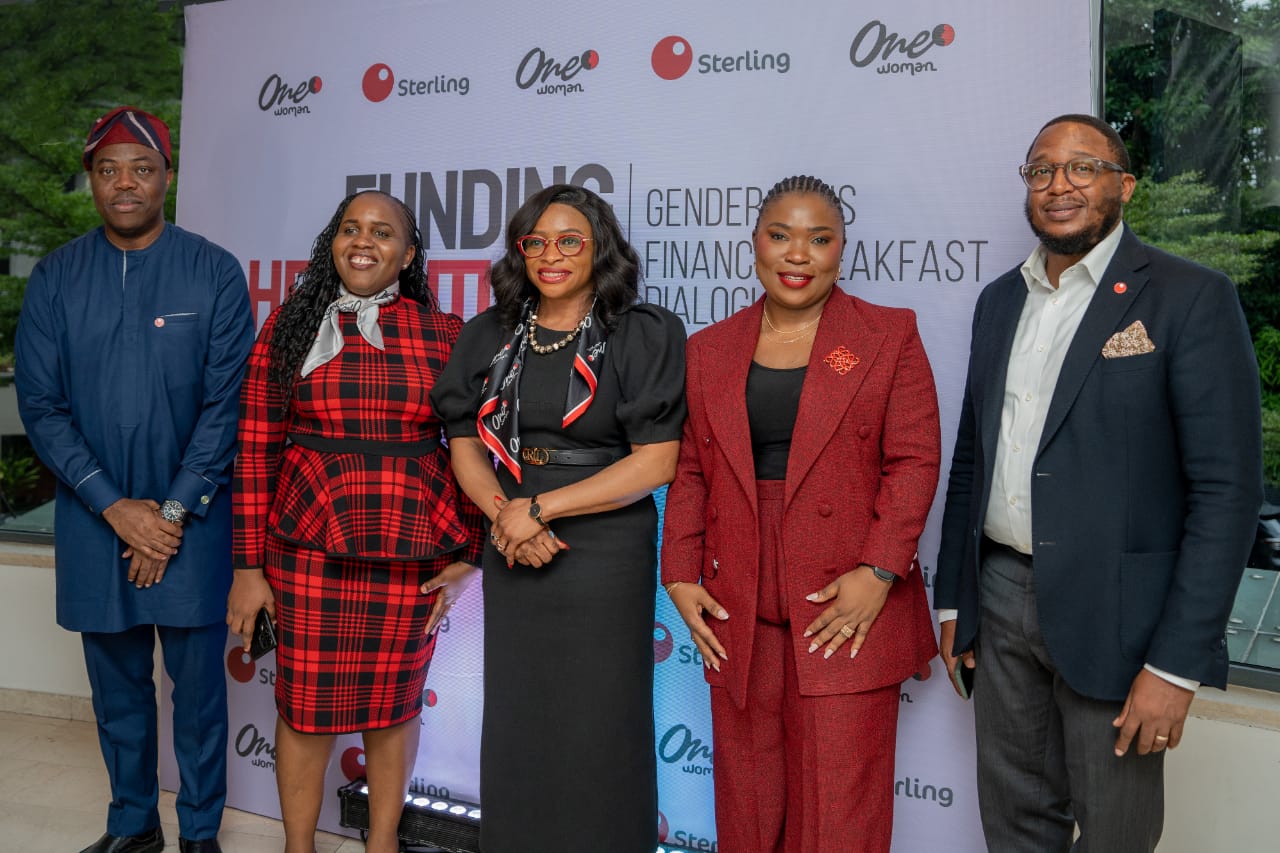
The women-focused initiative by Sterling Bank, OneWoman, is already yielding positive results, especially in promoting financial inclusion and empowering female-led enterprises in Nigeria.
Business Post reports that the programme was created to support women through three key pillars of capital, capacity, and community.
In 2025, according to the Head of the OneWoman Initiative, Ms Ezinne Nwokafor, the initiative gave out N43.9 billion loans to 2,450 female entrepreneurs, trained 6,000 of them, served about 380,000 women across three sectors of career women, women in business and freshers, and their vision 2030 is to give out N500 billion loans to one million women across their three sectors.
She noted that a significant majority of Nigerian women remain excluded from formal credit, with only a small percentage able to access structured financing. Despite improvements in financial inclusion, women continue to face systemic barriers that limit their ability to secure funding.
Ms Nwokafor pointed out that women account for a substantial share of micro, small, and medium enterprises and contribute meaningfully to the economy, yet face a financing gap estimated at $42 billion annually, according to the International Finance Corporation.
She also referenced data showing that more than half of women-led businesses identify access to finance as a major constraint, while rejection rates for loan applications remain significantly higher for women than for men.
According to her, these challenges are often linked to structural issues such as gaps in asset ownership, social norms, and limited access to financial data and visibility.
“Sterling’s OneWoman initiative is positioned to bridge this gap by combining financial solutions, mentorship, capacity building, and community support for women across different stages of their journey,” she said at the Funding Her Future Breakfast Dialogue in Lagos.
The session brought together voices from across sectors for a focused and necessary conversation on how to unlock more inclusive and effective financing pathways for women-led businesses in Nigeria.
On his part, the chief executive of Sterling Bank, Mr Abubakar Suleiman, said, “Women-led businesses need the right support systems, the right networks, and the right ecosystem to grow with confidence and scale with resilience.”
By Modupe Gbadeyanka
Alpha Morgan Bank has reaffirmed its commitment to supporting institutions that drive intellectual growth and national development.
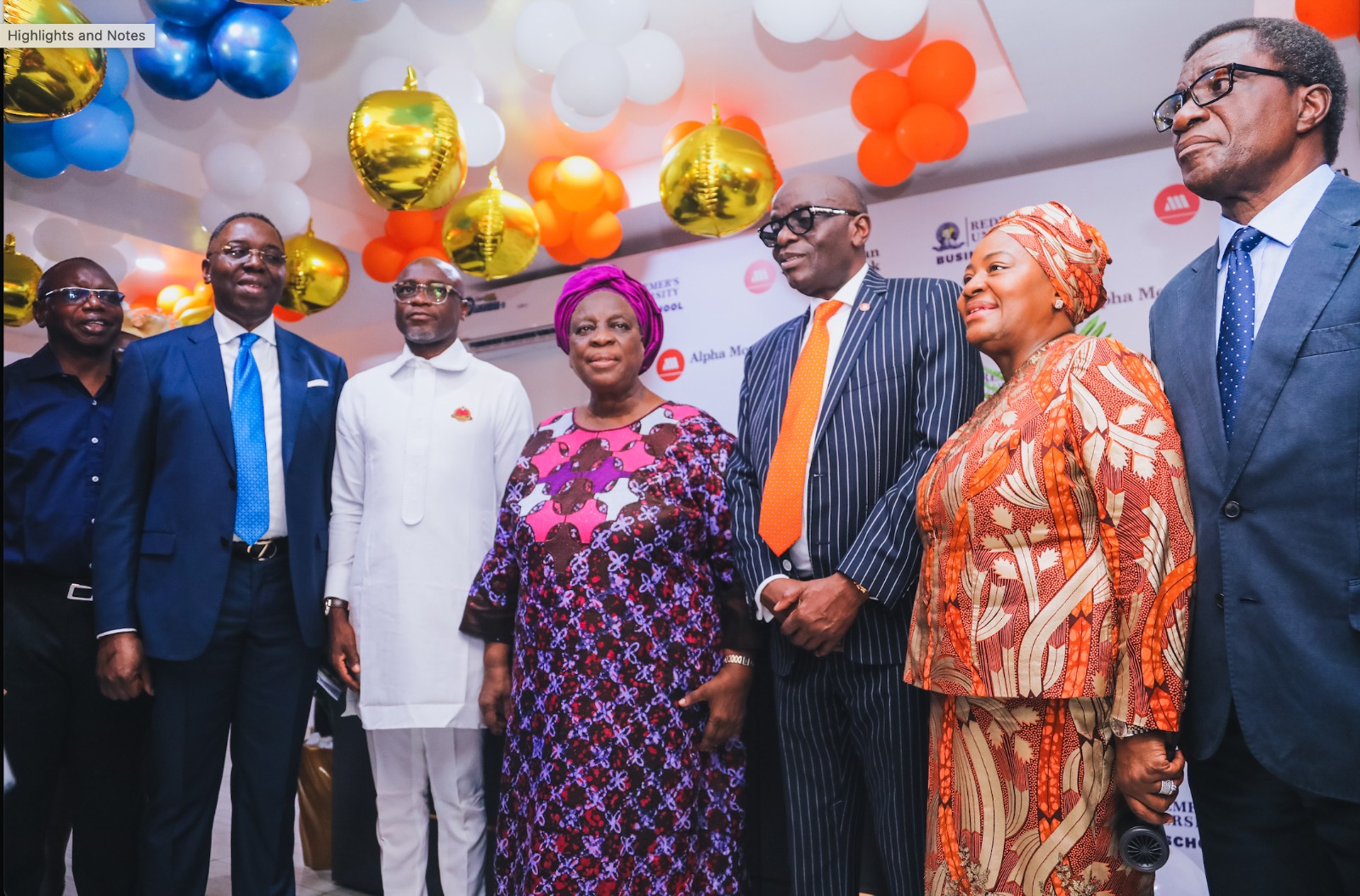
The lender gave this reassurance at the commissioning of the Redeemer’s University Business School by Pastor (Mrs) Folu Adeboye, the wife of the General Overseer of the Redeemed Christian Church of God (RCCG), Pastor Enoch Adeboye.
Speaking at the event, the Managing Director of Alpha Morgan Bank, Mr Ade Buraimo, said the company was proud to be associated with the school, noting its commitment to education and institutional development.
As part of its broader focus on knowledge sharing and thought leadership, Alpha Morgan Bank will host its Economic Review Webinar in May 2026, bringing together experts to share insights on key economic trends and opportunities.
The commissioning of the business school was witnessed by distinguished guests, including the Pro-Chancellor and Chairman of the Governing Council of Redeemers University, Professor Oluwatoyin Ogundipe; the Vice Chancellor, Professor Shadrach Olufemi Akindele; Mrs Bola Obasanjo; and other notable dignitaries.
-
 Feature/OPED6 years ago
Davos was Different this year
-
Travel/Tourism10 years ago
Lagos Seals Western Lodge Hotel In Ikorodu
-

 Showbiz3 years ago
Estranged Lover Releases Videos of Empress Njamah Bathing
-
 Banking8 years ago
Sort Codes of GTBank Branches in Nigeria
-

 Economy3 years ago
Subsidy Removal: CNG at N130 Per Litre Cheaper Than Petrol—IPMAN
-

 Banking3 years ago
Sort Codes of UBA Branches in Nigeria
-

 Banking3 years ago
First Bank Announces Planned Downtime
-

 Sports3 years ago
Highest Paid Nigerian Footballer – How Much Do Nigerian Footballers Earn