Connect with us

Banking

Why We Are Intensifying Support to Small Businesses—FCMB

Published

on

FCMB

First City Monument Bank (www.fcmb.com) has explained that its increased and consistent support to Small and Medium Scale Enterprises (SMEs) is aimed at further empowering them to take the lead in the growth and development of Nigeria’s economy.

According to the bank, this is because SMEs are one of the key drivers of the country’s push for economic prosperity due to their potential to create jobs, reduce poverty, boost production and economic activities.

Towards this end, the lender has urged business owners to keep pace with current and emerging realities in order to make their respective businesses productive and competitive, which will lead to progress for them and the nation.

FCMB made this known in a statement to commemorate this year’s International MSME Day, which holds every June 27.

The annual event provides an opportunity to raise public awareness of the contributions of such businesses towards ensuring sustainable development, poverty alleviation, empowerment and other benefits.

FCMB SMEs

A recent survey conducted by the National Bureau of Statistics (NBS) and the Small and Medium Enterprises Development Agency of Nigeria (SMEDAN) indicates that SMEs in Nigeria accounts for about 96% of registered businesses, employ about 84% of the entire labour force and contribute 48% to the country’s Gross Domestic Product (GDP).

FCMB, as a leading financial powerhouse in Nigeria, has built a strong base and dominated the SMEs segment by consistently offering various cutting-edge solutions through its key pillars of support. These are access to capital, capacity building, advisory services, networking opportunity and technology.

The FCMB SME Advisory Service provides market intelligence and technical assistance support to businesses, access to intervention funds in partnership with Development Financial Institutions (DFIs), as well as provision of credit enhancement facilities to mitigate the credit risk and collateral gaps experienced in lending to SMEs.

Commenting on the significance of the International SMEs Day and commitment of FCMB to businesses, the Group Head, Business Banking of the Bank, Mr George Ogbonnaya, said the Day is very important to the financial institution as a major operator in the global business community.

According to him: “We recognise the role of SMEs as catalysts for sustainable development. SMEs in Nigeria have what it takes to compete at the highest level in the international market, but without the requisite exposure and support, it can be very difficult to succeed. We strongly believe that SMEs need genuine support to play a frontal role in the development of individuals, communities and the country in general, especially as the world battles to overcome the negative effects of COVID-19”.

He added that: “We are also inspired by the fact that our market-leading propositions and support to SMEs have consistently made a real impact on businesses and the economy in general. We will continue to provide the right platform and opportunities to empower our customers to take their businesses to greater heights”.

FCMB SMEs1

Last year, FCMB secured a $50 million loan facility from the International Corporation (IFC), a member of the World Bank Group, to help it expand lending to SMEs to ensure their sustainability following the disruptions caused by the COVID-19 pandemic.

The IFC facility, which is a demonstration of the strong confidence reposed in FCMB by global organisations and the market, has enabled it to support several businesses with trade financing and working capital loans.

So far, the bank has provided over N23 billion loan guarantee support to SMEs with inadequate collateral coverage or those in the start-up stage.

The bank has also taken the lead in digitisation by automating its lending process for SMEs through the FCMB Quick loans platform. Through this channel, the lender has so far disbursed more than N90 billion in loans to entrepreneurs. It processes over 25,000 digital loans with disbursements hitting an average of N7.5 billion in a month.

For female-owned SMEs, FCMB has in place a robust proposition known as SheVentures, which offers enhanced support through access to finance, training and mentoring with the unique benefit of zero-interest-rate for an initial period of three months.

Hundreds of female-owned SMEs have benefitted from zero-interest loans, which range between N500,000.00 and N5 million.

Overall, since 2019, almost 15,000 such businesses have benefitted from various FCMB SheVentures initiatives, in terms of funding and training.


It is also worthy to note that FCMB has been very active in the renewable energy sector through capacity building sessions, access to funding and provision of opportunities for developers and end-users to connect in meaningful, productive ways.

The bank has executed credit enhancement agreements worth N20.9 billion to support renewable and energy-efficient projects. This is meant to improve the supply of energy, enhance cost efficiency and access to clean energy.

In addition, the lender has consistently grown its loan portfolio to mini-grid developers, commercial and industrial energy efficiency providers, and solar home system distributors.

For instance, it is on track to finance projects that would deliver over 10,000 new solar-powered electricity connections to households and businesses across various communities by the end of 2021.
FCMB SMEs2

The bank has also developed a product for Mini-Grid developers, under the World Bank/Rural Electrification Agency (REA) of Nigeria scheme. Through this, businesses in the renewable energy sector can access loans of up to 70% of the project cost without collateral.

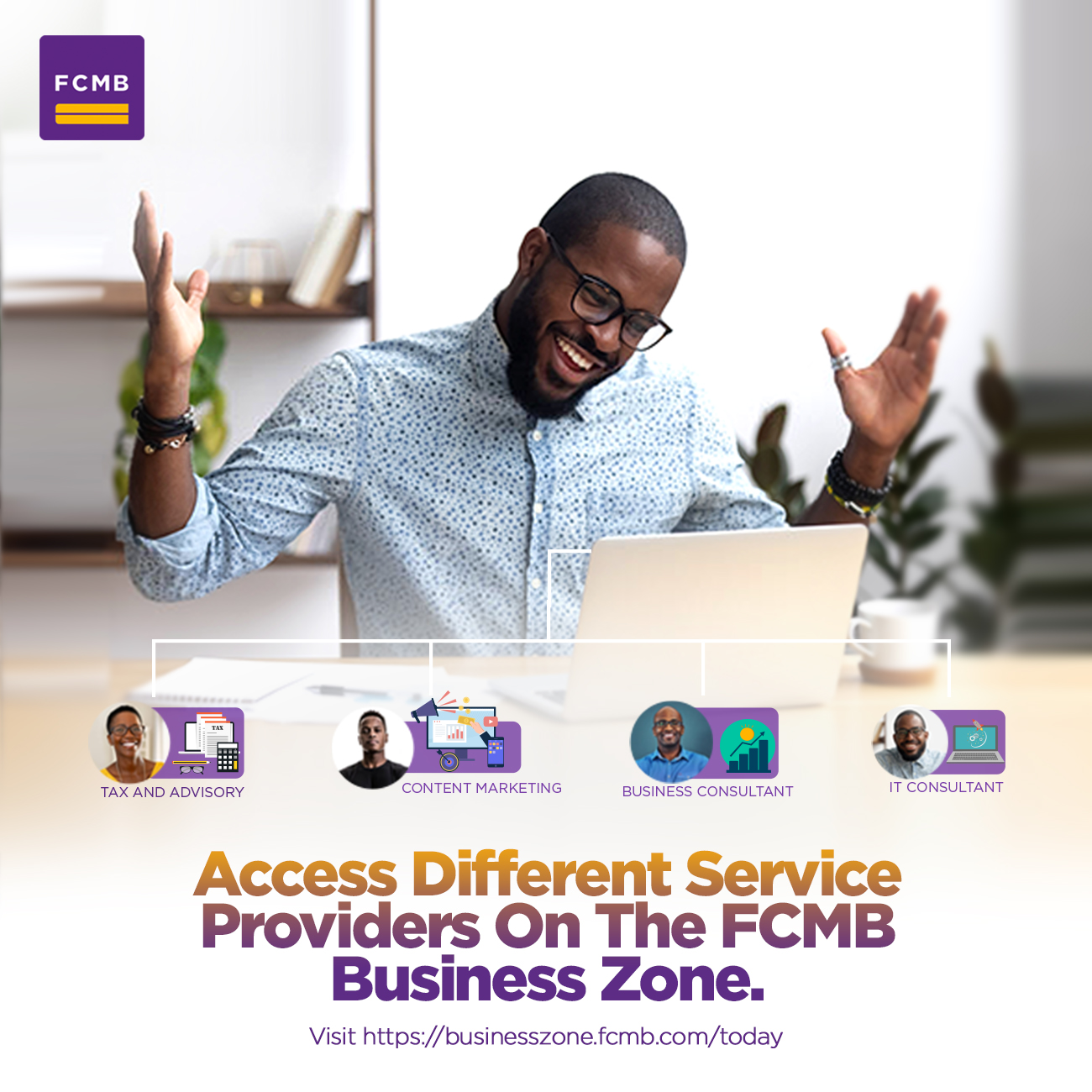
The financial institution set up FCMB Business Zone, an online community where SMEs can interact amongst themselves and utilize the services of various business enablers and professionals for their benefit, including various e-learning programmes.

The bank assists SMEs to leverage technology by providing them with access to Fintech solutions that can aid the growth of their business.

These giant strides, among several others by FCMB have been recognised and applauded by the market as well as other stakeholders. The Bank won the prestigious award of “Best SME Bank in Africa” at the Asian Banker Middle East and Africa Regional Awards held in November 2020.

First City Monument Bank (FCMB) Limited, with over 200 branches spread across Nigeria, is a member of FCMB Group Plc. The Group is one of the leading financial services institutions in Nigeria with subsidiaries that are market leaders in their respective segments.

Having successfully transformed into a retail banking and wealth management-led group, FCMB expects to continue to distinguish itself through innovation and the delivery of exceptional services.

For more information about FCMB, please visit www.fcmb.com.

Dipo Olowookere is a journalist based in Nigeria that has passion for reporting business news stories. At his leisure time, he watches football and supports 3SC of Ibadan. Mr Olowookere can be reached via [email protected]

Banking

Paystack Enters Banking Space With Ladder Microfinance Bank Acquisition

Published

on

Paystack

By Adedapo Adesanya

Nigerian-born payments company, Paystack, has announced its entry into the banking sector with the launch of Paystack Microfinance Bank (Paystack MFB) after the acquisition of Ladder Microfinance Bank.

The bank continues Paystack’s push into consumer products and adds a banking layer to its business-focused payment product, coming ten years after the company was founded with the goal of simplifying payments for businesses using modern technology.

In Nigeria alone, the company says its systems process trillions of Naira every month, supporting more than 300,000 businesses and millions of customers. According to Paystack, this growth highlighted a broader need beyond payments, prompting the decision to build a more comprehensive financial offering.

Paystack MFB will begin lending to businesses before expanding to consumers. It will also offer banking-as-a-service (BaaS) products to companies building financial products and treasury management products.

The company explained that while payments are a critical part of the financial journey, businesses and individuals increasingly require a full financial operating system. This includes the ability to store money securely, move funds easily, gain clarity from financial data, and access tools that support long-term growth. Developers, Paystack added, also need reliable, secure, and compliant infrastructure to build new financial solutions efficiently.

To address these needs, Paystack said it has established Paystack Microfinance Bank as a separate and independent entity from Paystack Payments Limited.

The new microfinance bank operates with its own license, governance structure, and product roadmap, although it will work closely with its sister company.

“By adding Paystack MFB to our family of brands, we’re finding the right balance through combining the rapid innovation of a tech-first platform with the stability of traditional banking,” said Ms Amandine Lobelle, Paystack’s chief operating officer.

Last year, it launched its controversial consumer payments app Zap, and now it is taking a step further with the company securing regulatory backing to become a deposit-taking institution. According to a statement, the bank will be guided by the same principles that shaped Paystack’s early success, including reliability, simplicity, transparency, and trust.

Paystack MFB has begun operations with a small group of early members and plans a gradual rollout to more businesses and individuals. The company also announced the opening of a waitlist for interested users and confirmed it is recruiting a dedicated team to help build its long-term banking infrastructure.

Continue Reading

Banking

N1.3bn Transfer Error: EFCC Recovers N802.4m from Customer for First Bank

Published

on

EFCC First Bank N802.4m transfer error

By Modupe Gbadeyanka

The Economic and Financial Crimes Commission (EFCC) has helped First Bank of Nigeria to recover the sum of N802.4 million from a suspect, Mr Kingsley Eghosa Ojo, who unlawfully took possession of over N1.3 billion belonging to the bank.

The funds were handed over the financial institution by the Benin Zonal Directorate of the anti-money laundering agency on Monday, January 12, 2026, a statement on Tuesday confirmed.

First Bank approached the EFCC for the recovery of the money through a petition, claiming that the suspect received the money into his account after system glitches.

The commission in its investigation; discovered that the suspect, upon the receipt of the money, transferred a good measure of it to the bank accounts of his mother, Mrs Itohan Ojo and that of his sister, Ms Edith Okoro Osaretin, and committed part of the money to completion of his building project and the funding of a new flamboyant lifestyle.

With the recovery of the money from the identified bank accounts, the EFCC handed it over in drafts to First Bank.

While handing over the lender, the acting Director for the Directorate, Mr Sa’ad Hanafi Sa’ad, stressed his organisation would continue to discharge its mandate effectively in the overall interests of society.

“The EFCC Establishment Act empowers us to trace and recover proceeds of crime and restitute the victim. In this case, First Bank was the victim and that is exactly what we have done.

“We will continue to discharge our duties to ensure that fraudsters do not benefit from fraud and that economic and financial crimes are nipped in the bud,” he said.

In his response, the Business Manager for First Bank in Benin City, Mr Olalere Sunday Ajayi, who received the drafts on behalf of the bank, commended the EFCC for the swiftness and the professionalism it brought to bear in the handling of the matter and expressed the bank’s gratitude to the commission.

He described the EFCC as one of Nigeria’s most effective and reliable institutions.

Meanwhile, Mr Kingsley and all other suspects in the matter have been charged to court for stealing by the EFCC.

Continue Reading

Banking

Why Technology-Enabled Banking is a Multiplier for Nigeria’s 2036 Goal

Published

on

Henry Obiekea FairMoney

By Henry Obiekea

Nigeria is at a defining moment in 2026. After several years of bold macroeconomic adjustments, including foreign exchange unification and structural reforms, the country is moving from stabilization into expansion. With the Central Bank of Nigeria restoring confidence in the Naira and foreign reserves reaching a five-year high of over 45 billion dollars, the next phase of growth will be shaped by how effectively Nigerians can participate in the formal financial system.

Technology-enabled banking is playing a critical role in this transition. Commercial banks remain the backbone of the system, providing balance sheet strength, regulatory depth, and long-term capital essential for national development. Yet in a country of over 220 million people, physical access alone cannot deliver financial inclusion at scale.

Mobile-first and digitally delivered financial services are bridging this gap. By extending regulated banking beyond physical locations into everyday devices, licensed microfinance banks and other regulated institutions are bringing millions of Nigerians into the formal economy. This approach helped push formal financial inclusion to over 64 percent in 2025, ensuring the last mile is no longer excluded.

Achieving the Federal Government’s target of a one trillion dollar GDP by 2036 requires efficient capital flow. In the first quarter of 2025 alone, Nigeria recorded over 295 trillion naira in electronic payment transactions. Faster, secure financial infrastructure supports modern commerce, strengthens trade, and improves overall economic productivity.

Micro, small, and medium-scale enterprises, which contribute nearly 48 percent of GDP, are central to this growth. Technology-driven banking models are helping to close long-standing credit gaps. By responsibly using alternative data to assess risk, small-ticket working capital loans provide the “pocket capital” businesses need to grow. This builds a pipeline of enterprises that can mature into larger corporate clients within the broader banking ecosystem.

Digitally delivered financial services also strengthen public revenue mobilisation. Increased transaction transparency supports a broader tax net and contributes directly to government revenues through stamp duty, reinforcing fiscal sustainability.

This evolution is supported by a maturing regulatory environment. The Central Bank of Nigeria’s Open Banking framework, rolling out in phases from early 2026, ensures that all regulated institutions operate under consistent oversight. Secure data sharing standards mean customers’ financial histories can move with them across institutions, strengthening trust and accountability.

At FairMoney Microfinance Bank, we see this framework as a social contract. Knowing that deposits are protected by NDIC insurance and supported by clear dispute resolution mechanisms gives customers the confidence to participate actively in the economy.

The future of Nigerian banking is defined by structural harmony. Traditional banks provide depth and stability, while technology-enabled institutions provide reach, speed, and accessibility. Together, they turn financial access into economic resilience.

By working in alignment, we can ensure every Nigerian, from the Lagos professional to the rural trader, is equipped to contribute meaningfully to our shared one trillion dollar future.

Henry Obiekea is the Managing Director of FairMoney Microfinance Bank

Continue Reading

Trending