Connect with us

Banking

Why we Can’t Pay Dividend to Shareholders Now–Ecobank

Published

on

By Modupe Gbadeyanka

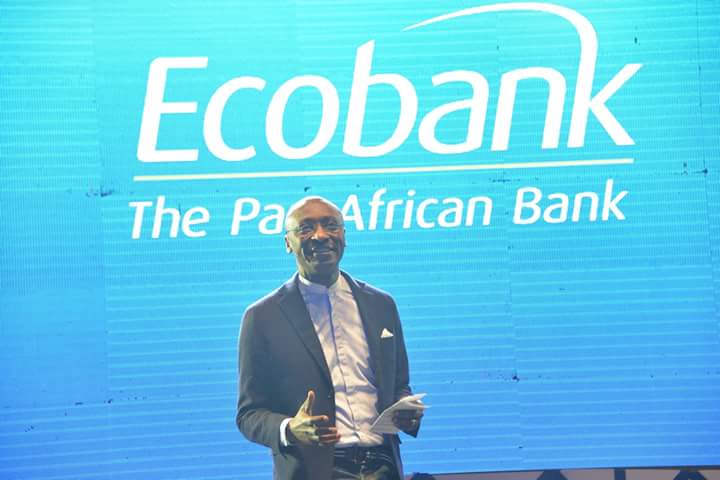
Chairman of Ecobank Transnational Incorporated (ETI), parent company of the Ecobank Group, Mr Emmanuel Ikazoboh, has explained why the board of directors of the company did not propose the payment of dividend to shareholders in the 2018 business year.

Speaking at the Annual General Meeting (AGM) of the lender in Togo, the Chairman said noted that the board decided to halt the payment of dividend as a result of the impending regulatory capital requirements of the group and the need to build the holding company’s liquidity buffers.

According to him, the decision was in the best interest of the company, assuring shareholders to expect reward from the bank as a soon as the financial institution has a strong balance sheet and solid capital base.

“We assure you that while this was a hard decision, it was taken in the best interest of the company. We want to make sure we attend to the capital needs of all our subsidiaries before can start paying dividends,” the Chairman said at the meeting.

Mr Ikazoboh further assured shareholders of the company that efforts are being intensified to sustain the positive performance recorded by the financial institution going forward.

After posting a loss in 2016, Ecobank bounced back into profit in 2017 and consolidated on that performance in 2018 by growing its profit after tax by 46 percent to N136 billion.

The Chairman said the results reflected the continued discipline in cost management, commitment to risk management and the ongoing clean-up of the bank’s credit portfolio, saying the efficiency or cost-to-income ratio has steadily improved to 61.5 percent in 2018 despite tepid revenue growth.

He said: “Our capital levels remain adequate. The Group’s Base II/III Capital Adequacy Ratio of 13.6 percent is above the regulatory limit and each of our subsidiaries is meeting its capital commitments as well.

“However, your board believes that in the near-term, to meet our planned growth initiatives, and to ensure that we win in key countries such as Nigeria and Kenya, we will need to boost capital levels through a combination of fresh equity injections and the reinvestments of profits.”

Also speaking, the Group Chief Executive Officer of the bank, Mr Ade Ayeyemi, described the company’s financial results in 2018 as remarkable in many ways, saying it reflects the meaningful and significant progress they made in the execution of “our Roadmap to Leadership strategy”.

“It also demonstrates the commitment, hard work and contribution of Ecobankers towards ensuring our sustainable foundation for growth,” Mr Ayeyemi said.


Modupe Gbadeyanka is a fast-rising journalist with Business Post Nigeria. Her passion for journalism is amazing. She is willing to learn more with a view to becoming one of the best pen-pushers in Nigeria. Her role models are the duo of CNN's Richard Quest and Christiane Amanpour.

Click to comment

Leave a Reply

Your email address will not be published. Required fields are marked *

Auto

Bank Introduces New Vehicle Financing Initiative With 10% Deposit

Published

on

Access Bank New Vehicle Financing Initiative

By Aduragbemi Omiyale

A new vehicle financing initiative designed to allow funding support of up to 90 per cent of a vehicle’s value and repayment tenures of more than four years has been introduced by Access Bank Plc.

This is part of the lender’s vehicle asset financing programme aimed at expanding access to vehicle ownership and mobility services across the country.

Application for the service is through a digital process, the bank’s Executive Director of Corporate and Investment Banking Division, Ms Iyabo Soji-Okusanya, disclosed.

Customers can access vehicles from top distributors like CIG Motors, Mikano Motors, Kewalram Motors, Stallion Motors, Elizade JAC, CFAO and other mobility dealers. They can purchase both new and certified pre-owned vehicles through a single process, she added.

“You apply online, and you go home with the keys to your car already in your pocket,” Ms Soji-Okusanya stated, noting that for businesses, the initiative will provide access to vehicles needed for operations while helping dealers improve inventory turnover and unlock capital tied down in unsold stock.

While explaining how the process works, the Group Head of Access Bank Mobility, Mr Ishmael Nwokocha, said the bank spent the last six months engaging dealers and other stakeholders in the automotive value chain before rolling out the programme.

According to him, Nigeria records annual vehicle sales of about 100,000 units, with only about 10 per cent being brand-new vehicles, while the remaining 90 per cent are pre-owned vehicles, adding that rising vehicle prices have significantly reduced affordability for many Nigerians.

“What are we offering today? Come with 10 per cent equity contribution, and we’ll finance the 90 per cent,” Mr Nwokocha said, noting that customers would also have access to insurance, after-sales services, and a digital loan application process that allows applicants, dealers and the bank to monitor progress.

He said the initiative extends beyond individual consumers to corporate organisations, schools, hospitals and other businesses requiring vehicle fleets, revealing plans to expand financing access to operators in the ride-hailing and transport sectors that are currently outside the formal banking system.

On her part, the Group Head of Product and Segment at Access Bank, Ms Chizoba Iheme, said the bank had put measures in place to support customers who encounter financial difficulties during the repayment period, explaining that affected borrowers could seek loan restructuring rather than risk losing their vehicles immediately.

“So long as the vehicle is still valid, it’s still running on the road, we can look at your finance, and then we’ll repackage your loan,” she said, also clarifying that customers are not required to maintain loans for the full approved tenor and can repay outstanding obligations earlier if they choose.

On the scope of the programme, she said financing is available to individuals, corporates and small businesses seeking vehicles for commercial or operational use.

The Managing Director of CIG Motors, Ms Eniola Olutimilehin, whose company is one of the participating dealers, said the partnership would help connect vehicle buyers with financing while supporting mobility and business operations.

She said the collaboration is expected to improve access to vehicles for individuals and entrepreneurs requiring transportation assets for personal and commercial activities.

Continue Reading

Banking

Paystack Bets on AI-Powered Commerce with New Index Platform

Published

on

Paystack Index

By Adedapo Adesanya

African payments infrastructure giant, Paystack, has taken an early step into AI-driven commerce with the launch of Paystack Index, a platform that allows users to complete transactions through AI assistants.

The move signals the company’s ambition to power payments in an emerging era where chatbots could become a primary channel for shopping and financial services. It makes Paystack among the first African fintechs attempting to integrate payments directly into AI workflows.

In a statement on Thursday, the payments giant announced the experimental product developed by Paystack with product support from TSG Labs, the venture studio and emerging technology arm of The Stack Group.

Paystack Index builds on existing Paystack products, such as Paystack Checkout, by giving Zap users in Nigeria a new way to check out with supported Paystack merchants via AI agents.

The product is launching in early access as Paystack learns how people want to use AI agents to get things done, starting with familiar tasks like buying airtime and mobile data, funding wallets, sending money, and paying for food.

Paystack Index is live in Nigeria and currently works with supported AI clients, including Claude, ChatGPT, and OpenClaw. At launch, it supports airtime and mobile data purchases across major Nigerian networks, transfers via Zap, and food ordering through Chowdeck.

With Paystack Index, users can ask a supported AI agent to complete a task. Index interprets the request, routes it to the right provider or supported Paystack merchant, processes the transaction through Zap and Paystack’s payment infrastructure, and helps the user complete checkout securely within the AI experience.

Users remain in control of what they authorise. Index only acts on requests that users send through their chosen AI agent and within the permissions and limits they set. Index does not store card numbers, CVVs, PINs, or bank account credentials, and transactions are processed through Paystack’s secure payment infrastructure.

“Paystack has always focused on helping businesses get paid safely and reliably, wherever their customers are,” said Mr Shola Akinlade, CEO of Paystack. “As AI agents become a more common way for people to search, decide, and take action, we think checkout has to evolve too. Paystack Index is an early experiment in extending Paystack’s checkout infrastructure into AI experiences, starting with users in Nigeria and a few supported merchants and services.”

“The goal is simple: help users complete everyday transactions more easily, while keeping authorisation, permissions, and payment processing on trusted Paystack rails,” he added.

Paystack said since the product is not fully due for general rollout, it will continue to test how users interact with AI agents for commerce, how merchants can safely participate in AI-led checkout experiences, and what infrastructure will be needed as this behaviour evolves.

Paystack Index is now live in Nigeria in early access, with more features, supported merchants, billers, and African markets coming soon. Users in Nigeria can get started with Paystack Index at paystack.com/index.

Continue Reading

Banking

Zenith Bank Opens Branch in Osubi Community in Delta

Published

on

Zenith Bank Osubi branch

By Aduragbemi Omiyale

To deepen financial inclusion and bring financial services to underserved persons in the country, Zenith Bank Plc has opened a new branch in Osubi in the Okpe Local Government Area of Delta State.

This has made Zenith Bank the first commercial bank to establish a presence in the Osubi community. The branch is the 19th of Zenith Bank in the Niger Delta state.

The chief executive of Zenith Bank, Ms Adaora Umeoji, during the commissioning of the branch on Wednesday, June 24, 2026, thanked Governor Sheriff Oborevwori of Delta State for supporting business operators.

She described the Osubi branch as a milestone in Zenith Bank’s enduring relationship with the state, reiterating the company’s commitment to serving underserved communities and to empowering individuals, businesses, women entrepreneurs, and SMEs through innovative banking solutions, access to finance, and capacity-building initiatives.

The banker expressed optimism that the new branch would serve as a catalyst for economic activity in Osubi and its surrounding communities, supporting the broader development of Delta State and Nigeria at large.

“We are deeply grateful to Governor Sheriff Oborevwori for his unwavering support and partnership, and for finding time to personally commission the branch today.

“His generous donation of the land on which this branch is built is a testament to his administration’s commitment to fostering private sector investment and creating an enabling environment for businesses to thrive.

“Since assuming office, the Governor has driven significant infrastructure and socio-economic development across the state, and Zenith Bank is proud to contribute to that progress through this new branch in Osubi,” Ms Umeoji stated.

In his remarks, Mr Oborevwori described the new branch as “a clear vote of confidence in the economic potential of our state, pointing out that it shows that the investments we have made in infrastructure, economic development, and ease of doing business are producing tangible results.

“When a leading financial institution such as Zenith Bank expands its presence in Delta State, it sends a powerful message that Delta State is open for business and ready for greater investment.”

He also underscored the branch’s significance to the host community, noting that “this branch is the only bank in the whole of Okpe Local Government as it is today. The significance of this bank to our people cannot be overemphasised, because of the impact it will have on the economy of this local government.”

Continue Reading

Trending