Connect with us

Banking

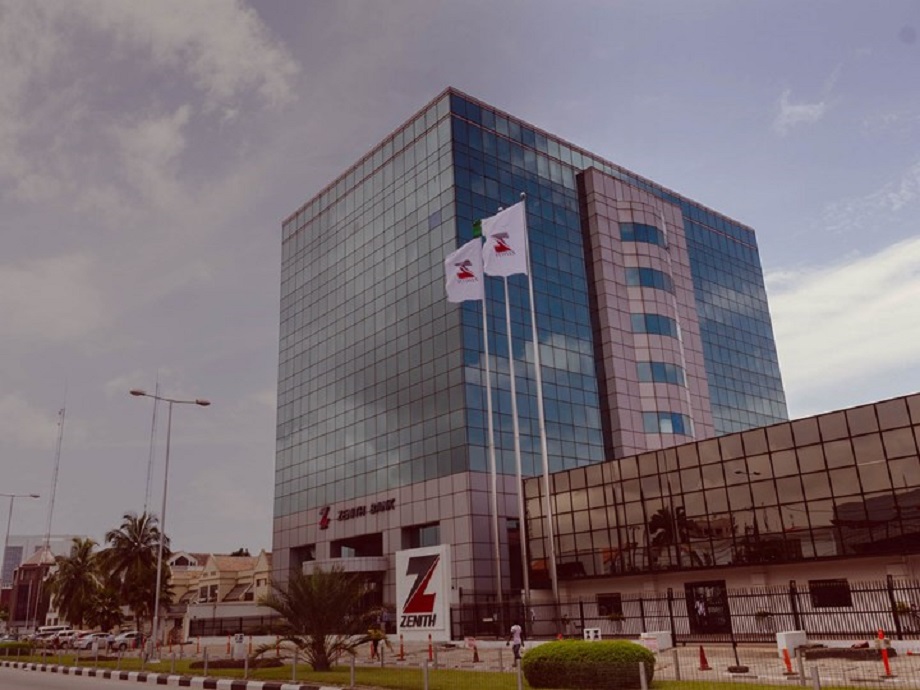
Zenith Bank Staff Steals N3m from Customers’ Accounts

Published

on

Zenith Bank profit

By Dipo Olowookere

An employee of Zenith Bank Plc in Lagos simply identified as Bunmi has been accused of stealing N3 million from accounts of customers with the bank.

The suspect, who has now been declared wanted by the police, allegedly works with a syndicate, who supplies him with account details of other unsuspecting customers, where the stolen money are transferred into.

Spokesperson of the Nigerian Police Force in Zone 2, Lagos, CSP Dolapo Badmos, disclosed that accomplices of the main suspect, Bunmi, have been arrested. She gave the names of those arrested as Babalola Akinyele, aka Olumba; and Adeshina Adenekan, aka Oluwo Ake.

She noted that the two men tricked the account owners into releasing the numbers, adding that the duo shared the proceeds of the fraud with the prime suspect, who was at large.

Akinyele, 35, an indigene of Ondo State who claimed to be working for a bet company, said he met Bunmi at a car wash.

“Bunmi helped me to unblock my ATM card. I did not know that he worked in a bank until then. He later said I should get some account numbers for him and I called my friend, Adenekan, to assist me, which he did. Bunmi simply said he wanted to transfer money into the accounts.

“I don’t know how the man used to do it, but whenever he transferred money into the accounts, he would call us and we would use ATM cards to withdraw the money. He took 70 per cent, while we shared 30 per cent.

“Bunmi later called me and said he had left the bank and I should throw away the SIM card we had been using to communicate,” the apprehended accomplice said.

The second suspect, Adenekan, a land agent, said he had tricked a woman into providing the account numbers used for the fraud.

He said, “I met Akinyele in Lagos in November 2017. He called me in December and said he needed some account numbers. I then approached a female customer of mine, telling her I needed three account numbers for my land business. I told her someone wanted to pay me and the money could not be paid into a single account. After she was arrested, she brought the police to me. I then led the cops to Adenekan.”

According to a report by Punch, the fraud was uncovered after owners of the accounts complained about their disappearing funds, which made the bank to institute a probe.

The bank management reportedly blocked the accounts into which the funds were transferred.

Owners of the blocked accounts, who were reportedly unaware that their accounts were being used for fraud, were said to have reported at their various branches and complained of the development.

The bank management was said to have handed them over to the police.

“Between November 2017 and January 2018, the Zone 2 Police Command, through its Zonal Intervention Squad, arrested two suspects who were members of a fraud syndicate. They specialised in hacking into bank accounts.

“One of the suspects, Babalola Akinyele, operated with one Bunmi, a worker at Zenith Bank. Bunmi’s role is to hack into customers’ accounts and transfer money into different bank accounts supplied by Adeshina Adenekan, who thereafter withdraws the money with different Automated Teller Machine cards and returns same to the syndicate.

“Akinyele and Adenekan receive 10 per cent each of the proceeds from Bunmi, the arrowhead of the fraud. They withdrew the money with ATM cards because they did not want to enter into banking halls and be caught. So far, N3m has been traced to them.

“We urge members of the public to be careful and not disclose their Bank Verification Numbers and phone numbers to strangers because these are the things they use to access funds. The case is under investigation and effort is on to arrest the bank worker, who is at large,” CSP Badmos said.

Dipo Olowookere is a journalist based in Nigeria that has passion for reporting business news stories. At his leisure time, he watches football and supports 3SC of Ibadan. Mr Olowookere can be reached via [email protected]

Click to comment

Leave a Reply

Your email address will not be published. Required fields are marked *

Banking

Zenith Bank Launches Côte d’Ivoire Subsidiary

Published

on

zenith bank plc

By Aduragbemi Omiyale

A Côte d’Ivoire subsidiary of Zenith Bank Plc will be launched on Wednesday, April 29, 2026, after obtaining an operating licence in December 2025 from the country’s Ministry of Finance and Budget.

The country’s subsidiary will operate from its headquarters at SCI Wall Street, Avenue Noguès, Plateau, Abidjan.

Zenith Bank is in Côte d’Ivoire to deepen its presence in Francophone West Africa and strengthen financial intermediation within the West African Economic and Monetary Union (WAEMU).

Positioned as a gateway for cross-border trade and investment, Zenith Bank Côte d’Ivoire will focus on corporate banking, trade finance, local and offshore banking services, and structured financial solutions tailored to businesses operating across Africa and internationally.

Expected at the official opening ceremony tomorrow are senior government officials and regulators from Nigeria and Côte d’Ivoire, continental business leaders, and members of the diplomatic community, highlighting the strategic economic ties and investment opportunities between the two markets.

The Côte d’Ivoire launch forms part of Zenith Bank’s broader continental growth strategy. In addition to the Anglophone countries where it currently operates, and in line with the expansion into the Francophone market, the bank has commenced its entry process into the CEMAC (Central African Economic and Monetary Community) region, with Cameroon as the focal point.

It was gathered that the new subsidiary will be headed by Mr Cédric Tano, a seasoned banking executive with over two decades of experience.

“We are proud to establish Zenith Bank’s presence in Côte d’Ivoire at a time of strong economic growth in the country and increasing regional integration.

“Our focus is to showcase the Zenith brand as a customer-centric institution that combines global best practices with deep local insight.

“We are well-positioned to support businesses with innovative financing solutions, facilitate cross-border trade, and contribute meaningfully to the growth of the Ivorian economy and the wider WAEMU region,” Mr Tano commented.

Also speaking, the chief executive of Zenith Bank, Ms Adaora Umeoji, said, “From the very beginning, our founder and chairman, Mr Jim Ovia, set out to build a truly global brand with a strong presence across Africa and key international markets.

“The launch of Zenith Bank Côte d’Ivoire is a bold step in realising that vision; opening a strategic corridor into Francophone West Africa and reinforcing our commitment to facilitating trade, investment, and enterprise growth across the continent.

“As we continue to expand thoughtfully and strategically, we remain focused on delivering world-class banking solutions that connect African businesses to global opportunities.”

Continue Reading

Banking

Ecobank, DHL Organise Programme to Unlock Fresh Possibilities for SMEs

Published

on

Ecobank DHL Fresh Possibilities for SMEs

By Modupe Gbadeyanka

Some entrepreneurs across diverse sectors recently completed a three‑week intensive capacity‑building programme organised by Ecobank Nigeria, in partnership with DHL.

The event was put together to equip Small and Medium Enterprises (SMEs) with the skills, tools, and insights required to scale beyond local markets and compete globally.

The focus was on critical growth enablers such as cross‑border trade, e‑commerce opportunities, logistics, customs procedures, and international shipping—key pillars for sustainable expansion in today’s increasingly connected global marketplace.

In one of the sessions, titled Trade and Grow Beyond Borders: Welcome to E‑commerce, the Relationship Channel Manager for DHL Customers/Global Express, Mr Charles Eke, underscored logistics as a critical success factor for SMEs, identifying key challenges such as access to finance, markets, and efficient logistics.

He also provided practical guidance on customs processes, international shipping, documentation, and shipment tracking, while emphasising the immense opportunities e‑commerce presents for cross‑border expansion.

According to him, international markets often offer greater growth potential than domestic markets for well‑positioned SMEs.

The Head of SMEs, Partnerships and Collaborations at Ecobank Nigeria, Mrs Omoboye Odu, described the programme as a catalyst for meaningful growth and mindset change.

“Over the past three weeks, something truly powerful has taken place. This programme has gone far beyond knowledge sharing—it has inspired new thinking and unlocked fresh possibilities for our SMEs. The message is clear: no business should be limited by geography,” she said.

Mrs Odu reiterated Ecobank’s deliberate focus on SMEs as key drivers of Africa’s economic development, saying, “Beyond building capacity, we are intentionally opening doors by connecting businesses to new markets and opportunities. With our presence in over 30 African countries, coupled with integrated payment, trade finance, and e‑commerce solutions, Ecobank is uniquely positioned as the Pan‑African bank enabling seamless cross‑border trade.”

One of the participants, Ms Dolapo Fatoki of Debsfray, a Lagos-based fashion brand, described the initiative as impactful, practical, and transformative.

“The sessions were highly informative. I gained a deeper understanding of documentation and pricing, two areas that previously posed major challenges for me. The collaboration between DHL and Ecobank has been exceptional and truly beneficial,” she noted.

Similarly, the Creative Director of FC Accessories, Mr Tosin Olukuade, described the programme as “an eye‑opener,” adding that it reshaped his approach to business growth.

“The insights I gained will help me scale my business exponentially. I am grateful to Ecobank and DHL for creating this opportunity,” he said.

Reflecting on the programme’s digital focus, the chief executive of Needle Point, Mrs Theresa Onwuka, highlighted how the sessions broadened her outlook on growth and innovation.

“The class was so good—it got my mind thinking of possibilities. My main takeaway is clear: digitalisation is the way forward,” she remarked.

Continue Reading

Banking

Banks to Submit Monthly Reports on Failed Digital Transactions

Published

on

cbn gov. banks recapitalisation

By Adedapo Adesanya

The Central Bank of Nigeria (CBN) has directed banks and other financial institutions to submit monthly reports on failed electronic transactions across digital channels, as part of new compliance measures introduced in its revised Guide to Charges.

The directive was contained in a circular titled Exposure Draft of the Guide to Charges by Banks and Other Financial Institutions in Nigeria, 2026 (The Guide) and signed by the Director of the Financial Policy and Regulation Department, Mrs Rita Sike.

According to the apex bank, Chief Compliance Officers and Heads of Information Technology in financial institutions are required to jointly render electronic reports of all failed transactions conducted via Automated Teller Machines, Point of Sale terminals, mobile channels, web platforms, and other electronic systems.

The circular read, “The Chief Compliance Officer and Head Information Technology shall jointly render monthly reports electronically, of all failed electronic transactions via various e-channels (ATM, PoS, mobile, web/internet and related channels) that originate or terminate in the institution.”

The reports are to be submitted to designated CBN email addresses, reinforcing the regulator’s push for stricter monitoring of service failures across the banking system.

Beyond the reporting requirement, the CBN also introduced broader accountability measures, placing responsibility on top management of financial institutions to ensure strict adherence to the new guide.

Executive Compliance Officers or Managing Directors are mandated to cascade compliance expectations across all business units and ensure that banking systems are configured to apply only approved charges.

Specifically, the regulator directed that Heads of Information Technology must ensure that “all systems configurations only capture and allow posting of charges as permitted and described in this Guide,” while Chief Compliance Officers are to monitor strict compliance with the framework.

The revised guide, effective May 1, 2026, replaces the 2020 version and provides a comprehensive framework for charges across banking and other financial services.

The CBN explained that the review was aimed at promoting a safe and sound financial system, encouraging innovation, and expanding financial inclusion through lower tariffs on micropayments and transactions.

It added that the revised framework would strengthen oversight and accountability, encourage the adoption of electronic payment channels, and accommodate new industry participants.

Business Post also reported that the regulator has raised ATM card fees by 50 per cent to N1,500 and scrapped the monthly maintenance charge.

Continue Reading

Trending