

Brands/Products
LG Targets Technologies to Help Attain Sustainable Goals

By Adedapo Adesanya
As part of efforts to achieve the United Nations Sustainable Development Goals (SDGs) by 2030, global electronic giant, LG Electronics, has pledged to launch technologies that will drive the attainment of this.
The SDGs provide a powerful aspiration for improving the world, laying out where they collectively need to go and how to get there.
LG in its own little way said it has worked with the UN and other notable non-government organizations across the world to support the SDGs and reiterated its commitment to better the life for all through its products and services.
Its commitment to the planet is evident in every one of its core technologies.
According to Mr Il Hwan Lee, President, LG Electronics, Middle East & Africa Region, LG is committed to the triple bottom line of people, planet and profit.
“As a responsible global corporate citizen, LG Electronics is set to contributing to the achievement of the SDGs as the main goal of its social contribution activities. Our focus is on developing new innovations across Sustainability for the Community.
“We are committed to providing electronic products that help customers live better. To support this, we have developed a mid to long term plan themed: LGE & SDGs which we are working towards”, he said.
“In the last couple of years, LG has introduced a wide range of products across the areas of TVs & Home Entertainment, Kitchen, Laundry, Computers, Air Conditioning & Solar that fit into the technologies of the future with the SDGs at heart. Some of such that promote eco-friendly society include LG DUAL Inverter, LG NeON 2, LG WashTower and the CordZero M9 robot vacuum cleaner.
“The revolutionary DUAL Inverter Compressor technology inside LG’s air conditioners never stops adjusting speed for the perfect temperatures without wasting electricity thanks to its lower speed. The compressor reduces electricity usage by 70 per cent despite cooling rooms 40 per cent faster than conventional models.
“When it comes to TVs, LG’s OLED self-lit technology ticks the most environmentally-friendly boxes. They have been recognized as Eco Products by SGS, especially its OLED models with no backlight meaning fewer plastic parts, less indoor air pollution and 50 per cent less VOC emissions. OLED has a comparatively high recycle rate and doesn’t contain hazardous substances like cadmium and indium phosphide.
“LG OLED TVs are easy on the eyes and have been engineered to cause minimal eye strain via low blue light modes and zero flickering, with certification from TÜ V Rheinland of Germany and UL in the United States.
“This year, LG Soundbars are the first of their kind to receive SGS Eco Product Certification. Many LG soundbars use polyester resin sourced from used plastic bottles or recycled plastics, one using jersey fabric sourced from recycled PET bottles – so for every unit produced, almost seven plastic bottles are saved from the hazardous landfill.
“Even the packaging is greener, more recycled moulded pulp and less EPS plastic and foam are used, and the new L-shaped packaging lets more units be transported at once for fewer trucks on the road,” he said.
Recently, LG unveiled Net Zero homes to demonstrate innovations that reduce energy consumption, increase efficiency and enhance daily life. The New American Home and The New American Remodel showcased the wonders of an LG-solar-powered house filled with energy-efficient consumer electronics, appliances and air solutions.
Key to the homes’ environmental sustainability and appealing designs are rooftop installations of high-efficiency solar modules from residential renewable energy leader LG Business Solutions. Forty LG NeON 2 60-cell modules help power each home to support their Net Zero designs. These popular high-efficiency modules generate more power from the same amount of sunlight than lower-efficiency modules of the same size while blending in unobtrusively to the look and feel of the home’s design.
LG Electronics a few years ago set a new direction for its social contribution efforts by reflecting the opinions of the management and key stakeholders, and identified five of the 17 SDGs as its priority. LG Electronics continuously develops and implements initiatives that contribute to achieving these 5 SDGs, and monitors the progress.
The company’s SDGs plan was categorised into three, which are the promotion of an intelligent lifestyle, creation of a better society and realization of carbon and circular economy.
LG has long been committed to projects that benefit the environment. LG Carbon Fund was established in 2017 to support the development of GHGreducing technologies and solutions through the virtual cycle concept wherein all profits from LG Carbon Fund investments are funnelled back into the effort to reduce greenhouse gases.
LG is also an active participant in the Clean Development Mechanism (CDM) project, which seeks to curb harmful emissions through investing technology and capital in developing countries.
Towards the realization of zero-carbon and circular economy, the electronic giant has reduced carbon emissions in its production level by 150,000 tons by 2020 compared to the base year 2008 (i.e 1 million tons in cumulative reductions).
In its mid to long term plan, LG wants to achieve 80 per cent Green 3 Star Products by self-assessment of environmentally friendly products and achieve a 95 per cent recycle rate of waste from production sites by 2030.
To establish a sustainable supply chain, the company plans to use 100 per cent RMAP conformant smelters by the end of this year, assess the CSR risks of all its tier 1 suppliers and expand the scope to include its tier 2 and 3 this year as well. Its plan is to establish the highest level of safety culture in the manufacturing industry (independent stage) by 2030.
Achieve 100 per cent low risk for all the production sites in CSR self-assessment; improve work efficiency and the level of employee satisfaction by achieving work and life balance through fundamental changes in work style.





By Aduragbemi Omiyale
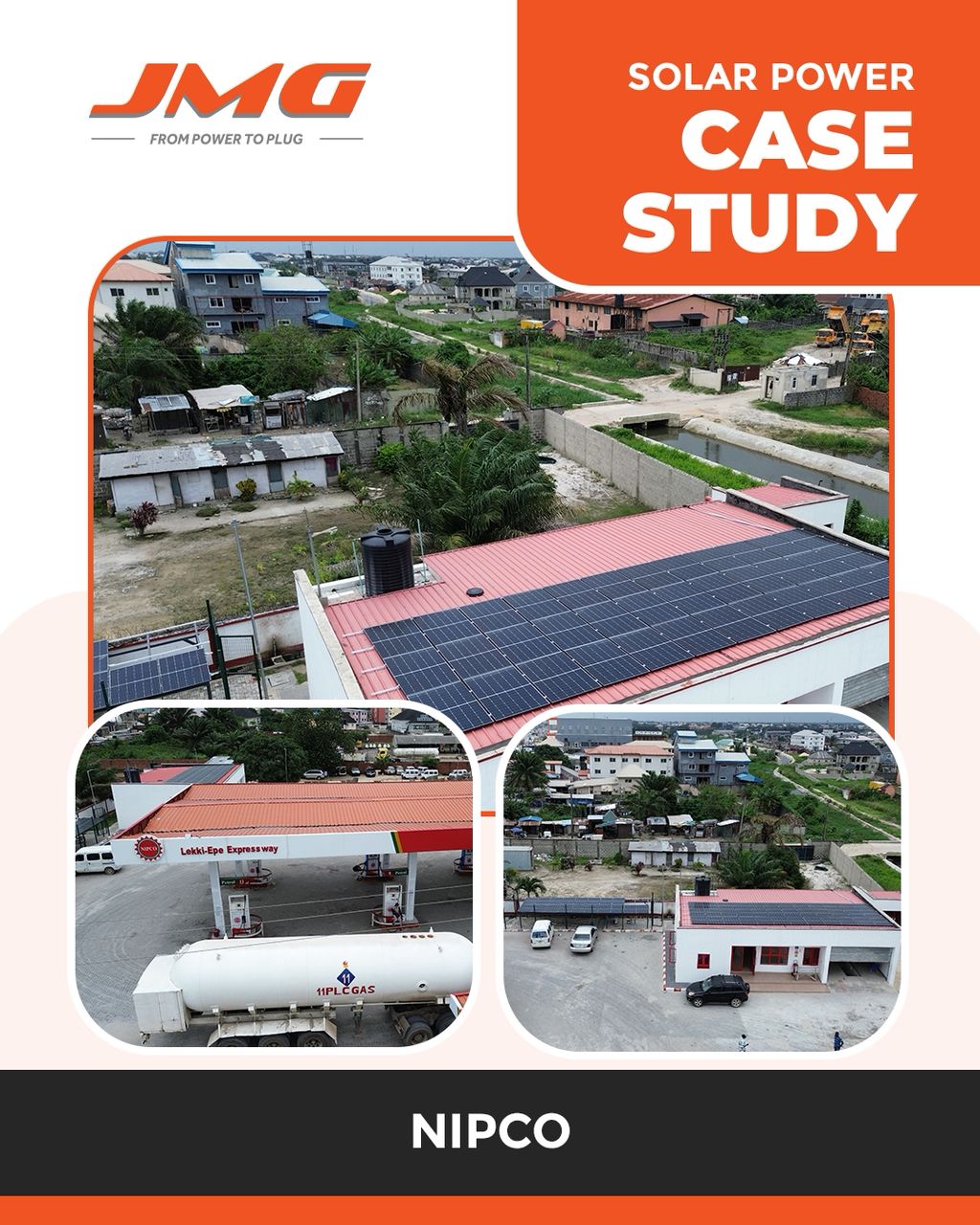
Nigeria’s trusted hybrid and integrated electromechanical energy provider, JMG Limited, has completed the installation of solar power systems at three key fuel stations of NIPCO Plc.
The clean energy source was installed at NIPCO’s petrol dispensing outlets in Gwagwalada Abuja, Lekki Lagos, and Mpape Abuja.
This will help the organisation eliminate diesel reliance, and unlock more than N44 million in annual energy cost savings.
The installations feature advanced hybrid systems, combining solar arrays, lithium battery storage, and smart inverters to provide 24/7 energy for fuel pumps, lighting, and office operations. Each site has reported zero use of electricity or generator power since the systems were installed.
The three NIPCO stations now run on an advanced hybrid solar system that combines high‑efficiency PV panels, intelligent lithium‑battery storage and smart inverters.
Since commissioning, the sites have operated with zero grid or generator power, providing silent, clean, uninterrupted electricity for pumps, lighting and administration.
“We are proud to help NIPCO lead the energy transition at the retail level.
“The scalable architecture can be sized to each location and has already delivered significant savings, about 88,535 kWh/year, N44.4 million in annual cost savings and a 43.8‑tonne reduction in CO₂ emissions,” the Head of JMG’s Hybrid Solar Division, Mr Abbass Hussein, stated, adding that, “Collaborating with NIPCO on this initiative demonstrates a practical pathway for other firms to reduce both emissions and energy expenses.”
Also commenting, NIPCO’s Station Manager at Gwagwalada, Mr Idoko Jacob, said, “The stations have not relied on electricity or generator power on bright-weather days since commissioning. The solar systems fully meet our daily energy needs during such periods. On days with poor weather, we supplement the solar system with generator power to ensure uninterrupted operations.”
Business Post gathered that the NIPCO Gwagwalada Station has a solar output of 42,450 kWh/year, annual savings of N15.6 million, and CO₂ reduction of 15,332.76 kg/year, with a system installed consisting of a 20kW Deye LV Hybrid Inverter, 26.8kWp Solar PV, and 51.2kWh Lithium Battery Storage.
The NIPCO Lekki Station has a solar output of 3,635 kWh/year, annual savings of N12 million, and CO₂ reduction of 13,130.1 kg/year, with a system installed consisting of a 25kW Must Hybrid Inverter, 22.95kWp Solar PV, and 76.8kWh Lithium Battery Storage.
As for the NIPCO Mpape Station, it has a solar output of 42,450 kWh/year, annual savings of N16.8 million, and CO₂ reduction of 15,332.76 kg/year, with a system installed consisting of a 20kW Deye LV Hybrid Inverter, 26.8kWp Solar PV, and 61.44kWh Lithium Battery Storage.


MAGGI, the culinary brand from Nestlé Nigeria, has announced the launch of its festive campaign, Taste of Christmas, designed to celebrate the sights, sounds, and flavours that define the Nigerian Christmas experience.
Central to the campaign is a collaboration with Nigeria’s fast-rising pop star Qing Madi and the renowned Loud Urban Choir, resulting in a new Christmas anthem titled Taste of Christmas.
Now available across all major music streaming platforms, the song blends contemporary sound with cultural warmth, evoking the joy of family, togetherness, and shared meals that characterize the season.
Extending beyond music, the Taste of Christmas campaign will roll out a curated series of festive recipes and culinary inspiration over a 12-day period. The collection features creative twists such as Coco Bongus, alongside beloved Nigerian classics, encouraging families to explore new flavours while enjoying MAGGI’s trusted range of seasonings.
Commenting on the campaign, the Category Manager for Culinary at MAGGI, Ms Funmi Osineye, said, “Christmas is a time when family, culture, and shared experiences come alive. With the Taste of Christmas campaign, we set out to create a platform that resonates strongly with today’s young adults while still celebrating the warmth of home. Partnering with Qing Madi and The Loud Urban Choir allows us to connect music and food in a way that feels authentic, modern, and deeply Nigerian.”
The campaign further reflects MAGGI’s commitment to celebrating home-grown talent, nurturing culinary creativity, and strengthening the role of food as a unifying force in Nigerian homes.
Consumers can access festive recipes, campaign content, and the Taste of Christmas anthem on MAGGI’s digital platforms and social media channels. Conversations around the campaign can be followed using #MAGGIChristmas.
MAGGI is a leading culinary brand from Nestlé Nigeria, committed to inspiring better cooking habits and bringing families together through delicious, nutritious meals.

By Modupe Gbadeyanka
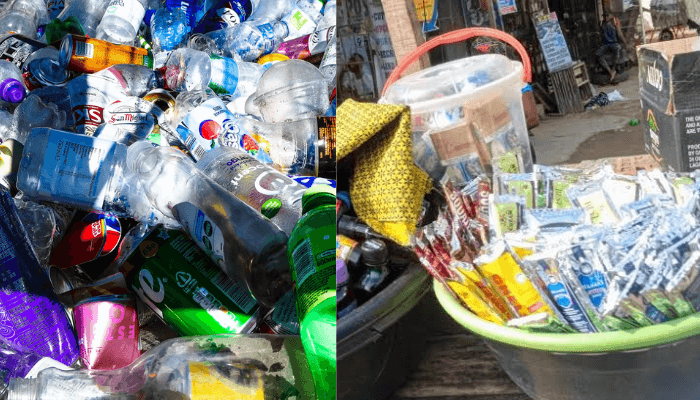
The decision of the federal government to suspend the ban on alcohol produced in sachets has been welcomed by the Nigeria Employers’ Consultative Association (NECA).
The Director-General of the group, Mr Adewale-Smatt Oyerinde, described it as a right step in the right direction because it respects existing National Assembly resolutions and restores regulatory clarity.
Recall that recently, the Office of the Secretary to the Government of the Federation (OSGF) ordered the suspension of the policy due to concerns raised by the House of Representatives Committee on Food and Drugs Administration and Control.
In a statement, the NECA chief said the immediate suspension of all enforcement actions relating to the proposed ban on sachet alcohol and 200ml PET bottle products, pending the conclusion of consultations and the issuance of a final policy directive, was good for the industry and the economy.
According to him, the sachet and PET segment of the alcoholic beverage industry accounts for a significant portion of the estimated N800 billion invested in the sector and supports thousands of direct and indirect jobs in manufacturing, packaging, logistics, wholesale and retail.
He stressed that in an economy already struggling with high unemployment and rising business costs, abrupt policy measures that threaten existing jobs and legitimate investments would be counterproductive.
“We fully acknowledge the need to address public health concerns, especially regarding children and young people, but the solutions must be evidence-based and carefully designed so as not to drive activities into the informal and unregulated economy or encourage illicit products.
“We are looking forward to a deepened consultation to enable the protection of jobs, livelihoods and legitimate investments, etc., while also ensuring that public health objectives are effectively and sustainably achieved,” Mr Oyerinde said.










-
 Feature/OPED6 years ago
Davos was Different this year
-
Travel/Tourism9 years ago
Lagos Seals Western Lodge Hotel In Ikorodu
-

 Showbiz3 years ago
Estranged Lover Releases Videos of Empress Njamah Bathing
-
 Banking8 years ago
Sort Codes of GTBank Branches in Nigeria
-

 Economy3 years ago
Subsidy Removal: CNG at N130 Per Litre Cheaper Than Petrol—IPMAN
-

 Banking3 years ago
First Bank Announces Planned Downtime
-

 Banking3 years ago
Sort Codes of UBA Branches in Nigeria
-

 Sports3 years ago
Highest Paid Nigerian Footballer – How Much Do Nigerian Footballers Earn