
Economy
2017 Budget Will Be Timely—Presidency



By Modupe Gbadeyanka
The presidency has promised to present the 2017 budget on time to the National Assembly for quick implementation.
This assurance was given by the Senior Special Assistant to the President on National Assembly Matters, Mr Ita Enang, during a press briefing.
Mr Enang noted that the presentation of the budget depends on the quick passage of the Medium Term Expenditure Framework and Fiscal Strategy Papers by the Senate, but revealed that the implementation of the 2016 budget was going on well.
He expressed his appreciation to the Senate and its leadership for the way they have piloted the affairs of the Eighth Senate especially concerning passage of requests from the President without delay.
The President’s aide further noted the new speed and momentum with which the Senate is handling its assignment in relation to the numbers of bill passed and time of sitting.
Among the requests submitted and treated by the Senate were the requests for the confirmation of the appointments of members of the boards of Independent National Electoral Commission (INEC), National Electricity Regulatory Commission (NERC), National Population Commission (NPC), Nigerian Communication Commission (NCC), Career and non-career Ambassadors and Justices of the Supreme Court submitted by the President.
On the just submitted list of Ambassadorial nominees, Mr Enang promised that the observation made on the floor in relation to the omission of FCT and Imo State from the list was being communicated and would be appropriately addressed.












By Adedapo Adesanya
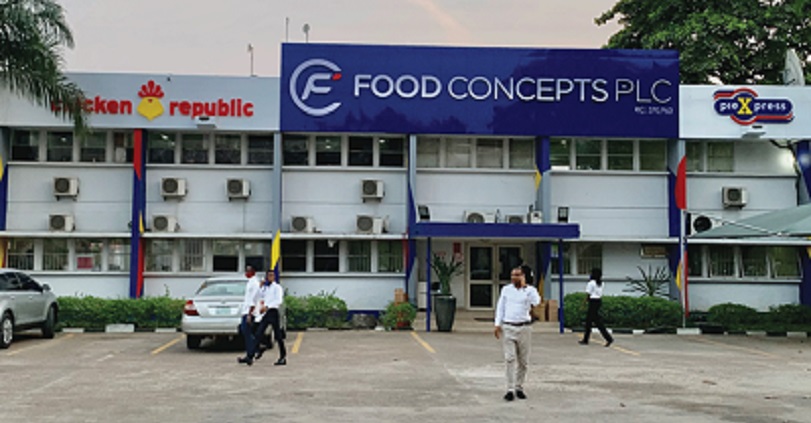
Food Concepts Plc, the parent company of fast food brands like Chicken Republic and PieXpress, has disclosed plans to pay 10 Kobo in interim dividend to new and existing shareholders for the 2026 financial year.
This was disclosed by the company in a notice to the NASD Over-the-Counter (OTC) Securities Exchange, where it trades its securities.
The notice indicated that the proposed interim dividend, which comes with no bonus, will be paid to those who hold the stocks of the company as of the qualification date for the dividend, which was Tuesday, March 24.
This means only those who hold the company’s shares as of the closing session will be eligible to receive the stipulated dividend payment.
The shareholders of the company will be credited with the 10 Kobo dividend on Tuesday, March 31.
The notice noted that the closure of the company’s register will be on Wednesday, March 25, through Friday, March 27, 2026, both days inclusive.
By Adedapo Adesanya
The NASD Over-the-Counter (OTC) Securities Exchange dropped for the third consecutive session on Wednesday, March 18, by 0.39 per cent due to continued sell-offs.
In what would be the final trading session of the week due to public holidays on Thursday and Friday for Eid-el-Fitr, the NASD Unlisted Security Index (NSI) further dipped by 16.14 points to 4,114.75 points from 4,130.89 points, and the market capitalisation lost N9.66 billion to close at N2.461 trillion versus the previous day’s N2.471 trillion.
FrieslandCampina Wamco Nigeria Plc depreciated by N10.32 to sell at N112.00 per share versus N122.32 per share, NASD Plc dropped N4.50 to finish at N41.50 per unit compared with the previous session’s N46.00 per unit, and Geo-Fluids decreased by 9 Kobo to N3.02 per share from N3.11 per share.
On the flip side, Air Liquide Plc improved by N2.23 to N24.57 per unit from N22.34 per unit, Central Securities Clearing System (CSCS) Plc advanced by 90 Kobo to N76.33 per share from N75.43 per share, Food Concepts Plc rose by 24 Kobo to N3.30 per unit from N3.06 per unit, UBN Property Plc surged by 20 Kobo to N2.18 per share from N1.98 per share, Impresit Bakalori Plc jumped 16 Kobo to N1.83 per unit from N1.67 per unit, and First Trust Mortgage Bank Plc added 14 Kobo to trade at N1.89 per share versus N1.75 per share.
During the trading day, the volume of securities went up by 43,404.4 per cent to 400.8 million units from 921,265 units, the value of securities grew by 2,108.7 per cent to N1.2 billion from N54.7 million, and the number of deals soared by 23.7 per cent to 47 deals from 38 deals.
CSCS Plc ended the day as the most traded stock by value (year-to-date) with 38.7 million units valued at N2.4 billion, followed by Infrastructure Guarantee Credit Plc with 400 million units exchanged for N1.2 billion, and Okitipupa Plc with 6.4 million units traded for N1.2 billion.
Resourcery Plc finished the session as the most traded stock by volume (year-to-date) with 1.1 billion units worth N415.7 million, trailed by Infrastructure Guarantee Credit Plc with 400 million units sold for N1.2 billion, and Geo-Fluids Plc with 131.1 million units valued at N505.6 million.
By Dipo Olowookere
The Nigerian Exchange (NGX) experienced a pullback of 0.69 per cent as a result of profit-taking by investors, with shares in the banking and energy sectors mostly affected.
Data harvested by Business Post showed that the energy index was down by 4.58 per cent during the session, and the banking space lost 2.14 per cent.
They brought down the All-Share Index (ASI) by 1,402.56 points to 201,156.85 points from 202,559.41 points and shrank the market capitalisation by N900 billion to N129.126 trillion from N130.026 trillion.
Customs Street ended in red at midweek despite three of the five key sectors finishing in green. The consumer goods counter expanded by 1.19 per cent, the industrial goods index improved by 0.46 per cent, and the insurance sector grew by 0.43 per cent.
Red Star Express declined by 9.98 per cent to N25.70, Aradel Holdings went down by 9.68 per cent to N1,210.30, Presco lost 9.30 per cent to trade at N1,701.10, Living Trust Mortgage Bank crashed by 8.40 per cent to N4.80, and DAAR Communications dropped 7.50 per cent to end at N1.85.
On the flip side, Secure Electronic Technology gained 10.00 per cent to settle at N1.32, Guinness Nigeria rose by 9.92 per cent to N423.20, John Holt increased by 9.72 per cent to N11.85, Sovereign Trust Insurance surged by 9.57 per cent to N2.06, and Linkage Assurance chalked up 9.33 per cent to trade at N1.64.
Investor sentiment was weak yesterday after the bourse registered 33 price gainers and 38 price losers, indicating a negative market breadth index.
Market participants bought and sold 6.1 billion stocks valued at N130.1 billion in 58,562 deals compared with the 1.8 billion stocks worth N88.1 billion traded in 62,654 deals on Tuesday, representing a shortfall in the number of deals by 6.53 per cent, and a spike in the trading volume and value by 238.89 per cent and 47.67 per cent apiece.
The most active equity on Wednesday was eTranzact with 5.2 billion units sold for N24.3 billion, Wema Bank exchanged 111.4 million units worth N3.1 billion, Coronation Insurance transacted 96.4 million units valued at N303.9 million, Dangote Cement traded 75.2 million units for N56.5 billion, and Access Holdings exchanged 61.5 million units valued at N1.6 billion.













-
 Feature/OPED6 years ago
Davos was Different this year
-
Travel/Tourism10 years ago
Lagos Seals Western Lodge Hotel In Ikorodu
-

 Showbiz3 years ago
Estranged Lover Releases Videos of Empress Njamah Bathing
-
 Banking8 years ago
Sort Codes of GTBank Branches in Nigeria
-

 Economy3 years ago
Subsidy Removal: CNG at N130 Per Litre Cheaper Than Petrol—IPMAN
-

 Banking3 years ago
Sort Codes of UBA Branches in Nigeria
-

 Banking3 years ago
First Bank Announces Planned Downtime
-

 Sports3 years ago
Highest Paid Nigerian Footballer – How Much Do Nigerian Footballers Earn