
Economy
6 Timeless Investing Tips to Become a Successful Investor


If you’re aiming to become a successful investor in the modern financial market, you need to have a good knowledge of the available opportunities. Knowing what’s out there and how best to leverage different investments can help maximise your gains.
Getting ahead of the curve, maintaining a solid position and capitalising on valuable opportunities is how successful investors maintain their portfolios. By following the tips below, you can start closing that gap and perform just as well within the investment landscape.
- Get ahead when getting started
Setting out on your investment journey is an exciting prospect and there’s no better time to be starting out as an investor. You’ll want to establish an idea of what you’re aiming to get out of investing and do your research in order to make the right moves.
Using forex platforms can be a great way to get started, with some offering a welcome bonus to forex trading of $30 or similar, giving you more investment power to start with. This can get your portfolio gathering momentum earlier on, along with any funds you’re prepared to invest.
- Diversify your portfolio
Having all your eggs in one basket leaves you at the mercy of whatever happens to that one stock. Keeping a broader investment strategy means that your portfolio will be less volatile and has more resilience to market shifts.
Invest in a range of stocks that suit your investment strategy and invest on a regular basis. Look for potential investments and where you could add value to your portfolio – automatic contributions can also help you to improve your position without manual intervention.
- Avoid making drastic portfolio shift on impulse
Your investment strategy should be something you stick with based on your life goals and ambitions. Don’t reconfigure your entire portfolio on a whim or because you heard about a potential rumoured market shift.
Capitalise on advice and information you hear but don’t completely change your plan. Larger shifts are best saved for once you’ve met specific goals or your personal situation has changed.
- Fluctuations come with the territory
The stock market rewards patience – sitting back, observing what’s happening and planning your next move. The market will move regularly, so don’t get spooked if your stock isn’t all upwards trajectories. Look at overall trends and hold your position unless you’re absolutely sure it’s the right time to sell.
If your investments move more than you’d like, shift over to more modest investments. While they may present be less opportunity for significant short-term gains, they’ll potentially have less volatility and be easier to track.
- Short term thinking can cost you
Only looking at recent trends rather than the bigger picture can create some problematic investor behaviour. If a stock performs badly across a quarter, you might be tempted to shift away. But if that stock has been on the up for going on a year, and you’ve ridden that all the way up, there’s potential for it to still pick back up.
Keep your eye on wider trends and how your stock has performed in the long term. Reacting to short-term activity without stopping to properly consider the motivating factors and potential outcomes could see you missing out.
- Boring is sometimes better
Some of the best investments you can make are into more dependable, low-volatility stocks. While they might not be the short-term investments that see some people make money quick, these ‘boring’ options can be fantastic for long-term investment strategies.
If you’re planning on using forex investment as a way of generating retirement funds, investing in lower-risk stocks over a longer period of time can allow you to slowly accrue a solid and substantial investment portfolio.



By Modupe Gbadeyanka
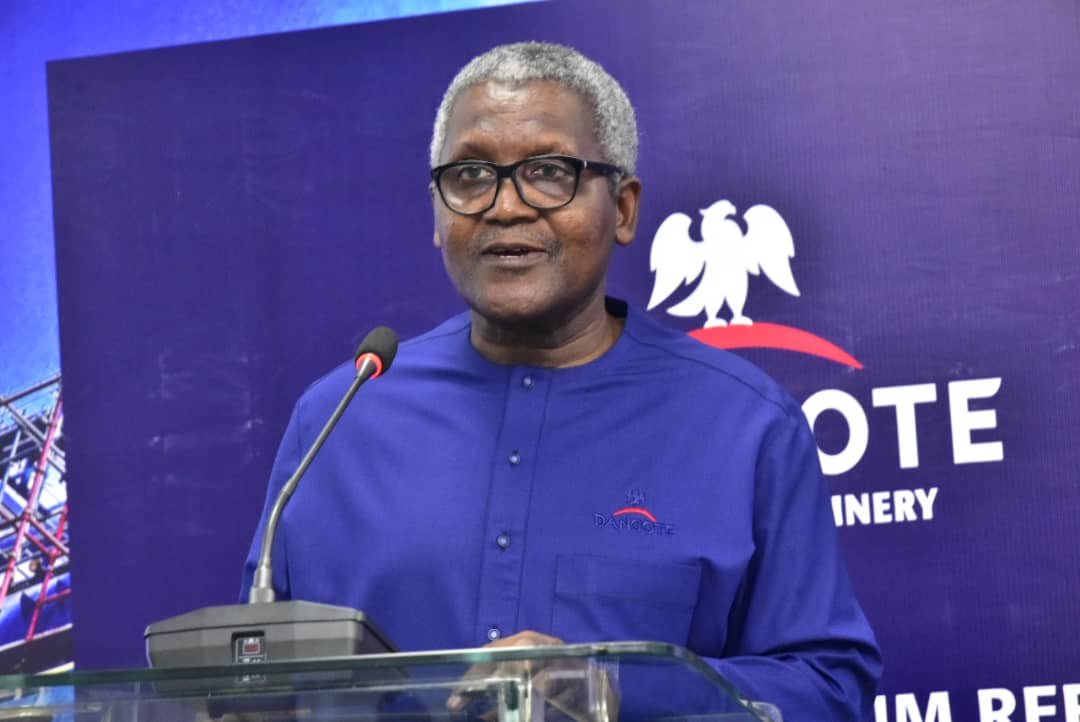
African industrialist, Mr Aliko Dangote, is setting his eyes on steel production, electricity generation and port development to support large-scale manufacturing and trade.
He told The New York Times in a recent interview that his ambition is to accelerate industrialisation across Africa.
He currently has business interests in cement, sugar, salt, fertiliser, and petrochemicals, with his latest project being the $20 billion Dangote Petroleum Refinery and Petrochemicals in Lagos, which produces about 650,000 barrels of refined products daily.
The businessman said his long-term goal is to deepen the continent’s manufacturing base beyond oil refining and position it as a global industrial force.
“We have to industrialise Africa,” Mr Dangote said, noting that his next focus areas include the steel industry, expanding access to electricity and building additional port infrastructure to support large-scale manufacturing and trade.
Industry analysts say entry into steel would position the group in a sector critical to infrastructure, housing and heavy industry, while investments in power and ports could address two of Nigeria’s most persistent constraints to economic growth.
Mr Dangote cited India’s Tata Group as a model for diversified industrial expansion, describing the conglomerate’s multi-sector footprint as an example of how large-scale manufacturing can transform emerging economies.
Beyond expansion, Mr Dangote said job creation remains central to his strategy. With Nigeria projected to require between 40 and 50 million new jobs by 2030, he argued that large-scale industrial projects are essential to absorbing the country’s growing youth population.
The refinery alone currently employs about 30,000 workers, approximately 80 per cent of them Nigerians. Expansion across new sectors is expected to raise total employment within the group to about 65,000.
Mr Dangote also announced plans to list shares in the refinery on the Nigerian stock market, a move that would broaden local participation in the asset.
Despite progress, he acknowledged that infrastructure gaps and crude supply challenges remain obstacles. He has previously raised concerns about logistics bottlenecks and inefficiencies in the oil value chain that complicate feedstock supply to the refinery.
Nevertheless, he said the group would continue to invest aggressively in sectors that reduce import dependence and retain economic value within Africa.
“Nobody dared to do it, so we did it,” he said, reiterating his belief that large-scale private investment is key to transforming Nigeria’s industrial landscape.
With cement plants operating across multiple African countries and a refinery that has reshaped Nigeria’s downstream outlook, Mr Dangote’s next push into steel, electricity and port infrastructure signals a new phase in his ambition to industrialise the continent.

By Aduragbemi Omiyale
The operating licence of a capital market operator, Kensington Agro Trading Limited, has been revoked by the Securities and Exchange Commission (SEC).
The capital market regulator, in a circular dated February 09, 2026, disclosed that the action “pursuant to the powers of the commission under Section 61(6) of the Investments and Securities Act, 2025, and Rule 34(1) of the SEC Rules and Regulations 2013, as amended.”
The disclosure noted that the revocation of the licence of the company was “with immediate effect.”
The reason for withdrawing the operating licence of Kensington Agro Trading Limited was not stated in the notice.
“The Securities and Exchange Commission hereby notifies the general public of the revocation of the registration of Kensington Agro Trading Limited as a capital market operator (Commodity Broker/Dealer and Collateral Manager) with immediate effect.
“The revocation of the company’s registration is invoked pursuant to the powers of the Commission under Section 61(6) of the Investments and Securities Act, 2025, and Rule 34(1) of the SEC Rules and Regulations 2013, as amended.
“Accordingly, Commodity Exchanges, the investing public, commodity traders, and all Capital Market Stakeholders are advised to discontinue capital market-related dealings with the company,” the circular signed by the management noted.

By Adedapo Adesanya
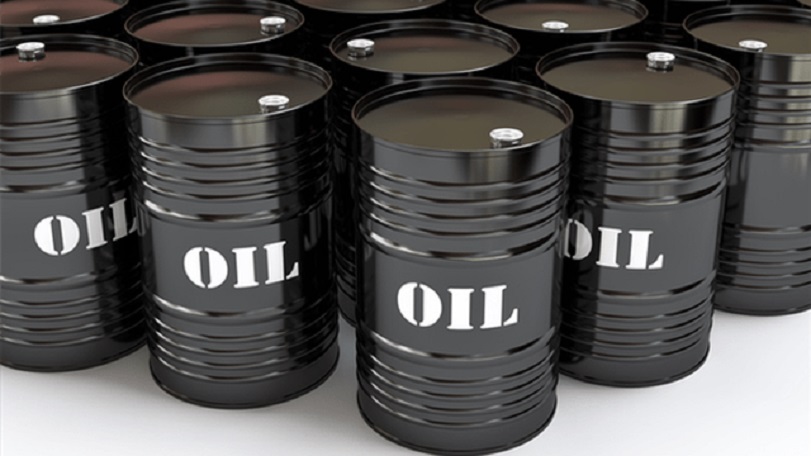
The latest off-cycle data released by the Central Bank of Nigeria (CBN) has revealed that Nigeria’s revenue from the oil and gas industry dipped by 25.04 per cent to N877.176 billion in December 2025, compared with N1.17 trillion received from energy firms in November 2025
In its presentation to the Federation Account Allocation Committee (FAAC) on receipts and expenditures for December 2025, the CBN disclosed that the amount earned from the oil and gas industry in the month under review represented 95.65 per cent of the sector’s budgeted revenue of N917.064 billion for the month.
In comparison, revenue from the petroleum industry in November 2025 accounted for 96.38 per cent of the N1.474 trillion budgeted for the sector in November 2025.
Providing a breakdown of revenue from the industry in December 2025, the CBN stated that the country earned N772.727 million from crude oil sales, dropping by 97.92 per cent from N37.134 billion recorded in November 2025; while the it recorded revenue of N9.019 billion from gas sales, rising by 24.14 per cent from N7.265 billion recorded in November.
Furthermore, the financial sector apex regulator noted that revenue from crude oil royalties dipped by 12.52 per cent to N514.288 billion in the month under review, from N587.865 billion recorded in the previous month; while receipts from miscellaneous oil revenue grew by 97.5 per cent to N2.678 billion in December 2025, from N1.356 billion in the previous month.
It also stated that royalties from gas appreciated by 124.91 per cent to N21.153 billion in December, from N9.405 billion in November 2025; revenue from gas flared penalties stood at N48.858 billion, down by 5.76 per cent from N51.842 billion in November, while revenue from Companies’ Income Tax (CIT) from upstream oil industry operations stood at N73.066 billion, as against N106.106 billion in the previous month.
The CBN further revealed that revenue from Petroleum Profit Tax (PPT) stood at N79.247 billion; rentals – N1.5 billion; while taxes stood at N126.594 billion, compared with N301.471 billion. N775.162 million, and N67.242 billion, respectively, in November 2025.
In addition, the CBN reported that from the country’s oil and gas revenue in December 2025, N18.163 billion was deducted for 13 per cent refund on subsidy, priority projects and Police Trust Fund from 1999 to 2021; while N8.761 billion was deducted by the Nigerian National Petroleum Corporation Limited (NNPCL), in respect of its 13 per cent management fee and frontier exploration fund.
It added that N23.724 billion was deducted and collected by the Nigerian Upstream Petroleum Regulatory Commission (NUPRC) in December 2025, being four per cent of the cost of collection; while N46.903 billion was transferred to the Midstream and Downstream Gas Infrastructure Fund from gas flared penalties in the same month.











-
 Feature/OPED6 years ago
Davos was Different this year
-
Travel/Tourism10 years ago
Lagos Seals Western Lodge Hotel In Ikorodu
-

 Showbiz3 years ago
Estranged Lover Releases Videos of Empress Njamah Bathing
-
 Banking8 years ago
Sort Codes of GTBank Branches in Nigeria
-

 Economy3 years ago
Subsidy Removal: CNG at N130 Per Litre Cheaper Than Petrol—IPMAN
-

 Banking3 years ago
Sort Codes of UBA Branches in Nigeria
-

 Banking3 years ago
First Bank Announces Planned Downtime
-

 Sports3 years ago
Highest Paid Nigerian Footballer – How Much Do Nigerian Footballers Earn