Connect with us

Economy

Adopt Agile Policy Making for Macroeconomic Stability, Others—IMF to Nigeria

Published

on

Rethink Relationship With IMF Nigeria

By Dipo Olowookere

The Nigerian government has been advised to consider agile policy making for macroeconomic stability and poverty reduction.

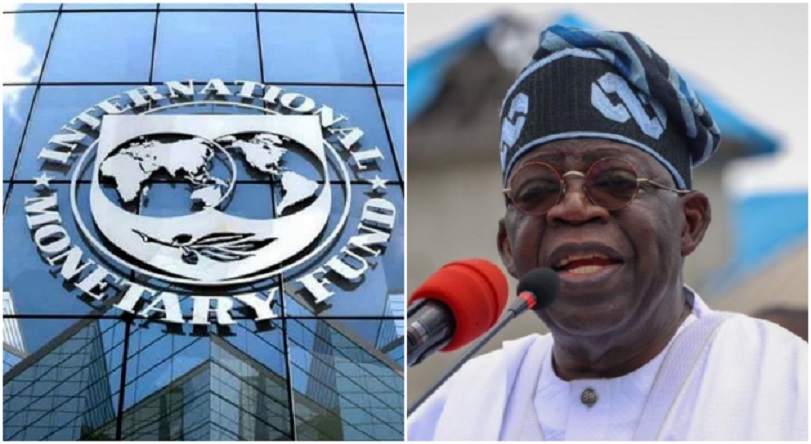
In a statement issued on Wednesday on the conclusion of its 2025 Article IV Mission with Nigeria, the International Monetary Fund (IMF) stated that the federal government should also endeavour to create enabling conditions for investment to boost economic growth.

The global lender praised the administration of President Bola Tinubu for implementing some bold economic reforms in the last two years, saying these policies have improved macroeconomic stability and enhanced resilience.

A few of these policies include the tax reform, fuel subsidy removal, liberalisation of the foreign exchange (FX) market, and the stoppage of monetary financing of the fiscal deficit, among others.

The IMF said these actions by the government have strengthened investor confidence, helping the nation to successfully tap the Eurobond market and leading to a resumption of portfolio inflows.

However, it noted that “poverty and food insecurity have risen” because “these gains have yet to benefit all Nigerians.”

It warned that the country may struggle with earnings and economic downturn if crude oil prices in the global market continue to decline.

“A further decline in oil prices or increase in financing costs would adversely affect growth, fiscal and external positions, undermine financial stability and exacerbate exchange rate pressures. A deterioration of security could impact growth and food insecurity,” the IMF said in a statement made available to Business Post.

It called for a neutral fiscal stance to safeguard macroeconomic stabilization with priority given to investments that enhance growth, tasking the government to accelerate “the delivery of cash transfers to assist the poor.”

As for the recently signed tax reform laws, the IMF praised the government for this, describing it as “an important step towards enhancing revenue mobilization and creating fiscal space for development spending, while preserving debt sustainability.”


Dipo Olowookere is a journalist based in Nigeria that has passion for reporting business news stories. At his leisure time, he watches football and supports 3SC of Ibadan. Mr Olowookere can be reached via [email protected]

1 Comment

1 Comment

  1. Pingback: Naira Trades N1,526/$1 at Official Market, N1,550/$1 at Black Market | Business Post Nigeria

Leave a Reply

Your email address will not be published. Required fields are marked *

Economy

First Holdco Lists N45bn Private Placement Shares on Stock Exchange

Published

on

first holdco subsidiaries

By Aduragbemi Omiyale

Shares of First Holdco Plc worth N45.0 billion issued through a private placement have been listed on the Nigerian Exchange (NGX) Limited.

A circular issued by the Head of Issuer Regulation Department of the NGX Regulation Limited, Mr Godstime Iwenekhai, disclosed that the equities were admitted for trading at the stock market on Monday.

According to the notice, the additional shares brought for listing to rank pari passu with existing shares of the organisation were 1,021,334,544 units.

These stocks were sold to one of the company’s major shareholders at a unit price of N44.06, amounting to N45.0 billion.

The total issued and fully paid-up shares of First Holdco, as a result of this listing, are now 45,475,027,677 ordinary shares of 50 Kobo each.

“Trading licence holders are hereby notified that an additional 1,021,334,544 ordinary shares of 50 Kobo each of First Holdco Plc were on Monday, June 22, 2026, listed on the daily official list of Nigerian Exchange Limited.

“The additional shares listed on NGX arose from the company’s private placement of 1,021,334,544 ordinary shares of 50 Kobo each at N44.06 per share.

“With the listing of the additional shares, the total issued and fully paid-up shares of First Holdco Plc have now increased to 45,475,027,677 ordinary shares of 50 Kobo each from 44,453,693,133 ordinary shares of 50 Kobo each,” the disclosure stated.

Continue Reading

Economy

AA Rano, Nipco, Matrix, Others Secure Q3 Petrol Import Permits

Published

on

Petrol Import Bill

By Adedapo Adesanya

The Nigerian Midstream and Downstream Petroleum Regulatory Authority (NMDPRA) has approved fresh import licences for petrol and diesel for the third quarter of 2026 (July – September) to prevent potential supply shortages in the domestic market.

According to a report by global energy intelligence firm, Argus Media, the latest approvals were issued to major downstream operators amid declining fuel stock levels and concerns over reduced petrol production at the 700,000 barrels per day Dangote Petroleum Refinery in Lagos.

The move comes as Nigeria continues to balance increasing local refining capacity with the need to guarantee adequate supplies of petroleum products across the country.

According to the Argus report, domestic firms, including AA Rano, AYM Shafa, Bono Energy, Nipco, Matrix Energy and Pinnacle Oil, received permits to import Premium Motor Spirit, popularly known as petrol, during the July-September period.

The publication further reported that the same companies, with the exception of Nipco, were granted approvals to import Automotive Gas Oil, commonly known as diesel. The fresh approvals follow an earlier batch of petrol import permits issued by the regulator in May, covering about 720,000 metric tonnes.

Quoting a regulatory source, Argus noted that many of the companies granted the latest approvals were among those that had received permits in previous rounds. “These are some of the same ones that previously received the PMS permits,” the source was quoted as saying.

It was also claimed that AA Rano and Matrix Energy each received approvals to import 180,000 metric tonnes of petrol. AYM Shafa received approval for 120,000 metric tonnes, while Pinnacle Oil received a permit covering 150,000 metric tonnes.

For diesel imports, Argus reported that AYM Shafa obtained a permit for 60,000 metric tonnes, while Pinnacle secured approval for 45,000 metric tonnes. The report stated that the import approvals were issued only recently, after being delayed from an initial target date of June 15.

Continue Reading

Economy

Three Securities Drag NASD OTC Market Down by 1.01%

Published

on

Nigeria's Unlisted Securities Market Sheds 0.78%, NASD Shares up 8.31%

By Adedapo Adesanya

Three securities weakened the NASD Over-the-Counter (OTC) Securities Exchange by 1.01 per cent on Tuesday, June 23, dragging the market capitalisation down by N25.91 billion to N2.544 trillion from Monday’s N2.570 trillion. Also, the NASD Security Index (NSI) decreased by 43.17 points to 4,239.34 points from 4,282.51 points.

The triplet price losers were Central Securities Clearing System (CSCS) Plc, which gave up N4.82 to trade at N75.00 per unit versus Monday’s closing price of N79.82 per unit. NASD Plc depreciated by N3.70 to close at N33.30 per share compared with the preceding day’s N37.00 per share, and Nitrox Industrial Gases Plc marginally lost 1 Kobo to sell at N21.41 per unit, in contrast to the previous session’s N21.42 per unit.

Tuesday’s trading data showed that the volume of securities traded by investors retreated by 35.9 per cent to 211,671 units from 330,034 units, and the value of securities fell by 82.9 per cent to N5.6 million from N32.7 million, while the number of deals doubled to 38 deals from 19 deals.

At the close of trades, Great Nigeria Insurance (GNI) Plc was the most traded stock by value on a year-to-date basis, with 3.4 billion units worth N8.4 billion, followed by Infrastructure Credit Guarantee (Infracredit) Plc with 2.3 billion units valued at N6.5 billion, and CSCS Plc with 68.1 million units transacted for N4.7 billion.

GNI Plc also closed the trading day as the most traded stock by volume on a year-to-date basis, with 3.4 billion units valued at N8.4 billion, trailed by Infracredit Plc with 2.3 billion units exchanged for N6.5 billion, and Resourcery Plc with 1.1 billion units sold for N415.7 million.

Continue Reading

Trending