Connect with us

Economy

AfDB, Others Worsening Nigeria’s Debt Burden—World Bank

Published

on

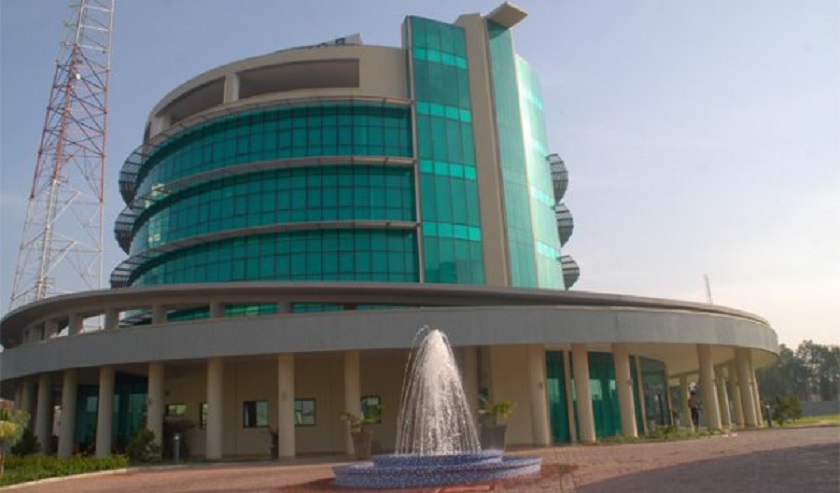
AfDB Nigeria Country office

By Adedapo Adesanya

The World Bank Group and the International Monetary Fund (IMF) have warned Nigeria, South Africa and other low-income nations to be careful with activities of the International Financial Institutions (IFIs) such as the African Development Bank (AfDB), Asian Development Bank, the European Bank for Reconstruction and Development and others because these international lenders are adding to their heavy debt profiles.

Speaking at at a World Bank-IMF Debt Forum on Monday in Washington DC, president of the World Bank, Mr David Malpass, noted that these development banks and IFIs were further worsening already-challenging debt situations.

“We have a situation where other international financial institutions and to some extent development finance institutions as a whole, certainly the official export credit agencies, have a tendency to lend too quickly and to add to the debt problem of the countries,” Mr Malpass said.

He said, “In Pakistan, the Asian Development Bank is pushing billions of dollars into a fiscally challenging situation.

“In the case of Africa, the African Development Bank is pushing large amounts of money into Nigeria, South Africa and others without the strongest program to sustain it and push it forward.

“In Kazakhstan, the EBRD is pushing forward with loans where lots of work is put in by other institutions and then the lower interest-rate investment is made.

“And so, we have a very real problem of the IFIs themselves adding to the debt burden. And there’s pressure then, I think, on IMF to sort through it and look at the best interest for the country.”

Business Post, citing latest figures by the Debt Management Office (DMO), as at September 2019, reported that the total debt profile of Nigeria stood at N26.2 trillion, with Total External Debt at N8.3 trillion while the Total Domestic Debt was at N17.9 trillion.

To remedy this, the World Bank, through its fund for the poorest countries, the International Development Association, said it would be implementing a new set of lending rules on July 1, 2020 as it unlocks a new round of funding expected to make some $85 billion in loans and grants available.

According to Mr Malpass, these are aimed at setting new standards for transparency and require coordination with other multilateral lenders working with the same country.

During the event, the IMF Managing Director, Ms Kristalina Georgieva, warned that the interest cost derived by high volume of debt may take away precious resources from people in low-income countries like Nigeria.

“Why I worry so much about debt in low-income countries, because what it means is that if it is not proper managed, interest rates, often high, takes away precious resources from education and health and infrastructure investments,” she said.

The IMF and World Bank are both worried that lack of transparency could make the debt risk a bigger problem in the world.


Adedapo Adesanya is a journalist, polymath, and connoisseur of everything art. When he is not writing, he has his nose buried in one of the many books or articles he has bookmarked or simply listening to good music with a bottle of beer or wine. He supports the greatest club in the world, Manchester United F.C.

1 Comment

Leave a Reply

Your email address will not be published. Required fields are marked *

Economy

Customs Steps up Push on Green Tax Awareness Ahead of July 1 Launch

Published

on

Green Tax Surcharge

By Adedapo Adesanya

The Nigeria Customs Service (NCS) has intensified its nationwide sensitisation campaign on the implementation of the Green Tax Surcharge and related fiscal adjustments ahead of the policy’s commencement on July 1, 2026.

The service disclosed this in a statement published on its official X handle on Monday, saying the initiative is aimed at promoting environmental sustainability, reducing carbon emissions and encouraging the importation of cleaner vehicles into the country in line with global environmental standards.

According to the statement, the latest sensitisation programme was held at the Apapa Area Command on Friday, June 26, 2026, under the theme, “Implementation of the Green Tax Surcharge and Related Fiscal Adjustments.”

The event brought together customs officers, licensed customs agents, freight forwarders, importers and other key stakeholders to familiarise them with the new policy ahead of its implementation.

Representing the Comptroller-General of Customs, Mr Adewale Adeniyi, the Zonal Coordinator for Zone A, Mr Mohammed Babadende, said the exercise was organised to ensure stakeholders fully understand the policy and its implementation framework before it takes effect.

“This sensitisation is designed to ensure that every stakeholder clearly understands the policy before implementation. Our objective is to eliminate uncertainty, promote voluntary compliance and guarantee uniform application of the Green Tax Surcharge across all commands,” Mr Adeniyi said.

He stressed that effective stakeholder engagement would help ensure a seamless rollout of the policy while improving compliance across the country’s ports and border stations.

Delivering a technical presentation, the Comptroller in charge of Tariff, System Audit and Coordination, Mr Murtala Muazu, explained that the Green Tax Surcharge differs from conventional fiscal measures and would therefore require a separate assessment process.

Mr Muazu disclosed that the agency has introduced a simplified implementation mechanism through the Harmonised System (HS) Code declaration platform to facilitate accurate assessment and ease compliance by importers and clearing agents.

He further revealed that the federal government has simultaneously reviewed existing import charges on vehicles to cushion the effect of the new environmental levy.

According to him, import levies on vehicles have been reduced from 20 per cent to 10 per cent, while duties on used vehicles have been cut from 15 per cent to five per cent.

The customs said the reductions are intended to offset the impact of the Green Tax Surcharge while supporting legitimate trade and ensuring businesses are not unduly burdened by the new policy.

Area Controllers who attended the sensitisation programme urged importers, licensed customs agents and members of the public to support the initiative, noting that the reduction in import levies would lower the cost of doing business, facilitate legitimate trade and ultimately contribute to reducing transportation costs across the country.

Stakeholders at the event welcomed the initiative but called for sustained public awareness campaigns to ensure broader understanding, minimise confusion and encourage voluntary compliance as the rollout date approaches.

The Green Tax Surcharge is scheduled to take effect on July 1, 2026, as part of the federal government’s broader efforts to promote environmentally friendly transportation and align Nigeria’s import policies with global climate and sustainability objectives.

Continue Reading

Economy

Access Holdings, Fidelity Bank, Chams Emerge Busiest Equities

Published

on

Access Holdings

By Dipo Olowookere

The three busiest equities on the floor of the Nigerian Exchange (NGX) Limited last week were Access Holdings, Fidelity Bank, and Chams Holdco.

The trio accounted for 20.90 per cent and 5.69 per cent of the total trading volume and value, respectively, after trading 485.749 million units worth N7.656 billion in 17,843 deals.

In the week, investors transacted 2.324 billion shares valued at N134.486 billion in 249,328 deals versus the 3.075 billion shares worth N254.614 billion executed in 287,157 deals in the previous week.

The financial services space led the activity chart with 1.523 billion stocks sold for N47.542 billion in 105,230 deals, contributing 65.53 per cent and 35.35 per cent to the total trading volume and value, respectively. The ICT industry exchanged 198.821 million shares worth N32.622 billion in 29,905 deals, and the consumer goods sector posted a turnover of 151.635 million shares worth N10.933 billion in 23,951 deals.

In the five-day trading week, 22 equities appreciated versus 11 equities a week earlier, 57 equities depreciated versus 78 equities of the previous week, and 67 equities remained unchanged versus 57 equities in the preceding week.

McNichols gained 26.47 per cent to trade at N8.60, International Energy Insurance appreciated by 14.43 per cent to N5.79, GTCO expanded by 10.69 per cent to N127.90, First Holdco jumped by 10.00 per cent to N55.00, and Airtel Africa also climbed 10.00 per cent to settle at N4,358.80.

On the flip side, Trans-Nationwide Express declined by 26.79 per cent to N3.28, Deap Capital slipped by 23.31 per cent to N3.75, Abbey Mortgage Bank lost 20.30 per cent to trade at N8.05, Aradel Holdings contracted by 19.00 per cent to N1,417.50, and Regency Assurance dropped 18.56 per cent to close at 79 Kobo.

The All-Share Index (ASI) and the market capitalisation, which measures the performance level of Customs Street, depreciated last week by 1.65 per cent and 1.60 per cent each to 232,049.02 points and N148.905 trillion, respectively.

Similarly, all other indices finished lower except the CG, banking, AFR Bank Value, AFR Div Yield and MERI Value indices, which grew by 2.40 per cent, 3.51 per cent, 3.28 per cent, 9.93 per cent and 0.56 per cent, respectively.

Continue Reading

Economy

Proposed Import Ban Won’t Revive Nigeria’s Textile Industry—CPPE

Published

on

textile ban

By Adedapo Adesanya

The Centre for the Promotion of Private Enterprise (CPPE) has cautioned against the Senate’s resolution seeking to ban the importation of textile fabrics, warning that such a move could be counterintuitive as it would undermine key industries, threaten millions of jobs and fail to revive Nigeria’s struggling textile sector.

According to the chief executive of the think-tank, Mr Muda Yusuf, while the objective of revitalising the textile industry was commendable, an outright import prohibition would likely create more economic challenges than solutions.

The Senate had urged the federal government to implement an import ban for an initial period of five years. The motion, sponsored by Senator Sunday Katung, is to create a protected window for domestic cotton farmers and local textile mills to scale up production.

Mr Yusuf noted that the import ban wasn’t the major driving force behind the country’s ailing textile sector, adding that it was driven mainly by structural constraints such as high energy costs, poor infrastructure, expensive credit and obsolete technology.

Other factors, he said, driving the decline of the sector included logistics bottlenecks, smuggling and policy inconsistency, rather than import competition.

According to him, restricting textile imports will disrupt production across the country’s garment, fashion, tailoring, furniture and interior design industries, which depend heavily on imported fabrics as production inputs.

He said that Nigeria’s fashion, garment-making and tailoring industry, valued at about N10 trillion, supported an estimated 10 million livelihoods and represented one of the country’s most vibrant creative economy sectors.

He further stated that the sector generates significant domestic value addition through design, tailoring, branding, embroidery, merchandising and retailing, often exceeding the value of the imported textile inputs.

“Restricting textile imports would increase production costs, reduce consumer choice and threaten thousands of micro, small and medium enterprises engaged in fashion, tailoring and garment manufacturing,” he said.

Mr Yusuf added that textile fabrics were also critical inputs for the furniture and interior design industry, valued at about N7 trillion, warning that supply disruptions would weaken the competitiveness of manufacturers.

He further noted that imported textile fabrics already attracted a combined Import Duty and Import Adjustment Tax of between 35 per cent and 45 per cent, yet the existing tariff protection had not restored the competitiveness of local textile manufacturers.

“The core problem lies in production economics rather than import penetration. An import ban addresses the symptom while leaving the underlying causes unresolved,” he said.

Mr Yusuf also maintained that local textile manufacturers currently lacked the capacity to meet the quantity, quality and diversity of fabrics required by the country’s fashion, garment, furniture and interior design industries.

He warned that an outright import ban could therefore create supply shortages and negatively affect downstream sectors that generated significantly more employment than textile manufacturing itself.

The CPPE boss advocated a comprehensive value-chain strategy to revive the textile industry and called for the restoration of domestic cotton production through improved security, mechanisation, better seedlings, extension services and guaranteed off-take arrangements.

He also stressed the need for affordable long-term financing, access to modern technology, a reliable energy supply and a more competitive operating environment for manufacturers.

Among other recommendations, Yusuf urged the government to prioritise locally produced textiles and garments for uniforms used by the military, paramilitary agencies, schools and other public institutions.

He also recommended the establishment of a Textile Competitiveness Fund financed from textile-related import tax revenues to support technology upgrades and industry modernisation.

Other measures proposed include strengthening border enforcement to curb smuggling and implementing reforms aimed at reducing energy and financing costs while improving industrial infrastructure.

Mr Yusuf stressed that sustainable revival of Nigeria’s textile industry would depend on improving competitiveness rather than imposing additional import restrictions.

He warned that a blanket import ban could encourage smuggling, reduce customs revenue and weaken a broader value chain that contributed substantially to employment and economic growth.

Continue Reading

Trending