

Economy
African Capital Markets Show Recovery in 2017—PwC

By Modupe Gbadeyanka
Overall, African equity capital market transaction volume and value improved in 2017 over 2016. In terms of value, 2017 saw the largest initial public offerings (IPOs) over the trailing five-year period, and an increase in the total value of equity capital market (ECM) transactions of 49% between 2016 and 2017 in US dollar terms.
PwC released its 2017 African Capital Markets Watch publication today, which analyses equity, and debt capital market transactions that took place between 2013 and 2017 on exchanges throughout Africa, as well as transactions by African companies on international exchanges.
This report lists all new primary market equity initial public offerings (IPOs) and further offers (FOs) by listed companies, in which capital was raised on Africa’s principal stock markets and market segments. The report also includes IPO and FO activity of African companies on international exchanges or non-African companies on African exchanges, on an annual basis.
Andrew Del Boccio, PwC Capital Markets Partner notes: “Capital markets in Africa saw a recovery in 2017 with the positive impact of commodity stabilisation on economies such as Cote d’Ivoire and Nigeria, which emerged from five successive quarters of GDP declines, and resilience in the face of economic and political uncertainty in South Africa.”
Since 2013, there have been 519 African ECM transactions raising a total of $52.7 billion, up 17% in terms of capital raised over the previous five-year period. Overall, ECM activity in 2017 was the second highest since 2013 in terms of volume with 121 issuances, up 25% over the prior year, and the highest since 2013 in terms of value, driven mainly by a few significant IPOs and FOs during the year.
“We are optimistic about the pipeline of companies seeking to access the capital markets in 2018, including cross-border IPOs of African companies, given encouraging indicators in large markets such as South Africa, Egypt, and Nigeria, and the continued economic growth in East Africa and the Francophone West African countries,” Del Boccio comments.
African ECM activity in 2017 was largely driven by the financial services sector for FOs, and the consumer services sector for IPOs, though both of these statistics were impacted by a few very sizable transactions during the year. Businesses in sectors such as telecommunications, consumer goods and services, financials, and healthcare continued to form a significant component of African ECM activity.
Although levels of market capitalisation for many of Africa’s exchanges remain low in a global context, a number of initiatives have taken place to deepen liquidity and provide investment opportunities for foreign and domestic investors alike. Regulators in some African countries have made efforts in recent years to encourage companies in specific sectors to list shares on their domestic stock exchanges. Additionally, enhanced regulatory capital requirements have driven financial services companies to access both the debt and equity capital markets over the past year.
2017 also saw a greater focus by exchanges on small and medium sized enterprises (SMEs) with the introduction of junior or alternative boards. In South Africa, the entry of four new exchanges altered the South African listing environment. Although there have been a number of listings on these new boards, with more activity in 2018, the listings to date have been technical in nature, with no new equity proceeds raised.
African IPO market
2017 saw the second-largest volume in IPO activity (28) over the past five years and is the largest in value, with $2.9bn raised in IPO proceeds, exceeding 2015 (the year with the next-largest value raised over the past five years) by 42%. Over the past five years, there have been 134 IPOs by African companies on both African and international exchanges, raising $9.1bn, a 37% increase in capital raised over the preceding five year period, 2012-2016.
Despite the policy gridlock and economic and political uncertainty South Africa has experienced over the past five years, the JSE has maintained its dominant role in the African capital markets. In 2017, capital raised from IPOs by companies on the JSE in US dollar terms increased by 178% as compared to 2016. Since 2013, capital raised from IPOs by companies on the JSE alone of $4.8bn represents 52% of the total African IPO capital raised.
Over the five-year period, the Bourse de Tunis with 23 issuances, and the EGX with 13 issuances followed the JSE in terms of volume of IPO transactions. In terms of value over the past five years, the next largest value of IPO proceeds raised was on the EGX at $1.3bn.
While a stronger year for some exchanges in sub-Saharan Africa, IPO activity on the North African stock exchanges – Egypt, Morocco, Tunisia and Algeria – decreased by 61% in terms of the value of IPO proceeds. There was also no IPO activity in Ghana compared to 2016, which saw $102.0 million raised on the Ghana Stock Exchange.
In contrast, elsewhere on the continent, 2017 saw some significant increases in IPO value on exchanges in Namibia, Rwanda and Tanzania compared to the prior year.
The top 10 African IPOs by value took place in South Africa, Egypt, Tanzania and the Francophone West African region, represented by the BRVM. On a sector basis, for the first time in five years the consumer services sector dominated the African IPO market with 44% of total value, followed by the financial services sector with 26%. In terms of volume, financial services accounted for the greatest volume of IPOs with 50%, followed by consumer goods with 14%.
African FO market
In 2017 FO activity was on a par with 2015 levels in terms of transaction volume, at 93 FOs – this represented an increase of 27% on the prior year. In terms of proceeds raised, 2017 saw an increase of 42% on the prior year, though it fell short of the highs noted in 2015. Over the past five years, there have been 385 FOs by African companies, raising $43.6bn on both African and international exchanges.
Over the five-year period, the vast majority of FO activity took place in South Africa representing 65% and 86% of total FO volume and value, respectively. This is broadly consistent with the 2017 year, when South Africa accounted for 51% and 86% in total FO volume and value, respectively. Egypt accounted for the next largest amount of FO volume for the 2017 year at 14% and for the five-year period 2013-2017 at 6%, respectively. In terms of FO value, Mauritius accounted for the next-largest FO proceeds raised in 2017 at 5%, and Nigeria the next-largest proceeds for the five-year period at 4%.
During 2017, the sector composition of African FO activity was largely consistent with the five-year average in terms of value and volume, with the financial services sector contributing 56% of the total FO value, followed by the basic materials sector at 14%.
Inbound, outbound, domestic and cross-border activity, 2013-2017
In 2017, domestic activity represented 76% of total ECM activity in terms of volume, and 87% in terms of value. For African ECM data, this statistic is driven by significant activity on the larger exchanges such as the JSE and EGX. There was an overall drop of 17% and 44% in cross-border activity in 2017 compared to 2016 in terms of both volume and value respectively.
Outbound ECM volume in 2017 remained on a par with prior periods, ranging between a five-year low in 2016 of ten, and a high of 17 in 2014. However, there was a significant drop of 89% in the value of outbound ECM activity in 2017 compared to 2016.
African debt markets
In respect of DCM activity, non-local currency corporate issuances totalled $7.5bn, an increase of 68% in terms of value and 110% in terms of volume over the prior year, with several large first-time issuers tapping into a market with sustained appetite for emerging market yields. Most of this funding was targeted at refinancing existing debt, but there were also instances of these proceeds being put to use for acquisitions or strategic capital expenditure.
The year ahead
Del Boccio comments: “In terms of capital markets activity, we expect that the recovery seen in 2017 will gain momentum in 2018 against a more stable political and economic backdrop. This will likely include an increase in cross-border ECM activity for regional players looking to compete in global markets, the continued impact of partial privatisation efforts through the capital markets, and the effect of other regulatory drivers that will lead African companies’ capital markets.”








By Dipo Olowookere
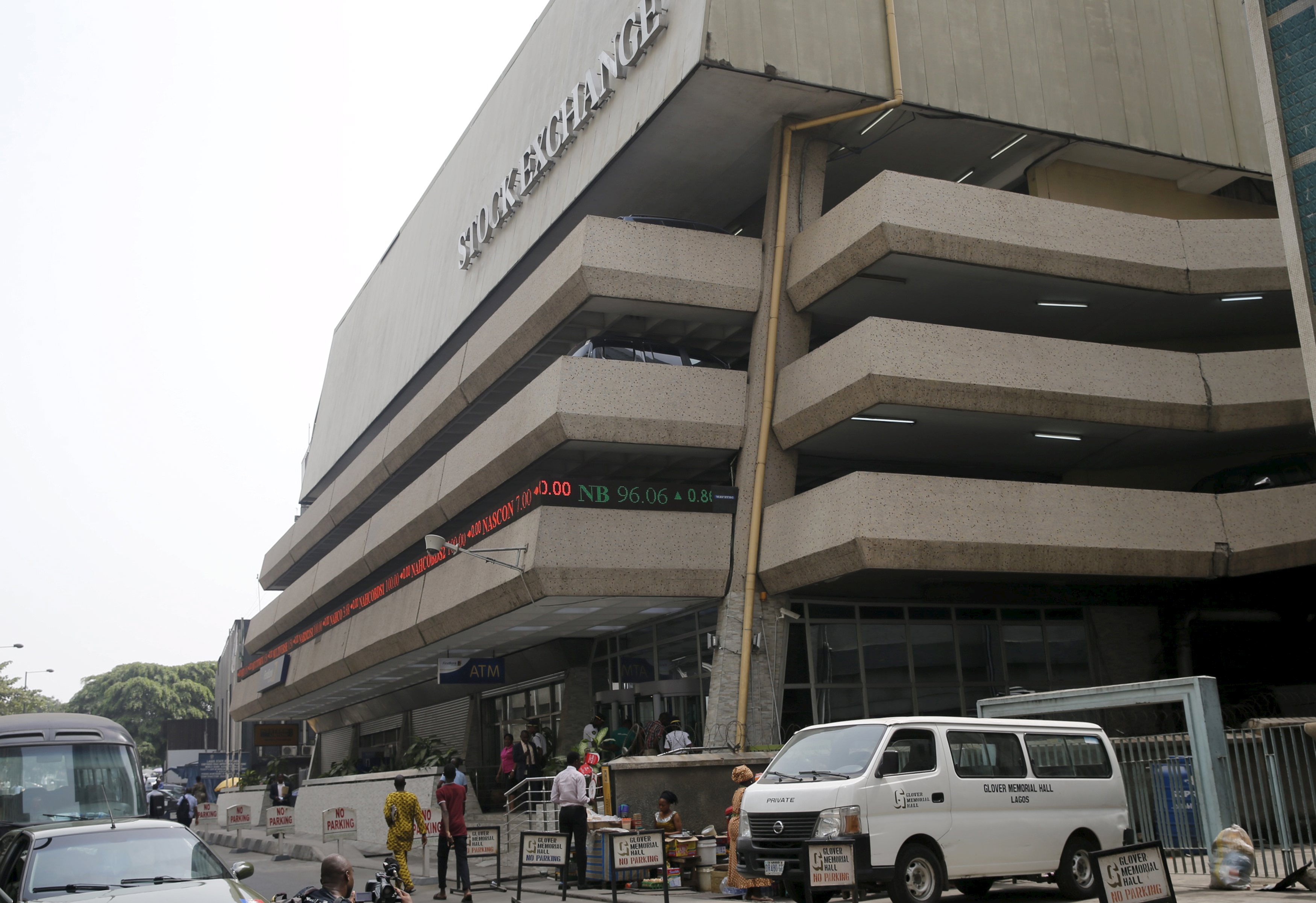
The Nigerian Exchange (NGX) Limited witnessed Santa Claus rally on Wednesday after it closed higher by 0.12 per cent.
Strong demand for Nigerian stocks lifted the All-Share Index (ASI) by 185.70 points during the pre-Christmas trading session to 153,539.83 points from 153,354.13 points.
In the same vein, the market capitalisation expanded at midweek by N118 billion to N97.890 trillion from the preceding day’s N97.772 trillion.
Investor sentiment on Customs Street remained bullish after closing with 36 appreciating equities and 22 depreciating equities, indicating a positive market breadth index.
Guinness Nigeria chalked up 9.98 per cent to trade at N318.60, Austin Laz improved by 9.97 per cent to N3.20, International Breweries expanded by 9.85 per cent to N14.50, Transcorp Hotels rose by 9.83 per cent to N170.90, and Aluminium Extrusion grew by 9.73 per cent to N16.35.
On the flip side, Legend Internet lost 9.26 per cent to close at N4.90, AXA Mansard shrank by 7.14 per cent to N13.00, Jaiz Bank declined by 5.45 per cent to N4.51, MTN Nigeria weakened by 5.21 per cent to N504.00, and NEM Insurance crashed by 4.74 per cent to N24.10.
Yesterday, a total of 1.8 billion shares valued at N30.1 billion exchanged hands in 19,372 deals versus the 677.4 billion shares worth N20.8 billion traded in 27,589 deals in the previous session, implying a slump in the number of deals by 29.78 per cent, and a surge in the trading volume and value by 165.72 per cent and 44.71 per cent apiece.
Abbey Mortgage Bank was the most active equity for the day after it sold 1.1 billion units worth N7.1 billion, Sterling Holdings traded 127.1 million units valued at N895.9 million, Custodian Investment exchanged 115.0 million units for N4.5 billion, First Holdco transacted 40.9 million units valued at N2.2 billion, and Access Holdings traded 38.2 million units worth N783.3 million.


By Adedapo Adesanya
Nigerian food and beverage company, Rite Foods Limited, has extended warm Yuletide greetings to Nigerians as families and communities worldwide come together to celebrate the Christmas season and usher in a new year filled with hope and renewed possibilities.
In a statement, Rite Foods encouraged consumers to savour these special occasions with its wide range of quality brands, including the 13 variants of Bigi Carbonated Soft Drinks, premium Bigi Table Water, Sosa Fruit Drink in its refreshing flavours, the Fearless Energy Drink, and its tasty sausage rolls — all produced in a world-class facility with modern technology and global best practices.
Speaking on the season, the Managing Director of Rite Foods Limited, Mr Seleem Adegunwa, said the company remains deeply committed to enriching the lives of consumers beyond refreshment. According to him, the Yuletide period underscores the values of generosity, unity, and gratitude, which resonate strongly with the company’s philosophy.
“Christmas is a season that reminds us of the importance of giving, togetherness, and gratitude. At Rite Foods, we are thankful for the continued trust of Nigerians in our brands. This season strengthens our resolve to consistently deliver quality products that bring joy to everyday moments while contributing positively to society,” Mr Adegunwa stated.
He noted that the company’s steady progress in brand acceptance, operational excellence, and responsible business practices reflects a culture of continuous improvement, innovation, and responsiveness to consumer needs. These efforts, he said, have further strengthened Rite Foods’ position as a proudly Nigerian brand with growing relevance and impact across the country.
Mr Adegunwa reaffirmed that Rite Foods will continue to invest in research and development, efficient production processes, and initiatives that support communities, while maintaining quality standards across its product portfolio.
“As the year comes to a close, Rite Foods Limited wishes Nigerians a joyful Christmas celebration and a prosperous New Year filled with peace, progress, and shared success.”
By Adedapo Adesanya
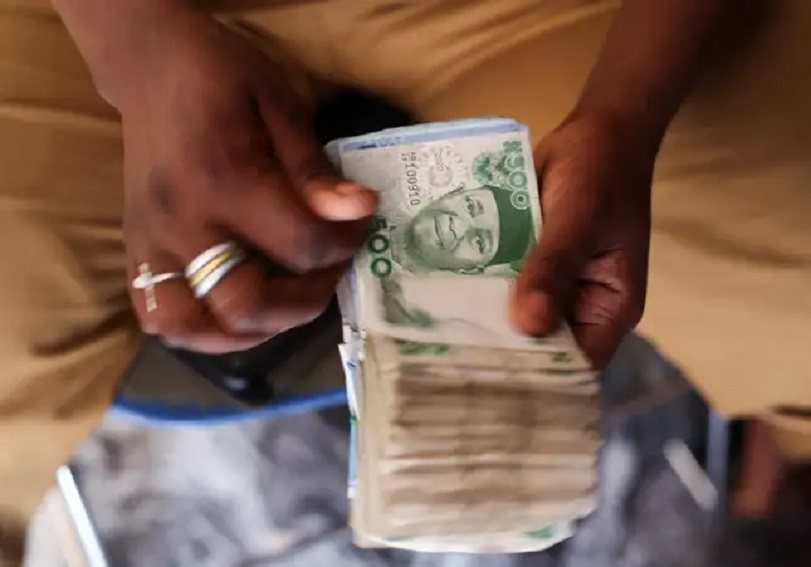
The Naira closed the pre-Christmas trading day positive after it gained N6.61 or 0.46 per cent against the US Dollar in the Nigerian Autonomous Foreign Exchange Market (NAFEM) on Wednesday, December 24, trading at N1,443.38/$1 compared with the previous day’s N1,449.99/$1.
Equally, the Naira appreciated against the Pound Sterling in the same market segment by N1.30 to close at N1,949.57/£1 versus Tuesday’s closing price of N1,956.03/£1 and gained N2.94 on the Euro to finish at N1,701.31/€1 compared with the preceding day’s N1,707.65/€1.
At the parallel market, the local currency maintained stability against the greenback yesterday at N1,485/$1 and also traded flat at the GTBank forex counter at N1,465/$1.
Further support came as the Central Bank of Nigeria (CBN) funded international payments with additional $150 million sales to banks and authorised dealers at the official window.
This helped eased pressure on the local currency, reflecting a steep increase in imports. Market participants saw a sequence of exchange rate swings amidst limited FX inflows.
Last week, the apex bank led the pack in terms of FX supply into the market as total inflows fell by about 50 per cent week on week from $1.46 billion in the previous week.
Foreign portfolio investors’ inflows ranked behind exporters and the CBN supply, but there was support from non-bank corporate Dollar volume.
As for the cryptocurrency market, it witnessed a slight recovery as tokens struggled to attract either risk-on enthusiasm or defensive flows.
The inertia follows a sharp reversal earlier in the quarter. A heavy selloff in October pulled Bitcoin and other coins down from record levels, leaving BTC roughly down by 30 per cent since that period and on track for its weakest quarterly performance since the second quarter of 2022. But on Wednesday, its value went up by 0.9 per cent to $87,727.35.
Further, Ripple (XRP) appreciated by 1.7 per cent to $1.87, Cardano (ADA) expanded by 1.2 per cent to $0.3602, Dogecoin (DOGE) grew by 1.1 per cent to $0.1282, Litecoin (LTC) also increased by 1.1 per cent to $76.57, Solana (SOL) soared by 1.0 per cent to $122.31, Binance Coin (BNB) rose by 0.6 per cent to $842.37, and Ethereum (ETH) added 0.3 per cent to finish at $2,938.83, while the US Dollar Tether (USDT) and the US Dollar Coin (USDC) remained unchanged at $1.00 each.










-
 Feature/OPED6 years ago
Davos was Different this year
-
Travel/Tourism9 years ago
Lagos Seals Western Lodge Hotel In Ikorodu
-

 Showbiz3 years ago
Estranged Lover Releases Videos of Empress Njamah Bathing
-
 Banking8 years ago
Sort Codes of GTBank Branches in Nigeria
-

 Economy3 years ago
Subsidy Removal: CNG at N130 Per Litre Cheaper Than Petrol—IPMAN
-

 Banking3 years ago
First Bank Announces Planned Downtime
-

 Banking3 years ago
Sort Codes of UBA Branches in Nigeria
-

 Sports3 years ago
Highest Paid Nigerian Footballer – How Much Do Nigerian Footballers Earn