Connect with us

Economy

Air Liquide Plc Announces Date for 61st AGM

Published

on

air liquide nigeria

By Adedapo Adesanya

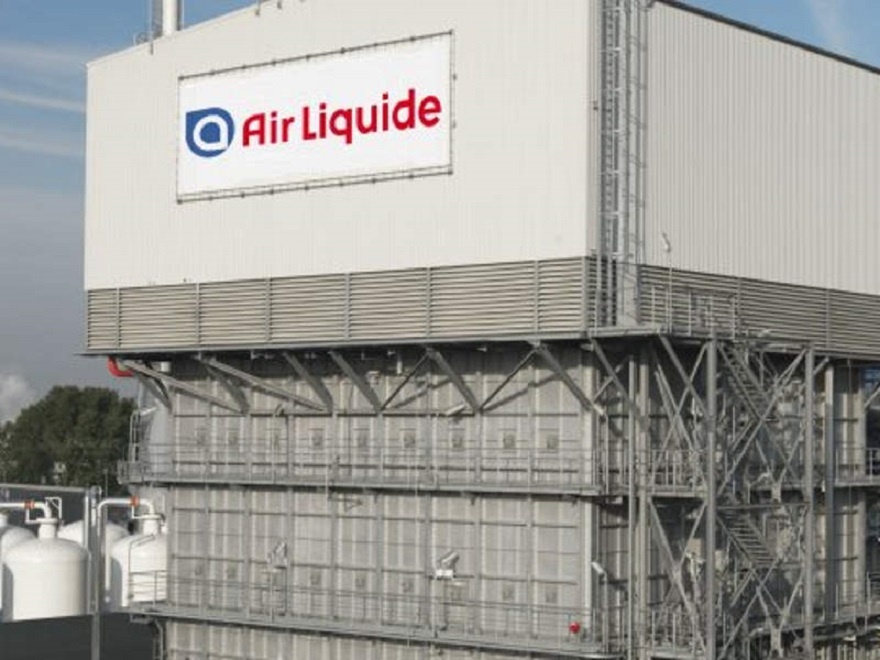
Industrial service company, Air Liquide Nigeria Plc, has announced date for its closure of register ahead of its Annual General Meeting (AGM) next month.

This was disclosed in a notice sent on Wednesday, May 13, to the NASD Over-the-Counter (OTC) Securities Exchange, where it trades its stocks.

The company noted that its closure of register will be from Monday, May 18 to Wednesday, May 20, all dates inclusive.

This means only shareholders who own shares of Air Liquide Plc before this date will be paid the dividends recommended by the board.

However, the amount to be paid as dividend was not stated in the public notice filed to the NASD Exchange yesterday.

The company also said its board will meet with shareholders to discuss at the 61st Annual General Meeting which will hold on Thursday, June 18, 2020.

This has been scheduled to take place at Sheraton Hotels and Towers located at Mobolaji Bank-Anthony Way, Ikeja Lagos from 12 pm.

Air Liquide Nigeria Plc supplies industrial and medical gases. The company offers argon, acetylene, nitrogen, medical oxygen, nitrous oxide, and specialty gases.

Air Liquide Nigeria serves healthcare, steel, automotive, fabrication, food and beverage, and oil and gas industries.

At as Thursday morning, its share price was trading at N6 per share at NASD OTC bourse.

Adedapo Adesanya is a journalist, polymath, and connoisseur of everything art. When he is not writing, he has his nose buried in one of the many books or articles he has bookmarked or simply listening to good music with a bottle of beer or wine. He supports the greatest club in the world, Manchester United F.C.

Click to comment

Leave a Reply

Your email address will not be published. Required fields are marked *

Economy

NIRSAL Relishes Participation of Non-Interest Banks in Credit Risk Guarantees for Loans

Published

on

NIRSAL guaranteed loan

By Aduragbemi Omiyale

The Nigeria Incentive-Based Risk Sharing System for Agricultural Lending (NIRSAL) Plc has expressed satisfaction with the growing participation of non-interest financial institutions in its credit risk guarantees for loans to farmers, processors, aggregators, exporters and other businesses across multiple agricultural value chains.

The chief executive of the non-bank financial institution created by the Central Bank of Nigeria (CBN) to de-risk agricultural lending in the country, Mr Sa’ad Hamidu, said non-interest lenders accounted for well over 50 per cent of the loans guaranteed by NIRSAL in the first half of 2026.

In 2025, the company guaranteed more than N100 billion to beneficiaries, and according to Mr Hamidu, this figure has already been surpassed in 2026 year-to-date.

Speaking at the AFRACA Masterclass on Inclusive Finance for Climate Resilience and Artificial Intelligence for Financial Services and Agricultural Finance in Lagos, the NIRSAL chief stated that the trend demonstrates what becomes possible when appropriate risk-sharing frameworks create sufficient confidence for different forms of capital to participate in agriculture.

“At NIRSAL, we have always maintained that agriculture, especially in sub-Saharan Africa, is not underfinanced because opportunities do not exist, but because the risks have not been sufficiently understood, measured, appropriately priced, and managed,” Mr Hamidu, represented by the agency’s Executive Director of Operations, Mr Ewaen Imohe, said.

He explained that NIRSAL’s response has been to co-develop systems and financing frameworks that bring greater structure to agricultural value chains, better define and mitigate their risks, and improve financiers’ understanding of the sector and confidence to lend.

The NIRSAL boss described the masterclass as particularly timely, noting that climate change is no longer an abstract global concern but a practical reality confronting farmers, agribusinesses and their financiers every production season across Africa.

The programme’s first major theme, Inclusive Finance for Climate Resilience, exposed participants to the concepts, tools, and approaches required to understand climate risk and develop financeable adaptation and mitigation projects.

For the second major theme, Artificial Intelligence for Financial Services and Agricultural Finance, Mr Hamidu expressed the expectation that participants would move beyond the excitement surrounding AI to examine how it can improve risk understanding, transaction assessment, and financial decision-making in agriculture.

He also pointed to opportunities for technology to complement climate finance, blended finance, grants, and other innovative mechanisms capable of expanding the financial and technical resources available to African agriculture.

On deepening AFRACA-NIRSAL collaboration, he stated that, “AFRACA, for us, is a platform for knowledge, continental exchange, and global insight. On our part, we remain a results-driven source of practical experience for AFRACA member countries.”

Continue Reading

Economy

CSCS Loses N10.30 Per Share to Slash NASD OTC Market Cap by 0.36%

Published

on

ISSA CSCS

By Adedapo Adesanya

The Central Securities Clearing System (CSCS) Plc weakened the NASD Over-the-Counter (OTC) Securities Exchange by 0.36 per cent on Wednesday, August 19, slicing the market capitalisation of the platform by N9.41 billion to N2.60 trillion from N2.610 trillion, and reducing the NASD Security Index (NSI) by 15.67 points to 4,333.09 from 4,348.76 points.

The securities depository company lost N10.30 at midweek to close at N88.12 per share versus Tuesday’s closing price of N90.02 per share.

This offset the 38 Kobo gained by Golden Capital Plc during the session. The stock traded at N14.05 per unit compared with the preceding day’s N13.67 per unit.

Yesterday, the volume of securities soared by 557.2 per cent to 747,429 units from 113,728 units, the value of securities jumped by 934.0 per cent to N9.4 million from N375.7 million, and the number of deals increased by 35.5 per cent to 42 deals from 31 deals.

Great Nigeria Insurance (GNI) Plc remained the most active stock by value on a year-to-date basis, with 3.4 billion units valued at N8.4 billion, trailed by Infrastructure Credit Guarantee (Infracredit) Plc with 2.3 billion units exchanged for N6.5 billion, and CSCS Plc with 79.9 million units worth N5.8 billion.

GNI Plc also finished the session as the most traded stock by volume on a year-to-date basis, with 3.4 billion units transacted for N8.4 billion, followed by Infracredit Plc with 2.3 billion units traded for N6.5 billion, and Resourcery Plc with 1.1 billion units sold for N415.7 million.

Continue Reading

Economy

Naira Loses N7.09, Closes N1,350/$1 at NAFEM

Published

on

more wealth for investors Naira

By Adedapo Adesanya

The Naira weakened by N7.09 or 0.53 per cent against the United States Dollar in the Nigerian Autonomous Foreign Exchange Market (NAFEM) on Wednesday, August 19, to N1,350.41/$1 from the previous rate of N1,343.32/$1.

The local currency also significantly depreciated against the Pound Sterling in the official market yesterday, by N19.87, to close at N1,839.13/£1 versus the previous day’s N1,819.26/£1, and against the Euro, it lost N18.07 to end at N1,574.31/€1 versus Tuesday’s price of N1,556.24/€1.

However, at the black market, the Naira maintained stability against the US Dollar at N1,390/$1, and also remained unchanged at the GTBank forex desk at N1,357/$1.

Interbank FX turnover increased by 1.72 per cent to $370.980 million from $364.709 million, according to the daily update by the Central Bank of Nigeria (CBN).

On the other hand, the number of interbank FX deals declined to 100, from 108 the previous day, reflecting a moderate slowdown in activities.

Available data from the central bank showed that demand for FX by end-users in Nigeria fell by 35.23 per cent to $3.42 billion in April 2026, easing pressure on the Dollar market as the Naira recorded modest gains.

This occurred as FX utilisation across economic sectors declined during the month, while the Naira strengthened at the official market. Across several sectors, including oil, food, and manufacturing, there were drops.

The monthly average exchange rate improved 1.38 per cent to N1,361.22 per Dollar in April from N1,379.98/$1 in March. At the end of the review month, the domestic currency closed at N1,374.94 per Dollar at NAFEM, compared with N1,386.72/$1 at the end of March.

In the cryptocurrency market, coins recorded massive jumps following the US Treasury’s decision to at least double bond buyback operations and was reinforced by a bond-market surge and President Donald Trump’s call for Congress to advance crypto market-structure legislation.

The American President urged Congress to advance the Digital Asset Market Clarity Act, calling for “a fair version” of the market structure bill that has been stuck in the Senate.

Ethereum (ETH) surged by 18.2 per cent to $2,261.93, Solana (SOL) rose by 11.4 per cent to $85.77, Ripple (XRP) expanded by 10.5 per cent to $1.10, Bitcoin (BTC) grew by 8.6 per cent to $69,784.82, Dogecoin (DOGE) added 7.3 per cent to sell at $0.0751, Cardano (ADA) rose by 4.8 per cent to $0.1842, Binance Coin (BNB) jumped by 4.5 per cent to $628.45, and TRON (TRX) increased by 0.1 per cent to $0.3330, while the US Dollar Tether (USDT) and the US Dollar Coin (USDC) remained unchanged at $1.00 apiece.

Continue Reading