Connect with us

Economy

Awe Calls for Review of Current ESG Frameworks

Published

on

ESG frameworks

By Aduragbemi Omiyale

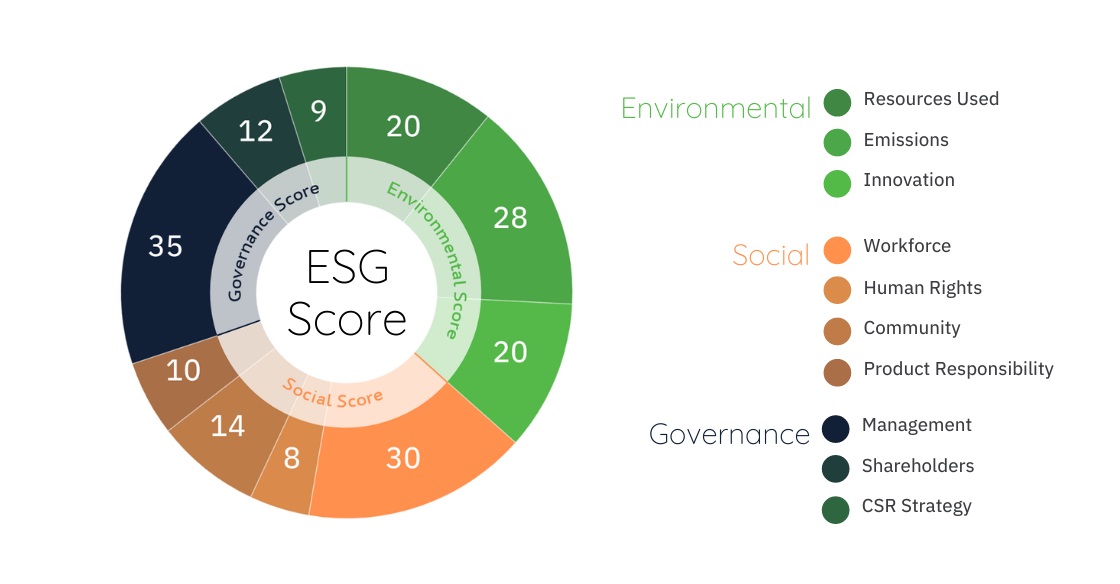
The current structures of the environmental, sustainability and governance (ESG) should be reviewed for better efficiency, the chief executive officer of the Nigerian Exchange Regulation (NGX RegCo) Limited, Ms Tinuade Awe, has submitted.

According to her, the ESG frameworks must be tinkered with to accommodate the changes triggered by the COVID-19 pandemic of 2020, urging stakeholders to intensify ESG efforts.

“Our world is yet to heal from the economic scars caused by the COVID-19 pandemic, and now we are facing a climate crisis. These challenges threaten to erase the significant progress made toward sustainable development,” Ms Awe said during her keynote speech at the Association of Sustainability Professionals of Nigeria (ASPN) webinar held recently.

At the programme themed Purpose Driven ESG Disclosures: Redefining the Facts Behind Sustainability, she said stakeholders should begin to prioritise actions that would help address global developmental challenges affecting ESG disclosures, noting that opportunity abounds for both private and public sectors to enhance sustainability output.

“This awakening for a sustainable world is also present within the financial sector, as evident in the rise of Environmental, Social, and Governance (ESG) factors in assessing investment opportunities and providing financial services,” she further said at the seminar organised to address several challenges confronting businesses and sustainability professionals in the formulation and implementation of ESG disclosures in Nigeria and beyond.

“The concept of ESG is an area of increasing interest in developed and developing economies due to the interplay between ESG and key issues such as sustainable development, corporate governance, climate change, stakeholder engagement, and community relations, amongst a myriad of issues,” she added.

Ms Awe disclosed the initiatives NGX RegCo is doing to catalyse ESG disclosures in the Nigerian capital market, saying the regulator collaborated with other stakeholders on developing the NGX Sustainability Disclosure Guidelines in 2019.

The guidelines aim to provide companies with a step-by-step approach to integrating sustainability into their activities and operations. With the last publication in 2019, the organisation is looking to update the NGX Sustainability Disclosure Guidelines.

According to her, “the updated Sustainability Disclosure Guidelines will be built on some of the most updated recent global sustainability reporting standards and frameworks including the Global Reporting Initiative (GRI) Universal Standards and facilitate a phased transition to mandatory sustainability reporting for companies listed on NGX in line with global trends.”

The CEO has also called for improvement across the ecosystem and tasked stakeholders to set agendas that ensure that critical ESG-related issues become deep-rooted cultural values shared by all stakeholders in corporations, a step she believes will help improve Nigeria’s ESG performance and reputation on the global stage.


Economy

Peter Obi Raises Eyebrows Over Tinubu’s $11.6bn Debt Servicing Plan

Published

on

peter obi

By Aduragbemi Omiyale

The presidential candidate of the Labour Party in the 2023 general elections, Mr Peter Obi, has expressed worry over plans by the administration of President Bola Tinubu to spend about $11.6 billion on debt servicing.

In a post on his social media platform on Monday, the opposition politician criticised this move, saying it is not good for the country.

He also said this action “should concern anyone interested in the country’s economic future and long-term development.”

The former Governor of Anambra State kicked against the penchant of the government to borrow from various sources without anything to show for it.

“There is nothing inherently wrong with borrowing when it is guided by prudence and directed toward productive investment, he noted, stressing that countries such as Japan, the United Kingdom, the United States, the United Arab Emirates, Singapore, and Indonesia are all heavily indebted, yet their borrowings are largely channelled into education, healthcare, infrastructure, and innovation – sectors that generate long-term economic returns and sustain repayment capacity.”

According to him, “despite high debt levels, their obligations remain more manageable because they are tied to measurable productivity.”

He said, “Nigeria’s situation, however, is markedly different. A huge proportion of past borrowing has been directed toward consumption, with limited visible or sustainable developmental outcomes to justify the scale of indebtedness.”

“It is also important to note that a huge portion of the debt currently being serviced was accumulated under the Tinubu administration itself, while borrowing has continued at a significant pace. The administration’s recent external borrowing alone includes about $6 billion (from First Abu Dhabi Bank in the UAE—$5 billion, and UK Export Finance via Citibank London—$1 billion), a further $1.25 billion under consideration from the World Bank, and an additional $516 million arranged through Deutsche Bank, bringing the latest known external loan commitments to roughly $7.8 billion. In addition, domestic borrowing through monthly bond issuances continues to add to the overall debt stock,” the businessman also stated.

“Against this backdrop, Nigeria’s 2026 budget shows that health is N2.46 trillion, education is N2.56 trillion, and poverty alleviation is N865 billion, giving a combined total of about N5.885 trillion for these three critical sectors.

“By comparison, debt servicing at about $11.6 billion (approximately N17–N18 trillion, depending on exchange rate assumptions) is almost three times higher than the total allocation to health, education, and social protection combined. This imbalance highlights a troubling fiscal reality in which debt obligations increasingly crowd out investment in human capital and poverty reduction.

“Moreover, even within the limited allocations to these sectors, funds may not be fully released, and a significant portion of what is eventually released could be misappropriated,” he further stated.

Mr Obi said, “The central issue is not borrowing itself, but whether borrowed funds are being converted into measurable productivity, inclusive growth, and improved living standards. Without this, debt servicing shifts from being a temporary fiscal obligation to a long-term structural burden that constrains development and deepens economic vulnerability.”

Continue Reading

Economy

Pathway Advisors Closes Fresh N16.76bn Oversubscribed Veritasi Homes CP

Published

on

Pathway Advisors Limited

By Adedapo Adesanya

Pathway Advisors Limited, an issuing house and financial advisory firm, has announced the successful completion of the Series 2 Commercial Paper issuance for Veritasi Homes & Properties Plc.

The Series 2 offer, issued under Veritasi Homes’ newly registered N20.00 billion Commercial Paper Programme, raised N16.76 billion, significantly above its initial N12.00 billion target on the back of strong institutional demand.

This issuance builds on the company’s track record in the Nigerian debt capital market and follows the recently concluded N10 billion 3-year 20 per cent  Series 1 Fixed Rate Bond Issuance, further reinforcing investor confidence in Veritasi Homes’ strong credit profile.

The 364-day tenor instrument attracted robust participation from a diverse pool of institutional investors, underscoring sustained confidence in the Company’s financial strength, operating model, and governance standards.

Commenting on the deal, the Founder/CEO of Pathway Advisors Limited, Mr Adekunle Alade (MBA, FCA, M.CIod), noted that the outcome further validates investor appetite for well-structured transactions in the Nigerian capital market.

“The strong oversubscription speaks to the market’s confidence in Veritasi Homes’ performance, governance, and repayment track record. We are pleased to continue supporting issuers with strong fundamentals in accessing efficient funding.’’

He further highlighted that Veritasi Homes’ consistent market activities since 2022, including successful issuances and full redemption of matured obligations, continue to strengthen its reputation among institutional investors.

“Pathway Advisors Limited remains committed to maintaining its leadership position within Nigeria’s capital markets through the origination and execution of transformative, value-driven, and commercially viable transactions by deploying innovative financial solutions and facilitating strategic capital formation across critical sectors.

“We are committed to supporting credible corporates in accessing efficient short-term and long-term financing solutions within the Nigerian capital market,” he said in a statement on Monday.

Speaking on the transaction, the Managing Director/CEO of Veritasi Homes & Properties Plc, Mr Nola Adetola, described the outcome as a strong endorsement of the company’s fundamentals.

“This result reflects the resilience of our business model, our growing market reputation, and the continued trust of the investment community. We are grateful to all institutional investors for their confidence in Veritasi Homes.”

He added that the proceeds from the issuance will be deployed to support the company’s working capital requirements, enhance liquidity, and complete the ongoing development activities across its real estate portfolio.

Mr Adetola also commended Pathway Advisors Limited for its advisory and arranging role in the successful execution of the transaction.

Continue Reading

Economy

SEC Okays Migration to T+1 Settlement Cycle for Capital Market Transactions

Published

on

Investments and Securities Act 2025

By Aduragbemi Omiyale

The Securities and Exchange Commission (SEC) has approved the transition to the T+1 settlement cycle for capital market transactions from June 1, 2026.

This is coming some months after Nigeria moved from the T+3 settlement cycle to the T+2 settlement cycle.

The T+ settlement cycle is the number of working days required to complete a capital market transaction, such as the trading of securities, shares, and others, from the first day the trade was executed by an investor.

In a notice on Monday, the SEC, which is the apex capital market regulator in Nigeria, said it was authorising the new system to “promote an efficient, fair, and transparent capital market.”

Under the new arrangement, equities and commodities traded by investors at the market would be cleared and settled by the Central Securities Clearing System (CSCS) within one day.

The agency noted that the migration to a T+1 settlement cycle forms part of its ongoing market modernisation initiatives aimed at enhancing market efficiency and strengthening risk management. reducing counterparty exposure, improving liquidity, and aligning the Nigerian capital market with international standards and global best practices.

“Accordingly, all eligible trades executed in the Nigerian capital market shall settle one business day after the trade date (T+1),” a part of the statement noted.

It was stressed that “Friday, May 29, 2026, shall be the final trading day under the existing T+2 settlement cycle. Trades executed on Friday, May 29, 2026, and Monday, June 1, 2026, shall both settle on Tuesday, June 2, 2026. All trades executed from Monday, June 1, 2026, onward shall be subject to the T+1 settlement cycle.”

SEC tasked all capital market operators, securities exchanges, clearing and settlement infrastructure providers, custodians, registrars, issuers, and other relevant stakeholders to take all necessary measures to ensure full operational readiness and compliance with the new settlement framework.

“Market participants are expected to review and align their systems, processes, controls, and operational workflows ahead of the implementation date,” it further stated, promising to continue to engage stakeholders and monitor the implementation process to ensure an orderly and seamless transition.

The regulator said it remains committed to strengthening market integrity, enhancing investor confidence, and fostering the development of a modern. resilient and globally competitive Nigerian capital market.

Continue Reading

Trending