Connect with us

Economy

Oil Theft Has Become a Franchise in Nigeria—Ejiofor

Published

on

Mike Ejiofor oil theft has become a franchise

By Dipo Olowookere

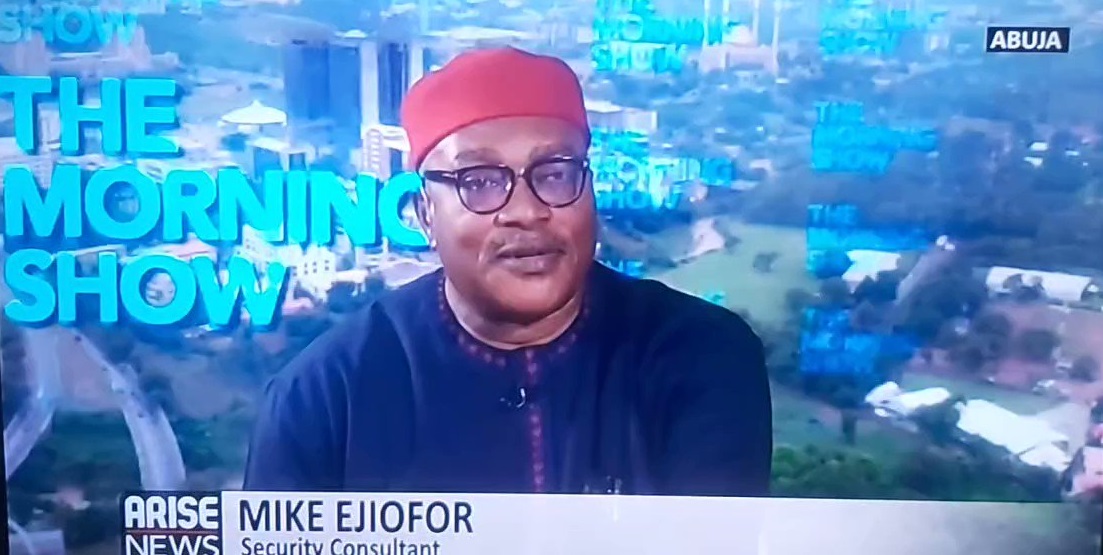
A former director of the Department of State Services (DSS), Mr Mike Ejiofor, has stated that oil theft has become a franchise in Nigeria, noting that it involves some powerful persons in the country.

He made this disclosure while speaking on Thursday on Arise TV breakfast programme, The Morning Show, anchored by the duo of Mr Reuben Abati and Mr Rufai Oseni.

“Why it (oil theft) has become a challenge now is that it has become a franchise. The thief should not steal more than the owner, but now, the bunkerers have the greater share of our national wealth, and it becomes worrisome,” he said.

“So, what should we do to bring this to an end?” Mr Ejiofor queried, stating that, “If you look at the whole situation, it is mindboggling.”

During the show, the security expert disclosed that the intelligence community in Nigeria do get intel about the activities of oil thieves, but the political leaders always fail to act.

He cited an instance when in about 2004, he and a military officer, after getting reports about oil bunkerers, they planned to bust them, but before the action was taken, the information was leaked, and he later received a call from a former militant leader, Mr Government Ekpemupolo, otherwise known as Tompolo, about the botched invasion.

Mr Ejiofor said the oil theft was draining the country as revenue that should be used to develop Nigeria is going into private pockets, depriving most citizens of a good life.

Some days ago, the Group Chief Executive Officer of the Nigerian National Petroleum Company (NNPC) Limited, Mr Mele Kyari, said a four-kilometre pipeline used to siphon oil from Forcados in Delta State to the Sea. He also said this illegal pipeline and a Loading Port had been operated in the last nine years.

He made the disclosure some days after the presidential candidate of the Labour Party in the 2023 election, Mr Peter Obi, said the government was complicit in crude oil theft, noting that only powerful individuals, in connivance with government officials, could steal crude oil and get the commodity out of the country through the waters.

During a visit to the illegal pipeline, Mr Kyari and the Chief of Defence Staff, General Lucky Irabor, promised to investigate and ensure those found culpable face the wrath of the law.

The revelation about the 4km pipeline cropped up after some Nigerians criticised the award of oil pipeline surveillance to Tompolo. The ex-Niger Delta militant said his team has discovered several points oil thieves use to steal crude oil from the country.


Dipo Olowookere is a journalist based in Nigeria that has passion for reporting business news stories. At his leisure time, he watches football and supports 3SC of Ibadan. Mr Olowookere can be reached via [email protected]

Click to comment

Leave a Reply

Your email address will not be published. Required fields are marked *

Economy

How Digital Payments Are Changing the Way Global Businesses Operate

Published

on

crypto payment

For businesses operating across borders, payments are no longer simply the final step in a transaction. The way money moves can influence where a company sells, how quickly it can enter a new market, and how easily customers can complete a purchase. As digital payment methods become more diverse, businesses are adjusting not only their checkout options but also the way payment processes fit into wider operations.

This shift is particularly visible in international commerce. A company can now serve customers in multiple markets without relying on a single payment method or a traditional physical presence in each location. Digital payments have become part of the infrastructure that supports increasingly distributed business models.

A More Connected Payment Environment

Global commerce has created a more complicated payment environment. Customers in different countries may have very different expectations about how a purchase should be paid for. Some markets rely heavily on cards, while others have seen rapid adoption of digital wallets, bank-based payment methods, or other local alternatives.

For businesses, this variety creates both opportunities and practical challenges. Offering payment options that customers recognize can reduce friction during a transaction, while supporting several markets may require businesses to work with different payment technologies and providers.

Digital payments have therefore become closely connected to market expansion. A company entering a new country does not only need to consider demand for its products or services. It also needs to understand how customers in that market prefer to pay and whether its existing payment setup can accommodate those expectations.

6a7b071354914.webp

More Choices for Businesses and Customers

The growth of digital payments has expanded the range of choices available on both sides of a transaction.

Consumers can increasingly choose between cards, digital wallets, bank transfers, mobile payment methods and other forms of electronic payment. Businesses, meanwhile, can select from different technologies and payment providers depending on their markets and operational requirements.

This development has changed the role of payments in the customer experience. Payment is no longer necessarily treated as an isolated technical process that begins only after a purchasing decision has been made. The available options can influence whether a customer completes a transaction in the first place.

For international businesses, flexibility can be particularly important. A payment method that is familiar and convenient in one market may be less relevant in another. Supporting a broader selection can allow businesses to adapt their payment experience without changing the underlying product or service.

The Rise of Alternative Payment Models

Traditional card and bank-based payments remain important, but the digital payments landscape has expanded beyond these established methods. Digital wallets, account-to-account payments, mobile solutions and cryptocurrency have all contributed to a broader definition of what a digital transaction can look like.

Cryptocurrency remains a smaller part of the overall payments landscape, but it has created another category of payment technology for businesses to consider. Specialized solutions such as BitHide can provide businesses with tools for handling crypto payments as part of their broader payment operations.

The significance of this development is not necessarily that every business will adopt cryptocurrency. Rather, it demonstrates how the payment landscape continues to diversify. Businesses operating internationally can increasingly choose from different models instead of relying on a single approach across every market.

Payments Are Becoming Part of Business Operations

As payment systems become more digital, their role increasingly extends beyond accepting money from customers. Payment processes can interact with accounting, order management, customer records and other parts of a company’s digital operations.

This is particularly relevant for businesses with large transaction volumes or customers in multiple countries. Manual payment processes can become difficult to manage as the number of transactions, currencies and payment methods increases. Digital systems can help businesses organize these processes within a wider operational framework.

The result is a gradual shift in how companies think about payments. Instead of treating payment processing as a separate function, businesses are increasingly considering it alongside other elements of their digital infrastructure.

This does not mean that every company needs a complex payment setup. The appropriate approach depends on the business model, target markets, transaction volumes and types of customers involved. For some companies, a small number of established payment methods may be sufficient. Others may need a more flexible arrangement because of the markets they serve.

Adapting to Different Markets

One of the more important changes brought by digital payments is the ability to adapt payment experiences to different markets.

International businesses often face differences in consumer behavior, financial infrastructure and preferred payment methods. A payment strategy that works well domestically may therefore require adjustments when a company expands internationally.

Digital payment technology can make these adjustments more practical, but it does not remove the need for local market knowledge. Businesses still need to understand customer preferences, applicable requirements and the practical costs associated with different payment methods.

This makes payment strategy part of international expansion rather than an issue that can be addressed only after a new market has been entered.

What Comes Next for Global Businesses

The digital payments market is likely to continue becoming more diverse as businesses and customers adopt new ways of moving money. The important change may not be the replacement of one payment method by another, but the growing ability to combine different methods according to the needs of a particular business or market.

For global companies, this creates an emphasis on adaptability. Payment systems need to support the way a business operates rather than becoming a limitation on where and how it can sell.

Digital payments are consequently becoming more than a convenient alternative to cash or traditional payment processes. They are increasingly connected to international commerce, customer experience and day-to-day business operations. As payment options continue to develop, companies that can adapt their payment strategies to different markets will be better positioned to operate in an increasingly digital global economy.

Continue Reading

Economy

Dangote Refinery Accepts 52.6m Barrels of 68.1m Crude Offered in Q2 2026

Published

on

nigerian crude oil

By Adedapo Adesanya

The Dangote Refinery accepted 52.6 million barrels of crude oil and condensate from producers in the second quarter of 2026, representing 78 per cent of the 68.1 million barrels offered to the refinery, according to the Nigerian Upstream Petroleum Regulatory Commission (NUPRC).

The refinery, which required about 63 million barrels during the three-month period, received the largest share of crude volumes offered to domestic refineries, accounting for about 98 per cent of total volumes offered by producers.

The figures were contained in the commission’s latest data on the implementation of the Domestic Crude Supply Obligation (DCSO), which showed that producers supplied 53.7 million barrels to local refineries between April and June.

The Q2 performance translated to a 97.4 per cent compliance rate with the DCSO, which is enforced by the NUPRC under Section 109 of the Petroleum Industry Act (PIA) 2021.

The agency said the DCSO framework operates on a “willing buyer, willing seller” basis, with monthly consultations between producers and refiners used to determine crude allocation volumes.

Despite producers offering the Dangote Refinery about 5.1 million barrels more than its quarterly requirement, the plant accepted 52.6 million barrels, leaving about 15.5 million barrels of the offered volume unaccepted.

NUPRC said the difference highlighted the need for continued coordination between producers and domestic refiners, particularly on commercial terms and logistics.

The commission attributed the improved DCSO compliance in the second quarter to increased local crude production and the signing of long-term crude supply agreements backed by bankable Sales and Purchase Agreements (SPAs).

According to NUPRC, these agreements have reduced transactional difficulties and improved the predictability of crude supply, enabling domestic refineries to plan their offtake more effectively.

Monthly data showed mixed performance during the quarter. In April, producers offered 19.31 million barrels against an allocation of 18.13 million barrels, while refineries received 20.88 million barrels, representing a 114.9 per cent delivery rate.

In May, producers offered 23.19 million barrels against an allocation of 18.78 million barrels, but actual deliveries fell to 14.23 million barrels, resulting in a 75.8 per cent compliance rate.

In June, producers offered 26.84 million barrels against an allocation of 18.17 million barrels, while refineries received 18.61 million barrels, representing a 102.4 per cent performance rate.

The NUPRC said it would continue to enforce the DCSO under the PIA while leveraging increased domestic production and commercial supply arrangements to support Nigeria’s energy sufficiency objectives.

Continue Reading

Economy

Africa’s Core Financial Challenge is Infrastructural, Not Liquidity—Stanley Jacob

Published

on

stanley jacob meristem

By Modupe Gbadeyanka

The Group Chief Innovation and Technology at Meristem, Mr Stanley Jacob, submitted that the core financial challenge facing Nigeria and Africa is not funding, but a lack of financial architecture and project readiness to deploy existing capital safely and productively.

At a forum organised by The Alternative Bank (AltBank) last Thursday in Lagos, Mr Jacob tasked policymakers to think out of the box, noting that the continent holds vast domestic capital pools.

At the event themed Beyond Interest, he also disclosed that the convergence of the Pan-African Payment and Settlement System (PAPSS) with the tokenisation of real-world assets could hand Nigeria a first-mover advantage in continental capital markets.

This sentiment was echoed by the Executive Director of Tugrande Alliance Limited, Ajibola Tobi-Osho, who pointed out that while Nigeria has moved from crisis management to macroeconomic stability, the binding constraint has shifted from inflation to capital allocation, with banks parking record liquidity at the central bank rather than lending to the businesses that drive jobs and growth.

Last Thursday’s programme was convened to advance the case for non-interest finance as a practical route to mobilising patient capital into Nigeria’s productive economy, as well as press investors and policymakers to judge every allocation by both the returns it earns and the capacity it builds.

The chairman of The Alternative Bank, Mr Muhtar Bakare, stated that Nigeria’s constraint is less a shortage of capital than a shortage of the trust that allows capital to do patient work.

“What we lack is not effort. We lack capital that stays long enough to turn effort into capacity, capacity into durable jobs and durable jobs into stability. That is why the distinction between extractive and productive capital matters,” he said.

Also speaking, the Governor of Lagos State, Mr Babajide Sanwo-Olu, averred that the government is not a competitor to private investment but an enabler of it.

“The future of finance is not only about the price of capital; it is increasingly about the quality of the economic activity that capital enables. Lagos is not only open for business; Lagos is prepared to do business,” Mr Sanwo-Olu, represented by the Commissioner for Finance, Mr Abayomi Oluyomi, stated.

In his remarks, former Governor of Lagos State and former Minister of Works and Housing, Mr Babatunde Fashola, argued that capital anchored to real, productive assets and to the public good delivers more durable value than money chased for short-term yield, and urged investors and institutions to weigh the long-term social returns of where they place their funds.

Delivering his brief on The Business Case for Ethical Capital, a member of Sterling Financial Holdings Company Plc board, Mr Abubakar Suleiman, traced The Alternative Bank’s journey from a modest non-interest window opened by Sterling Bank in 2014 to an institution he said now holds total assets approaching ₦500 billion and serves nearly a million customers.

“The Alternative Bank has shown that non-interest banking can grow, win customers, and generate profit. The business case for ethical capital already exists. Our task is to apply it with discipline,” he stated.

He pointed to WasteBanc, AltBank’s recycling initiative with the Lagos Waste Management Authority, and to Nigeria’s sovereign Sukuk programme as evidence that values-aligned finance can hold to commercial standards while connecting capital to identifiable, productive assets.

Continue Reading