
Economy
Bankroll Management Strategies for Long-term Survival


In an era where digital financial opportunities are more accessible than ever, the difference between success and failure often boils down to a single factor: discipline. Whether one is navigating the volatile world of stock trading, exploring the emerging DeFi sector, or engaging with high-performance entertainment platforms, the ability to manage capital is paramount. In Romania, where the digital economy has seen an unprecedented surge, many participants focus heavily on “the big win” while neglecting the defensive strategies required to stay in the game long enough for those wins to materialize.
Understanding the core principles of capital preservation
A robust strategy begins with separating personal funds from the “bankroll.” This removes emotional weight from losses and protects household stability—a habit increasingly adopted in Romania as financial literacy grows. This foundation ensures rational decision-making during volatility. Once established, the “Rule of Survival” mandates that no single event should deplete the fund, requiring fractional allocation. Several models help implement this:
- Fixed percentage: Risking 1% to 3% per transaction to prevent total wipeouts.
- Kelly criterion: Adjusting allocation based on perceived edge and probability for efficient growth.
- Unit-based: Dividing the bankroll into units (e.g., 100) to standardize risk based on confidence levels.
These systems provide a roadmap to navigate uncertainty and prevent “chasing losses,” turning a reactive participant into a strategic manager.
The role of digital platforms in financial monitoring
The modern Romanian user has access to a wide array of tools that make tracking and managing a bankroll easier than in previous decades. From mobile banking apps that categorize spending to specialized software for portfolio tracking, the technological infrastructure in Romania supports high levels of transparency. Choosing the right environment is just as important as the strategy itself, as the speed of execution and the reliability of the system can directly impact the bottom line. Reliable digital environments like mrbet showcase how integrated technology can help users keep track of their activity while maintaining a focus on performance and security.
Adapting strategies to the Romanian economic landscape
Romania presents a unique set of circumstances for capital management, characterized by a mix of local currency (RON) and the heavy use of the Euro for major investments or digital transactions. Currency fluctuations can add an extra layer of risk that is often overlooked. A savvy manager must account for exchange rates and transaction fees when calculating their net bankroll, as these “hidden” costs can erode profit margins over time. Furthermore, the local tax regulations regarding digital earnings require a proactive approach to ensure that a portion of the bankroll is always set aside for legal obligations.
Long-term survival through emotional discipline
The most sophisticated mathematical model in the world will fail if the individual lacks the emotional discipline to follow it. Human psychology is hardwired to feel the pain of loss more acutely than the joy of gain, a phenomenon known as loss aversion. In Romania’s competitive digital space, the pressure to “keep up” with others’ perceived successes can lead to over-leveraging and the abandonment of sound management principles. In dynamic settings like mr bet casino live, where interaction is constant and the pace is fast, long-term survival depends on the ability to remain detached from the outcome of any single event and to focus instead on the integrity of the process.
Setting “stop-loss” limits and “take-profit” targets are essential psychological anchors. These are not just technical tools; they are commitments made to oneself during a state of calm that serve as a guardrail when the “heat of the moment” takes over. To maintain this discipline over months or years, consider the following habits:
- Maintaining a detailed log: Documenting every move, the reasoning behind it, and the emotional state at the time helps in identifying recurring mistakes.
- Scheduled reviews: Taking time every week or month to evaluate the bankroll’s health away from the “active” environment ensures a more objective perspective.
- Continuous education: Staying informed about new financial tools and local economic shifts in Romania helps in refining the strategy as the environment evolves.
By treating capital management as a skill to be mastered rather than a chore to be avoided, the individual builds a psychological fortress. This mindset is what separates the survivors from those who are merely passing through the digital economy.
Building a legacy of financial resilience
Bankroll management is the ultimate survival tool in the digital age. It is the bridge between reckless speculation and sustainable growth, providing the structure needed to navigate the complexities of the Romanian and global financial markets. By understanding the principles of preservation, utilizing the right digital tools, and maintaining a high level of emotional discipline, anyone can increase their chances of long-term success. The goal is not just to survive the next week or month, but to build a foundation that can withstand the tests of time and market volatility.










By Adedapo Adesanya
Four stocks weakened the NASD Over-the-Counter (OTC) Securities Exchange by 0.22 per cent on Tuesday, March 24, with Friesland Campina Wamco Nigeria Plc leading the pack after shedding N7.83 to trade at N108.73 per share compared with the previous day’s N116.00 per share.
Further, Food Concepts Plc lost 37 Kobo to close at N3.00 per unit versus Monday’s closing price of N3.37 per unit, Riggs Ventures Plc depreciated by 10 Kobo to 90 Kobo per share from N1.00 per share, and Industrial and General Insurance (IGI) Plc dipped by 4 Kobo to 53 Kobo per unit from 57 Kobo per unit.
Consequently, the market capitalisation of the NASD bourse went down by N5.40 billion to N2.477 trillion from the previous session’s N2.482 trillion, and the NASD Unlisted Security Index (NSI) fell by 9.08 points to 4,140.30 points from 4,149.38 points.
Business Post reports that despite the loss, the trading platform witnessed the rise in the share prices of four securities, led by Okitipupa Plc, which gained N13.50 to sell at N250.00 per share compared with the previous day’s N236.50 per share. Central Securities Clearing System (CSCS) Plc added N2.61 to close at N78.94 per unit versus N76.33 per unit, First Trust Mortgage Bank Plc appreciated by 19 Kobo to N2.08 per share from N1.89 per share, and Impresit Bakalori Plc improved by 18 Kobo to N2.01 per unit from N1.83 per unit.
Tuesday’s trading data showed that the value of transactions increased by 518.9 per cent to N45.6 million from N7.37 million, and the volume of trades increased by securities rose by 126.34 per cent to 933,125 units from 412,260 units, while the number of deals went down by 9.4 per cent to 29 deals from 32 deals.
CSCS Plc remained the most traded stock by value (year-to-date) with 39.1 million units worth N2.4 billion, trailed by Infrastructure Guarantee Credit Plc with 400 million units valued at N1.2 billion, and Okitipupa Plc with 6.4 million units traded for N1.2 billion.
Resourcery Plc maintained its position as the most traded stock by volume (year-to-date) with 1.1 billion units exchanged for N415.7 million, followed by Infrastructure Credit Plc with 400 million units sold for N1.2 billion, and Geo-Fluids Plc with 131.2 million units transacted for N505.8 million.
By Adedapo Adesanya
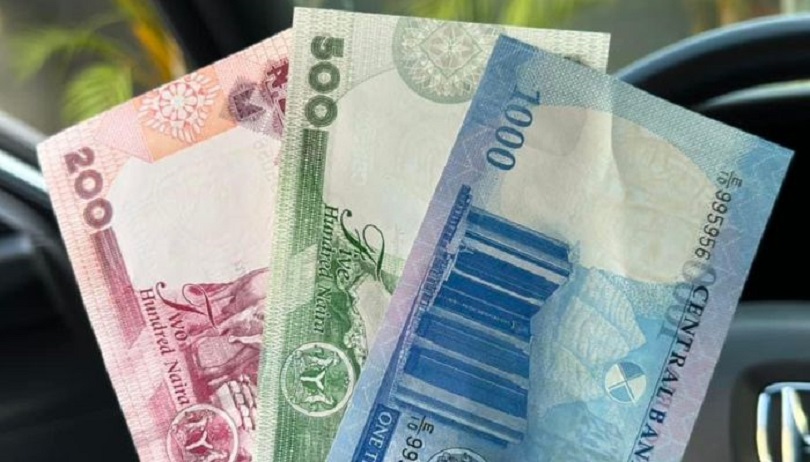
Pressure on the Naira against the Dollar eased on Tuesday, March 24, by 0.41 per cent or N5.75 in the Nigerian Autonomous Foreign Exchange Market (NAFEX) to N1,382.63/$1 from the previous day’s N1,388.38/$1.
Also, the Nigerian currency gained N11.43 against the Pound Sterling in the official market during the session to sell for N1,848.86/£1 versus Monday’s closing rate of N1,860.29/£1, and improved its value against the Euro by N9.43 to settle at N1,599.98/€1 versus the preceding session’s price of N1,609.41/€1.
However, the Naira lost N17 against the Dollar at the GTBank forex desk to close at N1,388/$1, in contrast to the previous N1,371/$1, and closed flat against the US Dollar in the parallel market at N1,400/$1.
Analysts at Quest Merchant Bank said global factors are shaping investor sentiment, giving the local currency the needed strength to maintain stability in the currency market. The prolonged conflict in the Middle East has heightened risk aversion, reducing appetite for emerging-market assets.
The bank noted that de-escalation in geopolitical tensions, alongside Nigeria’s attractive yield environment, could help sustain offshore inflows and support the currency in the near term, though structural challenges remain.
As for the cryptocurrency market, profit-taking erased gains made by some tokens after it was reported that a one-month ceasefire in the Iran war could be announced soon as part of a wider deal, easing worries that gripped the markets.
Other terms of the deal reportedly include a dismantling of Iran’s existing nuclear capabilities and that country’s vow to “never seek” nuclear weapons.
The news was felt most immediately in the oil market, with Brent Crude dropping from $104 to below $100 in a few minutes.
Previously, US President Donald Trump announced a five-day pause on strikes against Iranian energy infrastructure.
Solana (SOL) depreciated by 1.4 per cent to $90.21, Ripple (XRP) slumped by 1.3 per cent to $1.40, Bitcoin dipped 0.6 per cent to $70,235.96, Ethereum (ETH) declined by 0.4 per cent to $2,143.38, and Binance Coin (BNB) dropped 0.3 per cent to sell for $636.19.
On the flip side, Cardano (ADA) rose 1.4 per cent to $0.2652, TRON (TRX) added 0.7 per cent to close at $0.3077, and Dogecoin (DOGE) appreciated by 0.3 per cent to $0.095, while the US Dollar Tether (USDT) and the US Dollar Coin (USDC) remained unchanged at $1.00 each.
By Adedapo Adesanya
Oil prices were mixed on Tuesday after reports that the United States had sent Iran a 15-point plan to end the war in the Middle East.
Brent futures went down by $0.83 or 0.9 per cent to $99.11 a barrel, while the US West Texas Intermediate climbed $4.22 or 4.79 per cent to $92.35 per barrel.
President Donald Trump said on Tuesday that the US and Iran were “in negotiations right now” and suggested Tehran was eager to make a peace deal, even as the Islamic Republic denied it’s in direct talks with America.
President Trump, speaking in the Oval Office, said he decided to back off from his recent threat to order strikes on Iranian energy infrastructure
According to reports, the plan includes a one-month ceasefire to be announced, according to a mechanism that US Middle East envoys Steve Witkoff and Jared Kushner are working on.
The Strait of Hormuz was handling about 20 per cent of global seaborne oil supplies until the war broke out, before Iran virtually stopped flows via the critical waterway. With around a fifth of the world’s daily oil supply cut off by the Middle East war, prices are still more than 40 per cent higher than they were when the conflict erupted in late February.
The United Arab Emirates (UAE), which has seen its liquified natural gas (LNG) and most oil supply choked at the vital chokepoint, said Iran’s weaponisation of the energy and trade flows amounts to economic terrorism against every nation in the world.
Since the US-Israel strikes on Iran began on February 28, the daily traffic of over 100 vessels, including tankers, through the Strait of Hormuz, has slowed to a trickle of a handful of passages per week, all cargoes apparently approved for transit by Iran.
Iranian state media said that Iran would permit safe transit through the strait, except for ships associated with its “enemies.”
Amid the messaging clash between the US and Iran on negotiations, multiple outlets have reported that regional leaders are engaged in behind-the-scenes diplomatic efforts to help broker an end to the war.
The American Petroleum Institute (API) estimated that crude oil inventories in the US rose by 2.3 million barrels in the week ending March 20. Official data from the Energy Information Administration (EIA) will be released later on Wednesday.













-
 Feature/OPED6 years ago
Davos was Different this year
-
Travel/Tourism10 years ago
Lagos Seals Western Lodge Hotel In Ikorodu
-

 Showbiz3 years ago
Estranged Lover Releases Videos of Empress Njamah Bathing
-
 Banking8 years ago
Sort Codes of GTBank Branches in Nigeria
-

 Economy3 years ago
Subsidy Removal: CNG at N130 Per Litre Cheaper Than Petrol—IPMAN
-

 Banking3 years ago
Sort Codes of UBA Branches in Nigeria
-

 Banking3 years ago
First Bank Announces Planned Downtime
-

 Sports3 years ago
Highest Paid Nigerian Footballer – How Much Do Nigerian Footballers Earn