Economy
Brent Drops Below $100 on Chinese Lockdown Fears
By Adedapo Adesanya
The price of the international benchmark crude, Brent, fell below the $100 per barrel mark on Monday, precisely trading at $99.01 per barrel after losing 3.76 per cent or $3.77 as COVID-related lockdowns in China weighed on demand expectations, while the coordinated massive release from oil reserves eased fears of supply shortages.
Also, the United States West Texas Intermediate (WTI) crude futures depreciated by $3.41 or 3.47 per cent yesterday to trade at $94.85 per barrel.
With this development, oil prices have now erased most of their gains since the start of the Russian invasion of Ukraine on February 24.
Analysts note that the continued spread of COVID-19 in its place of origin, China is the most bearish element dictating the direction of the market.
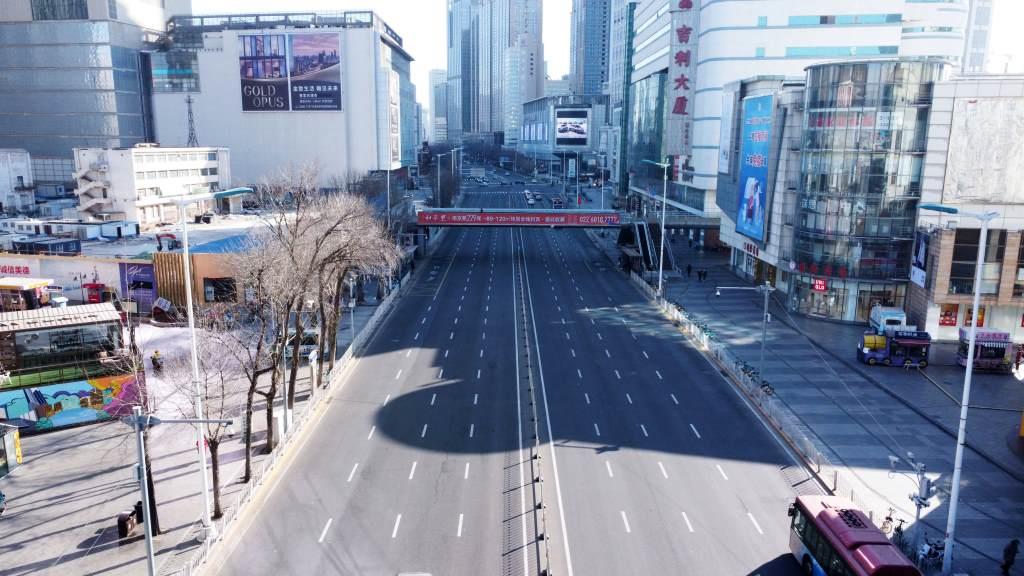
China is the world’s largest oil importer, and the Shanghai area, its financial hub, which has been in lockdown for more than a week, consumes roughly 4 per cent of the country’s crude.
If the spread is not contained and more states record large numbers, it could result in a significant number of lockdowns and the impact on oil markets could be substantial.
Shanghai, one of China’s wealthiest cities, with 26 million residents, reported a record more than 25,000 new infections during the weekend. And measures under the Chinese zero-COVID policy could weigh on fuel demand.
Authorities started easing some restrictions on Monday, as residents became increasingly frustrated with the policy.
This is creating a worry now for the demand aspect of the market after the supply has been the major source of concern in recent times.
Last week, the International Energy Agency (IEA) announced that its member countries would release 120 million barrels from emergency stockpiles, of which 60 million barrels would be from the US.
The announcement followed the US Biden-led administration saying it would release 180 million barrels from the Strategic Petroleum Reserve(SPR) in an effort to alleviate soaring prices.
The market will also weigh the likely outcome of a meeting between the European Union (EU) and the Organisation of the Petroleum Exporting Countries (OPEC) which is meant to discuss ways to step up sanctions against Russia, including an oil embargo.
Since the Russian invasion of Ukraine, OPEC and the larger OPEC+ group, including Russia, have not commented on the war and have not found the need to boost output more than planned, saying that the high oil prices are the result of “geopolitical” events, rather than a case of very tight market fundamentals.
However, Europe is split on an immediate oil embargo, with the biggest economy, Germany, not willing to go for it, for now, saying an oil ban would plunge the country and Europe into a deep recession.
Economy
Finance Minister Advocates Commercial Dispute Tribunal for Capital Market
By Aduragbemi Omiyale
Nigeria’s Minister of Finance and Coordinating Minister of the Economy, Mr Taiwo Oyedele, has proposed the establishment of a specialised Commercial Dispute Resolution Tribunal to fast-track the resolution of business disputes.
Speaking at the inaugural lecture as a Fellow of the Capital Market Academics of Nigeria (CMAN) in Abuja, Mr Oyedele argued that faster justice delivery is critical to attracting long-term investment and deepening Nigeria’s capital market.
At the event themed The Nigerian Capital Market as a Catalyst for Equitable and Inclusive Growth, the Minister noted that delays in resolving commercial disputes remain one of the biggest obstacles to investment, noting that cases currently take an average of 15 years to progress through the High Court, Court of Appeal and Supreme Court.
He pointed out that such prolonged litigation creates uncertainty, discourages investors and significantly increases the cost of doing business in Nigeria.
To address the challenge, the Minister proposed a dedicated Commercial Dispute Resolution Tribunal staffed by judges and arbitrators with specialised expertise in commercial, financial and capital market matters.
Mr Oyedele said the tribunal should operate with digital case management systems and mandatory timelines to ensure swift resolution of disputes involving businesses, suppliers, joint venture partners and other commercial entities.
He explained that the proposed tribunal would complement existing investment protection mechanisms by providing a more efficient avenue for resolving commercial disagreements that often delay investments and weaken investor confidence.
The Minister stressed that virtually every financial instrument—including bonds, syndicated loans, private placements and structured notes—is founded on enforceable contracts, making speedy dispute resolution essential for the growth of the capital market.
Beyond judicial reforms, he urged Nigerians to reconsider their long-held perception of public borrowing, insisting that debt should be judged by what it finances rather than by its size.
He argued that borrowing is not inherently harmful and should instead be viewed as a financial tool capable of supporting economic growth when channelled into productive investments.
“The relevant question is never simply how much debt there is. It is always debt for what, at what cost, against what return and repayable on what terms,” he stated, criticising the tendency among analysts and commentators to condemn every instance of government borrowing without examining whether the funds are being invested in projects capable of generating sustainable economic returns.
According to him, governments and businesses that borrow to finance productive assets yielding returns above the cost of capital are making rational financial decisions, adding that refusing to borrow under such conditions could amount to foregoing valuable development opportunities.
The Minister also challenged the mindset of many Nigerian entrepreneurs who resist bringing in external investors in order to retain full ownership of their businesses, noting that owning 100 per cent of a small enterprise often creates less value than holding a substantial stake in a much larger and well-capitalised company.
The Minister further outlined what he described as the “seven laws of capital attraction,” emphasising that investors are primarily attracted by trust, policy consistency, strong institutions and the rule of law rather than generous tax incentives.
He said capital seeks predictable returns instead of merely pursuing the highest returns, warning that countries with unstable policies often lose investment to jurisdictions offering lower but more reliable returns.
“Capital hates uncertainty more than taxation,” he said, attributing investor hesitation to policy reversals, regulatory inconsistencies, foreign exchange uncertainty and weak contract enforcement.
According to him, investors commit long-term capital to countries with credible institutions rather than to individual political leaders.
He identified an independent judiciary, a credible central bank and an efficient public bureaucracy as critical pillars for attracting sustainable investment.
The Minister also urged government officials, professionals and the media to improve communication around economic reforms, arguing that Nigeria often pays what he described as a “perception premium” because positive policy changes are poorly communicated to investors.
He maintained that attracting long-term capital requires not only sound economic policies but also stronger institutions, policy consistency, efficient justice delivery and a shift in public attitudes towards debt and private investment.
Meanwhile, the Director-General of the Securities and Exchange Commission (SEC), Mr Emomotimi Agama, called for stronger collaboration between regulators and academics, saying research-driven policymaking is essential for strengthening Nigeria’s capital market and promoting inclusive economic growth.
Speaking during the opening of the conference, Mr Agama described the Capital Market Academics of Nigeria as an important bridge between academic research and financial market regulation.
“I have long believed that good regulation begins with good thinking. The policies we make at SEC are only ever as strong as the evidence and the ideas that inform them,” he said.
According to him, research generated through academic conferences, journals and peer-reviewed studies provides the foundation for evidence-based regulation capable of responding to the evolving needs of Nigeria’s financial markets.
He said the agency regards academics as strategic partners whose ideas can shape policies that strengthen investor confidence and support market development, adding that Nigeria’s capital market is undergoing major reforms following the enactment of the Investments and Securities Act, 2025, and the implementation of a new 10-year Capital Market Master Plan.
He said the reforms require rigorous research, constructive scrutiny and honest debate to ensure that regulatory policies remain responsive to emerging realities and aligned with global best practices.
The SEC chief also commended CMAN for choosing a conference theme focused on equitable and inclusive growth, describing it as timely and relevant to Nigeria’s economic development agenda.
He urged participants to ensure that their deliberations produce practical recommendations capable of influencing policymaking and improving market operations.
“The commission’s door is open to evidence, to challenge and to fresh ideas, wherever they may lead. The finest measure of these two days will not be the sessions we hold, but the policies and the practices they go on to shape,” Mr Agama said.
He reaffirmed the organisation’s commitment to working closely with the academic community to advance knowledge, strengthen regulation and support the sustainable development of Nigeria’s capital market.
On his part, the president of the Capital Market Academics of Nigeria (CMAN), Prof. Uche Uwaleke, has called for stronger collaboration between academia and the financial services industry, saying closer partnerships are essential to deepening Nigeria’s financial markets and accelerating economic growth.
Mr Uwaleke said Nigeria possesses abundant intellectual capacity within its universities and extensive practical expertise across its financial institutions, but lacks a structured framework to connect both sectors for national development.
According to him, countries with resilient financial systems have succeeded by fostering continuous collaboration among universities, regulators, government agencies and industry players.
He described CMAN as Nigeria’s leading financial markets think tank, established to ensure that academic research goes beyond scholarly publications to provide practical solutions to the country’s economic challenges.
To bridge the gap between academia and industry, Mr Uwaleke urged the Federal Ministry of Education and the National Universities Commission (NUC) to recognise industry experience alongside academic publications in the appointment and promotion of lecturers in professionally oriented disciplines such as Banking, Finance, Insurance, Accounting and Capital Market Studies.
He also recommended that universities deliberately recruit accomplished retired bankers, investment professionals and capital market practitioners as adjunct lecturers to enrich teaching, strengthen curriculum relevance and better prepare graduates for the workplace.
According to him, the NUC should reinforce the initiative by awarding accreditation points to academic programmes that successfully integrate experienced industry practitioners into their faculties.
The CMAN president further called on financial sector regulators, including the Central Bank of Nigeria, Securities and Exchange Commission, National Insurance Commission, National Pension Commission and the Nigeria Deposit Insurance Corporation, to institutionalise structured sabbatical and research fellowship opportunities for qualified academics.
He said such programmes would enable scholars to undertake policy-oriented research while giving regulators access to independent expertise capable of improving policy formulation and regulatory effectiveness.
Mr Uwaleke also proposed the establishment of a Financial Markets Research Partnership to be championed by the Federal Ministry of Finance and the Ministry of National Planning.
He said the initiative should bring together regulators, universities and industry players to commission research on critical national priorities, including capital market development, infrastructure finance, pension reforms, insurance penetration, financial inclusion and sustainable finance.
In addition, he appealed to the National Assembly to support policies that encourage collaboration between universities and industry through incentives for financial institutions investing in research partnerships and university-based financial market research centres.
Mr Uwaleke commended SEC, the Bank of Industry, Cowry Asset Management Limited and the Chartered Institute of Stockbrokers for already providing sabbatical opportunities to CMAN members.
He reaffirmed the association’s commitment to serving as a bridge between academia, government, regulators and industry through independent research, policy advice and intellectual support aimed at strengthening Nigeria’s financial system and driving sustainable economic transformation.
Economy
Shareholders Approve Fresh N30bn Capital Raise for Neimeth
By Aduragbemi Omiyale
The board of Neimeth International Pharmaceuticals Plc can raise an additional N30 billion from the capital market, shareholders have declared.
They gave the authorisation for this fresh capital raise at the company’s 67th Annual General Meeting (AGM) held virtually on Thursday, June 25, 2026.
This was one of the resolutions passed at the yearly shareholders’ gathering, attended by several persons, including board and management members as well as investors and others.
The approval for new capital raise is coming after the board was, on June 23, 2025, authorised to raise up to N20.0 billion. For this tranche, only N2.440 billion was raised by the organisation, leaving an untilised balance of approximately N17.560 billion.
The company has now been given the authority to get fresh N30.0 billion, according to disclosure from Neimeth.
In the notice to the Nigerian Exchange (NGX) Limited, Neimeth said the board was asked to “raise additional capital of up to N30.0 billion through an issuance of shares (to be issued, whether by way of public offering, rights issue, private/special placement to strategic or identified investors), commercial papers, bonds, convertible and non-convertible securities), medium term notes and/or any other instruments, either as a stand-alone or by way of programmes, in such tranches, series or proportions, at such coupon or interest rates, within such maturity periods, or on such terms and conditions, through a combination of methods or processes, all of which shall be based on terms and conditions to be determined by the board and subject to obtaining the approvals of the relevant regulatory authorities.”
The shareholders resolved that “the aggregate shareholders’ approval for capital raising shall accordingly be N50.0 billion, of which approximately N2.440 billion has already been raised by way of rights issue, leaving an unutilised balance of approximately N47.560 billion available for raising.”
Economy
NASD OTC Sheds 0.36% as FrieslandCampina, Food Concepts Retreat
By Adedapo Adesanya
The duo of FrieslandCampina Wamco Nigeria Plc and Food Concepts Plc helped root the NASD Over-the-Counter (OTC) Securities Exchange in negative territory, following a 0.36 per cent slide on Monday, June 29.
FrieslandCampina, which is the maker of milk brands Peak Milk and Three Crowns, lost N13.44 to trade at N141.76 per unit compared with its previous price of N155.2o per unit, while Food Concepts, which is the parent company of fast food giant Chicken Republic, declined by 8 Kobo to end at N2.43 per share versus last Friday’s price of N2.51 per share.
Consequently, the NASD Security Index (NSI) slid by 15.51 points to 4,261.56 points from 4,277.07 points, and the market capitalisation lost N9.31 billion to close at N2.557 trillion compared with the previous value of N2.567 trillion.
The bourse finished with two price advancers yesterday, with Central Securities Clearing System (CSCS) Plc up by N3.80 to trade at N88.48 per unit versus N84.68 per unit, and Nitrox Industrial Gases Plc gaining 31 Kobo to end at N21.40 per share versus N21.09 per share.
The volume of securities traded by investors on the first trading day of the week contracted by 75.9 per cent to 229,314 units from the previous 955,096 units, and the value of securities slumped 17.8 per cent to N24.6 million from N29.9 million, while the number of deals increased by 9.7 per cent to 34 deals from the 31 deals recorded last Friday.
At the close of trades, Great Nigeria Insurance (GNI) Plc was the most traded stock by value on a year-to-date basis, with 3.4 billion units valued at N8.4 billion, followed by Infrastructure Credit Guarantee (Infracredit) Plc with 2.3 billion units sold for N6.5 billion, and CSCS Plc with 68.7 million units transacted for N4.7 billion.
GNI Plc also closed the day as the most traded stock by volume on a year-to-date basis, with 3.4 billion units worth N8.4 billion, followed by Infracredit Plc with 2.3 billion units exchanged for N6.5 billion, and Resourcery Plc followed with 1.1 billion units traded for N415.7 million
-
Feature/OPED6 years agoDavos was Different this year
-
Travel/Tourism10 years ago
Lagos Seals Western Lodge Hotel In Ikorodu
-
Showbiz3 years agoEstranged Lover Releases Videos of Empress Njamah Bathing
-
Banking8 years agoSort Codes of GTBank Branches in Nigeria
-
Economy3 years agoSubsidy Removal: CNG at N130 Per Litre Cheaper Than Petrol—IPMAN
-
Banking3 years agoSort Codes of UBA Branches in Nigeria
-
Banking3 years agoFirst Bank Announces Planned Downtime
-
Sports3 years agoHighest Paid Nigerian Footballer – How Much Do Nigerian Footballers Earn