
Economy
Brent Falls to $96 as OPEC+ Adds 100,000bpd, US Stockpiles Rise

By Adedapo Adesanya
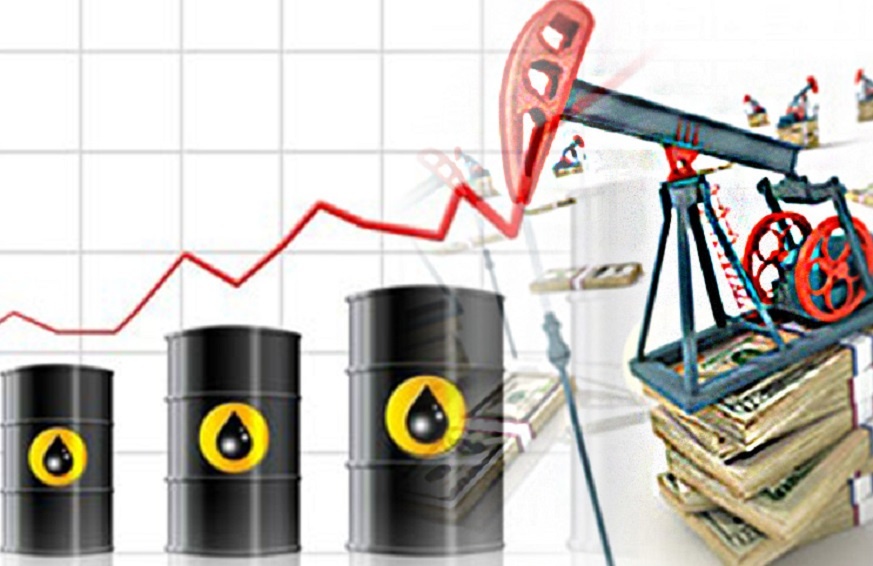
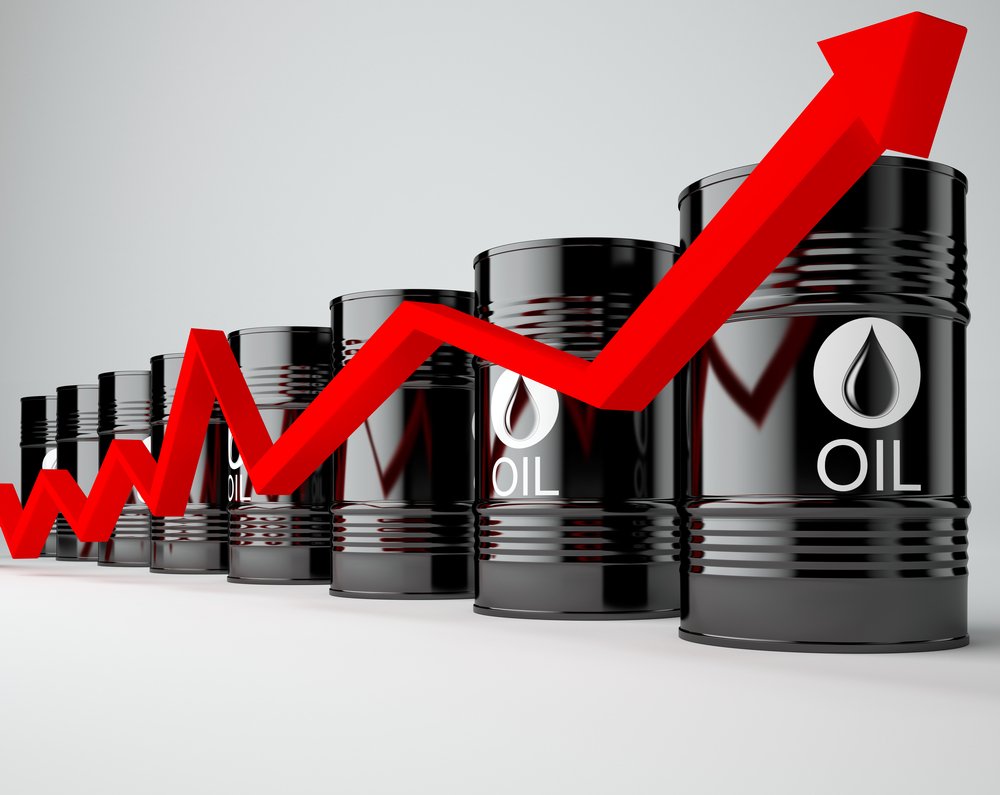
Brent crude fell below $100 per barrel on Wednesday as the Organisation of the Petroleum Exporting Countries and allies (OPEC+) said it would raise its oil output target by 100,000 barrels per day and crude stockpiles jumped in the United States.
This lowered the price of the international crude benchmark by $3.76 or 3.7 per cent to $96.78 per barrel and weakened the US West Texas Intermediate (WTI) crude futures by $3.76 or 4 per cent to $90.66 per barrel.
OPEC+ on Wednesday said it will add only 100,000 barrels a day of oil in September, giving a tight market extra supplies at a much slower pace than in recent months despite pressure to cool prices.
The 23-nation alliance will divide that amount proportionally between members, and with only the Saudis and the United Arab Emirates able to bolster production, just a fraction of it is likely to be delivered. For July and August, the group had pledged to add more than 600,000 barrels a day to the market.
The increase, equivalent to 0.1 per cent of global demand, follows weeks of speculation that the trip of President Joe Biden of the United States to the Middle East will bring more oil to the world market.
There were no discussions about whether the oil cartel would keep increasing production in subsequent months, delegates said. The group meets again on September 5.
The increase offers little respite for consumers suffering the inflationary squeeze of high oil prices.
The market was also pressured as US crude oil inventories rose unexpectedly last week as exports fell and refiners lowered runs.
Crude stocks rose 4.5 million barrels last week, compared with an analyst forecast for a draw of 600,000 barrels.
Also weighing on prices, Iranian and US officials said they were travelling to Vienna to resume indirect talks about Iran’s nuclear programme, reviving the all but vanished hopes of removal of sanctions hampering Iranian oil exports.
The US Dollar index, which tracks the greenback against six major peers, also rose, pressuring demand by making oil more expensive for holders of other currencies.





By Adedapo Adesanya
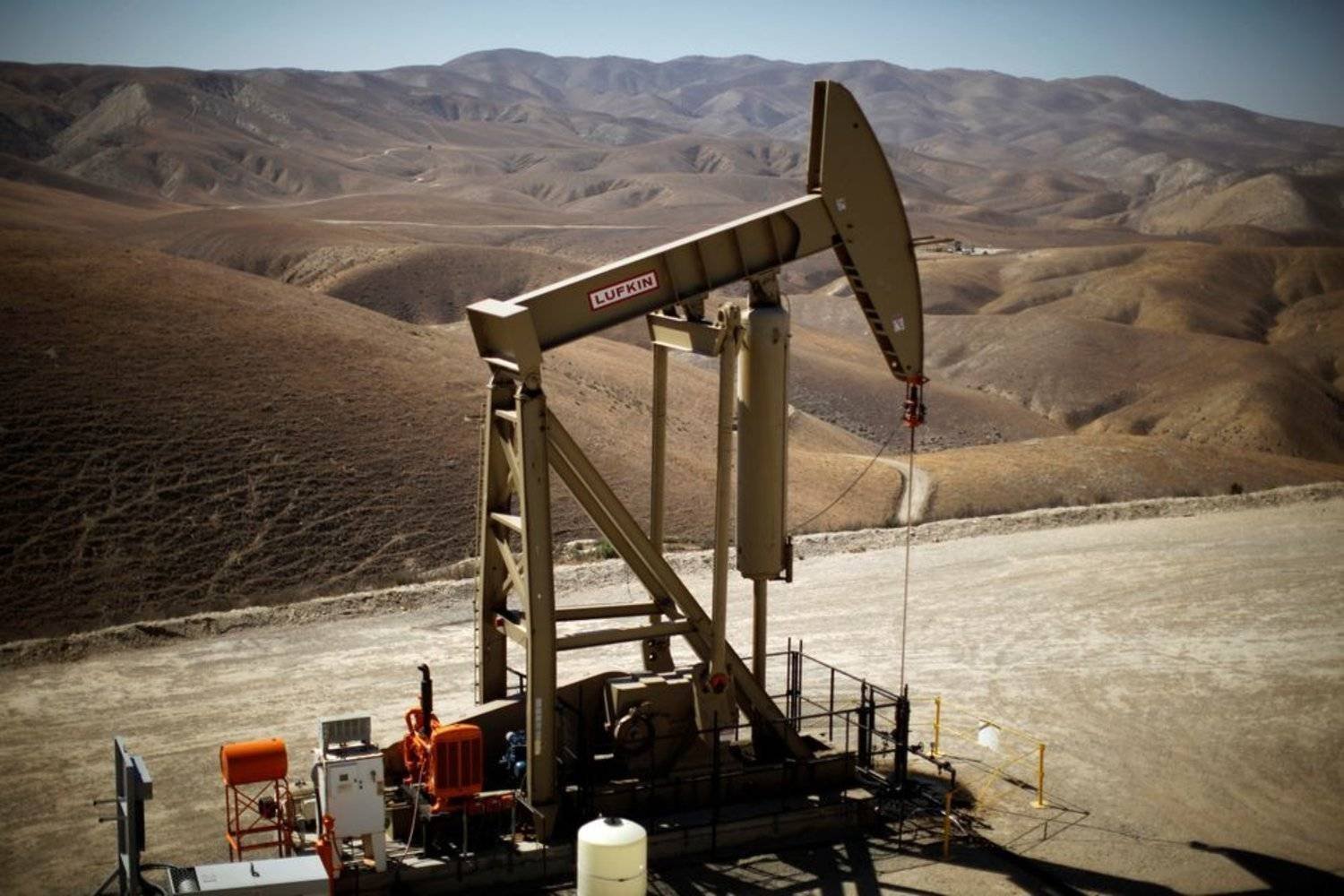
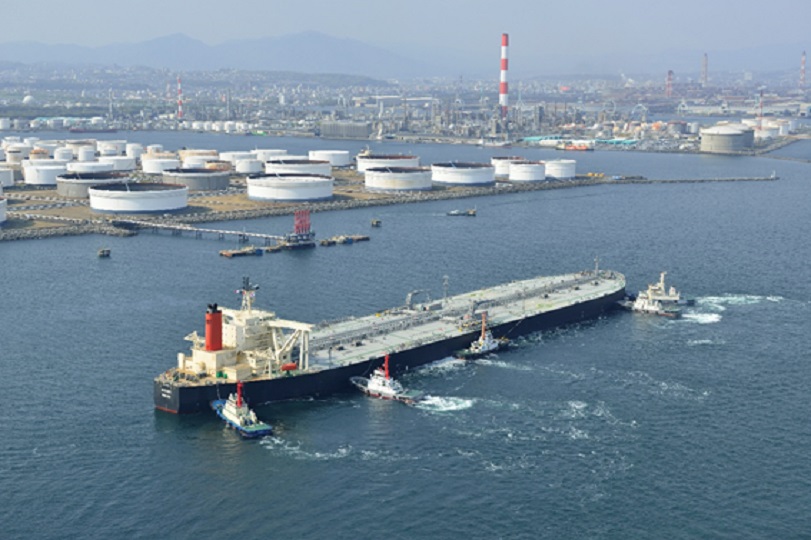
The Central Bank of Nigeria (CBN) has removed the cash pooling requirement for International Oil Companies (IOCs), allowing them to fully repatriate their export proceeds through Authorised Dealer Banks (ADBs).
Previously in 2024, the apex bank required IOCs to repatriate export earnings into Nigeria, but only 50 per cent could be accessed immediately (via banks) while the other 50 per cent had to stay in Nigeria for 90 days before they could move it.
This was called a cash pooling requirement, designed to keep more foreign currency (like Dollars) inside Nigeria temporarily to support FX liquidity.
However, the apex bank, in a circular signed by the Director, Trade and Exchange Department, Mr Musa Nakorji, disclosed that, to further liberalise and deepen the market in line with current realities, IOCs are now granted unfettered access to their repatriated export proceeds.
“Accordingly, IOCs may repatriate 100 per cent of their export proceeds through ADBs, which are required to ensure proper documentation and submit monthly reports to the Director, Trade and Exchange Department.
“This provision supersedes all previous circulars issued by the Bank on cash pooling.
“All Authorised Dealer Banks are advised to note and comply accordingly, as this directive takes immediate effect.”
The development means more flexibility for foreign oil companies as they can now move their money freely and meet international obligations faster, while it reduces exposure to FX risks in Nigeria. This makes Nigeria more attractive to foreign investors, especially in the oil and gas sector, at a time when the global oil market is facing turbulence from the Middle East war triggered by the US and Israel against Iran.
This indicates that the apex bank is making do of its promise to shift towards a more market-driven FX system, where there are fewer controls and less forced retention of foreign currency. This could help boost investor confidence since they will have more control over their money flows.
However, this comes with potential risks as the country could see less short-term Dollar supply staying in the country and may invite pressure on the Naira if outflows exceed inflows.

By Adedapo Adesanya
Debt has emerged as a fast-growing asset class for the startup funding landscape in Africa, according to a new report by the African Private Capital Association (AVCA).
The 2025 Private Capital Activity in Africa report showed that Africa emerged as the only global region to record growth in private capital deal volume in 2025, underscoring the continent’s resilience amid a challenging global investment climate.
For startups, raising funds signals validation of their business model, market potential, and growth trajectory, while also providing the financial runway needed to scale operations, invest in innovation, and compete effectively. This can be done via a number of means, including bootstrapping, venture capital, private equity, debt financing, crowdfunding, accelerators, grants, corporate investments, initial public offerings (IPOs), and revenue-based financing, among others.
The data showed that private debt emerged as a fast-growing asset class, with deal volumes surging by 57 per cent year-on-year.
The growth was driven largely by the rising use of venture debt, positioning private debt alongside private equity and venture capital as a key financing channel in Africa.
The report put total investment at $5.1 billion, reflecting a slight dip in value but sustained investor appetite across the continent. The data showed that deal activity rose by 8 per cent year-on-year to 530 transactions, even as global deal volumes declined by 7 per cent.
IPOs also saw modest growth, with four listings completed during the year.
Domestic investors played a critical role in driving liquidity, accounting for 68 per cent of private capital acquisitions.
International investors made up the remaining 32 per cent, led by Asian strategic buyers seeking to expand their footprint in African markets.
The report highlighted a shift in strategy among fund managers, who increasingly focused on smaller mid-market deals as global financial conditions tightened.
Transactions valued between $50 million and $99 million doubled during the year, signalling a move away from larger, capital-intensive investments.
Sectoral activity remained dominated by financial services, particularly fintech, which accounted for 82 per cent of transactions within the sector.
The information sector ranked as the second most active, supporting investments across finance, healthcare, retail and logistics.
Regionally, Southern Africa maintained its position as the most active investment hub, while East and North Africa recorded strong performances, buoyed by growth in energy and information technology investments.
Africa’s exit market also showed significant improvement, with 81 exits recorded in 2025, representing a 27 per cent increase from the previous year and the second-highest level on record.
This contrasted sharply with a 15 per cent decline in global exit activity over the same period.
Trade buyers remained the dominant exit route, accounting for 38 per cent of transactions, while sponsor-to-sponsor deals reached a record 26 per cent, reflecting increased depth in the secondary market.
Despite the strong deal and exit performance, fundraising declined by 34 per cent year-on-year to $2.7 billion, mirroring global liquidity pressures.
Development finance institutions remained central to the ecosystem, contributing 64 per cent of total commitments.
However, domestic capital continued to deepen, with African institutional investors accounting for 21 per cent of commitments.
Sovereign wealth funds and pension funds led this trend, reflecting a growing shift towards locally sourced capital.
Commenting on the findings, AVCA chief executive, Mrs Abi Mustapha-Maduakor, said the data reflects a continent increasingly decoupling from global investment headwinds.
“This year’s report tells a clear story: Africa is decoupling from the global slowdown. Stronger exit performance, deeper participation from domestic institutional capital, and sustained commitments from development finance institutions all point to a maturing ecosystem,” she said.
She added that the momentum is expected to build further as investors increase exposure to sectors driving Africa’s next phase of economic transformation.

By Adedapo Adesanya
Four price gainers buoyed the NASD Over-the-Counter (OTC) Securities Exchange by 0.75 per cent on Thursday, March 26.
During the session, FrieslandCampina Wamco Nigeria Plc gained N8.87 to sell at N110.00 per unit compared with the previous day’s N101.13 per unit, Golden Capital Plc rose by 63 Kobo to N13.00 per share from N12.37 per share, Geo-Fluids Plc appreciated by 29 Kobo to N3.18 per unit from N2.89 per unit, and Industrial and General Insurance (IGI) Plc increased by 2 Kobo to 52 Kobo per share from 50 Kobo per share.
As a result, the market capitalisation added N18.91 billion to close at N2.531 trillion versus the previous session’s N2.512 trillion, and the NASD Unlisted Security Index (NSI) grew by 31.61 points to 4,230.46 points from 4,198.85 points.
The volume of securities went down by 84.4 per cent to 342,825 units from 2.2 million units, the value of securities decreased by 50.7 per cent to N23.0 million from N46.7 million, and the number of deals shrank by 27.0 per cent to 27 deals from 37 deals.
Central Securities Clearing System (CSCS) Plc remained the most traded stock by value on a year-to-date basis with 39.3 million units sold for N2.4 billion, followed by Infrastructure Guarantee Credit Plc with 400 million units valued at N1.2 billion, and Okitipupa Plc with 6.5 million units traded for N1.2 billion.
Resourcery Plc was the most traded stock by volume on a year-to-date basis with 1.1 billion units worth N415.7 million, followed by Infrastructure Credit Plc with 400 million units exchanged for N1.2 billion, and Geo-Fluids Plc with 133.0 million units transacted for N511.1 million.











-
 Feature/OPED6 years ago
Davos was Different this year
-
Travel/Tourism10 years ago
Lagos Seals Western Lodge Hotel In Ikorodu
-

 Showbiz3 years ago
Estranged Lover Releases Videos of Empress Njamah Bathing
-
 Banking8 years ago
Sort Codes of GTBank Branches in Nigeria
-

 Economy3 years ago
Subsidy Removal: CNG at N130 Per Litre Cheaper Than Petrol—IPMAN
-

 Banking3 years ago
Sort Codes of UBA Branches in Nigeria
-

 Banking3 years ago
First Bank Announces Planned Downtime
-

 Sports3 years ago
Highest Paid Nigerian Footballer – How Much Do Nigerian Footballers Earn