

Connect with us

Economy

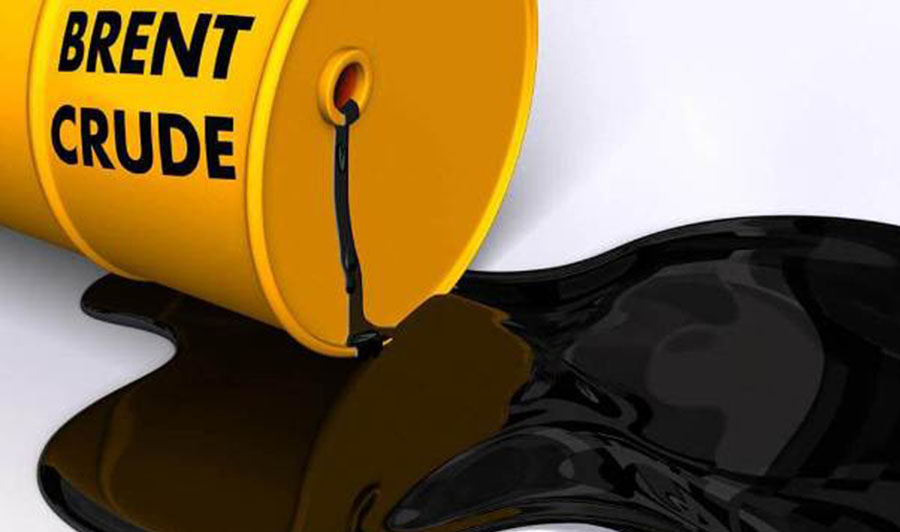
Brent, WTI Tumble Over 9% on Hormuz Reopening Signal

Published

on

Brent crude futures

By Adedapo Adesanya

Oil prices plunged by 9 per cent on Friday after Iran said passage for all ​commercial vessels through the Strait of Hormuz was open for the remaining ceasefire period.

Brent crude futures lost $9.01 or 9.07 per cent to trade at $90.38 a barrel, while the US West Texas Intermediate (WTI) crude futures depreciated by $10.48 or 11.45 per cent to finish at $83.85 a barrel.

Iran said Friday that the Strait of Hormuz is “completely open” for the remainder of the Israel-Lebanon ceasefire, bolstering hopes of a breakthrough in the weeks-long crisis over the crucial oil route.

Iran had maintained its blockade of the strait despite a two-week ceasefire with the US, which expires on Tuesday, and previously said it would not open the key waterway while Israel continued to strike Lebanon.

Business Post had reported that oil prices weakened to around $88 per barrel after Iranian Foreign Minister Seyed Abbas Araghchi posted on X that “all commercial vessels” would be allowed to pass through the strait throughout the remainder of the ten-day ceasefire in Lebanon.

US President Donald Trump thanked Iran on Truth Social, but stressed that the US naval blockade of the regime’s ports would remain “in full force and effect” until a peace deal was completed. “This process should go very quickly in that most of the points are already negotiated,” he added.

A second round of truce talks between the US and Iran is expected to take place as oil tankers are beginning to test the waters at the Strait of Hormuz.

Despite the fact that all ships can sail through the Strait of Hormuz, this passage needs to be coordinated with Iran’s Islamic Revolutionary Guard Corps (IRGC).

Market analysts noted that if these initial tankers make it through, flows will begin to partially normalise. However, a handful of vessels does not equal restored capacity. The backlog alone will take significant time to clear, and producers across the region are still dealing with disrupted output and logistics.

Prices had already fallen earlier in the Friday session as possible ​further talks between the US and Iran over the weekend and a 10-day ceasefire between Lebanon and Israel raised investors’ hopes that the war in the Middle East could be ‌nearing an ⁠end.

The American President also said on Friday that the US has banned Israel from further bombing in Lebanon, using a harsher tone than usual with the ​longtime US ally.

Adedapo Adesanya is a journalist, polymath, and connoisseur of everything art. When he is not writing, he has his nose buried in one of the many books or articles he has bookmarked or simply listening to good music with a bottle of beer or wine. He supports the greatest club in the world, Manchester United F.C.

2 Comments

2 Comments

  1. Pingback: Brent, WTI Tumble Over 9% on Hormuz Reopening Signal – PRIMA NEWS
  2. Pingback: Brent, WTI Tumble Over 9% on Hormuz Reopening Signal – PRIMA NEWS

Leave a Reply

Your email address will not be published. Required fields are marked *

Economy

Nigeria’s Gross Foreign Reserves Hit 17-Year High of $51.04bn

Published

on

Reserves

By Aduragbemi Omiyale

The gross foreign reserves of Nigeria reached a 17-year high of $51.04 billion, data from the Central Bank of Nigeria (CBN) shows.

Business Post gathered from the apex bank’s website that this new feat was achieved on Thursday, June 18, 2026.

A day earlier, which was Wednesday, June 17, 2026, the amount in the country’s external reserves stood at $50.96 billion, indicating accretion of 0.16 per cent.

This latest development is expected to strengthen the value of the Nigerian Naira in the foreign exchange (FX) market.

It was observed that since the beginning of this month, the amount in the forex reserves has been building up gradually after an initial scare.

It is believed that inflows from crude oil sales have been boosting the reserves, though prices are expected to trend downward as a result of the ceasefire deals between the United States and Iran on Friday.

The price of crude oil has cooled to around $80 per barrel. It should further moderate to its level before February 28, 2026, when the bombardment of Iran started, which led to the death of the country’s 86-year-old Supreme Leader, Ayatollah Ali Khamenei.

Continue Reading

Economy

DBN, EIB Seal €200m Financial Partnership for Nigerian MSMEs

Published

on

€200m Financial Partnership

By Aduragbemi Omiyale

A €200 million financial partnership to support the development of small-scale investments of Nigerian enterprises contributing to the country’s green and digital economy has been signed by the Development Bank of Nigeria (DBN) and the development arm of the European Investment Bank (EIB) Group, EIB Global.

The funds would be disbursed to Micro, Small, and Medium Enterprises (MSMEs) in Nigeria, with a focus on agriculture, renewable energy, digitalisation and innovation.

The collaboration aligns with EIB Global’s strategy to support sustainable, inclusive, and resilient economic growth in Nigeria under the Global Gateway Initiative.

The investment programme will boost private sector development in Nigeria and support entrepreneurs and job creation by easing access to suitable finance for MSMEs and Midcaps.

It will also strengthen Nigeria’s green transition by expanding financing opportunities for companies in the renewable energy and agribusiness sectors.

In agriculture, it will help improve productivity, develop local supply chains, and strengthen food security for a country that hosts the largest population in Africa.

On the energy side, improved financing for renewable energy businesses will support clean energy access, reduce carbon emissions, and help build climate resilience in underserved communities.

“This partnership with DBN will strengthen the competitiveness of Nigeria’s private sector, especially for SMEs in the green and digital sectors.

“In supporting green projects and women entrepreneurs, we are also fostering inclusive growth and climate action.

“This is a powerful example of EIB’s real impact on the ground,” EIB Vice-President, Mr Ambroise Fayolle, said at a signature ceremony on Thursday, June 18, 2026, at the Lagos office of the DBN.

Also commenting, the chief executive of DBN, Mr Tony Okpanachi, described the investment as a significant milestone in efforts to drive Nigeria’s economic growth and sustainability.

“The €200 million investment from EIB Global is a significant milestone in our mission to drive Nigeria’s economic growth and sustainability. By supporting local financial institutions and MSMEs in key sectors like agriculture, renewable energy, digitalisation, and innovation, we’re empowering entrepreneurs and fostering a culture of sustainable innovation,” he stated.

Continue Reading

Economy

Nigeria’s Crude Oil Output Can Hit 1.9mbpd—Eyesan

Published

on

crude oil output

By Adedapo Adesanya

Nigeria has the potential to produce 1.9 million barrels of crude oil per day, having hit a peak production of 1.86 million barrels per day in May, according to the chief executive of the Nigerian Upstream Petroleum Regulatory Commission (NUPRC), Mrs Oritsemeyiwa Eyesan.

The NUPRC chief said this on Wednesday during a meeting with the chairman of the Nigeria Revenue Service, Mr Zacch Adedeji, at the NRS headquarters in Abuja.

In a statement signed by the agency’s Head of Media and Corporate Communications, Mr Eniola Akinkuotu, it was disclosed that the country’s oil industry has continued to record production growth, noting that crude output reached a peak of 1.86 million barrels per day in May, placing the industry on a stronger recovery path.

The meeting also focused on strengthening collaboration between the two agencies to promote transparency, accountability and efficiency in the collection of oil and gas revenues.

Speaking during the engagement, Mrs Eyesan commended the leadership of the NRS for reforms that culminated in the enactment of the NRS Act and described the transition of revenue collection responsibilities as smooth.

Mrs Eyesan said the process had been seamless. The CCE also highlighted the Commission’s efforts in creating an enabling environment for operators in the oil and gas industry.

“We are here to enable them, enable their businesses, ensure that they survive and succeed. And we want to grow the pie because when you grow the pie, everybody benefits,” she said.

She also disclosed that recent gains in crude production demonstrate that industry reforms and collaborative efforts by stakeholders are beginning to yield positive results.

“We are back to production. We are ramping up now, and we want to continue working. We still recognise the constraints. Infrastructure and asset integrity are major constraints, but we will work on these. Even human capacity in the industry—we see that because we want to grow, we must also grow that capacity to meet the demands,” she said.

The NUPRC boss also pointed out that one of the key targets upon assuming office was the digitisation of NUPRC’s operations, a goal she said has largely been achieved.

Continue Reading

Trending

