Connect with us

Economy

Buhari Assures Manufacturers Better Supply of Forex

Published

on

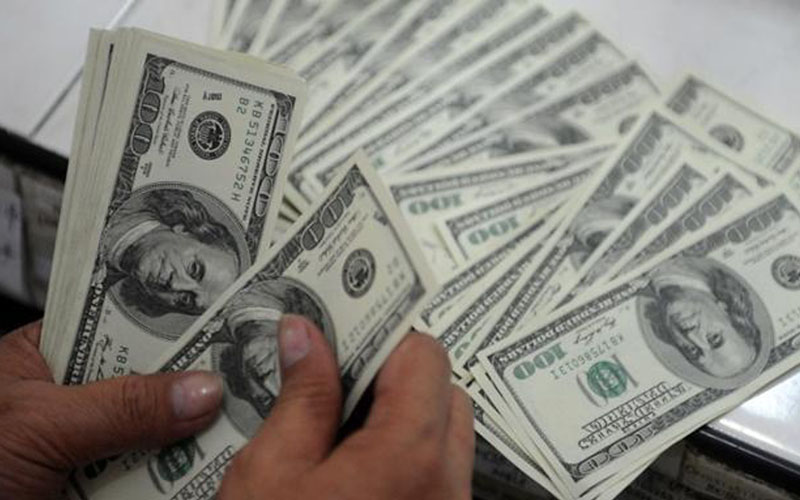
Forex Turnover

By Aduragbemi Omiyale

Members of the Manufacturers Association of Nigeria (MAN) have been assured of better access to foreign exchange (forex) for importation of raw materials and machines that are not available locally.

This assurance was given by President Muhammadu Buhari when he held a meeting with the group on Wednesday in Abuja.

Mr Buhari said he would look into the issue of the supply of forex raised by the group, noting that, “Our strategic plan to boost manufacturing activities in the country is on course.”

“We will continue to improve the patronage of locally made goods, bridge the gap between skills required by industry and those provided by our tertiary institutions and ensure seamless access to long term finance for our Small and Medium-Scale Enterprises (SMEs).

“We recognize that MAN remains a key stakeholder in this journey and we will continue our engagement with you,” a statement issued by Mr Femi Adesina, spokesman to the President, disclosed.

Mr Buhari, when he met with the team led by the leader of MAN, Mr Mansur Ahmed, stated that the relevant Ministry would revisit their concerns about the increase in excise duties on the identified products and other tariff-related matters.

On the African Continental Free Trade Area (AfCFTA), the President said Nigeria would fast track the process of setting up the Designated Competent Authority that will superintend the administration of Rules of Origin and Commission as well as the automation for issuance of electronic Certificate of Origin.

He added that the federal government would also ensure that relevant structured platforms are established for monitoring and evaluation of the performance of the Ease of Doing Business and improved Government patronage of made in Nigeria products.

Affirming his belief that a private sector led economy is the way to create jobs in the country, President Buhari urged the leadership of MAN to continue to encourage manufacturers that government recognizes the resilience of their members and other private sector organisations in promoting a virile manufacturing sector in Nigeria.

“I beseech you to continue to support the government in our quest to provide the appropriate environment that will attract the necessary investment both domestic and foreign for the upliftment of the nation’s economy,” he said.

On the impact of COVID-19 on world economies, the President noted that while the pandemic had an adverse impact on the Nigerian economy with the attendant fluctuations in the price of oil, his administration has effectively contained the spread of the pandemic and other diseases.

He added that the federal government would continue to consistently deploy prudent means of judiciously utilising the limited revenue to sustain the economy and stimulate growth.

Mr Buhari also used the occasion to reemphasize that in spite of limited resources, his government has made appreciable progress in road and rail infrastructure development; provision of stimulus packages for the manufacturing sector; improvement in energy management and support for exporters with a view to improving the operating environment for businesses in Nigeria.

“These projects are there for all to see.

“Furthermore, we are vigorously pursuing reforms on ease of doing business and currently putting in place other necessary policy measures and incentives that will guarantee full recovery from the consequences of COVID-19, sustain economic development and further shield the economy from the potential impact of fluctuations in the price of crude oil in the global market.

“I have listened carefully to all the challenges enumerated by the President of MAN and would like to assure you that, like we have done in the recent past, we will give consideration to some of the constraints that are yet to be fully addressed, especially those that align with our policies and programmes for economic recovery and sustainable development.

“Let me assure you that this Administration is fully aware that the survival of Nigeria lies in Agriculture and having a viable domestic manufacturing sector.

“I must emphasise here that when I say Agriculture, I also refer to agro-allied business which is the value-added component in the value chain.

“A strong manufacturing sector creates more jobs and wealth for our people.

“It will usher in sustainable economic prosperity because we will produce what we consume as a nation and generate foreign exchange by exporting surpluses and by import substitution,” he said.

In her remarks, the Minister of State, Industry, Trade and Investment, Ms Mariam Katagum, pledged that the Ministry would continue to work with MAN in the areas of policy, trade and creating an environment to facilitate the growth of businesses in Nigeria.

“MAN is in business to create a climate of opinion in this country so that manufacturers can operate efficiently and profitably for the benefit of all,” she said.

Speaking at the event, the MAN president said the advocacy visit was largely motivated by two things: namely, to thank the President for all the support extended to the manufacturing sector since his assumption of office in 2015, and seek the urgent support of the federal government for the manufacturing sector to overcome the binding constraints to competitive manufacturing in Nigeria.

On the challenges facing the sector, the MAN president said the association has articulated remedial measures for these challenges in the Blueprint for Accelerated Development of Manufacturing in Nigeria, which will be formally presented to the President within the first quarter of 2022.

The MAN leadership, however, highlighted a few challenges that could be addressed in the immediate term in order to improve the manufacturing environment.

They include: inadequate supply of foreign exchange, inadequate electricity supply, poor access to long term fund, patronage of Made-in-Nigeria Goods and local content development, looming increases in tax rate, among others.

Mr Ahmed also used the occasion to formally present the new logo and annual report of the association to President Buhari.


Aduragbemi Omiyale is a journalist with Business Post Nigeria, who has passion for news writing. In her leisure time, she loves to read.

4 Comments

Leave a Reply

Your email address will not be published. Required fields are marked *

Economy

Dangote Refinery Crude Intake Hits 635,000b/d in April, Receives 21 Cargoes

Published

on

Dangote Refinery Crude Supply to Local Refineries

By Adedapo Adesanya

Nigeria’s 650,000 barrels-per-day Dangote Refinery hit its highest-ever monthly crude intake in April 2026, taking in about 635,000 barrels per day of crude oil, according to Argus tracking data.

Deliveries in the review month rose from 565,000 barrels per day in March, bringing the refinery close to its full installed capacity.

The increase followed the completion of maintenance work on one of the refinery’s crude distillation units earlier this year.

This indicates that the Dangote Refinery is steadily ramping up operations toward full capacity after a gradual start since late 2023.

The refinery received 21 separate crude cargoes in April — a record since operations began.

All supplies came from West Africa, mainly Nigerian crude grades, with one cargo from Cameroon.

Nigerian grades delivered included Bonny Light, Escravos, Qua Iboe, Bonga, Forcados, Brass River, Amenam, and others.

Cameroon’s Ebome crude was supplied to the refinery for the first time.

April receipts comprised 160,000 barrels per day of Bonny Light, 65,000 barrels per day each of Escravos, Qua Iboe and Bonga, 50,000 barrels per day of CJ Blend, then 25,000-35,000 barrels per day each of Nigerian Utapate, EA, Jones Creek, Amenam, Forcados, Brass River, plus 25,000 barrels per day of Cameroon’s Ebome.

The strong rise in local and regional crude supply could also reduce the refinery’s dependence on imported crude grades and strengthen Nigeria’s domestic fuel production capacity.

The Argus report said that no US crude was delivered in April, despite the US West Texas Intermediate (WTI) crude previously being a major feedstock for the plant in 2025.

The refinery relied heavily on Suezmax tankers, with some vessels making multiple shuttle trips between offshore terminals and the refinery.

Average crude receipts in the first four months of 2026 climbed to 495,000 barrels per day, significantly above last year’s average of 375,000 barrels per day.

The data assessed Dangote’s April receipts at a weighted average of 35.1°API and 0.2 per cent sulphur content, compared with 37.2°API and 0.2 per cent sulphur in March. Receipts averaged 37.1°API and 0.15 per cent sulphur in January-April, compared with 36.8°API and 0.2 per cent sulphur across 2025.

The report also added receipts for May appear good as the refinery should get a cargo each of Qua Iboe and Odudu this week.

Continue Reading

Economy

Customs Area 11 Command Seizes N2bn Containers of Illicit Items

Published

on

Aliyu Mohammed Alkali Onne Port

By Bon Peters

About 17 containers containing illicit items worth over N2 billion have been seized by the Area 11 Command of the Nigeria Customs Service (NCS) in Onne, Port Harcourt, Rivers State, between January and April 2026.

In the period under review, the agency generated about N258 billion as revenue, a statement signed by the command’s acting spokesman, Mr Paul Istifanus Gimba, an Assistant Superintendent of Customs 1, disclosed on Thursday.

The Customs Area Controller for the Command, Comptroller Aliyu Mohammed Alkali, said last month, more than N77 billion was generated, noting that this reflects the command’s unwavering commitment to revenue generation, trade facilitation, and the enforcement of extant government fiscal policies.

He stated that in the second month of this month, his men intercepted an attempt to smuggle one 40-foot container declared to contain plumbing materials, with a Duty Paid Value (DPV) of N185.2 million.

According to him, upon examination, it was discovered that the perpetrators had concealed the original container number and replaced it with a fake one in an attempt to unlawfully remove the container from the port without payment of duty.

Furthermore, he hinted that in April 2026, the command intercepted six 20-foot containers carrying a total of 1,100 jerricans of Super Delicieux Vegetable Oil with a DPV of N494.0 million, in contravention of section 55 of the Nigeria Customs Service Act, 2023, which prohibited the importation of refined vegetable oils and fats in order to protect and promote local industries, particularly domestic vegetable oil producers and agro-allied businesses.

The senior customs officer highlighted other items seized by his men during the period under review, including cartons of chilli cutters, ceiling fans, and food packs.

The Comptroller reminded all mischievous importers and their agents that the command remained unwavering in its resolve to combat smuggling and all forms of illegal trade practices at the port, even as he strongly encouraged all law-abiding traders to remain compliant and resist the temptation to engage in activities that contravene the law.

Mr Alkali praised the professionalism of the officers and men of the command as well as their vigilance and dedication to duty.

He also thanked members of the press for their continued partnership and commitment to disseminating accurate and reliable information about the activities of the agency to the public.

Continue Reading

Economy

Indonesia Buys Nigerian Crude Oil to Reduce Exposure to Hormuz Disruptions

Published

on

crude oil in gongola

By Adedapo Adesanya

Indonesia has imported crude oil from Nigeria as Southeast Asia’s largest economy moves to reduce its dependence on Middle Eastern supplies amid rising geopolitical tensions involving the United States, Israel, and Iran.

Indonesia’s Ministry of Energy and Mineral Resources confirmed that Nigerian crude cargoes have already arrived in the country as part of efforts to diversify supply routes away from the volatile Strait of Hormuz, a key global oil transit chokepoint that handles about 20 per cent of world oil shipments.

The development positions Nigeria as an increasingly strategic alternative supplier in the global energy market as buyers seek more stable and flexible crude sources outside the Middle East.

Nigeria, which is Africa’s largest crude producer, has always sold some of its crude grades via joint ventures with international oil companies as well as to Dangote Refinery, to boost domestic production.

Indonesia’s Director General of Oil and Gas, Mr Laode Sulaeman, said the country was prioritising crude imports from suppliers whose shipping routes do not pass through the Strait of Hormuz, which has faced heightened security concerns following the ongoing conflict involving Iran, Israel, and the United States.

Apart from Nigeria, Indonesia is also considering crude supplies from Russia and the US.

The move could strengthen Nigeria’s crude export market at a time the country is seeking to boost production levels and attract new long-term buyers for its oil grades.

Speaking in March, the chief executive of the Nigerian National Petroleum Company (NNPC) Limited, Mr Bayo Ojulari, said that Nigeria could increase oil production by about 100,000 barrels per day ‌over the next few months to realistically help the global shortfall.

Before the latest geopolitical tensions, around 20 per cent of Indonesia’s crude imports came from the Middle East. However, the country has now accelerated plans to diversify supply sources, naming Nigeria among key replacement suppliers alongside Angola, Brazil, Russia, and the US.

The development comes as Nigeria continues to gain attention in global oil markets, with its crude grades increasingly sought after because of their relatively low sulphur content and suitability for modern refineries.

Indonesia also recently opened talks with Russia for long-term crude and liquefied petroleum gas supplies, including a proposed purchase of 150 million barrels of Russian crude scheduled for delivery from late 2026.

Continue Reading

Trending