Connect with us

Economy

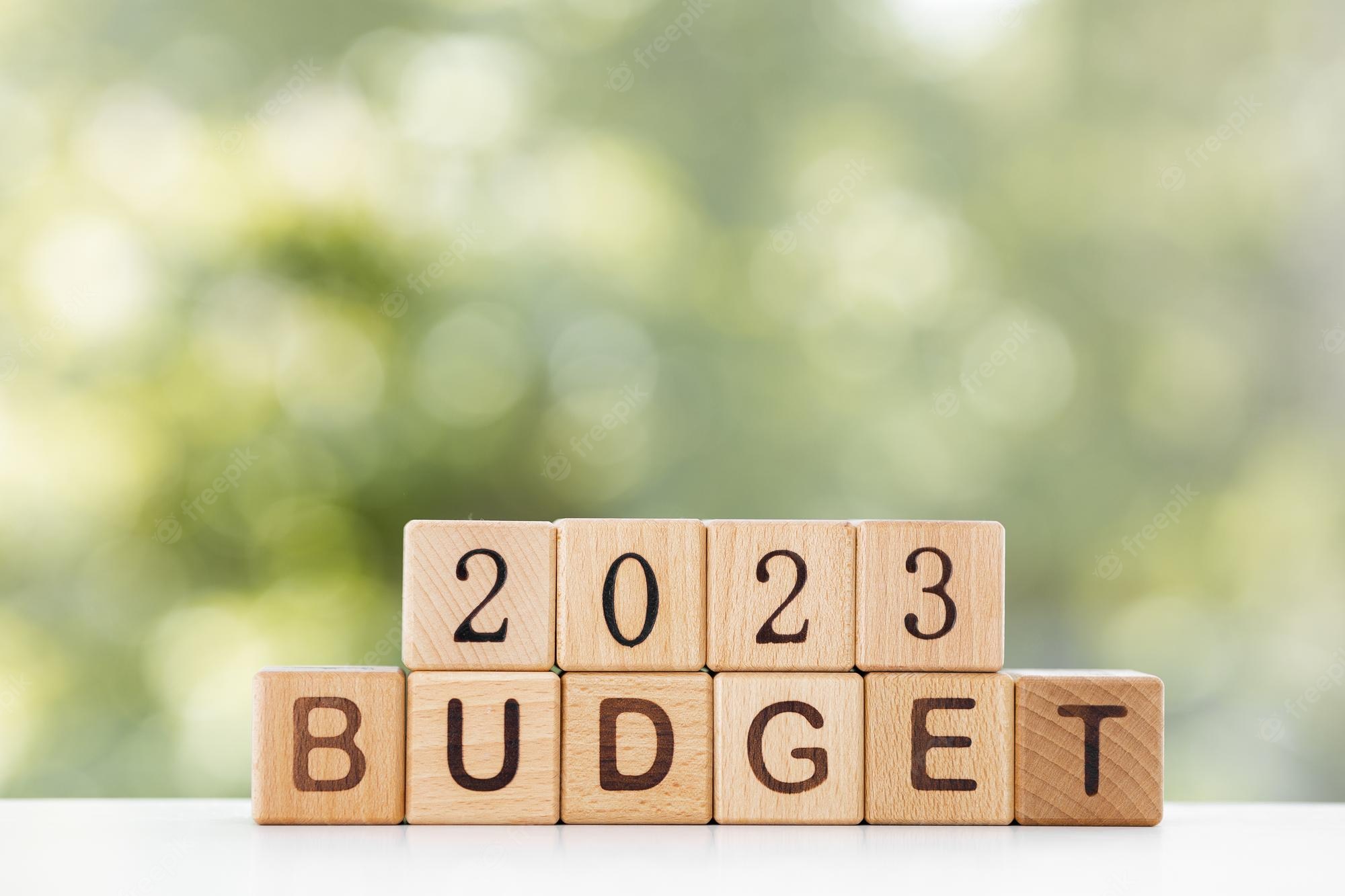
Buhari to Present N19.76trn 2023 Budget Friday

Published

on

2023 budget

By Adedapo Adesanya

President Muhammadu Buhari will, on Friday, October 7, present Nigeria’s 2023 budget of N19.76 trillion to the National Assembly in Abuja.

The presentation will take place at 10 am at the temporary chamber of the House of Representatives. He will expect the appropriation bill to be passed before the end of the year for signing ahead of the next fiscal year.

The Director-General, Budget Office of the Federation, Mr Ben Akabueze, had said the President will present the 2023 appropriation to the National Assembly in September.

He had said the 2023 budget was prepared in tandem with extant federal government policies and guidelines as articulated in the 2023 Budget Call Circular and other relevant laws and regulations.

Mr Buhari in December 2021, signed the 2022 Appropriation Bill into law with an aggregate expenditure of N17.127 trillion, an increase of N735.85 billion over the initial executive proposal for a total expenditure of N16.391 trillion.

Last month, Mrs Zainab Ahmed, the Minister of Finance, Budget and National Planning, said that the proposed 2023 budget is embedded with an N12.43 trillion deficit.

She said this in an interactive session with members of the Senate Committee on Finance and heads of revenue-generating agencies in Abuja.

According to her, the N12.43 trillion deficit is a result of the projected N6 trillion tax and import duty waivers as well as fuel subsidy of over N6 trillion that was retained for the year.

However, in his response, Mr Olamilekan Adeola, the chairman of the Senate Committee on Finance, suggested that the N12.43 trillion deficit be reviewed downwards before the budget is sent to the National Assembly for consideration and approval.

He said, “The proposed N12.43 trillion deficit for the 2023 budget and N6 trillion waivers are very disturbing and must be critically reviewed. Many of the beneficiaries of the waivers are not ploughing accrued gains made into expected projects as far as infrastructural developments are concerned.

“The same goes for the tax credit window offered by FIRS to some companies. Billions and trillions of naira can be generated by the government as revenue if such windows are closed against beneficiaries abusing them and invariably provide required money for budget funding with fewer deficits cum borrowings.”

“The Nigeria Customs Service should help in this direction by critically reviewing waivers being granted on import duties for some importers, just as the FIRS should also review the tax credit window offered to some companies without corresponding corporate social services to Nigerians in terms of expected project executions like road construction.”


Adedapo Adesanya is a journalist, polymath, and connoisseur of everything art. When he is not writing, he has his nose buried in one of the many books or articles he has bookmarked or simply listening to good music with a bottle of beer or wine. He supports the greatest club in the world, Manchester United F.C.

Click to comment

Leave a Reply

Your email address will not be published. Required fields are marked *

Economy

Nigeria Customs Seeks Slash in N34trn Import Duty Waivers

Published

on

import duty waiver

By Adedapo Adesanya

The Nigeria Customs Service (NCS) is seeking a reduction in import duty exemptions, which rose to N34 trillion, limiting its ability to increase its revenue generation threshold.

The Comptroller-General of the Customs Service, Mr Adewale Adeniyi, disclosed that the value of import duty exemption certificate approvals increased to that level in 2025, describing the policy as one of the major factors restricting its revenue generation.

At an investigative session of the Senate Committee on Finance with revenue-generating agencies in Abuja on Monday, Mr Adeniyi explained that government fiscal policies have continued to impact the revenue-generating capacity of the Customs Service, both positively and negatively.

“The NCS would have generated significantly higher revenue over the years if not for government-approved import duty waivers and other external factors affecting collections,” he said.

He added that the Import Duty Exemption Certificate scheme, introduced in March 2020, accounted for about N34 trillion in approvals in 2025, with nearly 60 per cent covering duty-free importation of military hardware due to Nigeria’s prevailing security challenges.

Other government-backed duty waivers, he noted, covered the importation of Compressed Natural Gas (CNG), electric and hybrid vehicles, healthcare equipment and medical supplies, industrial machinery and manufacturing inputs, as well as food import intervention programmes.

While acknowledging the impact of the waivers on Customs revenue, Mr Adeniyi argued that fiscal policy should not be assessed solely on the basis of revenue generation but also on its broader economic and social objectives.

He, however, urged the federal government to establish stronger monitoring mechanisms to ensure beneficiaries of duty waivers deliver the intended economic outcomes, including lower consumer prices, increased local production and improved healthcare access.

The committee also expressed displeasure over the absence of several heads of government agencies invited to the hearing, including the Nigerian Civil Aviation Authority (NCAA), Small and Medium Enterprises Development Agency of Nigeria (SMEDAN), Industrial Training Fund (ITF), and the Federal Medical Centre (FMC), Jabi.

The Chairman of the Senate Committee on Finance, Mr Sani Musa, warned that the affected chief executives must appear at the committee’s next sitting or face severe sanctions under the Senate’s rules.

Continue Reading

Economy

Is Headway Broker Safe and Legit? A Detailed Look at Regulation and Trust

Published

on

headway broker Demo Account

In the competitive world of online trading, finding a trading brokerage partner that balances reliability, technological innovation, and accessible conditions is essential. Headway broker has emerged as a significant player, currently serving over 4 million users globally.

In this article, we take a detailed look at what makes this broker for trading a notable option for both novice and experienced traders.

Headway Regulatory Foundation and Safety

Safety is the cornerstone of any trading relationship. Headway broker operates under the regulation and licensing of the Financial Sector Conduct Authority (FSCA). This regulatory oversight ensures that the broker adheres to strictly defined standards for transparency and operational conduct, providing traders with an added layer of security and confidence when managing their portfolios.

Trading Platforms and Instruments

Efficiency in trading Forex and other markets is driven by the tools at your disposal. Headway provides a robust technological trading ecosystem:

Industry-Standard Platforms: The broker fully supports MetaTrader 4 (MT4) and MetaTrader 5 (MT5), the most widely used platforms for technical analysis and automated trading.

Proprietary Mobile App: For traders who prioritize mobility, Headway offers its own custom-built trading app. It is readily available for download on both Google Play and the App Store, allowing for seamless account management and trading on the go.

Diverse Market Access: Traders have a wide range of opportunities with access to over 300 trading instruments, ensuring plenty of choice for different strategies and asset classes.

Trading Account Types Offered by Headway

Headway broker understands that every trader enters the market with a different level of experience:

Three Account Tiers: To ensure inclusivity, the broker offers three distinct types of accounts (Cent, Standard and Pro), tailored to suit different levels of expertise and capital requirements.

Demo Account: For those looking to refine their skills without financial risk, Headway provides a comprehensive demo trading account. This is the perfect environment to practice strategies, understand how the platform works, and gain confidence before transitioning to live trading.

Customer Support and Incentives

Headway supports its user base with comprehensive resources and financial incentives:

24/7 Technical Support: Market fluctuations happen at any time. Headway provides round-the-clock technical support for the traders, ensuring that help is always available whenever a question or issue arises.

150$ No Deposit Bonus: To help new traders get started, Headway offers a $150 no deposit bonus. This is an excellent way to test the broker’s execution speed and trading environment with zero initial risk.

IB Partnership Program: Beyond individual trading, Headway fosters growth through its Introducing Broker (IB) partnership program. This allows partners to build their business and earn commissions by referring new traders to the platform.

Conclusion

With its combination of FSCA regulation, a vast range of instruments, and modern platforms like MT4, MT5, and its own proprietary app, Headway FX broker provides a comprehensive environment for modern traders. Whether you are using the demo account to hone your skills or taking advantage of the 150 no deposit welcome bonus, this broker offers the stability and tools needed for your trading journey.

Continue Reading

Economy

Buying Interest Lifts NASD OTC Exchange by 0.40%

Published

on

NASD OTC exchange

By Adedapo Adesanya

The NASD Over-the-Counter (OTC) Securities Exchange rose by 0.40 per cent on Monday, July 13, buoyed by buying interest in 11 Plc, Central Securities Clearing System (CSCS) Plc and UBN Property Plc, which offset the profit-taking in Food Concepts Plc, the parent company of Chicken Republic.

11 Plc gained N20.69 to end at N227.64 per share compared with last Friday’s price of N206.95 per share, CSCS Plc grew by N1.83 to N91.48 per unit from N89.65 per unit, and UBN Property Plc added 1 Kobo to sell at N1.81 per share versus N1.80 per share.

On the flip side, Food Concepts Plc depreciated by 24 Kobo to close at N2.45 per unit, in contrast to the preceding session’s N2.69 per unit.

As a result, the market capitalisation increased by N9.2 billion to N2.587 trillion from N2.578 trillion, and the NASD Security Index (NSI) improved by 15.33 points to 4,311.67 points from 4,296.34 points.

Yesterday, the volume of securities traded by investors surged by 615.9 per cent to 9.1 million units from the previous 1.3 million units, and the value of securities rose by 997.1 per cent to N320.4 million from the preceding session’s N29.2 million, while the number of deals decreased by 12.5 per cent to 28 deals from last Friday’s 32 deals.

At the close of trades, Great Nigeria Insurance (GNI) Plc remained the most active stock by value on a year-to-date basis, with 3.4 billion units valued at N8.4 billion, followed by Infrastructure Credit Guarantee (Infracredit) Plc with 2.3 billion units worth N6.5 billion, and CSCS Plc with 73.9 million units exchanged for N5.2 billion.

GNI Plc also closed the session as the most traded stock by volume on a year-to-date basis, with 3.4 billion units sold for N8.4 billion, followed by Infracredit Plc with 2.3 billion units traded for N6.5 billion, and Resourcery Plc with 1.1 billion units transacted for N415.7 million.

Continue Reading