
Economy
Businesses in Nigeria Maintain Positive Performance Streak in June 2025

By Modupe Gbadeyanka
For the sixth consecutive month in 2025, businesses in Nigeria maintained a positive performance streak, remaining in the expansion region, according to the Business Confidence Monitor report of the Nigerian Economic Summit Group (NESG), supported by Stanbic IBTC.
The report obtains qualitative information on the current business performance within the Nigerian economy and gauges expectations about overall economicactivities in the short term.
It is anchored on business managers’ optimism on key leading economic indicators such as investment, prices, demand conditions, employment, etc, combining leading qualitative indicators on Production, Investment, Export, Demand Conditions, Prices, Employment, and the General Business Situation to gauge the overall business optimism of the Nigerian economy.
The target respondents for the Business Confidence Survey (BCS) are business establishments operating in Nigeria that have been engaged in economic activities since the beginning of 2023. The survey is administered to senior managers and business executives.
According to the NESG–Stanbic IBTC Business Confidence Monitor (BCM), the Current Business Index rose to 113.6 points in June from 109.8 points in May 2025, driven by easing inflationary pressures, improved investor confidence and climate, and stronger business resilience across key sectors.
Sectoral analysis showed expansion across all sectors and broader economic activities. Strong business growth was observed in Manufacturing (123.6), non-manufacturing (120.7), and Trade (121.0) in June 2025. The Agriculture and Services sectors also expanded, though only slightly above the origin (100 index points), reaching 108.9 and 106.3 index points, respectively.
However, Non-manufacturing’s performance declined when compared with its May 2025 level of 122.2. This decline is linked to factors such as credit squeeze, rising inventories due to weak demand, and high (weak) exchange rates, which fuel imported inflation and escalate production costs, especially as many companies in this sector depend on imported inputs.
Despite the overall positive trend, structural challenges constrained broader business growth. Key BCM sub-indices investment, export, supply order, prices, and employment recorded lower values compared to the previous month. The cost of doing business also rose in June, reversing the slight relief observed in May 2025.
Businesses identified major constraints such as limited access to financing, persistent electricity supply shortages, inconsistent economic policies, inadequate foreign exchange availability, and elevated commercial lease and rental costs.
In June 2025, the index for the Agriculture sector rebounded from its temporary contraction in May 2025, returning to the expansion region. The sector index rose to 108.9 points in the month, up from 98.2 points in May. This recovery was primarily driven by a swift rebound in the Crop Production sub-sector, which contributed over 80 per cent of total output.
The reversal of the May 2025 downturn is attributed to several favorable developments: the harvest period coinciding with the New Yam Festival celebrated nationwide, the commencement of wet-season planting, a boost in livestock activities following the inclusion of high-yield Danish dairy heifers, and the operationalization of various agro-processing initiatives supported by multilateral development institutions.
A breakdown of performance across the five agricultural sub-sectors shows that only Fishing recorded a contraction (below 100 points) in June 2025. Other sub-sectors experienced expansion in business activities, with significant growth in Crop Production (109.6, up from 95.1 in May 2025). Agro-Allied (108.2), Livestock (105.2), and Forestry (100.0) also remained in the expansion region.
Despite these gains, many agribusiness owners pointed to several ongoing challenges affecting their operations, with limited access to finance being the most critical. Many reported difficulty securing loans, which limits their ability to procure essential inputs like feed, drugs, and agricultural equipment.
Other challenges include infrastructure deficits particularly unreliable power supply and weak transportation and logistics networks rising input costs, high rental and operational expenses, growing insecurity, and regulatory burdens. Unstable power supply remains a major concern, especially for poultry and fish farmers who rely heavily on cold storage and water systems, thus increasing their energy costs. This situation contributed to a rise in the cost-of-doing business index to 136.3 in June, from 120.2 in May 2025.
NESG–Stanbic IBTC Business Confidence Monitor (BCM) Index for the manufacturing sector showed that businesses experienced expansion, recording an index of 123.6 points in June 2025. This marks a significant improvement from 114.4 points in May 2025. The uptick reflects stronger performance across key sub-sectors, boosting overall manufacturing output in Nigeria.
Major contributors to this expansion include Textile, Apparel & Footwear; Cement; Plastic and Rubber Products; Wood and Wood Products; and Pulp, Paper and Paper Products. Despite this progress, manufacturers highlighted persistent structural constraints, raw material shortages, unreliable electricity, high import tariffs, inflation, and insecurity.
Rising production costs, high rents, imported machine parts, and diesel worsened by weak domestic currency continue to weigh on output and profits. Multiple taxes, weak demand, unstable policies, and poor access to finance further stifle growth and expansion.
In addition, insecurity hampers the sourcing of raw materials, further disrupting production. While most sub-sectors recorded positive performance, some particularly Motor Vehicle and Assembly posted declines. Still, the strength of major sub-sectors outweighed these losses, driving the sector’s overall index improvement.
Business conditions in Nigeria’s non-manufacturing sector posted a reading of +120.7 points in June 2025. This marks the second month in a row of declining business performance, highlighting growing concerns among businesses about the challenging economic environment. While still within expansion territory, the index continues a downward trend from 123.6 points in April and 122.2 in May, reflecting growing strains on sector-wide business optimism.
Many non-manufacturing industries attributed the weakening momentum to persistent structural and macroeconomic challenges. Poor power supply has increased reliance on costly diesel, while high rents, dilapidated roads, and other infrastructural deficits have inflated production and transportation costs, eroding business efficiency. Although the overall performance remained positive, the outlook varied across sub sectors.
Apart from Oil and Gas Services, which reported improved business activity, all other sub-sectors registered a decline compared to May, with “Other Non-Manufacturing” sliding into contraction at 98.4 points. Amplifying these pressures are rising exchange rates and restricted access to finance, which hinder procurement and planning. Meanwhile, mounting regulatory burdens and elevated inflation continue to compress productivity and profit margins. These worsening conditions have increased operational costs, curtailed expansion, and weakened investor confidence across the sector.
Nigeria’s Services sector sustained its business expansion momentum in June 2025, following a slight slowdown in the previous month (May 2025). The NESG–Stanbic IBTC Services Business Confidence Monitor (BCM) Index rose to 106.3 points from 104.5 in May 2025. The improvement in business performance was driven by growth in the Broadcasting and Real Estate sub-sectors, supported by rising client/consumer demand and more stable operating conditions. Five of the six major service sub-sectors recorded business expansion. However, the Telecommunications and Information Services sub-sector experienced a contraction due to structural challenges, including the rising cost of service delivery primarily energy-related-delayed tariff adjustments, high exchange rates, and soaring dollar-denominated expenses for tower leases, network equipment, and international connectivity.
Other Services sub-sectors reported weak expansion in June, as amplified business constraints such as energy-related cost pressures, logistics bottlenecks, currency volatility, and persistent security issues, particularly in northern and rural areas continued to hinder service growth and raise operating costs. These factors eroded competitiveness and dampened business activity during the period.
The NESG–Stanbic IBTC Trade index recorded an expansion in June 2025, with the index rising to 121.0 points, up from 114.1 points in May 2025. The Retail sub-sector showed a notable rebound, shifting from the contraction zone of 89.2 points in May to 111.7 points in June 2025.
In contrast, the Wholesale sub-sector experienced a slight decline but remained in the expansion zone, registering 130.3 points in June. This performance underscores the enduring structural and macroeconomic constraints that continue to weigh heavily on the trade sector.
The modest improvement in some areas of sectoral performance was largely driven by increased consumer demand for essential goods, relative stability in the retail prices of fast-moving consumer goods (FMCGs), and improved conditions in supply chain logistics.
Traders across key urban centers reported higher sales volumes in food items, personal care products, and household essentials categories typically considered non-discretionary partly due to heightened demand from festival-related activities nationwide. Despite these gains, many trade businesses in Nigeria continue to struggle with a wide range of structural and operational challenges that impede their growth and profitability.
Chief among these is the lack of capital, followed closely by market price volatility and logistics and transportation bottlenecks. These challenges discourage investment, reduce business competitiveness, and make it increasingly difficult for entrepreneurs to sustain operations.
Entrepreneurs frequently cite limited access to affordable financing and prohibitively high interest rates on loans as key constraints. These financial barriers hinder the ability to expand operations, replenish inventory, or invest in productivity-enhancing tools.
To capture the short-term outlook and performance expectations of business owners in the country, the NESG–Stanbic IBTC Future Business Expectation Index provides insights into the levels of optimism and pessimism among businesses for the next one to three months. For June 2025, the index stood at 134.5 points, reflecting a slight improvement from 132.4 points in May 2025.
Across the sectors, the Manufacturing sector recorded the highest optimism at 160.4 points, followed by Trade (158.0 points) and non-manufacturing (153.5 points).
Meanwhile, the Services sector, at 122.3 points, showed the lowest level of optimism regarding expected improvements in the business environment.
Notably, sentiment improved in four sectors; Non-manufacturing, Manufacturing, Services, and Agriculture compared to May 2025, suggesting that despite higher index scores, businesses remain cautiously optimistic in their expectations due to ongoing macroeconomic uncertainties.
The generally optimistic outlook for Nigerian businesses is driven by a combination of seasonal economic activity, policy-driven interventions, relative exchange rate stability, ongoing infrastructure development, and a gradual recovery in consumer demand.
These drivers continue to support cautious optimism across various sectors, particularly in Agriculture, Retail Trade, Non-manufacturing, and Services. As these positive trends continue to build momentum, many businesses are positioning themselves to take advantage of new opportunities and more favourable operating conditions.









By Adedapo Adesanya
The NASD Over-the-Counter (OTC) Securities Exchange extended its stay in the south territory with a decline of 0.56 per cent on Wednesday, April 2.
This brought down the market capitalisation by N13 billion to N2.417 trillion from N2.430 trillion, and downed the NASD Unlisted Security Index (NSI) by 22.57 points to 4,062.87 points from the previous session’s 4,062.87 points.
It was observed that the NASD exchange ended with three price gainers and three price losers during the trading day.
MRS Oil Plc depreciated by N19.00 to close at N171.00 per unit compared with the previous price of N190.00 per unit, NASD Plc lost N4.14 to trade at N37.36 per share compared with Wednesday’s N41.50 per share, and Central Securities Clearing System (CSCS) Plc gave up N2.00 to sell at N78.00 per unit versus N80.00 per unit.
On the flip side, FrieslandCampina Wamco Nigeria Plc appreciated by 19 Kobo to N93.00 per share from N92.81 per share, Food Concepts Plc expanded by 15 Kobo to N2.87 per unit from N2.72 per unit, and Great Nigeria Insurance (GNI) Plc improved by 2 Kobo to 52 Kobo per share from 50 Kobo per share.
Yesterday, the volume of securities dipped by 91.8 per cent to 260.2 million units from 3.2 billion units, the value of securities went down by 98.1 per cent to N154.2 million from N8.3 billion, while the number of deals soared by 53.3 per cent to 46 deals from 30 deals.
GNI Plc was the most active stock by value on a year-to-date basis with 3.4 billion units worth N8.4 billion, followed by CSCS Plc with 56.9 million units valued at N3.9 billion, and Okitipupa Plc with 27.5 million units traded for N1.8 billion.
The most traded stock by volume on a year-to-date basis was also GNI Plc with 3.4 billion units sold for N8.2 billion, trailed by Resourcery Plc with 1.1 billion units exchanged for N415.7 million, and Infrastructure Guarantee Credit Plc with 400 million units transacted for N1.2 billion.
By Adedapo Adesanya
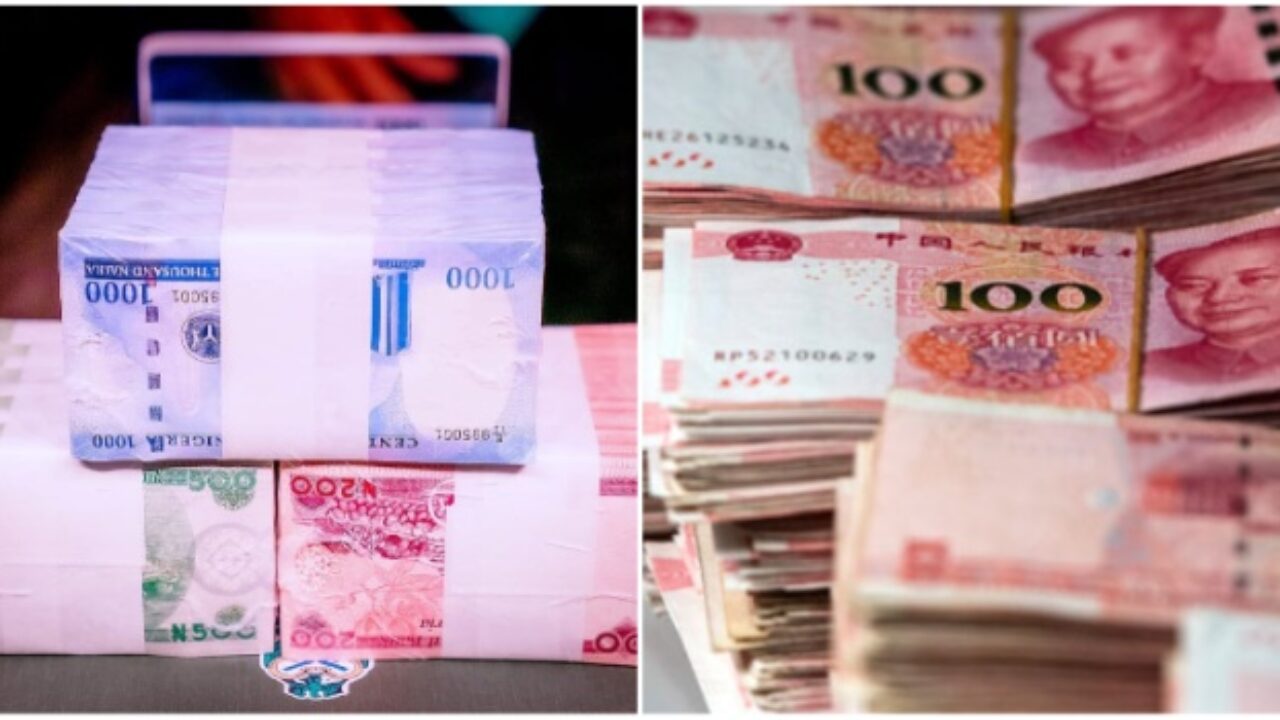
The Naira dropped N2.09 or 0.15 per cent against the United States Dollar in the Nigerian Autonomous Foreign Exchange Market (NAFEX) on Thursday, April 2, to trade at N1,380.79/$1 compared with Wednesday’s rate of N1,378.70/$1.
However, it appreciated against the Pound Sterling in the official market by N2.77 to quote at N1,824.86/£1 versus the N1,836.57/£1 it was traded at midweek, and improved its value against the Euro by N10.54 to N1,591.92/€1 from N1,602.46/€1.
Yesterday was the last trading session of the week for the local currency in the spot market, as the market will be closed on Friday and Monday for the Easter Holiday.
At the black market, the Nigerian Naira maintained stability against the greenback yesterday at N1,405/$1, but gained N8 at the GTBank FX counter to settle at N1,388/$1, in contrast to the previous session’s N1,396/$1.
Pressure eased on the domestic currency as strong policy indicators have helped calm the majority of worries within the financial systems. Particularly in the remittance segment, the apex bank has directed all International Money Transfer Operators (IMTOs) to route remittance transactions through designated Naira settlement accounts in banks, a move aimed at boosting transparency and channelling more foreign exchange into the formal market.
This helps take off pressure from the foreign reserves, which have fallen below the $50 billion mark as they are gradually decreasing rather than falling sharply.
Meanwhile, the cryptocurrency market was bullish on Thursday, as macro sentiment shifted against recent optimism after reports that Iran is drafting a protocol with Oman to manage traffic through the Strait of Hormuz, easing concerns about disruptions to a key global oil route.
The remarks came after U.S. President Trump on Wednesday night vowed to hit Iran “extremely hard” in the coming weeks and that the Strait of Hormuz would “open naturally” once the war ends.
Cardano (ADA) chalked up 1.9 per cent to trade at $0.2435, Dogecoin (DOGE) grew by 1.2 per cent to $0.0912, Ethereum (ETH) appreciated by 0.8 per cent to $2,066.37, Bitcoin (BTC) added 0.5 per cent to sell at $67,080.53, Solana (SOL) increased by 0.5 per cent to $79.91, and Ripple (XRP) jumped 0.2 per cent to $1.31.
Conversely, Binance Coin (BNB) dipped 0.7 per cent to $586.90, and TRON (TRX) depreciated by 0.3 per cent to $0.3147, while the US Dollar Tether (USDT) and the US Dollar Coin (USDC) closed flat at $1.00 each.

By Dipo Olowookere
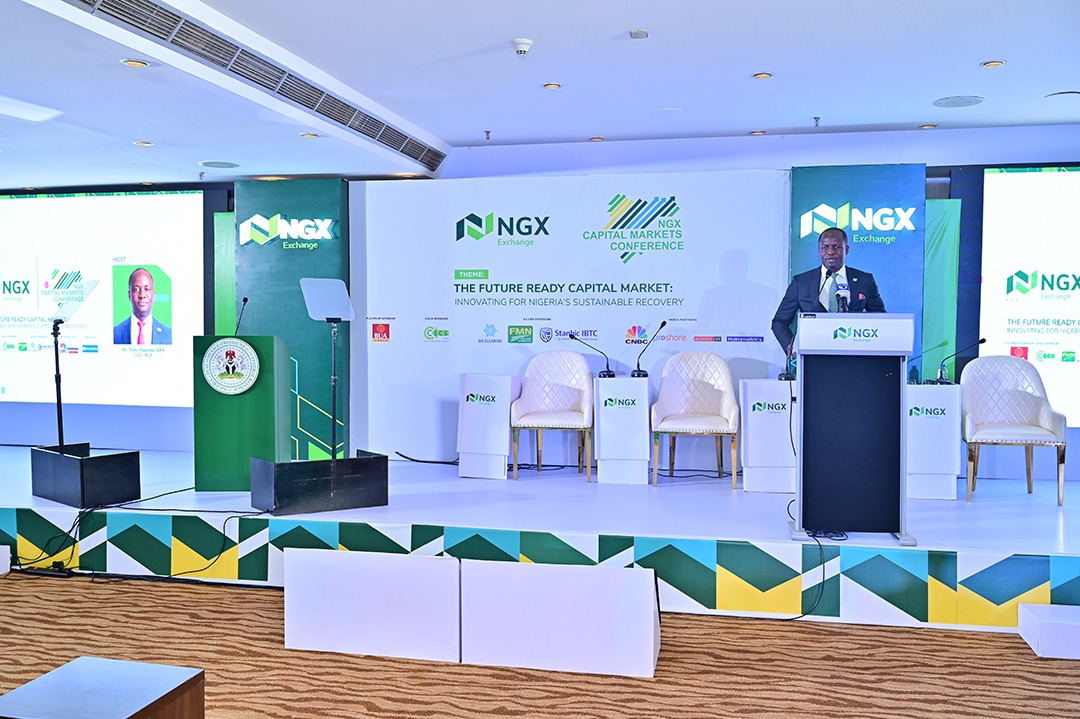
The local stock market was relatively flat on Friday, as the bears and the bulls shared the spoils of war, though investor sentiment turned bullish compared with the preceding session’s bearish posture.
Data from the Nigerian Exchange (NGX) Limited showed that the All-Share Index (ASI) was marginally down by 4.66 points as it ended at 201,698.89 points versus Wednesday’s 201,703.55 points, and the market capitalisation slightly contracted by N3 billion to N129.806 trillion from N129.809 trillion.
Customs Street was shut on Friday because of the public holidays declared by the federal government today and next Monday.
Business Post reports that John Holt declined by 9.91 per cent to N15.45, Abbey Mortgage Bank shed 9.60 per cent to trade at N8.95, International Energy Insurance slipped by 6.48 per cent to N3.32, Chams shrank by 5.30 per cent to N3.75, and Tantalizers depreciated by 5.18 per cent to N4.03.
On the flip side, Unilever Nigeria improved by 10.00 per cent to N103.40, Fortis Global Insurance gained 9.82 per cent to trade at N1.23, Multiverse appreciated 9.81 per cent to N20.15, Legend Internet advanced by 9.38 per cent to N6.30, and Zichis grew by 9.02 per cent to N14.14.
The market breadth index was positive during the trading session, as there were 35 appreciating stocks and 24 depreciating stocks.
Yesterday, investors traded 560.0 million equities valued at N19.3 billion in 49,676 deals, in contrast to the 815.5 million equities worth N33.3 billion transacted in 52,641 deals in the preceding day, representing a drop in the trading volume, value, and number of deals by 31.33 per cent, 42.04 per cent, and 5.63 per cent, respectively.
Secure Electronic Technology dominated the activity log with 59.7 million shares valued at N61.1 million, Wema Bank exchanged 52.0 million equities worth N1.4 billion, VFD Group transacted 36.0 million stocks for N410.5 million, Access Holdings sold 35.3 million shares valued at N914.8 million, and Chams traded 31.0 million equities worth N115.0 million.
-
 Feature/OPED6 years ago
Davos was Different this year
-
Travel/Tourism10 years ago
Lagos Seals Western Lodge Hotel In Ikorodu
-

 Showbiz3 years ago
Estranged Lover Releases Videos of Empress Njamah Bathing
-
 Banking8 years ago
Sort Codes of GTBank Branches in Nigeria
-

 Economy3 years ago
Subsidy Removal: CNG at N130 Per Litre Cheaper Than Petrol—IPMAN
-

 Banking3 years ago
Sort Codes of UBA Branches in Nigeria
-

 Banking3 years ago
First Bank Announces Planned Downtime
-

 Sports3 years ago
Highest Paid Nigerian Footballer – How Much Do Nigerian Footballers Earn