

Economy
Cardoso Links Interest Rate Cut to Improved Fiscal-Monetary Coordination

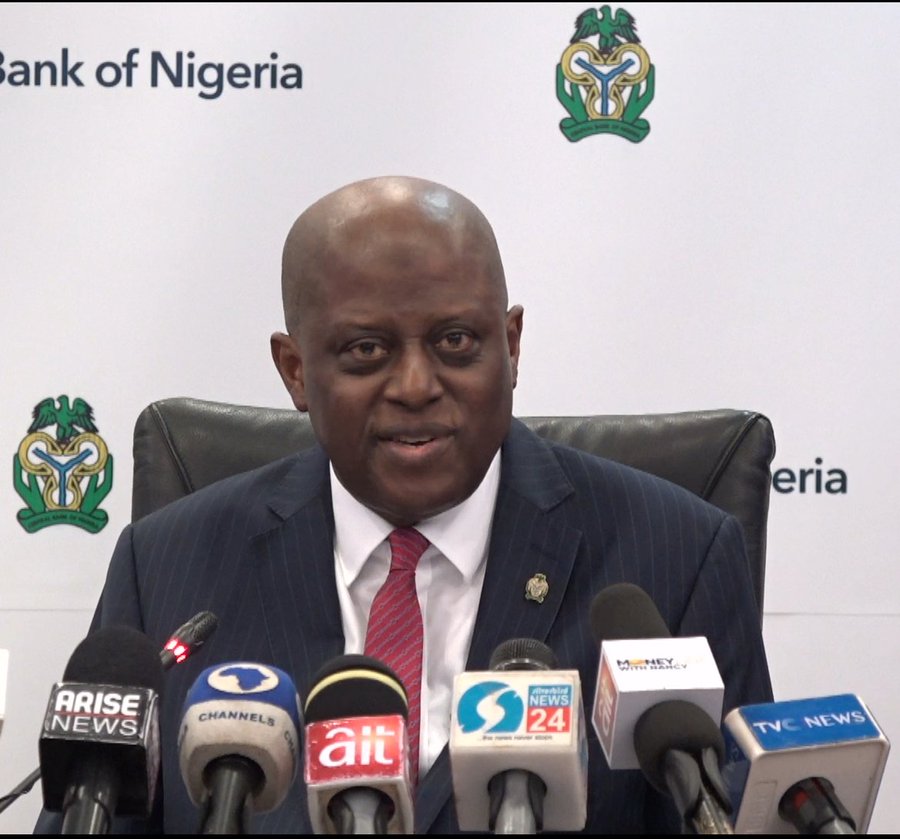
By Adedapo Adesanya
The Governor of the Central Bank of Nigeria (CBN), Mr Yemi Cardoso, has attributed the September reduction in the benchmark interest rate to improved coordination between fiscal and monetary authorities, alongside easing inflation and stronger external reserves.
Mr Cardoso said alignment between both arms of economic management helped address longstanding challenges in policy implementation and provided a stronger basis for adjusting monetary conditions.
He spoke during a panel discussion themed How Central Banks Decide—Committee Decision-Making and Communication in an Era of Uncertainty at the ongoing World Bank/International Monetary Fund meetings in Bangkok, Thailand.
The CBN reduced the Monetary Policy Rate (MPR) to 23 per cent in September from 26.5 per cent, following two consecutive decisions to retain the rate in May and July. The apex bank had earlier lowered the rate by 50 basis points to 26.5 per cent in February from 27 per cent.
According to Mr Cardoso, the improved relationship between fiscal and monetary authorities was among the developments that supported the decision, which took market watchers by surprise.
“For example, we had significantly changed a lot of the things that were not working… for example, coordination between the fiscal and the monetary,” he said.
“We had signed up an MOU between the fiscal and the monetary to ensure that we were all on the same page, and that was very well received.”
The CBN governor also highlighted the introduction of an overnight rate framework, saying it provided greater clarity on prevailing interest rates compared with the system previously in place.
He explained that the decision to lower the benchmark rate was also supported by improvements in Nigeria’s macroeconomic conditions, particularly the steady decline in inflation, stronger external reserves and continued economic growth.
“Our external reserves were the highest we had had in 18 years. Inflation was coming down consistently even though, internationally, in many places, it was going up; in our case, it was coming down. And growth was still going at a reasonable enough pace,” Mr Cardoso said.
He added that these conditions placed Nigeria in a relatively strong position to make a monetary policy adjustment that the authorities could have undertaken earlier.
The apex bank governor also stressed the importance of communicating policy decisions clearly to financial markets, noting that the CBN had devoted more time to explaining the economic circumstances behind the September rate cut.
According to him, the engagement helped market participants understand the rationale for the decision, despite the initial surprise.
“It took the market by surprise, and markets, as we know, generally don’t like surprises,” he said, adding that the communication strategy had been carefully considered.
Mr Cardoso maintained that the country’s external buffers and improved macroeconomic stability provided sufficient support for the decision, while stressing that credibility with investors remained essential to the successful implementation of monetary policy.
He said markets needed to see a consistent record of sound policy decisions before placing their trust in the monetary authorities.
“The markets must have consistently seen you over a period of time doing things in the right way and believe they can put their trust in you,” he said.