Economy
Casino Gambling & Integrated Resorts in Thailand
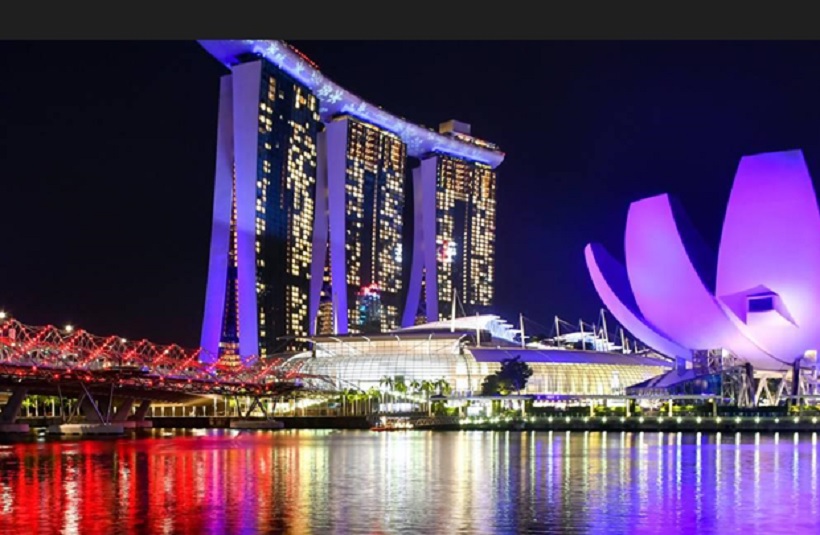
Thailand Moving Closer to Integrated Resorts
In early January of this year, a report was submitted and presented to the House of Representatives of Thailand. It contained surveys and various other research proposing casino-entertainment resorts to be built in Thailand.
As reported by thaicasinocenter.org, a special house committee and Suan Sunandha Rajabhat University ran a public opinion survey at the end of 2022, asking whether Thai people would approve of entertainment resorts being built in certain areas which will have casinos. In that particular survey, 80.7% of people approved the projects, and 36.4% answered that casinos must be a part of those resorts.
An Important Decision
At a three-hour meeting, the House of Representatives of Thailand discussed the proposals presented to them. While the idea of entertainment resorts was not an issue, the inclusion of casinos was the major point that had to be decided upon. Of the 319 representatives present, 310 voted in favor of having casinos as part of the entertainment complexes. It was seen as beneficial due to the economic value that the projects would bring.
The proposal was approved, but this does not mean that casino gambling will become legal overnight. The full report, as well as any extra comments made during the meeting, will be sent to the government for further evaluation. Pakornwut Udompipatsakul, a member of the House committee who was present for this event, said that this is a huge step for the country. However, full authorization and planning may still be two to three years away.
The Official Report
The official report proposed that if the proposal were approved, a new committee would be established to monitor and manage the issue, with the Prime Minister of Thailand having a leading role. In terms of funding, it was proposed that investments come from both public and private sources. With regard to location, the report highlighted Bangkok, the Eastern Economic Corridor (EEC), and places within a 100-kilometer radius of Suvarnabhumi and U-Tapao airports as the first priority. As an alternative, the report then pointed to tourism provinces as the second choice, with a few smaller provinces as the third.
The legality of casinos and online gambling in the country is the main obstacle this proposal faces. To move forward with the project, the 1935 Gambling Act must be amended to allow for casino and online gambling in the areas where the projects are to be built. If the government approves the project, the Ministry of Interior will be responsible for creating and introducing the relevant bill.
Additional Suggestions
In the report, there were also suggestions that the entertainment complex would have a five-star hotel, amusement parks, indoor and outdoor sports stadiums, shopping malls, a zoo, and beauty parlors. In fact, no more than 5% of the resort would be occupied by casinos.
When casinos eventually open, they will welcome locals and foreigners older than 21 years. Additionally, for people to be allowed, they would need to present evidence that they have had at least THB 500,000 or $15,000 in their bank account in the previous six months. The official report also stated that anything won from the casinos would be taxed.
Opposing Views & Future Steps
The proposal for the meeting and approval was received with some opposition, mainly from Thanakorn Komkrit, secretary-general of the Stop Gambling Foundation. He expressed worry that the committee had not developed a strategy to combat illegal gambling or addressed the possibility of criminal groups using casinos and online gaming to launder money. These problems will undoubtedly be thoroughly investigated and debated before the idea is given to the government. The proposal will be discussed further in the next few years.
Final Thoughts
Before the Thai government can move forward with the ambitious project of constructing casino-entertainment resorts in Thailand, a thorough assessment and discussion of potential issues must be conducted. To stay informed, be sure to follow the latest updates at thaicasinocenter.org, which provides reliable coverage of the official report and public opinion. Ultimately, only time will tell whether Thailand will join its neighbors as a prime gambling destination in Asia.
Economy
57 Equities Gain Weight on Nigerian Exchange in One Week
By Dipo Olowookere
Last week on the floor of the Nigerian Exchange (NGX) Limited, 57 equities appreciated, higher than 44 equities in the previous week, while 38 equities shed weight versus 35 equities in the preceding week, with 51 equities closing flat versus the 67 equities recorded a week earlier.
UPDC REIT chalked up 33.33 per cent to trade at N14.20, First Holdco gained 25.59 per cent to finish at N120.50, Unilever Nigeria rose by 19.31 per cent to N147.95, Cadbury Nigeria improved by 18.42 per cent to N67.50, and AXA Mansard expanded by 17.86 per cent to N13.20.
On the flip side, Mecure lost 26.97 per cent to N62.40, Royal Exchange shrank by 12.84 per cent to N1.29, Tripple Gee slumped by 12.34 per cent to N3.41, SUNU Assurances crumbled by 10.00 per cent to N3.60, and BUA Foods dropped 10.00 per cent to close at N845.10.
In the week, the All-Share Index (ASI) went up 1.60 per cent to 247,357.40 points, and the market capitalisation appreciated by 1.61 per cent to N159.588 trillion.
Similarly, all other indices finished higher with the exception of the consumer goods, Lotus II, growth, sovereign bond and commodity indices, which fell by 3.76 per cent, 1.55 per cent, 20.24 per cent, 0.14 per cent, and 1.25 per cent respectively.
As for the trading data, 4.433 billion shares worth N306.143 billion in 255,589 deals were transacted in five days versus the 2.819 billion shares valued at N182.499 billion traded in 226,729 deals in the previous week.
The financial services segment led the activity chart with 3.422 billion shares valued at N207.206 billion traded in 117,545 deals, contributing 77.18 per cent and 67.68 per cent to the total trading volume and value, respectively.
The consumer goods sector traded 201.978 million shares worth N17.171 billion in 28,666 deals, and the ICT industry posted a turnover of 169.481 million shares worth N21.194 billion in 23,107 deals.
First Holdco, Access Holdings, and GTCO accounted for 2.151 billion shares worth N170.793 billion in 44,768 deals, contributing 48.51 per cent and 55.79 per cent to the total trading volume and value, respectively.
Economy
American Refiners Boost Nigeria Oil Purchases as Exports Rebound 150% in May
By Adedapo Adesanya
Nigeria’s crude oil exports to the United States rebounded strongly in May as shipments rose by nearly 150 per cent month-on-month as American refiners increased purchases of overseas crude.
Latest data from the US Census Bureau showed that crude imports from Nigeria climbed to 2.36 million barrels in May, compared with 946,000 barrels recorded in April.
This indicated renewed demand for Nigeria’s premium light sweet grades amid shifting global patterns and higher international oil prices as the Middle East disruption weighed on trade.
The value of the imports also rose sharply to $279.8 million, up from $85.2 million in the previous month, reflecting both the higher volume of purchases and stronger crude oil prices during the period.
The rebound coincided with a broader increase in crude oil imports by the US.
According to the latest US International Trade in Goods and Services Report, total US crude imports increased by $1.5 billion in May, making crude oil one of the largest contributors to the $12.3 billion rise in overall goods imports during the month.
The report also showed that imports of industrial supplies and materials increased by $3.1 billion, with crude oil accounting for nearly half of the increase.
The recovery marks a significant turnaround after two consecutive months of declining Nigerian crude shipments to the US market. Export volumes had fallen from 4.64 million barrels in February to 1.54 million barrels in March, before dropping further to 946,000 barrels in April.
Despite the fluctuations, cumulative exports between January and May 2026 reached 11.15 million barrels, valued at approximately $926.6 million, reaffirming Nigeria’s strategic position as a key supplier of premium low-sulphur crude grades to the world’s largest economy.
Concerns surrounding crude shipments through the Strait of Hormuz, one of the world’s busiest oil transit routes, are encouraging refiners to increase purchases from Atlantic Basin producers such as Nigeria, whose crude grades offer lower geopolitical shipping risks than some Middle Eastern supplies.
Nigeria’s flagship crude grades, including Bonny Light, Qua Iboe and Escravos, remain highly sought after by US Gulf Coast refiners because of their low sulphur content and high yields of premium petroleum products such as petrol, diesel and aviation fuel.
Although the US has emerged as one of the world’s largest crude oil producers following the shale revolution, many American refineries continue to import light sweet crude to complement domestic production and optimise refining operations.
The rebound in exports also comes as Nigeria gradually restores crude production following improved security operations in the Niger Delta and intensified efforts by government agencies and operators to curb crude oil theft, pipeline vandalism and illegal refining.
Economy
NGX Group H1 2026 Earnings Rise 118%, to Pay N1.30 Interim Dividend
By Aduragbemi Omiyale
The Nigerian Exchange (NGX) Group Plc has impressed its shareholders with a sterling performance in the first half of 2026, declaring an interim dividend of N1.30.
This was as the organisation grew its revenue for the period by 118 per cent to N17.60 billion from N8.08 billion in the corresponding period of 2025, driven by strong market activity, operating leverage and increased contribution from investee companies.
Analysis of the financial statements of the firm showed that transaction fees rose by 169 per cent to N13.34 billion from N4.96 billion, listing fees increased by 59 per cent to N2.38 billion, and technology income rose by 19 per cent to N447.86 million.
Further, operating profit increased by 155 per cent to N10.62 billion from N4.16 billion, reflecting strong operating leverage, as growth in income significantly outpaced the increase in operating expenses.
In the first six months of this year, the share of profit from equity-accounted investees soared by 130 per cent to N4.14 billion as a result of the strong performance of Central Securities Clearing System (CSCS) Plc.
Consequently, profit before tax jumped by 170 per cent to N14.76 billion from N5.46 billion in H1 2025, while profit after tax surged by 146 per cent to N10.36 billion from N4.22 billion in the prior-year period.
It was observed that the company’s balance sheet remained robust, with total assets up to N75.87 billion as of June 30, 2026, while shareholders’ equity increased to N60.49 billion from N55.20 billion at the end of 2025.
The chairman of NGX Group, Mr Umaru Kwairanga, while commenting on the results and cash reward, said, “The board’s approval of an interim dividend of N1.30 per share reflects the strength of NGX Group’s first-half performance and our confidence in the group’s long-term prospects.
“We are encouraged by the significant growth recorded across the business and by the increasing contribution of companies within the group’s investment portfolio.
“The board remains committed to balancing attractive returns to shareholders with continued investment in the infrastructure, technology and strategic initiatives required to deepen Nigeria’s capital market and position NGX Group for sustainable growth.”
Also commenting, the chief executive, Mr Temi Popoola, said, “Our first-half results demonstrate the strength and scalability of NGX Group’s business model. Revenue growth was supported by significantly higher transaction activity, increased listing income and stronger contributions from our investee companies, while disciplined execution enabled us to translate this growth into substantially improved profitability.
“We remain focused on sustaining this momentum by deepening market liquidity, expanding investor participation, accelerating the development of technology-enabled products and building a more diversified financial market infrastructure group. The N1.30 interim dividend reflects both the progress made and our confidence in the Group’s capacity to deliver sustainable long-term value.”