

Economy
CBDC and Mobile Money – A Perfect Marriage


By Athu Karume
The rapid growth of mobile money has changed the payment landscape in Africa, alleviating the limitations of physical cash and barriers to banking services. The African mobile money story started in Kenya in 2007, when Safaricom launched its M-PESA solution for peer-to-peer money transfers. Shortly thereafter, the service spread quickly, starting in East Africa, and spreading out to the rest of the continent. Most mobile operators, including Vodacom, MTN, Orange, Telma and Airtel, are now providing mobile money services in most African countries. The initial success story of money mobile is due to a quick money transfer solution for unbanked and underbanked populations. Now, there are opportunities to make mobile money even more useful and efficient with CBDCs.
CBDC is a digital form of cash and part of the monetary base. It is a digital bearer instrument for store of value, payment, and settlement finality. CBDC is the direct liability of the central bank and has the lowest credit and redemption risk versus money issued by private entities.
A well-designed CBDC has the potential to improve payment efficiency at a lower cost and reduce payment risks typically associated with mobile money. A CBDC implementation that integrates into the existing mobile money services and systems will bring a new level of interoperable settlement efficiency, financial inclusion, convenience, safety, and financial stability.
CBDCs will augment and accelerate, not displace, or dampen, mobile money as a means of digital financial services. Mobile money services can interface their existing systems and apps with the CBDC platform to upgrade their services to send and receive CBDC in all kinds of domestic retail, wholesale, and cross-border financial services. Thanks to CBDC, mobile money services can remain available and deliver immediate settlement finality even when the users are out of network coverage.
MNOs are embracing CBDCs as a natural evolution of mobile payments. Mr. Eli Hini, Head of Mobile Financial Services of MTN Mobile Money Ghana shared his view on the benefits of CBDC, including the enhancement of digital payments, the opportunity for inclusion, offline (can transact without connectivity), clearing and settlement, and domestic transfers at the MoMo Stakeholder Forum 2022. “Innovation will always come, and just like mobile money came to create opportunities for people, other innovations (CBDCs) will come, and we should be ready to embrace it,” Mr. Hini told the audience.
With CBDC, commercial banks, MNOs, electronic money institutions (EMIs), microfinance institutions (MFIs) and fintech, will be more connected and accessible, creating a smoother, real-time, and more cost-effective way to make transactions.
On the other hand, existing mobile money services provide important and effect channels for rapid CBDC adoptions. CBDC adoptions require ease of signing up, ease of funding and using, widespread acceptability and usability, low cost of use and incentive, and public education. The general public is already familiar with mobile money services which are tailored for the different demographics with smart phones or feature phones. The operators have already created agent networks and business partnerships to facilitate funding and usage. Mobile money services are the ready partners to distribute CBDC ‘instantly’ to their existing user bases.
CBDC and mobile money is a perfect marriage. The interest in Central Bank Digital Currency (CBDC) has shot up in the past few years. Research and development of CBDCs have spread globally, particularly in ten countries in East and West Africa, where CBDCs and mobile money can complement and enhance each other very well in the drive towards financial inclusion.
Athu Karume is President, Africa Markets for eCurrency Mint and a 20-year veteran of the financial services and financial services and technology industries in Tanzania, US and Europe












By Aduragbemi Omiyale
One of the players in the hydrocarbon business in Nigeria, Geo-Fluids Plc, which trades its securities on the NASD OTC Securities Exchange, is planning to restructure its share capital with an increased of about 1,090 per cent.
Next Monday, the company will hold its Annual General Meeting (AGM) and one of the resolutions to be tabled to shareholders by the board is an authorisation for raising the share capital from N2.1 billion to N25.0 billion.
This is to be achieved by creating an additional 45,742,332,488 ordinary shares of 50 kobo each, each ranking pari passu in all respects with the existing ordinary shares of the firm.
Funds from this action would be used to expand the business scope to include hydrocarbons, mining, and natural resource development.
“That the share capital of the company be and is hereby increased from N2,128,833,756 to N25,000,000,000 ordinary shares of 50 kobo each, each ranking pari passu in all respects with the existing ordinary shares of the company,” a part of the resolutions read.
In addition, Geo-Fluids wants approval, “To undertake the business of bitumen production and processing in all its forms, including but not limited to the exploration, prospecting, drilling, extraction, refining, treatment, blending, storage, packaging, distribution, marketing, importation, exportation, shipping, transportation, trading, and general supply of bitumen, its derivatives, by-products, and ancillary materials; and to carry on all other related or incidental undertakings, services, or operations that may be considered advantageous, beneficial, or necessary for the advancement, expansion, or diversification of the bitumen industry.”
Also, it wants the authority of shareholders, “To engage in the acquisition, development, and management of mining assets and concessions for the purpose of exploring, extracting, processing, and producing hydrocarbons, oil and gas, minerals, and other natural resources; and to develop, mine, and process coal, industrial minerals, and other raw materials required for industrial, commercial, energy, or infrastructural purposes, together with all related activities necessary to ensure the effective exploitation, utilisation, and commercialisation of such resources.”
Further, it wants, “To operate and participate in all segments of the oil and gas value chain, including but not limited to the exploration, prospecting, drilling, extraction, refining, processing, storage, blending, supply, marketing, distribution, importation, exportation, transportation, shipping, and trading of crude oil, refined petroleum products, petrochemicals, liquefied natural gas, compressed natural gas, and other related hydrocarbons and derivatives; and to establish, own, operate, or participate in facilities, ventures, or partnerships that advance the energy and petroleum sector.”
At the forthcoming meeting, the organisation wants its name changed from Geo-Fluids Plc to The Geo-Fluids Group Plc.

By Adedapo Adesanya
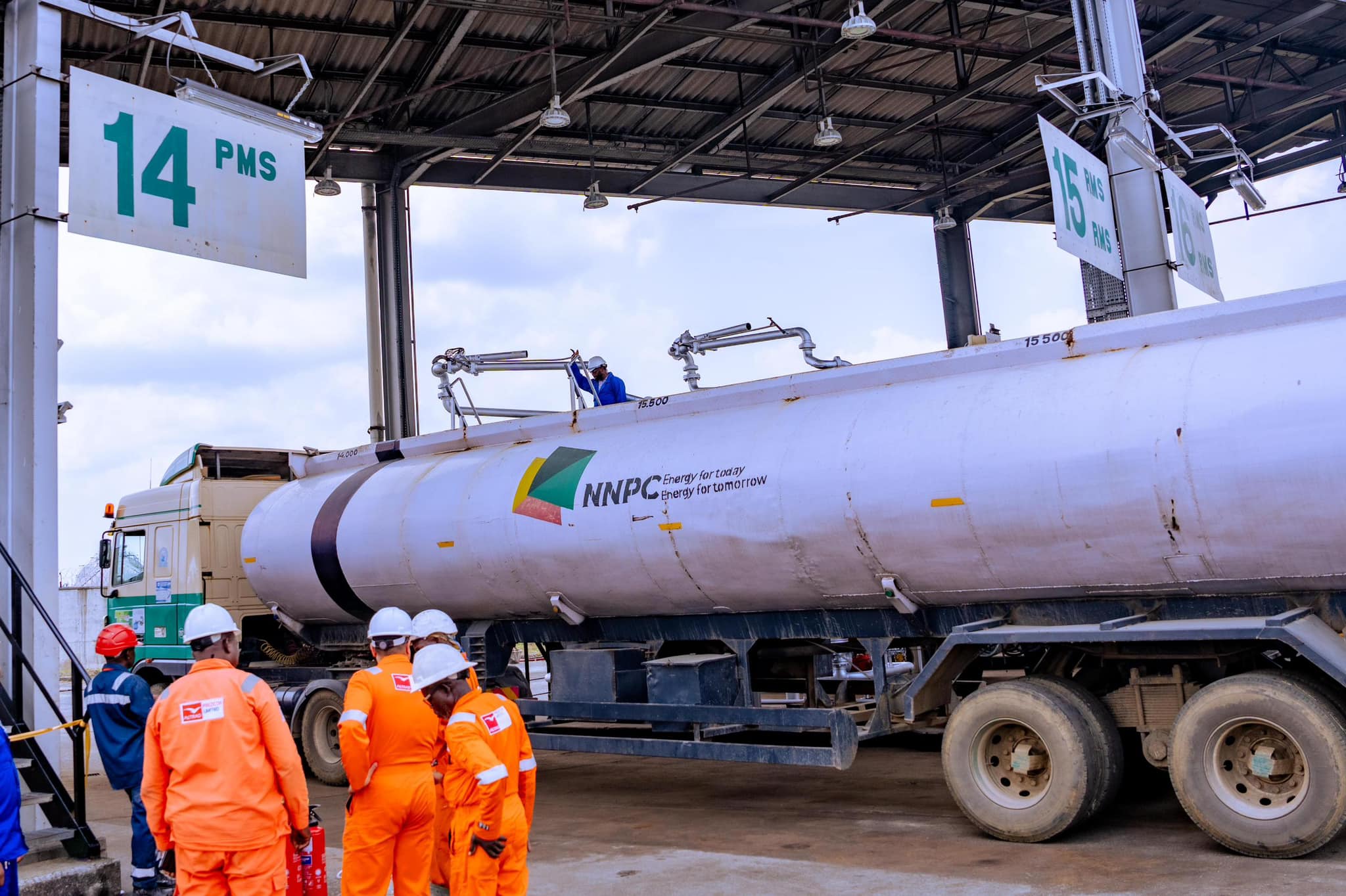
The Petroleum and Natural Gas Senior Staff Association of Nigeria (PENGASSAN) has warned against the full privatisation of the country’s government-owned refineries.
Recall that the Nigerian National Petroleum Company (NNPC) is putting in place mechanisms to sell the moribund refineries in Port Harcourt, Warri, and Kaduna.
However, this has met fresh resistance, with the President of PENGASSAN, Mr Festus Osifo, saying selling a 100 per cent stake would mean the government losing total control of the refineries, a situation he warned would be detrimental to Nigeria’s energy security.
Mr Osifo said the union was advocating the sale of about 51 per cent of the government’s stake while retaining 49 per cent, which he described as being more beneficial to Nigerians.
“PENGASSAN, even before the time of Comrade Peter Esele, had been advocating that government should sell its shares. The reason why we don’t want government to sell it 100 per cent to private investors is because of the issue bordering on energy security,” he said on Channels Television, late on Sunday.
“So, what we have advocated is what I have said earlier. If government sells 51 per cent stake in the refinery, what is going to happen? They will lose control, so that is actually selling. But for the benefit of Nigerians, retain 49 per cent of it.“
The PENGASSAN leader maintained that if the government had heeded the union’s advice in the past, the oil industry would be in a better state than it is today.
He addressed concerns in some quarters over whether investors would be willing to buy stakes in government-owned refineries, insisting that there are investors who would be interested.
“Yes, there are investors who surely will be willing to buy a stake in the refinery because our population in Nigeria is quite huge, and those refineries, when well maintained without political pressures and political interference, will work,” he said.
However, Mr Osifo warned that even if the government decides to sell a 51 per cent stake, it must ensure that a complete valuation is carried out to avoid selling the refineries cheaply.

By Aduragbemi Omiyale
Capital market operators have been given a deadline by the Securities and Exchange Commission (SEC) for the renewal of their registration.
A statement from the regulator said CMOs have till Saturday, January 31, 2026, to renew their registration, and to make the process seamless, an electronic receipt and processing of applications would commence in the first quarter of 2026.
“These initiatives reflect our commitment to leveraging technology for faster, more transparent, and efficient regulatory processes.
“The commission is taking deliberate steps to make regulatory processes faster, more transparent, and technology-driven. We are investing in automation, database-supervision, and secure infrastructure to improve how we interact with the market,” the Director General of SEC, Mr Emomotimi Agama, was quoted as saying in the statement during an interview in Abuja over the weekend.
He noted that through the digital transformation portal, the organisation has automated registration and licensing end-to-end as operators can now submit applications, upload documents, and track approvals online, cutting down manual processing time and reducing the need for physical visits.
According to him, the agency has also rolled out the Commercial Paper issuance module, which allows operators to file documents, monitor progress, and receive approvals electronically while feedback from early users shows a clear improvement in turnaround time.
“Work is ongoing to automate quarterly and annual returns submissions, with structured templates and system checks to ensure accuracy. A returns analytics dashboard is also in development to support risk based supervision and exception reporting.
“To back these changes, we have started upgrading our IT infrastructure, servers, storage, networks, and security layers, to boost speed and reliability.
“Selective cloud migration is underway for platforms that need scalability and external access, while core internal systems remain on premisev5p for now as we assess security and cost implications.
“At the same time, we are strengthening data integrity and cybersecurity with vulnerability assessments and planned penetration testing once automation and migration phases are stable.
“These efforts show our commitment to building a modern, resilient regulatory environment that supports efficiency, investor confidence, and market stability,” he stated.
Mr Agama affirmed that the nation’s capital market was clearly on a path toward digital transformation adding that there is an urgent need for regulatory clarity on advanced technologies, targeted support for smaller firms, and capacity-building initiatives.
“A phased and proportionate approach to regulating emerging technologies such as AI is essential, complemented by internal readiness through supervisory technology tools.
“Furthermore, investor education, particularly among younger demographics, will be critical to future-proof participation and drive fintech adoption.
“Innovation is vital, but it must be accompanied by responsibility. As operators embrace automation, artificial intelligence, and data-driven tools, they bear a duty to ensure ethical, secure, and compliant deployment. Safeguarding investor data, preventing market abuse, and maintaining operational resilience are non-negotiable,” he declared.
The SEC DG said that ultimately, responsible technology adoption is about building trust, the cornerstone of our markets saying that trust thrives on fairness, transparency, accountability, and regulatory compliance.
He, therefore, urged operators to uphold these principles adding that it will not only protect investors and systemic stability but also strengthen the long-term credibility and competitiveness of the Nigerian capital market.









-
 Feature/OPED6 years ago
Davos was Different this year
-
Travel/Tourism9 years ago
Lagos Seals Western Lodge Hotel In Ikorodu
-

 Showbiz3 years ago
Estranged Lover Releases Videos of Empress Njamah Bathing
-
 Banking7 years ago
Sort Codes of GTBank Branches in Nigeria
-

 Economy3 years ago
Subsidy Removal: CNG at N130 Per Litre Cheaper Than Petrol—IPMAN
-

 Banking3 years ago
First Bank Announces Planned Downtime
-

 Banking3 years ago
Sort Codes of UBA Branches in Nigeria
-

 Sports3 years ago
Highest Paid Nigerian Footballer – How Much Do Nigerian Footballers Earn