Connect with us

Economy

Contracts Award: FG to Give Priority to Local Firms

Published

on

By Modupe Gbadeyanka

Federal Government has promised to soon unveil some incentives to Nigerian firms in an effort to boost indigenous technology and encourage local entrepreneurs.

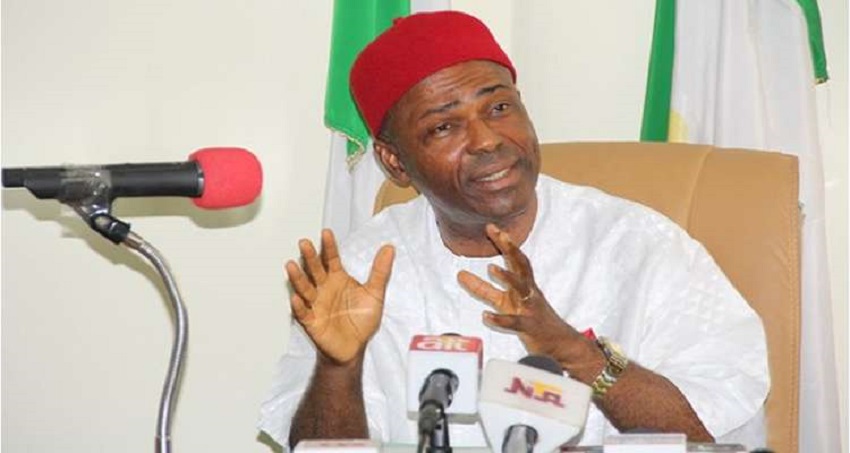
While delivering a keynote address at the Annual General Meeting (AGM) and 2017 Conference of the Nigerian Society of Engineers (NSE) on Tuesday, in Abuja, Minister of Science and Technology, Dr Ogbonnaya Onu, also stated that expatriate quota visas will henceforth not be granted to foreign firms at will where Nigerian professionals abound.

He said in case, expatriate quota is given to foreign firms at least 3 Nigerian professionals must be made to work with them from conceptualization to commissioning of the project so as to develop local capacity.

According to the Minister, Nigerian firms and companies are now to be given priority in the award of contracts.

He called on Nigerian engineers to utilize their skills in view of the prevailing global revolution which put premium on engineering in economic activities, noting that the richest people in the world are those who used their brain to create wealth.

Mr Onu bemoaned the paucity of engineers in Nigeria and also called on Nigerians to show interest in the commercialization of research findings as this will help us to create wealth, provide jobs, reduce poverty as well as stop capital flight.

The Minister also disclosed that the recently-launched Science, Technology and Innovation roadmap 2017 2030 will trigger industrialization and promote competiveness in raw materials to add value to our raw materials and guidelines that will guide our projects and contracts.

He also said that with the national strategy to promote competitiveness in raw materials, about N3 trillion would be saved by the Federal Government, adding that capital flight would be drastically reduced.

Earlier in his opening remarks, the President National Society of Engineers, Engr. Otis Liver Anyaeji called on the federal government to unbundle some ministries so as to make government business more effective.

He also called on the federal government to formulate and implement policies on agricultural mechanization, noting that development starts with infrastructural growth.


Modupe Gbadeyanka is a fast-rising journalist with Business Post Nigeria. Her passion for journalism is amazing. She is willing to learn more with a view to becoming one of the best pen-pushers in Nigeria. Her role models are the duo of CNN's Richard Quest and Christiane Amanpour.

Click to comment

Leave a Reply

Your email address will not be published. Required fields are marked *

Economy

Budget Office Explains Reason for Quarterly Report Delay

Published

on

2026 budget tinubu

By Adedapo Adesanya

The Budget Office of the Federation has defended the delay in publishing three outstanding Quarterly Budget Implementation Reports, saying the situation arose from the repeal and re-enactment of the 2025 Appropriation Act and the subsequent extension of the budget’s implementation period to June 2026.

The last publication on the budget office’s website is Q3 2025, a development that breaks the Fiscal Responsibility Act amid the country’s rising borrowing costs and mounting fiscal pressure.

In a clarification statement, the DG of the Budget Office, Mr Tanimu Yakubu, said public concerns over the absence of the reports must be understood within the constitutional and fiscal framework governing public finance administration in Nigeria, stressing that a fiscal year is not strictly tied to the January–December calendar, but is instead a legislative construct defined by appropriation laws passed by the National Assembly.

“The fiscal year is not necessarily synonymous with the calendar year. The calendar year is a fixed chronological construct of twelve months running from January to December.

“The fiscal year, however, is a juridical and legislative creation whose duration, commencement, and terminal date are determined by the extant appropriation framework enacted by law,” he said.

Mr Yakubu claimed that the recent reporting delay followed the Repeal and Re-enactment of the 2025 Appropriation Act concluded in December 2025, alongside an extension of the budget’s execution period.

These changes, he said, effectively altered the operational timeline for fiscal reporting and necessitated comprehensive reconciliations before publication of the affected quarterly reports.

“In substance and in law, therefore, the fiscal year becomes not merely a chronological concept, but a legislatively sustained expenditure window,” he explained.

The Budget Office further noted that Nigeria’s fiscal practice has historically accommodated adjustments such as supplementary budgets, rollover provisions, and implementation extensions, particularly for capital projects, to ensure continuity and prevent wastage of public resources.

It added that similar practices exist in other jurisdictions, where fiscal years are defined by law rather than fixed to the calendar year.

Citing constitutional provisions, the office referenced Sections 80 and 81 of the 1999 Constitution (as amended), which require that public expenditure be backed by appropriation laws rather than a rigid annual cycle. It maintained that as long as legislative authority exists, expenditure remains valid within the approved framework.

The DG also pointed to judicial precedents underscoring the supremacy of the National Assembly in public finance matters, noting that executive spending must align with statutory approval.

He also explained that the current reconciliation process involves revenue performance reviews, cash flow adjustments, debt analysis, and inter-agency coordination to ensure accuracy and audit integrity of the outstanding reports.

Mr Yakubu then assured that the missing quarterly reports are being finalised and will be released in phases in the coming weeks, adding that reforms are underway to strengthen digital reporting systems and improve transparency and timeliness in fiscal data publication.

In his words, “Accordingly, the outstanding Quarterly Budget Implementation Reports are being finalised and will be released in phases over the coming weeks.

“In parallel, the Budget Office is strengthening its digital reporting architecture, data harmonisation systems, and institutional coordination mechanisms to support more comprehensive, timely, and analytically robust fiscal reporting in line with evolving international public finance reporting standards.”

Continue Reading

Economy

NGX Group Advances Investor Education Drive with Digital Retail Engagement Initiative

Published

on

NGX Group Shares

Nigerian Exchange Group has intensified its investor education drive through a digital engagement initiative aimed at improving financial literacy and deepening retail participation in the Nigerian capital market.

The Group recently hosted an X Space session themed Follow the Fundamentals: A Beginner’s Guide to the Stock Market, reaching over 5,000 users, largely young Nigerians, first-time investors, and retail market participants seeking to better understand investment opportunities in the capital market.

Featuring social media investment influencer Omiete Inko-Tariah, alongside representatives from Nigerian Exchange Limited and NGX Regulation Limited, the session demystified key concepts around market operations, investor protection, and safe participation. Beyond education, it served as an open forum where retail investors engaged directly with market stakeholders on issues of confidence, transparency, and accessibility.

Speaking on the initiative, Clifford Akpolo, Head, Group Communications and Partnerships at NGX Group, said: “Deepening retail participation is critical to building a more resilient, inclusive, and sustainable capital market. At NGX Group, we believe financial literacy is not just an educational responsibility; it is a strategic imperative for strengthening investor confidence, improving market accessibility, and expanding long-term wealth creation opportunities for Nigerians. Through digital platforms like this, we are leveraging innovation to connect with the next generation of investors and democratize access to market knowledge.”

The initiative forms part of NGX Group’s broader sustainability agenda under its Community pillar, which focuses on advancing financial literacy, inclusion, and economic empowerment through education-driven and stakeholder-focused programmes.

Following the success of this edition, NGX Group plans to sustain similar engagements as part of its ongoing commitment to strengthening investor confidence, deepening retail participation, and building a more resilient and inclusive investment ecosystem.

Continue Reading

Economy

NGX Posts Turnover of 7.772 billion Equities Worth N374bn in Five Days

Published

on

VFD Group Lists NGX

By Dipo Olowookere

A total turnover of 7.772 billion equities worth N374.040 billion in 402,945 deals was recorded by the Nigerian Exchange (NGX) Limited last week compared with the 7.075 billion equities worth N324.351 billion traded in 474,436 deals a week earlier.

Data from the stock exchange showed that the financial services industry led the activity chart with 4.774 billion shares valued at N196.352 billion in 153,515 deals, contributing 61.43 per cent and 52.49 per cent to the total trading volume and value, respectively.

The ICT segment followed with 1.118 billion stocks worth N57.825 billion in 44,622 deals, and the services sector transacted 601.745 million equities for N6.984 billion in 27,653 deals.

First Holdco, UBA, and Chams accounted for 2.195 billion shares worth N99.820 billion in 30,056 deals, contributing 28.24 per cent and 26.69 per cent to the total trading volume and value, respectively.

Berger Pains led the gainers’ chart after gaining 55.57 per cent to trade at N168.95, SCOA Nigeria improved by 45.92 per cent to N33.05, DAAR Communications expanded by 42.41 per cent to N2.25, Fidson rose by 32.52 per cent to N136.50, and Learn Africa grew by 32.32 per cent to N10.85.

On the flip side, Zichis led the losers’ table after it gave up 11.78 per cent to settle at N29.43, The Initiates declined by 10.03 per cent to N32.30, NPF Microfinance Bank depreciated by 10.00 per cent to N5.76, NCR Nigeria shed 10.00 per cent to quote at N179.10, and Custodian Investment crashed by 9.52 per cent to N81.25.

At the close of transactions in the five-day trading week, 74 equities appreciated versus 69 equities in the previous week, 24 stocks depreciated versus 36 stocks a week earlier, and 48 shares closed flat versus 41 shares of the preceding week.

Last week, the All-Share Index (ASI) gained 2.27 per cent to finish at 250,330.92 points, and the market capitalisation chalked up 2.13 per cent to end at N160.444 trillion.

Similarly, all other indices finished higher apart from the energy, sovereign bond, and commodity indices, which fell by 1.19 per cent, 0.08 per cent and 0.80 per cent, respectively.

Continue Reading

Trending