Economy
Court Adjourns MTN, AGF $2bn Tax Case to October 29
By Modupe Gbadeyanka
The dispute between MTN and Nigeria’s Attorney General of the Federation (AGF), Mr Abubakar Malami, over the request for payment of $2 billion tax has been adjourned till Tuesday, October 29, 2019.
The matter came up for hearing on Wednesday before Justice Chukwujeku Aneke of the Federal High Court sitting in Lagos.
In September 2018, the nation’s attorney general told the South African GSM service provider to pay the $2 billion, but the company challenged it.
This came weeks after the Central Bank of Nigeria (CBN) had asked the leading telecom company in Nigeria to return $8.1 billion it allegedly repatriated to its home country with the help of four local banks, which were heavily fined by the CBN.
MTN, which took the matter to court, said the tax payment demand by the AGF was without merit, claiming that the attorney general exceeded his powers in making such request.
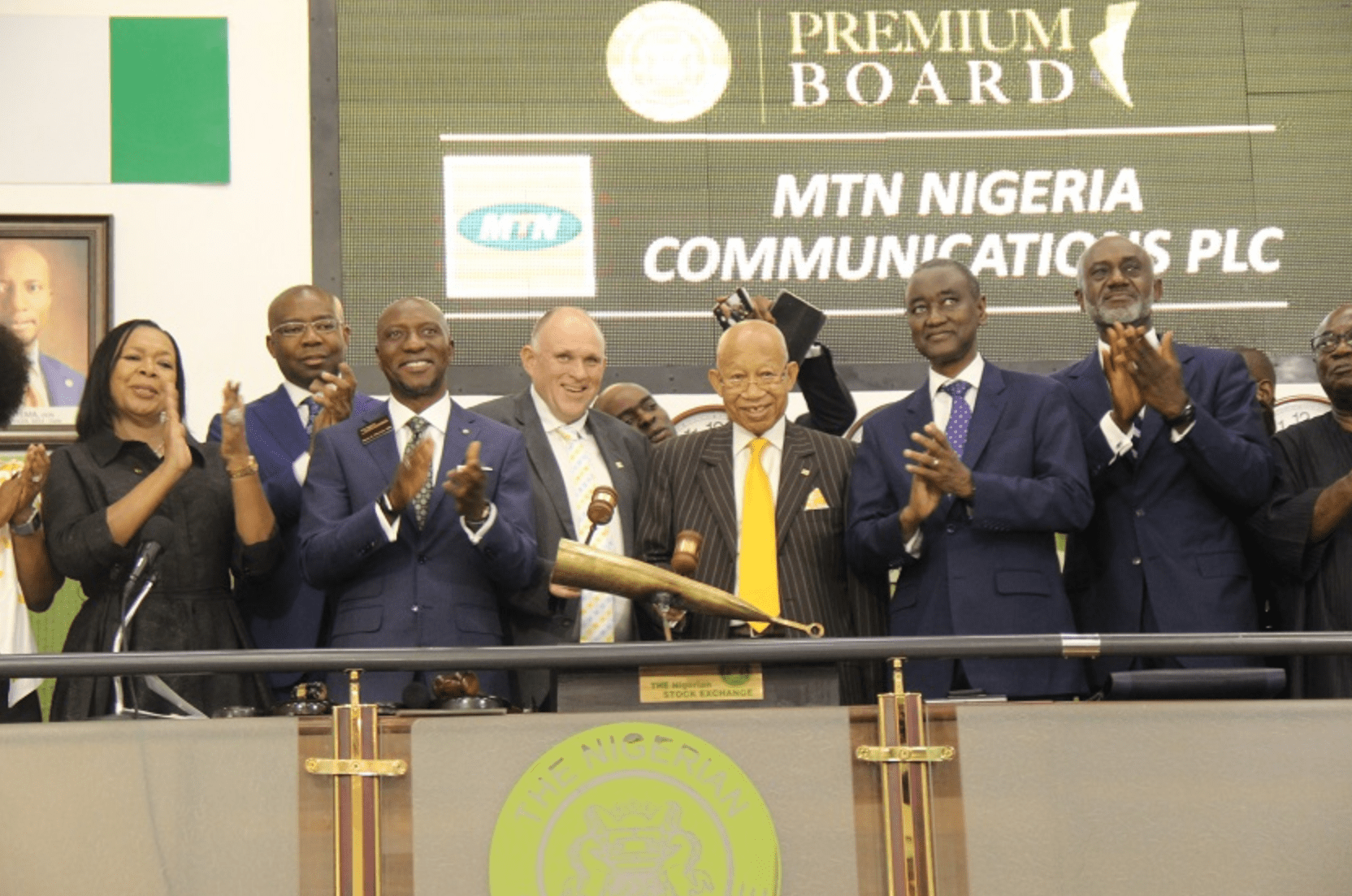
Last month, MTN Group listed shares of its local unit, MTN Nigeria Communications Plc, on the Nigerian Stock Exchange (NSE).
At its inaugural listing by introduction, the shares were offered at N90 per unit, but rose to N159.30k some days later.
Business Post reports that at the close of transactions today, shares of the company were traded at N128.50k per unit after going down by 50 kobo.
Economy
OGUNCCIMA Expresses Displeasure Over 15% Fuel Tariff Suspension
By Aduragbemi Omiyale
The decision of the federal government to suspend the implementation of the 15 per cent import duty on Premium Motor Spirit (PMS) and diesel imports has not gone down well with the Ogun State Chamber of Commerce, Industry, Mines and Agriculture (OGUNCCIMA).
The group faulted the federal government’s decision to set aside the policy, warning it could slow down the nation’s progress toward energy independence and weaken investor confidence in the refining sector.
“The suspension of the 15 percent fuel import tariff is disappointing. The policy was a step in the right direction to promote local refining, reduce dependence on imports, conserve foreign exchange, and create a fair competitive environment for domestic producers.
“Its reversal sends a wrong signal to investors who have shown confidence in Nigeria’s energy sector,” the president of OGUNCCIMA, Mr Niyi Oshiyemi, stated.
On Thursday, the Nigerian Midstream and Downstream Petroleum Regulatory Authority (NMDPRA) announced the suspension of the controversial policy.
For OGUNCCIMA, this is a setback to Nigeria’s economic reform drive and a missed opportunity to protect local refiners, particularly the Dangote Refinery and other modular refining initiatives.
According to Mr Oshiyemi, the tariff would have helped to stabilize the Naira by curbing excessive demand for foreign exchange used in fuel importation, adding that local refineries need firm policy backing to thrive, warning that continuous reliance on imported fuel would make the economy vulnerable to external shocks.
“The Dangote Refinery alone has the capacity to meet Nigeria’s domestic fuel needs and even export to other African countries. Supporting such investments with protective policies like the import tariff is not just economic common sense; it is a matter of national interest,” he stated.
The OGUNCCIMA leader urged the central government to reconsider its decision and reintroduce the policy after consultations with key stakeholders in the oil and gas industry, emphasising that sustainable industrial growth requires consistency in policy direction, noting that frequent policy reversals discourage private sector participation and hinder long-term development.
While acknowledging the government’s concern about potential short-term price increases, Mr Oshiyemi maintained that the long-term gains including job creation, forex savings, and increased energy security far outweigh any temporary inconvenience, reaffirming the organisation’s commitment to advocating policies that protect local industries and promote economic diversification.
“We believe in reforms that empower Nigerian investors and strengthen our productive base. The 15 percent tariff was one of such reforms, and we urge the government to revisit it in the national interest,” he said.
Economy
Ogun Eyes N500bn IGR Next Year, N750bn in 2027
By Modupe Gbadeyanka
An ambitious N500 billion is being targeted by the Ogun Stte government in the 2026 fiscal year by leveraging its strategic proximity to Lagos State and its vast landmass of over 16,000 square kilometres.
At the Treasury Board meeting on the 2026–2028 Medium-Term Expenditure Framework (MTEF) and the 2026 Budget, the Governor of Ogun State, Mr Dapo Abiodun, also said by the time he would be leaving office in 2027, the aim is to have reached N750 billion.
At the gathering on Tuesday at the Obas Complex, Oke-Mosan, Abeokuta, he noted that as Nigeria’s industrial hub, Ogun State “has no business generating less than N500 billion a year, and that has to be our target.”
“By the time we are leaving in 2027, Ogun State’s revenue should rise to about N750 billion. That is what ambition looks and feels like,” he declared, specifically tasking the Ogun State Internal Revenue Service (OGIRS) to contribute N250 billion of the total target, while other key revenue-generating agencies—such as the Ogun State Property and Investment Corporation (OPIC), the Bureau of Lands, the Ministry of Education, Science and Technology, and the Ministry of Housing—were directed to scale up their efforts.
Mr Abiodun emphasized that every Ministry, Department and Agency (MDA) had a critical role to play in achieving the goal, describing them as “pieces of a jigsaw that must fit together to complete the bigger picture.”
“Our comparative advantage was not fully harnessed by previous administrations. Our strength lies in providing what Lagos cannot offer. I expect every MDA to prepare an ambitious budget—aim for the stars, and if we miss, we’ll at least land on the moon,” he said.
The Governor urged agencies to adopt creativity and innovation in their revenue drive, commending those that had already demonstrated commendable results.
On the deplorable condition of Kara, near Isheri, Governor Abiodun reiterated his administration’s commitment to urban renewal, stressing that the area would be cleared and redeveloped.
“The new Ogun State cannot allow that place to continue to wear that look. You cannot be entering the new Ogun State and what you see first is an eyesore. There is no better time to act than now—we can’t leave it as an albatross for the next administration,” he added.
He revealed that an inter-ministerial team comprising officials from the Ministries of Environment, Physical Planning and Urban Development, the Bureau of Lands, and other relevant agencies had been set up to handle enumeration, compensation, and relocation efforts necessary for the corridor’s transformation.
Economy
NASD OTC Securities Exchange Rises 1.11% on Strong Investors Appetite
By Adedapo Adesanya
Four securities lifted the NASD Over-the-Counter (OTC) Securities Exchange by 1.11 per cent on Wednesday, November 12, with NASD Plc increasing by N5.32 to close at N59.00 per share compared with the previous day’s N53.68 per share.
Further, Central Securities Clearing System (CSCS) Plc added N3.80 to its value to sell at N42.00 per unit versus Tuesday’s closing price of N38.20 per unit, Lagos Building Investment Company (LBIC) Plc rose by 31 Kobo to end at N3.48 per share versus N3.17 per share, and UBN Property Plc gained 23 Kobo to settle at N2.59 per unit, in contrast to the preceding day’s N2.36 per unit.
The additions recorded by the quartet moved the market capitalisation of the platform higher by N24.10 billion to N2..193 trillion from N2.168 trillion, as the NASD Unlisted Security Index (NSI) soared by 40.27 points to 3,665.36 points from Tuesday’s 3,625.09 points.
The midweek’s trading numbers showed there was a 87,326.8 per cent jump in the volume of securities transacted to 22.1 million units from the 25,278 units transacted in the previous trading session while the value of transactions surged by 155,602.5 per cent to N1.3 billion from N846,210.62, and the number of deals rose by 35.7 per cent to 19 deals from 14 deals.
Infrastructure Credit Guarantee Company (InfraCredit) Plc ended as the most traded stock by value on a year-to-date basis with 5.8 billion units valued at N16.4 billion, followed by Okitipupa Plc with 170.3 million units transacted for N8.0 billion, and Air Liquide Plc with 507.4 million units worth N4.2 billion.
InfraCredit Plc was also the most traded stock by volume on a year-to-date basis with 5.8 billion units worth N16.4 billion, trailed by Industrial and General Insurance (IGI) Plc with 1.2 billion units traded for N419.7 million, and Impresit Bakolori Plc exchanged 536.9 million units for N524.9 million.
-
Feature/OPED6 years agoDavos was Different this year
-
Travel/Tourism9 years ago
Lagos Seals Western Lodge Hotel In Ikorodu
-
Showbiz3 years agoEstranged Lover Releases Videos of Empress Njamah Bathing
-
Banking7 years agoSort Codes of GTBank Branches in Nigeria
-
Economy2 years agoSubsidy Removal: CNG at N130 Per Litre Cheaper Than Petrol—IPMAN
-
Banking3 years agoFirst Bank Announces Planned Downtime
-
Sports3 years agoHighest Paid Nigerian Footballer – How Much Do Nigerian Footballers Earn
-
Banking3 years agoSort Codes of UBA Branches in Nigeria