Economy
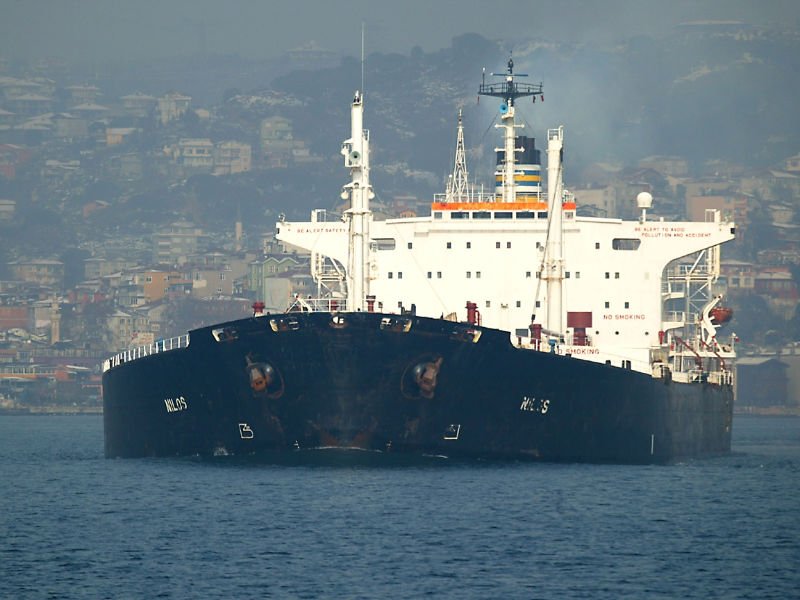
Crude Oil Prices Fall To Lowest Levels in 10 Months
By Adedapo Adesanya
The prices of the crude oil grades in the market fell to their lowest levels this year on Wednesday, losing all of the gains they had accumulated since Russia’s invasion of Ukraine.
Brent futures fell by $2.18 or 2.8 per cent to trade at $77.17 a barrel, as the United States West Texas Intermediate (WTI) futures depreciated by $2.24 to $72.01 per barrel.
Oil surged to nearly $140 a barrel in March, close to an all-time record, following the launch of what Russia tagged a “special operation” in Ukraine a month earlier.
The market has been steadily declining recently as economists brace for weakened worldwide growth in part due to high energy costs.
The situation worsened on Wednesday with bigger-than-expected increases in US fuel inventories despite a drop in crude stocks.
The US Energy Information Administration (EIA) reported an inventory decline of 5.2 million barrels for the week of December 2 compared with a sizeable draw of 12.6 million barrels estimated for the previous week, which sent prices higher at the time.
A day before the EIA released its report, the American Petroleum Institute estimated another weekly crude inventory draw for the week to December 2 at 6.43 million barrels.
Meanwhile, the EIA also reported an inventory build in fuel and another rise in middle distillate stocks for the week to December 2. Gasoline (petrol) inventories added 5.3 barrels in the week to December 2, with production averaging 9.1 million barrels daily, in contrast to a build of 2.8 million barrels for the previous week and a production rate of 9.4 million barrels daily.
Prices are also slipping further down as traders relax about the potential consequences of the G7 and EU price cap on Russian oil.
It appears they have assumed that it would not affect the availability of oil in any significant way and are selling crude.
Analysts also note that Russian oil is already trading close to the cap, so it shouldn’t make much of a difference in revenues, but it is worth remembering Russia has said it would not sell oil to countries that enforce the price cap, meaning the supply of Russian oil specifically might tighten for some importers.
Russia has also threatened to set a price floor for its oil in response to the G7 price cap, which may further complicate matters.
Support came as China, the world’s biggest crude importer, announced the most sweeping changes to its anti-COVID regime since the pandemic began. The country’s crude oil imports in November rose 12 per cent from a year earlier to their highest in 10 months, data showed.
Still, warnings from big US banks about a likely recession next year weighed on the value of the commodity.
Economy
CSCS Raises NASD Exchange by 0.04%
By Adedapo Adesanya
Central Securities Clearing System (CSCS) Plc kept the NASD Over-the-Counter (OTC) Securities Exchange in the green territory by 0.04 per cent on Friday, July 16.
The securities depository company added N2.50 to its share price to settle at N95.14 per unit from the preceding session’s N92.64 per unit.
However, FrieslandCampina Wamco Nigeria Plc slid during the session by N5.85 to N141.81 per share from N147.66 per share.
But when the bourse closed for the day, the market capitalisation increased by N1.08 billion to N2.593 trillion from N2.592 trillion, while the NASD Security Index (NSI) appreciated by 1.80 points to 4,320.67 points from 4,318.87 points.
During the session, the value of securities slid by 38.9 per cent to N63.5 million from N104.1 million, the volume of securities went down by 34.5 per cent to 1.2 million units from 4.8 million units, and the number of deals declined by 15.4 per cent to 33 deals from 39 deals.
Great Nigeria Insurance (GNI) Plc was the most traded stock by value on a year-to-date basis, with 3.4 billion units valued at N8.4 billion, followed by Infrastructure Credit Guarantee (Infracredit) Plc with 2.3 billion units worth N6.5 billion, and CSCS Plc with 75.4 million units traded for N5.3 billion.
GNI Plc also ended the day as the most traded stock by volume on a year-to-date basis, with 3.4 billion units exchanged for N8.4 billion, followed by Infracredit Plc with 2.3 billion units sold for N6.5 billion, and Resourcery Plc with 1.1 billion units transacted for N415.7 million.
Economy
First Holdco Drives Nigerian Bourse’s 0.54% Growth
By Dipo Olowookere
The bulls regained control of the Nigerian Exchange (NGX) Limited on Friday after surrendering power to the bears a day earlier as a result of mild selling pressure.
Yesterday, the Nigerian bourse rebounded by 0.54 per cent, mainly due to the gains recorded by First Holdco and others.
Data harvested by Business Post indicated that the industrial goods and energy sectors were flat, while the banking index chalked up 3.13 per cent. The insurance space expanded by 1.08 per cent, and the consumer goods counter rose by 0.21 per cent.
Consequently, the All-Share Index (ASI) went up by 1,316.52 points to 243,462.13 points from 242,145.61 points, and the market capitalisation grew by N850 billion to N157.057 trillion from N156.207 trillion.
The market breadth index was bullish during the last trading session of this week, printing 31 appreciating stocks and 23 depreciating stocks, representing strong investor sentiment.
First Holdco led the advancers’ log after it climbed 9.97 per cent to N95.95, Haldane McCall appreciated by 9.94 per cent to N3.65, LivingTrust Mortgage Bank soared by 9.73 per cent to N3.72, LASACO Assurance jumped by 5.26 per cent to N2.00, and Thomas Wyatt gained 5.10 per cent to quote at N3.09.
On the flip side, Red Star Express declined by 9.50 per cent to N20.00, Omatek slipped by 6.08 per cent to N1.70, C&I Leasing shrank by 5.93 per cent to N5.55, Jaiz Bank crashed by 5.03 per cent to N8.50, and Livestock Feed fell by 3.89 per cent to N8.65.
As for the activity chart, market participants bought and sold 685.9 million equities for N42.7 billion in 44,134 deals on Friday versus the 498.5 million equities worth N34.9 billion traded in 39,484 deals on Thursday, implying a rise in the trading volume, value, and number of deals by 37.59 per cent, 22.35 per cent, and 11.78 per cent, respectively.
Investors’ darling for the day was First Holdco, with a turnover of 225.9 billion units valued at N21.0 billion, Guinea Insurance sold 53.4 million units for N45.2 million, Zenith Bank traded 41.5 million units worth N4.7 billion, Access Holdings exchanged 29.1 million units valued at N720.6 million, and UBA exchanged 27.5 million units for N1.2 billion.
Economy
Freight Forwarders Seek Wider Sensitisation on Green Tax, Others
By Modupe Gbadeyanka
The Africa Association of Professional Freight Forwarders and Logistics of Nigeria (APFFLON) has appealed to the Nigeria Customs Service (NCS) to deepen its sensitisation on the newly introduced Green Tax Surcharge Policy.
The chairman of APFFLON, Mr Akeem Ayobiojo, made this plea on behalf of his colleagues on Tuesday, July 14, 2026, at the Customs House in Abuja, during a stakeholders’ engagement with the agency.
He also called for improvements in the administration of Pre-Arrival Assessment Reports and Post Clearance Audit and the African Continental Free Trade Area (AfCFTA).
Mr Ayobiojo stated that freight forwarders were happy to work with the customs, commending the organisation for implementing Chapter 99, describing it as a major relief for manufacturers.
He, however, emphasised that a deeper understanding of the new tax was necessary for his members, saying more predictable procedures would reduce delays and unexpected costs for importers and freight forwarders.
In his remarks, the Comptroller-General of Customs, Mr Adewale Adeniyi, assured manufacturers, freight forwarders and other players in the nation’s trade sector that the NCS would continue to engage them on fiscal policies affecting their businesses, saying sustained dialogue remains key to resolving implementation challenges and improving the country’s trading environment.
He also promised them the service’s resolve to enhance and facilitate trade, acknowledging that, “Your feedback is important because it helps us understand what is happening in the field, and where necessary, we will take your concerns to the Federal Ministry of Finance and other relevant government institutions.”
Speaking about Authorised Economic Operator (AEO), Mr Adeniyi further explained that Nigeria would not lower the standards required under the Authorised Economic Operator Programme as the initiative is guided by global benchmarks established by the World Customs Organisation (WCO).
On her part, the Deputy Comptroller-General of Customs for Tariff and Trade, Ms Caroline Niagwan, clarified that electric vehicles can be imported without payment of duty only by holders of Import Duty Exemption Certificate (IDEC) issued by the Federal Ministry of Finance.
She also urged importers facing classification disputes to take advantage of the Advance Ruling system, noting, “Once an Advance Ruling is issued based on genuine documentation, importers have certainty on classification, valuation or origin before the goods arrive, thereby reducing unnecessary disputes during clearance.”