Economy
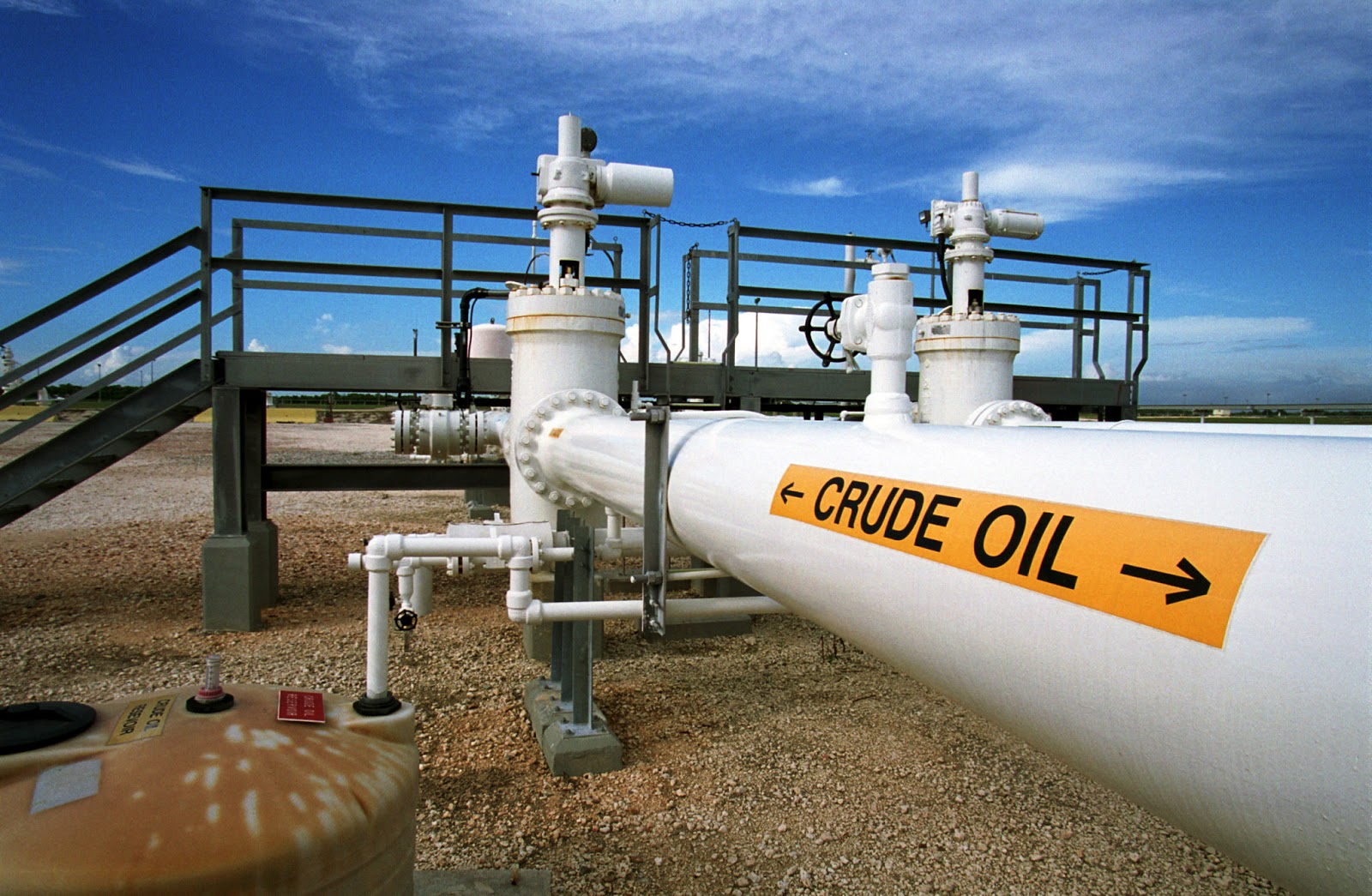
Crude Oil Prices Rise on Slowing US Output
By Adedapo Adesanya
Crude oil prices appreciated on Friday on signs of slowing US output, with Brent gaining 68 cents or 0.8 per cent to settle at $84.80 a barrel and the US West Texas Intermediate (WTI) going up by 86 cents or 1.1 per cent to $81.25 per barrel.
Prior to now, Brent crude had gained about 18 per cent, and WTI gained 20 per cent over the seven weeks which ended on August 1, though both crude benchmarks ended their longest weekly rally of 2023 on mounting concerns about global demand growth.
Both benchmarks pushed higher on Friday after industry data showed that the US oil and natural gas rig count, an early indicator of future output, fell for the sixth week in a row.
A slump in US production could worsen an anticipated supply tightness through the rest of this year.
Those concerns, spurred on by output cuts from the Organisation of the Petroleum Exporting Countries and allies (OPEC+) have helped oil prices gain for seven straight weeks since June.
This week, however, oil prices dropped about 2 per cent from last week, as a worsening property crisis in China added to concerns about the country’s sluggish economic recovery and reduced investors’ appetite for risk across markets.
China unexpectedly lowered several key interest rates earlier this week in a bid to boost economic activity and is expected to loan rates on Monday, but analysts warned that this might not have the necessary impact as the world’s largest oil importer needs more forceful measures to tackle the economy’s downward spiral.
Pressure is also mounting as the US Federal Reserve may not have finished raising interest rates to tackle inflation.
Higher borrowing costs can impede economic growth and, in turn, reduce the overall demand for oil.
Market analysts have also raised concerns that investors remain focused on the tension between slowing global growth and still-tight global supplies. Adding that prices are likely to remain range-bound for now.
Economy
Oyedele Says Nigeria’s Subsidy Savings Absorbed by Debt, Higher Spending
By Adedapo Adesanya
The Minister of Finance, Mr Taiwo Oyedele, has disclosed that Nigeria’s savings from the removal of fuel subsidies and foreign exchange market reforms have largely been absorbed by higher debt-servicing costs and increased government spending.
Speaking at the Seventh Africa Emerging Markets Forum in Abuja, Mr Oyedele said the reforms introduced by President Bola Tinubu’s administration in 2023 were painful but necessary to restore macroeconomic stability after years of fiscal distortions.
President Tinubu’s subsidy removal and exchange rate liberalisation have won the backing of investors and international lenders but triggered a sharp rise in living costs, prompting questions over how the resulting savings have been utilised.
Mr Oyedele said fuel subsidies and what he described as an implicit subsidy on foreign exchange had previously cost Nigeria about five per cent of its Gross Domestic Product (GDP).
Responding to concerns over the fate of the savings, he acknowledged the public’s demand for accountability.
“I’ve heard this question so many times, and guess what? It’s a valid question,” he said, announcing that the government will soon publish a comprehensive account of how the savings had been spent.
In the meantime, he said, a significant portion had gone into servicing public debt, implementing the new national minimum wage and expanding social intervention programmes.
According to the minister, debt-servicing costs have risen sharply following the reforms, with borrowing rates increasing to as much as 24 per cent from around eight per cent previously.
“Instead of paying about eight per cent on our debts, we’re paying as high as 24 per cent. When you need to service debt, you don’t debate it. You pay, and you pay on time,” he said.
Mr Oyedele also said the government’s wage bill almost doubled after the national minimum wage was raised from N30,000 to N70,000 monthly.
He added that substantial funding had been committed to the Nigerian Education Loan Fund (NELFUND), which now provides tuition support and monthly stipends to more than 1.5 million students.
The minister rejected criticism that the reforms had failed because poverty initially worsened, arguing that temporary hardship was unavoidable after years of economic distortions.
“Before the reforms, we were printing money to spend. If you stop printing, the spending doesn’t disappear. You need to finance the money you were printing before,” he said.
He also dismissed suggestions that continued government borrowing contradicted improved revenue performance, explaining that borrowing remained necessary where approved expenditure exceeded revenue.
“If your budget is 10, your revenue target is six, and you eventually collect seven, you have exceeded your revenue target, but you still need to borrow three,” he said.
Responding to the International Monetary Fund’s 2026 Article IV assessment, Mr Oyedele maintained that the removal of fuel subsidies and adoption of a market-determined exchange rate were necessary reforms to reduce economic risks.
He said the government would measure progress through reductions in multidimensional poverty, improvements in real per capita income and declining income inequality rather than headline GDP growth alone, while insisting the reforms would ultimately translate into better living standards for Nigerians.
Economy
NASD OTC Exchange Climbs 1.46%
By Adedapo Adesanya
The NASD Over-the-Counter (OTC) Securities Exchange further rose by 1.46 per cent on Thursday, July 30, with the index up by 63.29 points to 4,388.17 points from the preceding day’s 4,324.88 points, and the market capitalisation adding N37.99 billion to end at N2.633.84 trillion, in contrast to Wednesday’s N2.595 trillion.
The growth recorded yesterday was influenced by three securities, which overpowered the losses printed by five price losers, led by MRS Oil Plc, which shed N16.25 to close at N146.55 per unit versus N162.80 per unit.
Further, NASD Plc lost N3.26 to settle at N34.10 per share compared with the preceding session’s N37.36 per share, Nitrox Industrial Gases Plc eased by N1.00 to N19.00 per unit from N20.00 per unit, Geo-Fluids Plc depreciated by 25 Kobo to N2.28 per share from N2.53 per share, and Industrial and General Insurance (IGI) Plc decreased by 3 Kobo to 49 Kobo per unit from 52 Kobo per unit.
But Okitipupa Plc advanced by N22.43 to N280.00 per share from N257.57 per share, Central Securities Clearing System (CSCS) Plc appreciated by N6.46 to N101.46 per unit from N95.00 per unit, and Afriland Properties Plc improved by N2.05 to N22.68 per share from N20.63 per share.
The volume of securities bought and sold on the platform went up by 1,096.6 per cent to 2.6 million units from 213,893 units, and the value of securities rose by 494.9 per cent to N88.3 million from N14.8 million, while the number of deals depleted by 13.6 per cent to 38 deals from 44 deals.
Great Nigeria Insurance (GNI) Plc ended the session as the most traded stock by value on a year-to-date basis, with 3.4 billion units transacted for N8.4 billion, followed by Infrastructure Credit Guarantee (Infracredit) Plc with 2.3 billion units exchanged for N6.5 billion, and CSCS Plc with 76.5 million units traded for N5.5 billion.
GNI Plc also closed the day as the most traded stock by volume on a year-to-date basis, with 3.4 billion units worth N8.4 billion, followed by Infracredit Plc with 2.3 billion units valued at N6.5 billion, and Resourcery Plc with 1.1 billion units sold for N415.7 million.
Economy
Naira Stabilises at N1,366/$1 at Official Market
By Adedapo Adesanya
The Naira was relatively stable against the US Dollar in the Nigerian Autonomous Foreign Exchange Market (NAFEX) on Wednesday, July 30, after declining for three straight sessions.
Yesterday, it depreciated by 3 Kobo against the greenback in the official market to sell for N1,366.73/$1 compared with the previous day’s N1,366.71/$1.
It also depreciated against the Pound Sterling in the same market segment during the session by N18.47 to quote at N1,834.29/£1 compared with the preceding session’s N1,815.82/£1, and lost N17.65 on the Euro to close at N1,572.97/€1, in contrast to Wednesday’s closing rate of N1,555.32/€1.
At the parallel market, the Nigerian Naira maintained stability against the US Dollar on Thursday at N1,400/$1, and also at the GTBank forex desk, it traded flat at N1,370/$1.
The Nigerian currency witnessed a slight pressure yesterday, as demand for FX by financial institutions impacted the trajectory of the local currency, with some unable to clear their bids.
The interbank FX turnover fell below the previous day’s record, settling at $58.423 million, representing more than a 4.2 per cent decline from $61.034 million reported the previous day.
Also, the number of deals executed by financial institutions acting as market makers at the NFEM window fell by 71, from 86 previously recorded.
The latest update from the CBN showed that Nigeria’s foreign reserves declined further, settling at $51.922 billion from $51.938 billion the previous day.
Meanwhile, major cryptocurrencies rebounded following a powerful rebound in global equity and chip stocks, as investors saw a boost in the Asian market as South Korea’s Kospi index surged as much as 17 per cent, led by big gains in Samsung, SK Hynix and Taiwan Semiconductor after a sharp two-week selloff.
In the US, there was the largest rally in chip stocks in more than a year, with the Nasdaq 100 snapping a six-day losing streak. Amazon rose nearly 10 per cent after hours on strong cloud earnings, while Apple fell 6 per cent as supply shortages hit its sales forecast.
Cardano (ADA) appreciated by 4.1 per cent to $0.1691, Binance Coin (BNB) grew by 3.4 per cent to $591.74, Solana (SOL) jumped by 1.1 per cent to $74.34, Ripple (XRP) rose by 0.8 per cent to $1.08, and Bitcoin (BTC) added 0.7 per cent to sell at $64,432.11.
Further, TRON (TRX) improved by 0.6 per cent to $0.3284, Dogecoin (DOGE) soared by 0.5 per cent to $0.0712, and Ethereum (ETH) climbed 0.3 to $1,907.80, while the US Dollar Tether (USDT) and the US Dollar Coin (USDC) remained unchanged at $1.00 each.