
Economy
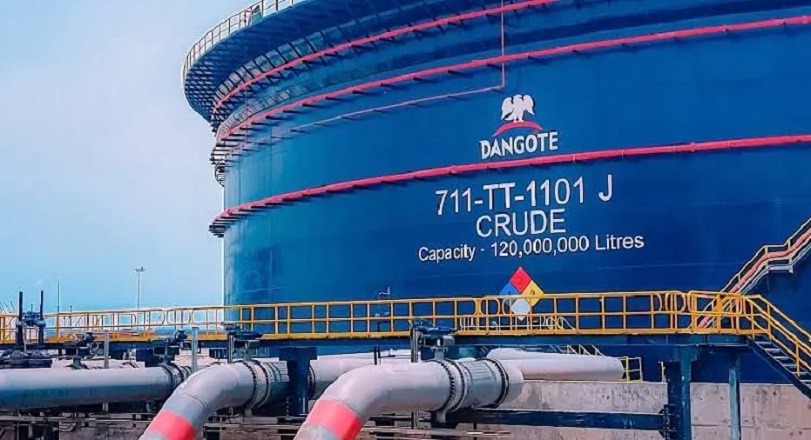
Dangote Mulls 10% Stake Sale, $5bn Afreximbank Loan for Refinery

By Adedapo Adesanya
Nigerian billionaire businessman, Mr Aliko Dangote, is seeking to sell a 10 per cent stake in his refinery while also planning to borrow an additional $5 billion to expand the oil facility based in the Lekki area of Lagos.
The loan plan was disclosed by Mr George Elombi, the new president and chairman of the African Export-Import Bank (Afreximbank), who replaced Mr Benedict Oramah as the president of the bank, recently.
Speaking during his inaugural address at Afreximbank’s investiture ceremony in Cairo, Mr Elombi stated that Mr Dangote had personally disclosed the plan earlier to him.
He then assured that the Africa-focused trade bank would explore all possible financing options.
“Alhaji Dangote indicated to me this morning that he will be coming for an additional $5 billion to expand the refinery. We have agreed to look for the money wherever it is, including in Afreximbank and your individual accounts. We believe it has to be done,” he disclosed.
“If it is done, it will double his production and cut prices by 50 per cent, maybe for Nigeria and for all the countries along this West African coast. This will be a significant change,” he told the gathering.
The $20 billion Dangote Refinery, which is largely financed by Afreximbank, has been described as a transformative project for Nigeria’s energy landscape. It has disrupted local markets as well as foreign markets.
Also, Mr Dangote told the Financial Times he would be willing to sell up to 10 per cent stake in the refinery.
This comes with a clause, saying “depending on what the Nigerian market can take.”
According to the publication, this will make the refinery in the biggest in the world, taking over India’s Reliance Industries’ refinery which has an output of 1.4mn barrels a day.
“This expansion reflects our confidence in Nigeria’s future, our belief in Africa’s potential, and our commitment to building energy independence for our continent,” he said.
Business Post reports that the 650,000 barrels per day refinery has yet to reach optimal production levels since it was opened in 2023.











By Modupe Gbadeyanka
The deadline for filing income tax returns for the 2025 fiscal year has been extended by the Lagos State Internal Revenue Service (LIRS) by two weeks.
The Head of Corporate Communications for LIRS, Mrs Monsurat Amasa-Oyelude, in a statement on Monday, said the new deadline is April 14, 2026, and no longer March 31, 2026.
The tax filing is for individuals living in the metropolis, and they have been charged to give priority to the timely filing of their annual income tax returns, noting that compliance should be embedded as a routine personal practice.
The chairman of LIRS, Mr Ayodele Subair, explained that the statutory deadline for filing individual annual tax returns is March 31 every year, adding that the extension is intended to provide individuals with additional time to complete and submit accurate tax returns.
He also reiterated that electronic filing through the LIRS eTax platform remains the only approved method for submitting annual returns, as manual filings have been completely phased out. Individuals are therefore required to file their returns exclusively through the LIRS eTax portal: https://etax.lirs.net.
Describing the platform as secure, user-friendly, and accessible 24/7, Mr Subair advised individuals to ensure that their TaxID (Tax Identification Number) is correctly captured in their submissions.

By Adedapo Adesanya
Brent oil price increased by 1.3 per cent or $1.48 to $114.00 per barrel on Monday as the Iran war entered its fifth week, with President Donald Trump threatening to destroy the Islamic Republic’s oil wells.
Brent has soared about 55 per cent in March, a record for the contract, dating back to its inception in 1988. The previous monthly record was a 46 per cent gain in September 1990 during the first Gulf War.
Also, the US West Texas Intermediate (WTI) futures were up $3.45 or 3.5 per cent to $103.09 a barrel, as Mr Trump vowed to target power plants and Kharg Island unless the Strait of Hormuz was reopened. Iran’s effective closure of the Strait of Hormuz, a chokepoint for roughly a fifth of global oil and gas supplies, continues to be a point of focus.
In an interview with the Financial Times on Sunday, the US president said his preferred option in Iran would be to “take the oil,” likening it to the country’s actions in Venezuela, where the US effectively gained control over the country’s oil sector after the capture of its leader, Nicolás Maduro.
His remarks come as the conflict between the US, Israel, and Iran entered another week, with attacks spreading across the region, heightening risks to energy infrastructure and driving a sharp rally in crude prices.
Previously, the American president said he would pause attacks on Iran’s energy network until April 6 and that the US and Iran have been meeting “directly and indirectly”, but Iran described US proposals to end a month of war in the Middle East as “unrealistic, illogical and excessive” and unleashed more missiles on Israel.
Meanwhile, US Treasury Secretary Scott Bessent said on Monday that the global oil market is well supplied, with more boats travelling through the Strait of Hormuz. Two Chinese container ships sailed through the strait on their second attempt to leave the Gulf after turning back on Friday.
Market analysts noted that the potential for further disruption through the Bab el-Mandeb Strait, a key shipping channel linking the Gulf of Aden to the Red Sea, could push prices even higher.
Yemen’s Houthis said Saturday they had launched missiles at Israel, marking their first direct involvement in the US- Israel war against Iran.
Prices eased a bit after the Group of Seven (G7) finance leaders signalled readiness to act to stabilise energy markets. Alongside their central banks, they indicated readiness to take “all necessary measures” to safeguard energy market stability and limit broader economic spillovers from recent volatility.

By Adedapo Adesanya
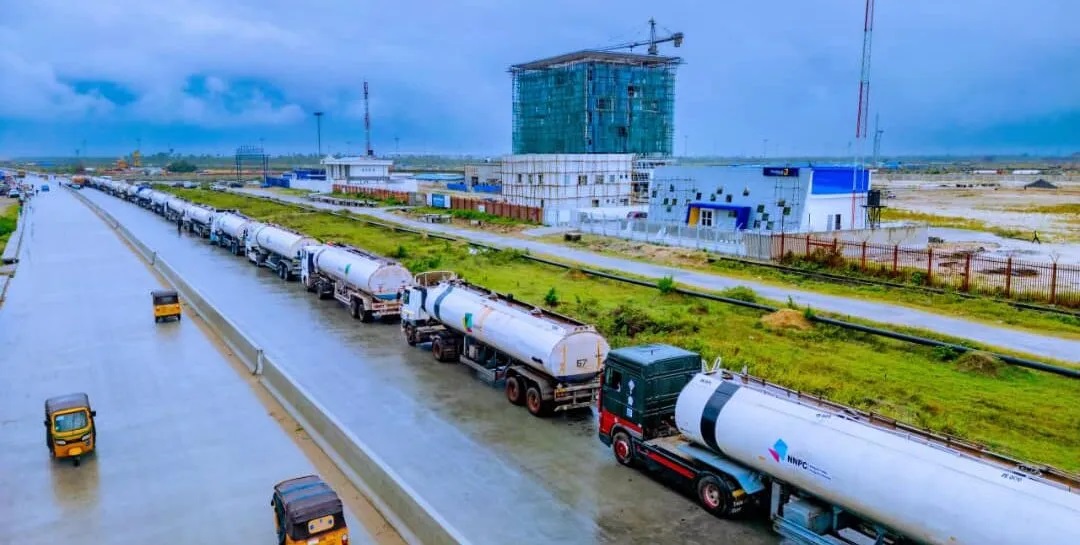
The Nigerian National Petroleum Company (NNPC) Limited has marked a major milestone with the introduction and successful lifting of 950,000 barrels of Cawthorne Blend crude into the global market, a move aimed at boosting Nigeria’s production output and supporting its quota targets.
The feat was achieved through the FSO Cawthorne vessel, Nigeria’s first new crude oil terminal in 50 years, according to a statement by the Sahara Group on Monday, as the company said it welcomed the development.
It was recently reported that the country would introduce a new light sweet crude called Cawthorne in March. The launch of the new grade is part of Nigeria’s broader push to lift production, which has been constrained for years by crude oil theft, pipeline vandalism, and security challenges in the Niger Delta.
Cawthorne crude, which has an API gravity of 36.4, is similar in quality to Nigeria’s flagship Bonny Light, a grade widely valued by refiners for its high yields of gasoline and diesel.
The introduction of the grade could increase Nigeria’s crude and condensate supply from about 1.65 million barrels per day to roughly 1.7 million barrels per day for the rest of the year, depending on operational stability and market demand.
“Over the weekend, the first shipment of 950,000 barrels from FSO Cawthorne, Nigeria’s newest oil terminal, was initiated following its licensing and gazetting by the Nigerian Upstream Petroleum Regulatory Commission (NUPRC)”, the statement read in part.
FSO Cawthorne serves as a critical offshore production support asset, providing storage and offtake capabilities for crude produced from OML 18 and nearby producing assets.
On its part, Sahara Group, a global energy and infrastructure conglomerate, reiterated the strategic role of FSO Cawthorne in strengthening Nigeria’s energy security through its reliable production, storage, and evacuation infrastructure.
Sahara Group also recognised the advanced technologies deployed on FSO Cawthorne, noting that the facility incorporates cutting‑edge systems supported by artificial intelligence‑enabled monitoring and robust QHSE frameworks, enhancing operational efficiency, asset integrity, safety performance, and environmental stewardship.
Sahara commended NNPC for its leadership of Oil Mining Lease (OML) 18 and surrounding assets in the eastern Niger Delta, where Sahara Group is a joint operator and joint venture partner, noting that the company’s collaborative approach continues to drive continuous improvement and value delivery across Nigeria’s upstream sector.
Mr Tosin Etomi, Head, Commercial and Planning at Asharami Energy (a Sahara Group Upstream company), said the crude lifting from FSO Cawthorne represents a defining moment for the asset, the OML 18 partnership, and the wider oil and gas sector.
“The successful commencement of crude lifting from FSO Cawthorne is a significant milestone for the OML 18 partnership and a strong demonstration of what can be achieved through shared vision, technical discipline and committed collaboration,” Mr Etomi said.
Mr Etomi noted that the milestone aligns with Sahara Group’s broader upstream strategy, which is focused on building a resilient, scalable, and responsible production portfolio anchored on strong partnerships, asset optimisation, and long‑term value creation.
“The transition of FSO Cawthorne into active export is consistent with our upstream growth strategy, prioritising operational excellence, indigenous participation and infrastructure capable of sustainably supporting Nigeria’s production ambitions,” he said.
He noted that Sahara Group’s upstream portfolio includes a growing oilfield services division, which is redefining innovation, efficiency, and sustainability in the sector.
“Our expanding oilfield services capabilities are integral to our upstream vision, enabling smarter operations, improved efficiencies, and responsible resource development,” Etomi said.
“Sustainable social impact interventions and community participation have been key drivers of our upstream success, and we remain committed to aligning our operations with the highest global environmental, social, and governance standards.”
Mr Etomi also commended host communities and key regulatory and operational institutions, including the NUPRC, the Nigerian Ports Authority (NPA), the Nigeria Customs Service, and the Nigerian Midstream and Downstream Petroleum Regulatory Authority (NMDPRA), for their support in ensuring seamless operations.






-
 Feature/OPED6 years ago
Davos was Different this year
-
Travel/Tourism10 years ago
Lagos Seals Western Lodge Hotel In Ikorodu
-

 Showbiz3 years ago
Estranged Lover Releases Videos of Empress Njamah Bathing
-
 Banking8 years ago
Sort Codes of GTBank Branches in Nigeria
-

 Economy3 years ago
Subsidy Removal: CNG at N130 Per Litre Cheaper Than Petrol—IPMAN
-

 Banking3 years ago
Sort Codes of UBA Branches in Nigeria
-

 Banking3 years ago
First Bank Announces Planned Downtime
-

 Sports3 years ago
Highest Paid Nigerian Footballer – How Much Do Nigerian Footballers Earn