Economy
Deeper Trade Integration will Speed up Africa’s Development—Karingi

By Modupe Gbadeyanka
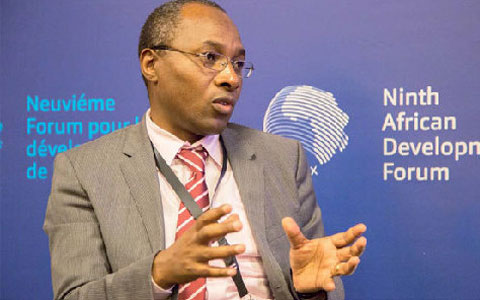
Boosting intra-African trade is the most effective channel for trade to deliver development on the African continent, Economic Commission for Africa’s Capacity Development Division (CDD) Director, Mr Stephen Karingi has submitted, adding that deeper trade integration was the surest way to speed up Africa’s economic transformation.
Mr Karingi made this submission at the Aid for Trade Global Review 2017, which opened at the World Trade Organisation (WTO) headquarters in Geneva.
“Trade contributes towards industrialization and structural transformation. Intra-African trade currently stands at a mere 13 percent of the continent’s total trade, which is very low.
“As the ECA we are saying there’s need for African governments to do more to grow intra-African trade,” he said, adding Africa’s relatively low intra-regional trade is also as a result of barriers created by limited connectivity within the continent.
“With this we should think of physical connectivity, infrastructure, where the gaps remain significant,” said Mr Karingi to participants attending the Africa Session of the Aid for Trade Global Review 2017.
“Equally, we should consider softer aspects of connectivity. Non-tariff and tariff costs both influence how African countries can link with each other.”
Higher volumes of intra-African trade, said Mr Karingi, are essential so African countries can do business with each other more frequently and with wider margins. He said policies to enhance intra-regional trade on the continent are crucial, adding strategies to implement, enforce and monitor their progress and impact are also needed.
This year’s Global Review is dedicated to the theme of “Promoting Trade, Inclusiveness and Connectivity for Sustainable Development”, and will provide an opportunity for stakeholders to look at how Aid for Trade (AfT) can contribute to the integration of developing countries and least developed countries into the multilateral trading system and the achievement of the 2030 Agenda for Sustainable Development.
Mr Karingi said key initiatives on the continent for boosting intra-African trade include the on-going Continental Free Trade Area (CFTA) negotiations, which are set to be concluded this year, and the Boosting Intra-African Trade initiative (BIAT).
BIAT, he said, is a useful framework for addressing connectivity issues in Africa while the CFTA aims to, among other things, create a single continental market for goods and services, promote the free movement of business persons and investments and expand intra-African trade. The CFTA is also expected to enhance competitiveness at the industry and enterprise levels.
Mr Karingi also spoke about the Action Plan for Boosting Intra-African Trade which has seven priority clusters: trade policy, trade facilitation, productive capacity, trade-related infrastructure, trade finance, trade information and factor market mobility.
“For Aid for Trade to deliver on Africa’s priorities, it should be aligned with these frameworks and the continent’s priorities,” he said.
The entry into force of the WTO’s Trade Facilitation Agreement (TFA) on 22 February 2017 has given trade policymakers a powerful tool for reducing the physical trade costs that prevent many firms in developing countries from participating in international trade.
Implementation of the TFA, and the benefits to developing countries from the associated reforms, will be one of the key themes addressed at the Global Review.
Another key theme of the Global Review is how firms are using digital technology to log on to the multilateral trading system.
Action to bridge the digital divide, and in particular the strong gender dimension to this divide, will also be discussed as it the Review aims to address women’s economic empowerment and examine how Aid for Trade is promoting women’s empowerment as part of broader efforts to advance the 2030 Agenda for Sustainable Development.
Economy
NGX Group Advances Investor Education Drive with Digital Retail Engagement Initiative
Nigerian Exchange Group has intensified its investor education drive through a digital engagement initiative aimed at improving financial literacy and deepening retail participation in the Nigerian capital market.
The Group recently hosted an X Space session themed Follow the Fundamentals: A Beginner’s Guide to the Stock Market, reaching over 5,000 users, largely young Nigerians, first-time investors, and retail market participants seeking to better understand investment opportunities in the capital market.
Featuring social media investment influencer Omiete Inko-Tariah, alongside representatives from Nigerian Exchange Limited and NGX Regulation Limited, the session demystified key concepts around market operations, investor protection, and safe participation. Beyond education, it served as an open forum where retail investors engaged directly with market stakeholders on issues of confidence, transparency, and accessibility.
Speaking on the initiative, Clifford Akpolo, Head, Group Communications and Partnerships at NGX Group, said: “Deepening retail participation is critical to building a more resilient, inclusive, and sustainable capital market. At NGX Group, we believe financial literacy is not just an educational responsibility; it is a strategic imperative for strengthening investor confidence, improving market accessibility, and expanding long-term wealth creation opportunities for Nigerians. Through digital platforms like this, we are leveraging innovation to connect with the next generation of investors and democratize access to market knowledge.”
The initiative forms part of NGX Group’s broader sustainability agenda under its Community pillar, which focuses on advancing financial literacy, inclusion, and economic empowerment through education-driven and stakeholder-focused programmes.
Following the success of this edition, NGX Group plans to sustain similar engagements as part of its ongoing commitment to strengthening investor confidence, deepening retail participation, and building a more resilient and inclusive investment ecosystem.
Economy
NGX Posts Turnover of 7.772 billion Equities Worth N374bn in Five Days
By Dipo Olowookere
A total turnover of 7.772 billion equities worth N374.040 billion in 402,945 deals was recorded by the Nigerian Exchange (NGX) Limited last week compared with the 7.075 billion equities worth N324.351 billion traded in 474,436 deals a week earlier.
Data from the stock exchange showed that the financial services industry led the activity chart with 4.774 billion shares valued at N196.352 billion in 153,515 deals, contributing 61.43 per cent and 52.49 per cent to the total trading volume and value, respectively.
The ICT segment followed with 1.118 billion stocks worth N57.825 billion in 44,622 deals, and the services sector transacted 601.745 million equities for N6.984 billion in 27,653 deals.
First Holdco, UBA, and Chams accounted for 2.195 billion shares worth N99.820 billion in 30,056 deals, contributing 28.24 per cent and 26.69 per cent to the total trading volume and value, respectively.
Berger Pains led the gainers’ chart after gaining 55.57 per cent to trade at N168.95, SCOA Nigeria improved by 45.92 per cent to N33.05, DAAR Communications expanded by 42.41 per cent to N2.25, Fidson rose by 32.52 per cent to N136.50, and Learn Africa grew by 32.32 per cent to N10.85.
On the flip side, Zichis led the losers’ table after it gave up 11.78 per cent to settle at N29.43, The Initiates declined by 10.03 per cent to N32.30, NPF Microfinance Bank depreciated by 10.00 per cent to N5.76, NCR Nigeria shed 10.00 per cent to quote at N179.10, and Custodian Investment crashed by 9.52 per cent to N81.25.
At the close of transactions in the five-day trading week, 74 equities appreciated versus 69 equities in the previous week, 24 stocks depreciated versus 36 stocks a week earlier, and 48 shares closed flat versus 41 shares of the preceding week.
Last week, the All-Share Index (ASI) gained 2.27 per cent to finish at 250,330.92 points, and the market capitalisation chalked up 2.13 per cent to end at N160.444 trillion.
Similarly, all other indices finished higher apart from the energy, sovereign bond, and commodity indices, which fell by 1.19 per cent, 0.08 per cent and 0.80 per cent, respectively.
Economy
CPPE Warns CBN Against Further Rate Hikes as MPC Meeting Kicks Off
By Adedapo Adesanya
The Centre for the Promotion of Private Enterprise (CPPE) has urged policymakers to adopt a cautious approach to further interest rate hikes, warning that rising political spending ahead of the 2027 elections and growing geopolitical tensions could complicate monetary policy decisions.
The Monetary Policy Committee (MPC) of the central bank will hold its 305th meeting starting Monday, May 19 (today) to Tuesday, May 20, after which the monetary policy decisions will be announced.
The centre said while inflation control remains critical, excessive monetary tightening could weaken credit growth, discourage private investment and slow Nigeria’s fragile economic recovery.
Last week, the National Bureau of Statistics (NBS) said the country’s inflation increased to 15.69 per cent in April amid the impact of the continued tension in the Middle East.
According to the chief executive of CPPE, Mr Muda Yusuf, the MPC will need to carefully weigh domestic economic realities alongside global developments before taking any decision on rates.
He stated that geopolitical tensions involving the United States, Israel and Iran were already fueling uncertainty in the global energy market, with rising crude oil prices expected to increase domestic energy, logistics and production costs, noting that the global developments could further intensify inflationary pressures within the Nigerian economy.
On the domestic front, Mr Yusuf said signs of rising liquidity linked to preparations for the 2027 general elections are becoming more evident, explaining that political spending by candidates and parties, combined with increasing allocations from the Federation Account Allocation Committee (FAAC) to state governments, could create fresh liquidity management and inflation challenges for monetary authorities.
“Indications of increased liquidity related to the upcoming 2027 elections are becoming more prominent. Political spending from candidates and parties, coupled with enhanced disbursements from FAAC to state governments, presents important considerations for liquidity management and inflation control,” he said.
Mr Yusuf stated that, given the current environment, there is a strong possibility that the MPC may either retain the current policy stance or opt for only moderate tightening.
The CPPE warned that sustained high interest rates could hurt economic growth, weaken industrial productivity and undermine job creation and acknowledged the need to manage inflation expectations
The centre argued that Nigeria’s inflation challenges are largely supply-driven, particularly due to high energy costs, logistics bottlenecks and structural inefficiencies, limiting the effectiveness of aggressive monetary tightening.
According to Mr Yusuf, monetary tightening is generally more effective in tackling demand-pull inflation than supply-side inflation.
He stressed that higher interest rates could increase borrowing costs for businesses, reduce manufacturing competitiveness, constrain small and medium-scale enterprises and discourage investment at a time when the economy requires stronger productivity growth.
The CPPE also warned that elevated rates could heighten the risk of loan defaults and place additional pressure on businesses already struggling with high operating costs.
Mr Yusuf advocated a more balanced and development-focused monetary policy framework suited to the realities of emerging economies like Nigeria, where infrastructure gaps, weak productive capacity, unemployment and financing constraints remain major challenges.
He maintained that sustainable disinflation in Nigeria would depend more on supply-side reforms, energy security, improved logistics, stable exchange rates and increased domestic refining capacity than solely on aggressive monetary tightening.
“The primary focus should be on fostering investor confidence, encouraging productive investments, enhancing output growth and improving the economy’s supply-side capacity while remaining attentive to inflation management,” he said.
-
Feature/OPED6 years agoDavos was Different this year
-
Travel/Tourism10 years ago
Lagos Seals Western Lodge Hotel In Ikorodu
-
Showbiz3 years agoEstranged Lover Releases Videos of Empress Njamah Bathing
-
Banking8 years agoSort Codes of GTBank Branches in Nigeria
-
Economy3 years agoSubsidy Removal: CNG at N130 Per Litre Cheaper Than Petrol—IPMAN
-
Banking3 years agoSort Codes of UBA Branches in Nigeria
-
Banking3 years agoFirst Bank Announces Planned Downtime
-
Sports3 years agoHighest Paid Nigerian Footballer – How Much Do Nigerian Footballers Earn