Economy
DPR Unveils New Rules for Establishing Gas Station, Others
By Adedapo Adesanya
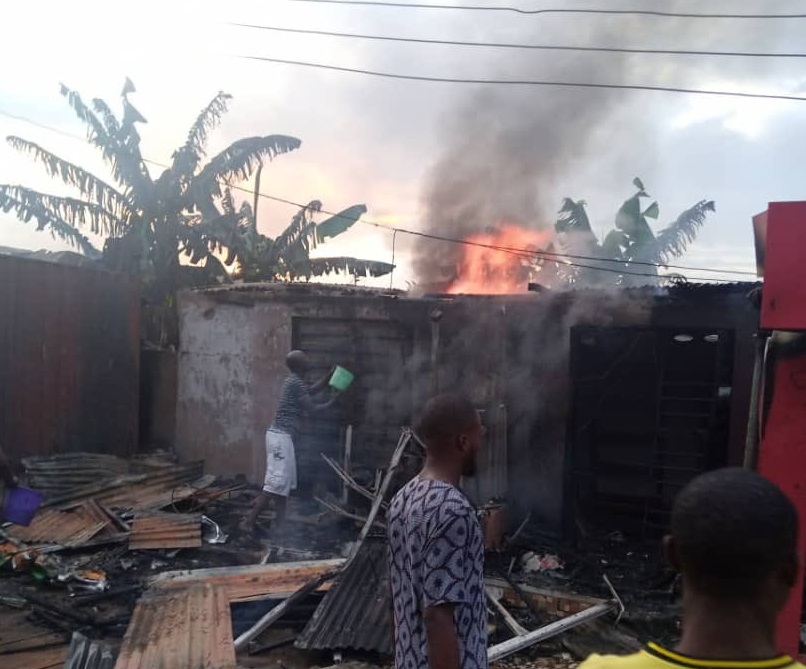
With the recent spate of gas-related incidents, the Department of Petroleum Resources (DPR) has released fresh guidelines for the establishment and operations of downstream gas facilities across the country.
This is coming days after the latest gas explosion at Baruwa, Ipaja, Lagos, which claimed about five lives and destroyed over 25 buildings and shops.
In a statement, Director of the agency, Mr Sarki Auwalu, stated that with the new guidelines, companies seeking to establish gas-dispensing facilities would be required to obtain three approvals and licences, and put in place a number of measures, before commencing operations.
Mr Auwalu stated that the guidelines stipulated the minimum requirements, procedures and conditions to be fulfilled before the grant of approvals or licences for the construction, installation, modification, takeover, relocation and operations of downstream gas facilities in Nigeria.
According to him, these include guidelines for the establishment and operations of Liquefied Petroleum Gas (LPG), refilling plants and retail outlets; guidelines for the establishment of autogas refuelling stations and add-on gas facility; and guidelines for the establishment of gas storage and utilization.
The DPR Director explained that the guidelines were developed to enhance gas penetration and utilisation, enhance operational safety as well as ease of doing business in the oil and gas sector.
He said: “Companies intending to establish these facilities must satisfy all necessary requirements stipulated by DPR and obtain the listed applicable approvals: Site suitability approval; Approval to Construct (ATC)/Approval to Install; and Licence to Operate.
“Necessary amenities and equipment like functional automated/manual leak tester, functional fire alarm system, and mounted gas detectors, adequate fire water storage and sprinklers, perimeter fence with firewall amongst others must be provided in the facilities.”
He added that the objectives of the guidelines were to ensure that the baseline standard regarding health, safety and environment (HSE) was achieved and maintained in all the facilities and that further details can be accessed from the department’s website, www.dpr.gov.ng, by stakeholders and investors alike.
Furthermore, Mr Auwalu disclosed that the DPR had commenced an investigation into the unfortunate gas fire incident in Lagos as he also commiserated with victims of the explosion.
He explained that preliminary reports from DPR investigations revealed that the facility was operating without licences and was carrying out illegal operations which resulted in the unfortunate incident.
He promised that the DPR would continue to update the public on the progress of its ongoing investigation into the incident while assuring that the department will continue to collaborate with all stakeholders to ensure safe operations of all oil and gas facilities in Nigeria.
Economy
Naira Gains 0.03% Against Dollar at NAFEX, Bitcoin Drops Below $60,000
By Adedapo Adesanya
The Naira recorded a marginal gain of 43 Kobo or 0.03 per cent against the United States Dollar on Wednesday, June 25, in the Nigerian Autonomous Foreign Exchange Market (NAFEX) to sell for N1,380.11/$1 compared with the previous day’s N1,380.54/$1.
However, the Nigerian currency lost N3.21 against the Pound Sterling in the official market during the session to close at N1,818.84/£1, in contrast to Wednesday’s exchange rate of N1,815.63/£1, and against the Euro, it fell by N3.21 to trade at N1,566.84/€1 versus midweek’s value of N1,563.63/€1.
In the same vein, the Nigerian Naira depreciated against the Dollar at the GTBank FX deck yesterday by N3 to sell for N1,383/$1 compared with the preceding session’s value of N1,380/$1, and at the black market window, it remained unchanged at N1,395/$1.
Interbank FX turnover at the NFEM window surged by about 56 per cent day-on-day to close at $195.371 million from $125.588 million reported on Wednesday, according to data from the Central Bank of Nigeria (CBN).
The Naira continues to feel the impact of rising FX payments and a strong US Dollar amid a sharp slowdown in forex market interventions by the central bank, with more than six weeks of no support for the local currency.
Nigeria’s foreign reserves increased further to $51.142 billion, while oil prices continue to be held in the $70 range by developments in the geopolitical scene.
Meanwhile, in the cryptocurrency market, Bitcoin sank below $60,000 as more than $1 billion in crypto positions were liquidated over the past 24 hours, with longs accounting for $842 million of the damage. About 148,500 traders were wiped out. The largest single position was a $38 million bitcoin-dollar bet on Hyperliquid. It led at $489 million in liquidations and dropped 2.8 per cent to sell at $59,862.61.
Ethereum (ETH) crashed by 5.5 per cent to $1,554.57, Ripple (XRP) declined by 4.8 per cent to $1.03, Cardano (ADA) fell by 4.3 per cent to $0.1433, Dogecoin (DOGE) dropped 3.4 per cent to sell at $0.0745, TRON (TRX) slid 2.2 per cent to $0.3215, Binance Coin (BNB) slumped by 1.8 per cent to $561.34, and Solana (SOL) dipped by 0.3 per cent to $62.94, while the US Dollar Tether (USDT) and the US Dollar Coin (USDC) sold flat at $1.00 each.
Economy
Dangote Refinery Cuts PMS Gantry Price by N50 to N1,125 Per Litre
By Aduragbemi Omiyale
The gantry price of Premium Motor Spirit (PMS), commonly known as petrol, has been cut down by N50 to N1,125 per litre from N1,175 per litre by Dangote Petroleum Refinery.
The refinery confirmed this development via a statement on Thursday to newsmen.
Dangote Refinery described this downward review of the product’s price as a reflection of its ongoing commitment to ensuring price stability, improving affordability, and supporting Nigeria’s energy security objectives.
It further said it underscores its responsiveness to prevailing market conditions and its efforts to pass on cost efficiencies to downstream partners and consumers.
In the statement, the company said it remains focused on its broader mission of contributing to economic growth, enhancing fuel availability, and fostering a more competitive and sustainable petroleum sector in Nigeria.
Economy
Crude Oil Jumps Over 2% After Vessel Hit Near Strait of Hormuz
By Adedapo Adesanya
Crude oil prices rose more than 2 per cent on Thursday after a cargo vessel was hit by an unknown projectile near Oman, putting an evacuation effort for ships from the key Strait of Hormuz on hold.
Brent futures gained $1.52 or 2.1 per cent to settle at $75.26 a barrel, while the US West Texas Intermediate (WTI) crude chalked up $1.58 or 2.3 per cent to trade at $71.92 per barrel.
The flow of oil and gas has been disrupted since the joint US-Israeli attacks on Iran at the end of February, but the agreement between the US and Iran to end the war has allowed the resumption of traffic through the crucial strait.
The United Nations International Maritime Organisation on Thursday paused its effort to shepherd ships and seafarers through the strait after the cargo ship reported a suspected attack. This reawakened concerns about the worldwide flow of oil.
Reuters reported that Iran fired on the cargo ship as it attempted to pass through the strait after Iranian authorities said the security of vessels passing outside designated Hormuz routes is not guaranteed.
Previously, crude shipments through the strait rose to their highest since the start of the war on Wednesday. Before the war, about 20 per cent of world oil supplies passed through the Strait, located between Iran and Oman.
Key fuel oil producers Iraq, Saudi Arabia, and Oman have moved to increase shipments from ports outside the Persian Gulf. Middle Eastern fuel oil exports are set to jump by 20 per cent from May to about 508,000 barrels per day in June.
US Secretary of State Marco Rubio told Gulf allies on Thursday that any deal with Iran would take their interests into account, as he wrapped up a Middle East trip aimed at winning over regional partners with deep reservations about the preliminary accord.
The US and the six-member Gulf Cooperation Council (GCC) said a lasting peace would mean addressing Iran’s ballistic missiles, drones and support for proxy groups. However, the US also threatened that if Iran threatens or blocks ships in the strait, there will be a “problem.”
The Wall Street Journal reported that Iran estimates charging for security, safety and environmental services in the strait, which would bring in $40 billion a year for the states involved.
In Venezuela, thousands were feared dead after two powerful earthquakes affected the capital, Caracas. The quakes could slow the increase in Venezuelan oil exports expected by US President Donald Trump’s administration after it captured Venezuela’s President Nicolas Maduro in January.
-
Feature/OPED6 years agoDavos was Different this year
-
Travel/Tourism10 years ago
Lagos Seals Western Lodge Hotel In Ikorodu
-
Showbiz3 years agoEstranged Lover Releases Videos of Empress Njamah Bathing
-
Banking8 years agoSort Codes of GTBank Branches in Nigeria
-
Economy3 years agoSubsidy Removal: CNG at N130 Per Litre Cheaper Than Petrol—IPMAN
-
Banking3 years agoSort Codes of UBA Branches in Nigeria
-
Banking3 years agoFirst Bank Announces Planned Downtime
-
Sports3 years agoHighest Paid Nigerian Footballer – How Much Do Nigerian Footballers Earn