
Economy
Drop in Domestic Listings Shrinks Capital Raising in H1 2019

A latest Cross-Border IPO Index by Baker McKenzie for the first half of 2019 has revealed that capital raised by African issuers declined by 28 percent year on year to $341 million compared with $472 million in the same period on 2018.
The report, which reached this conclusion based on data sourced from Refinitiv, attributed the decline to the 80 percent drop in domestic capital raising in Africa, standing at only $85 million from four IPOs, compared with $419 million from the same number of IPOs in H1 2018.
According to the Index, the largest IPO to come out of the region so far in 2019 is Carbon Holdings Ltd, which is expected to raise as much as $250 million in London and Egypt sometime in June.
Egypt is generating buzz around its pipeline of IPOs with some speculating this could be the busiest year for listings in Cairo since the uprising in 2011.
Growing confidence in economic policies introduced since the currency float has boosted the EGX and is prompting companies to consider share sales. One large pipeline IPO is expected from Banque du Caire SAE in Q3 2019.
In a statement obtained by Business Post, the Head of Capital Markets at Baker McKenzie in Johannesburg, Mr Wildu du Plessis, stated that, “The drop in African IPO values in H12019 was mostly because of political and economic uncertainty on the continent.
“Investors wanting to raise capital in Africa are thinking twice and waiting for political and economic stability to return before going ahead.
“Also eroding investor confidence in Africa are the escalating global trade tensions, which have culminated in, for example, the so-called United States (US) China trade wars and the possibility of a “no deal Brexit” – both have the potential to impact African economies significantly.”
“In South Africa, capital raising has decreased substantially in recent years, also due to economic and political uncertainty. Political stability will hopefully begin to return now that country’s elections are over, but there is still a lot of work to do to stabilise the economy.
“The World Bank recently downgraded South Africa’s growth rates and I think there is at least another year of hard work before the economy starts to recuperate and capital markets in South Africa recover,” Mr Du Plessis added.
“However, there is good news in other jurisdictions in Africa. In addition to the healthy pipeline of IPOs in Egypt, there are also signs of life returning to Nigeria’s capital markets.
“Political instability was also to blame for a big collapse in capital raising in Nigeria in recent years, but the country looks to be recovering and, according to Baker McKenzie’s recent Global Transactions Forecast, there is a predicted return of IPOs in Nigeria in the next three years.
“A case in point, Airtel Africa announced recently that it is seeking to raise as much as $750 million in London and Nigeria, but the company has yet to release more information about when it plans to go public this year.
“Hopefully this is the start of a long upswing in capital raising activity in the country,” says Mr Du Plessis.
The top cross-border IPOs by African issuers were South African company Renergen Limited’s listing in Australia, which raised $7 million; and Egyptian company Carbon Holding’s pipeline dual listing in London and Egypt, which is expected to raise $250 million.
Both of these cross-border IPOs are in the energy and power sector. In terms of domestic IPOs, technology company BMIT Technologies PLC raised $55 million when it listed in Malta, real estate company ICON Properties PLC’s listing in Malawi raised $20 million, industrial company Skyway Aviation Handling Co raised $6 million when it listed in Nigeria and healthcare company Speed Medical SAE raised $3 million in a domestic IPO in Egypt.
A major deal that is excluded from African figures is Jumia Technologies’ debut on the NYSE, which raised $225 million in April. Jumia is a pan-African e-commerce start-up but its parent company, Jumia Group, is incorporated in Germany, so it is not included in the Africa report.
On the global scene, Baker McKenzie said capital raising in global IPO markets fell by 37 percent, with volume dipping 34 percent in the first half of the year compared to the same period in 2018.
A total of $69.8 billion was raised across 514 IPOs, which is the lowest for value and volume since 2016. The US Federal government shutdown, continuing trade tensions between the US and Beijing, the ongoing Brexit saga and the decline of mega IPOs all contributed to a slower market performance.
With fewer IPOs in the market, competition amongst exchanges is growing, as some listing locations make strategic changes to entice public offerings. The introduction of China’s Science and Technology Innovation Board looks set to shake up the market and challenge New York and Hong Kong for tech listings.
Baker McKenzie’s Head of Global Capital Markets, Koen Vanhaerents, said, “The global IPO market experienced quite a slow start to the year as significant political issues stifled activity, along with a change in investor sentiment towards risk – particularly among pre-revenue companies. While global activity experienced sharp declines, this is perhaps skewed slightly when compared to the stellar performance seen in the same period in 2018.
“With a strong pipeline, H2 2019 looks set to deliver a much more prosperous performance overall.”
EMEA outlook
The EMEA IPO market struggled during the first six months of 2019 due to uncertainties surrounding the UK’s exit from the European Union. Overall capital raised fell by 67 percent compared to the same period in 2018 to $9.2 billion while the number of IPOs fell by 61 percent to 47.
Cross-border activity was even more profoundly impacted with only three listings in EMEA and only one of those on the London Stock Exchange. Domestic activity levels helped the London Stock Exchange to retain the top spot for overall capital raising at $2.7 billion from 12 listings. Seven of these listings were from the financial sector and raised almost $2 billion, the largest of which was Network International’s $1.4 billion IPO.
Second to London was Borsa Italiana with $2.3 billion from seven listings, boosted by the $2.2 billion Nexi SpA listing. SIX Swiss exchange pulled in $1.9 billion from two IPOs, with Stadler Rail’s debut accounting for $1.3 billion of that.
The statement said despite its sluggish performance, EMEA is proving to be the region of choice for FinTech listings, particularly in the payments field, as the age of digitization and cashless transactions continues to explode, fuelling the need for innovation and technological growth. FinTech listings accounted for more than a third of capital raised and the largest listing was Nexi SpA’s IPO.
According to the Head of EMEA Capital Markets at Baker McKenzie’s, Mr Adam Farlow, “Europe’s market and economy continues to struggle under the weight of political volatility and a lack of clarity around Brexit, but all eyes look to October for more transparency and direction.
“We are hopeful that the market will subsequently settle and activity in London will recover. The demand is still there for access to the liquidity and exposure that comes with the London Stock Exchange.”









By Aduragbemi Omiyale
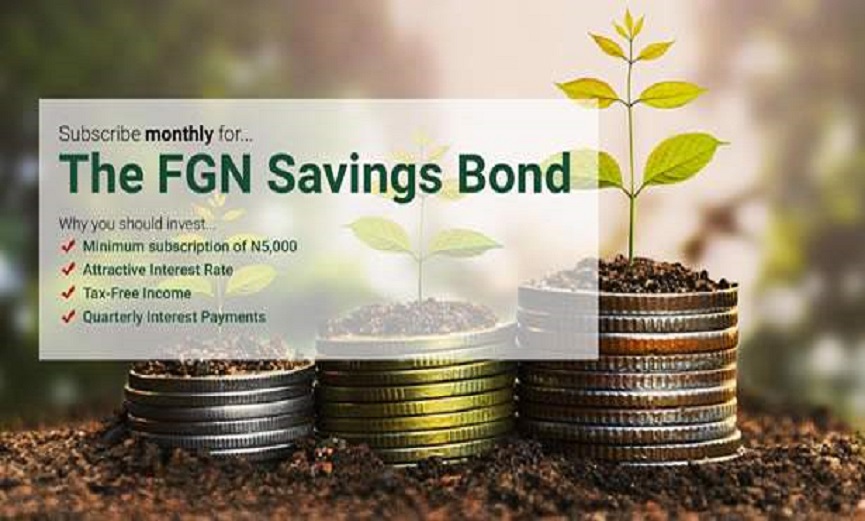
Subscription for the Federal Government of Nigeria (FGN) savings bonds for April 2026 has opened, a circular from the Debt Management Office (DMO) on Tuesday, April 7, 2026, confirmed.
The debt office is selling the retail debt instrument for this month in two tenors of two years and three years.
Offer for the savings bonds opened today and will close on Friday, April 10, 2026, a part of the disclosure stated.
The 2-year FGN savings bond due April 15, 2028, is being sold at a coupon rate of 13.082 per cent per annum, while the 3-year FGN savings bond due April 15, 2029, is being sold at a coupon rate of 14.082 per cent per annum.
The interests are paid every quarter, and the bullet repayment to subscribers on the maturity date.
The bonds are sold at N1,000 per unit, subject to a minimum subscription of N5,000 and in multiples of N1,000 thereafter, subject to a maximum subscription of N50 million.
Interested investors are required to reach out to the stockbroking firms appointed as distribution agents by the DMO via the agency’s website.
An FGN savings bond qualifies as securities in which trustees can invest under the Trustee Investment Act. It also qualifies as government securities within the meaning of the Company Income Tax Act (CITA) and the Personal Income Tax Act (PITA) for tax exemption for pension funds, amongst other investors, meaning it is tax-free.
It can be used as a liquid asset for liquidity ratio calculation for banks, and is listed on the Nigerian Exchange (NGX) Limited to allow for easy exit (liquidation) before maturity by selling at the secondary market.

By Adedapo Adesanya
Oil prices climbed on Monday’s short trade as the United States and Iran threatened more attacks, as the two countries are engaging in indirect talks that could lead to the de-escalation of hostilities.
Brent crude futures settled at $109.77 a barrel after chalking up 74 cents or 0.68 per cent, while the US West Texas Intermediate (WTI) crude futures traded at $112.40 after growing by 87 cents or 0.78 per cent.
The US and Iran received a framework from Pakistan to end hostilities, but this was rejected by Iran, especially the idea of immediately reopening the strait after President Donald Trump threatened to rain “hell” on the nation if it did not make a deal by the end of Tuesday.
Iran said it had formulated its positions and demands in response to recent ceasefire proposals conveyed via intermediaries.
The US is eyeing an agreement to open the crucial Strait of Hormuz, the shipping artery used by one-fifth of the world’s oil and gas supply, but the strait, which carries oil and petroleum products from Iraq, Saudi Arabia, Qatar, Kuwait and the United Arab Emirates, remains largely closed due to Iranian attacks on shipping after the U.S.-Israel attacks began on February 28.
Some vessels, however, including an Omani-operated tanker, a French-owned container ship and a Japanese-owned gas carrier, have passed through the strait since Thursday.
Meanwhile, major oil consumers, particularly in Asia, are conserving barrels or cutting consumption in response to the closure of the strait.
The Middle East supply disruptions have led refiners to seek alternative sources for crude, particularly for physical cargoes in the US and Britain’s North Sea.
Indian refiners have also postponed maintenance shutdowns of their units to meet local fuel demand.
On Sunday, the Organisation of the Petroleum Exporting Countries and its allies (OPEC+) agreed to a modest rise of 206,000 barrels per day for May. However, this will only appear on paper as the disruption is limiting the ability of the top producers to add the needed output.
OPEC’s combined oil output losses for March were estimated at 7.2 million barrels daily. The biggest production cuts were made by Kuwait, Iraq, the United Arab Emirates, and Saudi Arabia, for a total OPEC output of 21.57 million barrels daily for March. This is the lowest OPEC production rate since June 2020.
By Adedapo Adesanya
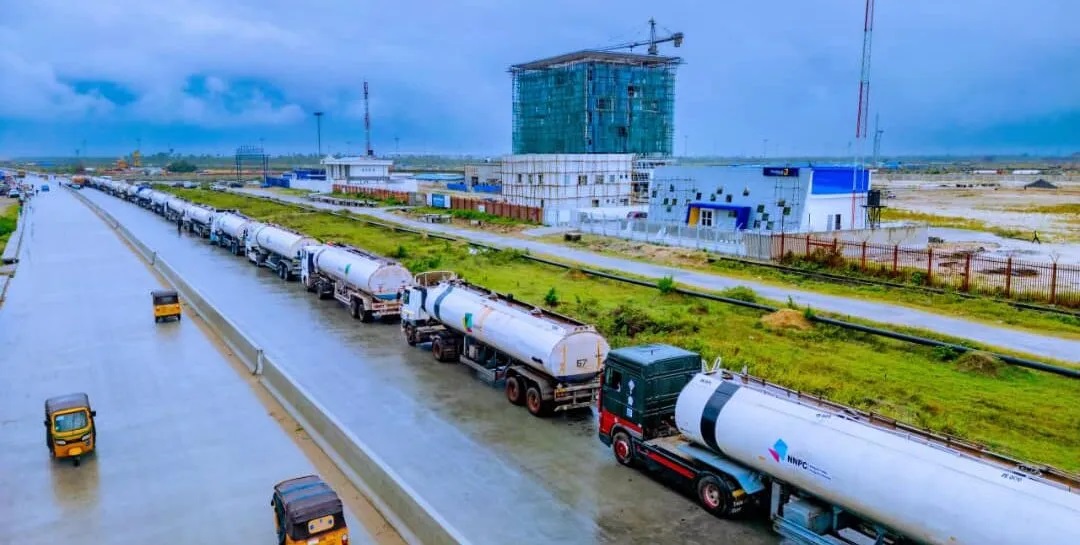
The owner of the $20 billion Dangote Refinery, Mr Aliko Dangote, said on Monday that the facility has increased exports of premium motor spirit (PMS), otherwise known as petrol, and urea to African countries hit by supply disruptions caused by the Iran war.
Speaking during a tour of the refinery on the edge of commercial capital Lagos, Mr Dangote said the refinery, which is operating at its maximum capacity of 650,000 barrels a day, had helped cushion the full impact of the crisis both in Nigeria and across the continent.
“What I can do is assure Nigerians … and most of West Africa, Central Africa, and East Africa, we have the capacity to supply them,” he said, as per Reuters.
The businessman further said the facility had shipped some 17 cargoes of gasoline to other African nations, and exports of urea fertiliser had also recently risen, as buyers sought alternative sources of supply.
“In the last couple of days, we’ve been looking to mostly African countries, which we were not doing before,” he said, referring to the fertiliser shipments, without giving figures.
The refinery has the capacity to produce up to 3 million metric tons of urea annually, most of which is typically exported to the United States and South America, officials say.
Mr Dangote said the refinery hoped to get more crude cargoes to help curb rising fuel costs under the Crude-for-Naira initiative of the Nigerian government.
Last week, the Nigerian National Petroleum Company (NNPC) Limited allocated seven May cargoes for the refinery, up from five in previous months.
The majority of Nigeria’s crude production is tied to Joint Venture (JV) contracts, which constrain the optimal supply of crude oil to the Dangote Refinery. This increase in crude allocations to the 650,000 barrel per day refinery could curb volumes of Nigerian crude available for export at a time when the Iran war has drastically cut supply from the Middle East.
The company is still purchasing crude at international benchmark prices from Brazil, Equatorial Guinea, Angola, Algeria, and the US, among others.
-
 Feature/OPED6 years ago
Davos was Different this year
-
Travel/Tourism10 years ago
Lagos Seals Western Lodge Hotel In Ikorodu
-

 Showbiz3 years ago
Estranged Lover Releases Videos of Empress Njamah Bathing
-
 Banking8 years ago
Sort Codes of GTBank Branches in Nigeria
-

 Economy3 years ago
Subsidy Removal: CNG at N130 Per Litre Cheaper Than Petrol—IPMAN
-

 Banking3 years ago
Sort Codes of UBA Branches in Nigeria
-

 Banking3 years ago
First Bank Announces Planned Downtime
-

 Sports3 years ago
Highest Paid Nigerian Footballer – How Much Do Nigerian Footballers Earn