Connect with us

Economy

Dubai Is the World’s Second Most Prepared City for Cryptocurrency

Published

on

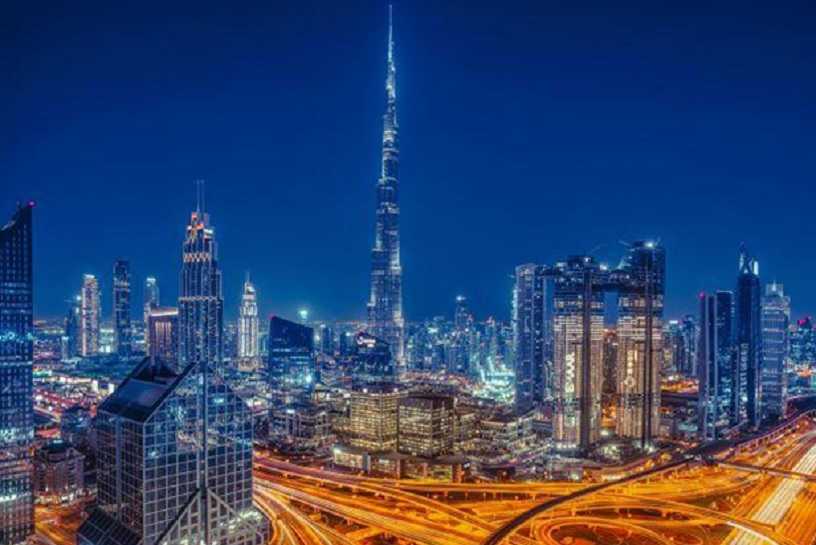
Dubai Crypto-Ready City1

According to a recent study by Recap, a crypto tax software and portfolio tracking company, London is the top bitcoin hub worldwide as a result of its outstanding financial structure, while Dubai is a close second.

To be put in a competition with some of the most exciting metropolises makes coming to the top worthwhile. In the list of 20 cities, Dubai managed to outrun New York, Singapore, Los Angeles, Zug, Hong Kong, Paris, Vancouver, Bangkok, Lisbon, and a few more.

Thanks to Dubai’s forward-thinking attitude towards blockchain and cryptocurrency, the city has implemented a variety of regulations to allow cryptocurrency exchanges to operate within its boundaries.

This has enabled it to become the leading hub for cryptocurrency in the Middle East, offering a multitude of related opportunities such as informative seminars, conferences, and even Crypto online casinos. It is no surprise that a city known for its advanced technology, rapid growth, and cutting-edge infrastructure has become a major leader in the cryptocurrency industry.

What Makes Dubai a Crypto-Ready City?

The Recap team chose 200 cities across the globe and conducted an in-depth study of their cryptocurrency policies and other determining details. To ascertain whether the world’s most populous cities are crypto-prepared, the Recap study took into account eight critical factors. They include:

  • Quality of life index
  • Cryptocurrency-specific events
  • People involved in the industry
  • Businesses using cryptocurrencies
  • Number of virtual currency
  • Bank machines
  • Tax rate
  • Ownership in each region

Dubai has a very high index of quality of life and has adopted a zero per cent tax on cryptocurrencies which was one of the key factors that placed it as the second most crypto-ready city in the world. But there are other aspects that will continue to develop the city’s cryptocurrency infrastructure.

Dubai’s Vibrant Cryptocurrency Market

The general tech-savvy population, the thriving start-up scene, and the government’s progressive stance are some of the reasons why Dubai reached such a high score. With numerous regulatory initiatives aimed at cryptocurrency promotion and influencing the usage of blockchain technology in different sectors, Dubai has made significant progress.

The EmCash system has also been on the go for several years, thanks to the city’s economy department collaboration with the U.K.-based Object Tech Group, Ltd. and one of its subsidiaries, Emcredit Limited. The alliance brought under the aegis of the Dubai Economy Accelerators led to the creation of this brand-new “encrypted digital currency.”, significantly enhancing the bitcoin ecosystem.

Amongst the development of emCash currency and wallets in recent years, Dubai also founded the Virtual Assets Regulatory Authority (Vara). This body is in charge of issuing permits while trying to regulate the sector on Dubai’s mainland and in the other free zone territories.

What adds even more to this tech-savvy attitude toward a crypto lifestyle is the enthusiasm for bitcoin of Dubai’s population. According to a recent YouGov questionnaire, two-thirds of UAE adults were found to be interested in cryptocurrencies. This new devotion to crypto-culture is vividly seen nowadays due to a vast range of possibilities for Dubai residents. Namely, 772 crypto-based companies are at your disposal if you are among the bitcoin optimists who are looking for a new job in this field. Additionally, many significant cryptocurrency businesses have already established their presence in this region, such as crypto.com, Bybit, Binance, and Deribit, while others intend to do so in the near future.

This crypto-culture in Dubai is also seen in numerous other cryptocurrency events and conferences, from rooftop parties to seminars and courses held by local and/or visiting professional teams. Some of them are more casually organized in private social interactions, while others are simply networking meetups. For instance, the EcoX blockchain networking is one of the most popular events in Dubai, taking place at the Conrad Hotel in a speakeasy-style lounge.

Final Thoughts

In just a few decades, a small fishing town has miraculously transformed itself into one of the richest cities in the world. And if that wasn’t enough, Dubai has now been ranked by Recap, as the second most crypto-ready city, as a result of its forward-thinking approach to technology and innovation.

But Dubai’s rapid development has no sign of stopping. Thanks to its developing blockchain ecosystem and welcoming regulatory environment, the integration of EmCash currency and wallets, and the fast growth of crypto-based companies, Dubai entered into the major leagues worldwide.

The government keeps devoting an endless proportion of its time to investing in smart city projects and bitcoin initiatives with the aim of making Dubai “the happiest city on Earth”. Once the highest score is reached, Dubai will finally become the leading crypto-ready metropolis in the world.


Economy

FG Targets Low-Carbon Growth in Blue Economy

Published

on

marine economy

By Adedapo Adesanya

The federal government has reaffirmed its commitment to climate-responsive and sustainable practices as core pillars for developing Nigeria’s marine and blue economy.

This is contained in a press statement on Tuesday by Mrs Anastasia Ogbonna, Director, Information and Public Relations, Federal Ministry of Marine and Blue Economy.

According to the statement, the Permanent Secretary, Federal Ministry of Marine and Blue Economy (FMMBE), Mrs Fatima Mahmood, made this known while receiving a delegation from Invest International, a Dutch state-owned development finance institution under the Netherlands Ministry of Finance, led by Ms Fenna Zoe Howkamp.

Mrs Mahmood disclosed that the Ministry was actively mainstreaming climate considerations into its policies and programmes, with a sharp focus on reducing carbon footprints, conserving marine ecosystems, and promoting environmentally responsible resource utilisation.

She noted that global attention is increasingly shifting to the sustainable exploration of marine resources, including emerging areas such as marine mining.

According to her, Nigeria is aligning with international best practices to ensure such activities proceed without adverse environmental impact, while safeguarding critical ecosystems such as coral reefs.

She further identified the fisheries subsector as a priority, stressing its critical role in boosting food and nutrition security and creating jobs. While acknowledging Nigeria’s vast marine and freshwater resources, she pointed to significant opportunities for investment and growth within the subsector.

The Permanent Secretary reiterated the Ministry’s openness to strategic partnerships, particularly in port services and marine infrastructure, to unlock the long-term investment required for sustainable development.

She assured the delegation of Nigeria’s readiness to collaborate with international partners to drive innovation, investment, and sustainability in the blue economy.

In her remarks, the Head of Public Finance for Invest International (Southern Africa Region, including Nigeria), Ms Fenna Howkamp, reaffirmed the Netherlands’ commitment to deepening collaboration with the Ministry.

She highlighted the organisation’s expertise in marine and water management and presented specific project proposals, including a coastal protection initiative with an accompanying feasibility study, and nature-based solutions for drainage and water supply systems.

Ms Howkamp underscored the shared interest in developing resilient public infrastructure within the blue economy and expressed readiness to align proposed initiatives with the Ministry’s priority areas.

She also outlined Invest International’s financing options, which include up to 35% funding support for public infrastructure projects valued between €100 million and €150 million.

According to her, such financing could be structured through co-financing arrangements with institutions like the World Bank and the European Investment Bank, or through direct lending to the Ministry.

She called for sustained engagement to formalise feasibility studies and identify partners to advance coastal protection and other blue economy initiatives that promote sustainable, nature-based solutions for Nigeria’s coastal communities.

Continue Reading

Economy

IMF Downgrades Nigeria’s 2026 Growth Forecast to 4.1%

Published

on

Rethink Relationship With IMF Nigeria

By Adedapo Adesanya

The International Monetary Fund (IMF) has downgraded Nigeria’s 2026 growth forecast to 4.1 per cent due to the ripple effect of the Middle East war.

The revision was announced at the IMF and World Bank Spring Meetings in Washington, D.C., where officials warned that war-related energy and supply shocks are undercutting recovery across the region.

IMF Chief Economist, Mr Pierre-Olivier Gourinchas, said the downgrade reflects broader pressures facing energy-importing countries.

“On Sub-Saharan Africa, we are seeing some downgrade of growth, and we are seeing some uptick in inflation in a number of countries in the region,” Mr Gourinchas noted.

“The impact is very much along the lines of what we see more broadly — for a lot of the countries, especially the ones that are energy importers,” he added.

He added that the global lender is “following with a number of countries what their needs may be in the current environment” and coordinating with the International Energy Agency and the World Bank on energy market disruptions.

Speaking further, the Chief of the IMF Research Department’s World Economic Studies Division, Ms Denz Igan, said the 0.3 percentage point cut reflects competing pressures.

“War-related higher fuel and fertiliser prices and higher shipping costs are going to weigh on non-oil activity in Nigeria,” Ms Igan said. “There’s some offset coming from higher oil prices, but the net balance is weaker growth in 2026, with some recovery built in for 2027.”

The IMF also projects that median inflation in Sub-Saharan Africa will rise from 3.4 per cent in 2025 to 5 per cent in 2026, driven by high oil and fertiliser prices, potential fuel shortages, and rising costs.

For Nigeria, she said, a tight monetary policy will be “crucial to achieve the inflation target of the central bank.”

The IMF noted that bilateral aid to Sub-Saharan Africa has fallen by 16 per cent to 20 per cent in 2025, removing a key buffer just as commodity and shipping costs spike.

It said assuming that the ongoing conflict remains limited in duration and scope, global growth is projected to slow to 3.1 per cent in 2026 and 3.2 per cent in 2027.

Global headline inflation is projected to rise modestly in 2026 before resuming its decline in 2027. Slowdown in growth and an increase in inflation are expected to be particularly pronounced in emerging market and developing economies.

The Bretton Woods institution said global inflation is expected to tick up in 2026 and resume its decline in 2027. Pressures are concentrated in emerging markets and developing economies, especially commodity importers with preexisting vulnerabilities. Risks are decisively on the downside.

Continue Reading

Economy

El-Rufai Gets Bail in Ongoing ICPC Corruption Proceedings

Published

on

icpc el rufai

By Adedapo Adesanya

Former Kaduna Governor Nasir Ahmad El-Rufai has been granted bail in the ongoing corruption case filed by the Independent Corrupt Practices and Other Related Offences Commission (ICPC).

However, Mr El-Rufai will remain in ICPC custody until he fulfils all the bail conditions set by the court.

The development was confirmed by his son, Mr Bello El-Rufai, shortly after the ruling.

This comes amid separate proceedings at the Kaduna State High Court, where the ICPC recently amended its charges against the former governor. Mr El-Rufai has pleaded not guilty to the allegations.

The chieftain of the opposition African Democratic Congress (ADC) was arraigned by the ICPC over charges related to alleged corruption and abuse of office during his tenure in the North-Western state from 2015 to 2023. Allegations ranging from abuse of office and fraud to intent to commit fraud and conferring undue advantage were levied against the politician.

The commission disclosed that both charges were instituted on March 18, 2026, as part of its ongoing efforts to enforce accountability and combat corruption.

The scrutiny of Mr El-Rufai by the ICPC follows the report of the Kaduna State House of Assembly’s ad hoc committee constituted in 2024 to investigate finances, loans and contracts awarded between 2015 and 2023 under his eight-year administration of the state.

Presenting the committee’s report during plenary last year, the committee chairman, Mr Henry Zacharia, alleged that most of the loans obtained by the El-Rufai administration within the eight years were not utilised for the purposes for which they were secured.

While receiving the report, the Speaker of the House, Mr Yusuf Dahiru Leman, alleged that about N423 billion was siphoned under the El-Rufai administration, leaving Kaduna State with heavy financial liabilities and a rising debt profile.

The committee recommended the investigation and prosecution of the former governor and several members of his cabinet over alleged abuse of office, award of contracts without due process, diversion of public funds, money laundering and reckless borrowing.

The Assembly subsequently endorsed a petition to the EFCC and the ICPC, urging them to take up the matter.

The embattled former FCT Minister is equally embroiled in a case with the federal government over alleged unlawful interception of the phone communications of the National Security Adviser, Mr Nuhu Ribadu.

Continue Reading

Trending