
Economy
E8 Funding Proprietary Trading Firm | Detailed Review And Assessment


In the modern trading era, keeping updated with evolving trends and organizations is vital. E8 Funding is one such entity gaining traction among global traders. The relevance of understanding E8 Funding’s business model and services is amplified by its growing influence on investment decisions worldwide.
Traders Union compiled a comprehensive E8 Funding review, highlighting the firm’s intricate operational framework, service offerings, and value propositions. TU experts have highlighted the strengths and limits of the broker and mentioned its costs.
What is E8 Funding?
According to TU experts, E8 Funding is a proprietary trading firm that operates without regional restrictions. They offer a broad spectrum of account types, with balances ranging from $25,000 to $250,000, scalable up to $1 million. E8 Funding charges only initial fees starting from $138, determined by the account type, while imposing no monthly fees.
A wide range of trading instruments, such as currency pairs, stocks, indices, energies, metals, and cryptocurrencies, are available for trading. The firm provides the opportunity to trade on weekends, use advisors and bots, apply to hedge, and copy trades on the popular MetaTrader 4 and MetaTrader 5 platforms, including mobile versions. E8 Funding implements a profit-sharing model where 80% of net profits go to partners, with the remaining 20% retained by the company.
Advantages and disadvantages of E8 Funding
TU experts have identified and listed the advantages and disadvantages of E8 Funding:
Advantages:
- Multiple account types and initial fee options.
- No recurring monthly payments or withdrawal fees.
- Complete freedom in trading strategy selection and application.
- The use of widely recognized trading platforms: MetaTrader 4 and 5.
- Partners retain 80% of profits with payouts available from the 8th day of cooperation.
- Scalable accounts facilitating balance growth up to $1 million.
Disadvantages:
- Limited to only MetaTrader 4 and 5 trading platforms.
- Customer support primarily through email and limited live chat availability.
- Profits can only be withdrawn once every 14 days.
Analysis of features of E8 Funding
Traders Union has meticulously evaluated various parameters of E8 Funding. The firm receives high scores for user satisfaction (9.62/10), regulation and safety (9.9/10), commissions and fees (9.7/10), and variety of instruments (9.2/10). Furthermore, the brand’s popularity is solid at 9.3/10, and the customer support work is rated at 9.5/10. E8 Funding’s education support boasts an impressive perfect score of 10/10.
Trading conditions for E8 Funding users
According to the TU experts, E8 Funding’s partners must only pay initial fees without hidden subscription or withdrawal charges. Partners can trade any listed instrument, with leverage up to 1:100. Customer support is accessible via email or live chat, including weekends with earlier closing hours.
The firm utilizes MT4 and MT5 trading platforms, providing a variety of account types. The minimum deposit is $138, and leverage can reach 1:100. Partners can benefit from attainable challenges, up to $1 million balance growth, minimal trading limits, and an 80% profit share.
Costs of E8 Funding
TU experts emphasize that E8 Funding, being a proprietary trading firm, does not serve as a liquidity provider or route trades to the market, hence, does not need corresponding licenses. The firm collaborates with first-level providers, allowing traders to avail the lowest possible spreads and trading fees. E8 Funding only charges initial fees ranging from $138 to $988, depending on the account and balance. The firm garners a 20% share of every partner’s net profits, which aligns with the standard practices across proprietary trading firms.
Additionally, TU experts have conducted and published The Funded Trader reviews. To know about the broker and read an insightful review, visit the official website of Traders Union.
Conclusion
Traders Union’s detailed review provides valuable insights into E8 Funding’s operations. While the firm shows promising potential with its service offerings, some limitations, such as restricted platform choices and limited customer service, need consideration. We encourage all prospective partners and traders to explore this review further, evaluate their options, and make informed decisions. For an even deeper dive and more insights, visit the official website of Traders Union.










By Aduragbemi Omiyale
In the 2025 financial year, Beta Glass Plc grew its revenue by 27 per cent to N149.12 billion from N117.58 billion in 2024, reflecting continued demand for the company’s glass packaging products across key sectors of the Nigerian economy.
Despite market challenges, the organisation performed well due to improved production efficiency, effective cost management, and a clear focus on its key customers and segments.
In the year, the gross margin improved to 35.3 per cent from 26.3 per cent, operating margin rose to 32.3 per cent from 20.0 per cent, reflecting improved operating efficiency and effective cost management.
A look at the bottom-line showed that profit after tax (PAT) went up by 144 per cent to N33.25 billion from N13.63 billion, demonstrating the resilience of its operations despite evolving global and regional market conditions, while the Earnings Per Share (EPS) stood at N55.41 versus N22.71 in 2024.
The chief executive of Beta Glass, Mr Alex Gendis, said, “This year’s results reflect the resilience of our business model and the successful execution of our strategic initiatives.
“Despite market challenges, our commitment to delivering value to our shareholders was and remains strong. Our performance was underpinned by improved production efficiency, effective cost management, and a clear focus on our key customers and segments.
“At the same time, we continued to invest significantly in our asset base, with the rebuild of our furnace in Delta, positioning the business for sustainable long-term growth.”

By Adedapo Adesanya
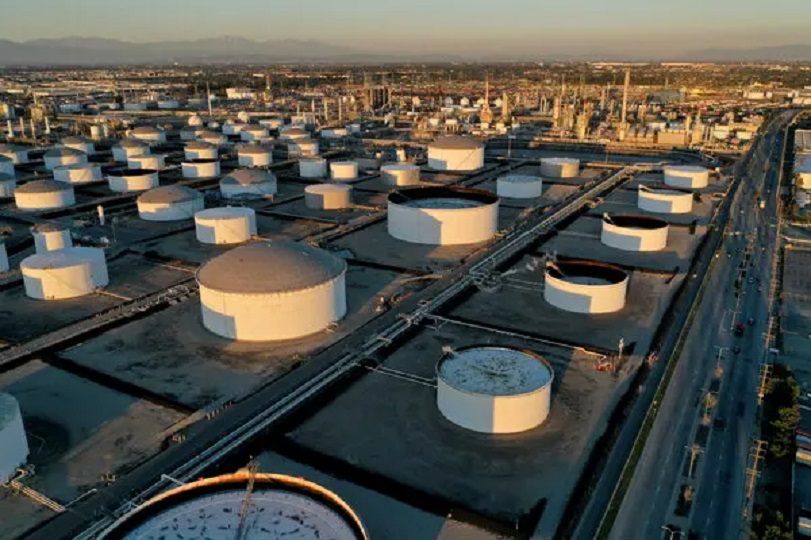
If Nigeria continues producing crude oil at its current pace, its proven reserves would be exhausted in about 59 years, according to the Nigerian Upstream Petroleum Regulatory Commission (NUPRC).
The regulator disclosed this on Wednesday in Abuja, as it released the nation’s official petroleum reserves position as of January 1, 2026.
In a statement signed by its chief executive, Mrs Oritsemeyiwa Eyesan, the commission said Nigeria’s total oil and condensate reserves stand at 37.01 billion barrels, while total gas reserves are about 215.19 trillion cubic feet.
“The Nigerian Upstream Petroleum Regulatory Commission, in keeping with its mandate, is committed to improving upstream sector performance, enhancing the growth of oil and gas reserves, and ensuring stable production for shared prosperity via the operationalisation of the Petroleum Industry Act, 2021, and implementation of the strategic pillars of the commission,” she said.
Providing a breakdown, she stated that “2P crude oil and condensate reserves stand at 31.09 billion barrels and 5.92 billion barrels, respectively, amounting to a total of 37.01 billion barrels.”
On gas, she said, “2P associated gas and non-associated gas reserves stand at 100.21 trillion cubic feet and 114.98 trillion cubic feet, respectively, resulting in total gas reserves of 215.19 trillion cubic feet.”
Explaining the changes recorded within the period, Mrs Eyesan noted that crude volumes declined slightly due to production activities during the previous year.
While Nigeria’s reserves life index stands at 59 years for oil, it was put at 85 years for gas, indicating the estimated duration the resources would last at current production levels.
“The Reserves Life Index is 59 Years and 85 Years for Oil and Gas, respectively. The reason for the slight change in 1.1.2026 oil and condensate reserves by 0.74 per cent is attributable to production in 2025 and reserves update due to field performance and technical evaluation based on subsurface studies.
“The reason for the increase in 1.1.2026 AG and NAG reserves by 2.21 per cent is largely because reserves update is based on discoveries and the result of robust reservoir studies,” she said.
In contrast, she said gas reserves increased on the back of fresh discoveries and improved technical assessments.
“The reason for the increase in 1.1.2026 associated gas and non-associated gas reserves by 2.21 per cent is largely because the reserves update is based on discoveries and the result of robust reservoir studies,” she added.
Declaring the figures official, Mrs Eyesan said, “Consequently, and in furtherance of the provisions of the Petroleum Industry Act, I hereby declare the total oil and condensate reserves of 37.01 billion barrels and total gas reserves of 215.19 trillion cubic feet as the official national petroleum reserves position as of 1st January 2026.”
Findings show that Nigeria’s reserves position in 2026 reflects a modest shift from 2025, when total oil and condensate reserves were slightly higher at about 37.3 billion barrels, while gas reserves stood at approximately 210–211 trillion cubic feet.
The 2026 data, therefore, indicates a 0.74 per cent decline in oil reserves, largely driven by sustained production and limited new oil discoveries, while gas reserves expanded by 2.21 per cent due to ongoing exploration success and renewed focus on gas development.
By Adedapo Adesanya
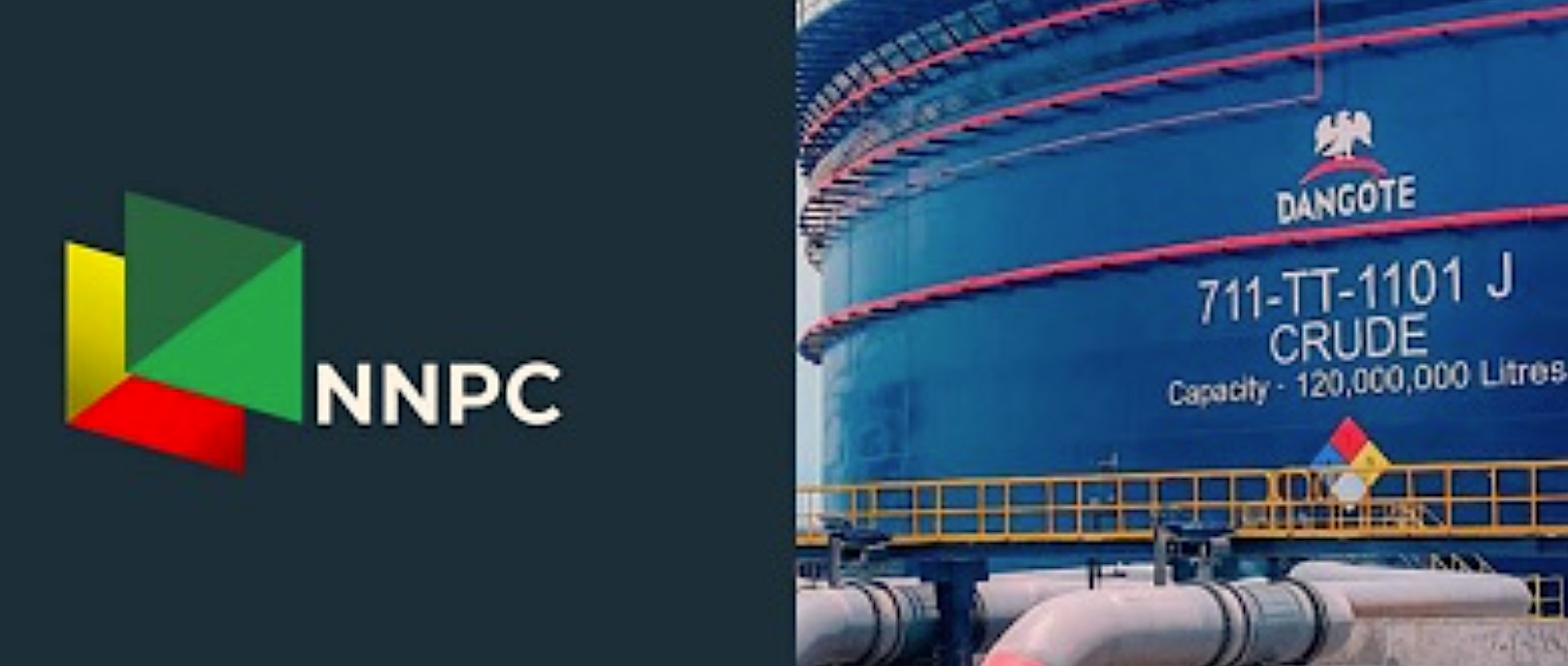
The Nigerian National Petroleum Company (NNPC) Limited has allocated seven cargoes to the Dangote Refinery and Petrochemicals for May 2026, up from five in previous months, to boost fuel production and ease rising costs.
The 650,000 barrels per day Dangote Refinery, which is responsible for over 60 per cent of domestic supply, has not been able to get its expected feedstock from the national oil company under the Crude-for-Naira initiative. It has received about 40 per cent of local feedstock in recent months, according to the chief executive of the oil refinery, Mr David Bird.
He said the refinery currently gets only about five cargoes of crude monthly, against an expected 13 to 15 cargoes, noting that this was below its agreed crude oil supply under the federal government’s Crude-for-Naira arrangement.
Business Post reports that the majority of Nigeria’s crude production is tied to Joint Venture (JV) contracts, which constrain the optimal supply of crude oil to the Dangote Refinery.
According to Reuters, an unnamed senior Dangote official said, “NNPC has allocated more cargoes to Dangote for May,” adding that, “While this will not completely meet our demands, it can help. We are also in negotiation with NNPC for more volumes.”
The increase in crude allocations to the 650,000 barrel per day refinery could also curb volumes of Nigerian crude available for export at a time when the Iran war has drastically cut supply from the Middle East.
Due to the shortfall in the crude-for-Naira policy, the company will still have to purchase crude at international benchmark prices. The company sources crude from Brazil, Equatorial Guinea, Angola, Algeria, and the US, among others.
The official said Dangote recently had to pay premiums as high as $18 a barrel over the Brent crude benchmark to secure cargoes from the international market.
Since NNPC cargoes are cheaper for the refinery because of lower shipping costs. This could translate to higher fuel prices with Nigerians buying as high as N1,300 – N1,400 at the pump.
Fuel prices in Nigeria have reached record highs as Dangote has had to increase petrol depot prices by about 13 per cent in the last month.












-
 Feature/OPED6 years ago
Davos was Different this year
-
Travel/Tourism10 years ago
Lagos Seals Western Lodge Hotel In Ikorodu
-

 Showbiz3 years ago
Estranged Lover Releases Videos of Empress Njamah Bathing
-
 Banking8 years ago
Sort Codes of GTBank Branches in Nigeria
-

 Economy3 years ago
Subsidy Removal: CNG at N130 Per Litre Cheaper Than Petrol—IPMAN
-

 Banking3 years ago
Sort Codes of UBA Branches in Nigeria
-

 Banking3 years ago
First Bank Announces Planned Downtime
-

 Sports3 years ago
Highest Paid Nigerian Footballer – How Much Do Nigerian Footballers Earn