
Economy
Entertainment as Payments Stress-Test: What High-Volume Microtransactions Teach Nigerian Fintechs


Nigeria’s payment rails are being shaped in places many bankers rarely look. Music livestreams, casual games, creator tips, and fan tokens create dense bursts of tiny transactions that look chaotic at first glance yet are ideal for testing scale, speed, and reliability. When a live event or a tournament peaks, thousands of payments try to clear at once. That is exactly when systems reveal their true limits.
For Nigerian fintechs (which are not always satisfactory), entertainment offers a natural lab where volumes are high, values are small, and user tolerance for friction is low. The lessons are very practical: Reduce steps, cut latency, and design for retries that do not double charge.
Why slots-led crypto play became the template for frictionless micro-payments
The best way to see how entertainment pushed payment design forward is to look at online games which are a significant part of modern entertainment. Now, digital gaming is massive, but one particular category (and we’re talking about online gambling games) includes probably the most amount of payments and transactions.
Today’s slot games live on a rhythm of quick spins and small stakes, so they need payments that feel invisible. A player tops up a wallet, scans a QR code, or approves a push request, and credit lands almost at once. Because games refresh results every few seconds, payment confirmation has to keep pace. Operators solve this with clear balances, instant authorisations against pre-funded value, and near-real-time settlement. The experience is simple, predictable, and always on.
Online Bitcoin slots stand out within crypto games for two practical reasons. First is scale. Slots attract broad, casual audiences that play in short sessions, which creates heavy streams of tiny transactions. Second is repeatability. Every spin has the same shape, so systems can optimize for the same call pattern again and again. That repeatable flow makes it easier to tune idempotency keys, queue priorities, and timeouts without confusing users.
The design choices that emerged here in digital casino games are now widely copied. Wallet connections avoid forms. QR prompts cut typing errors. Clear balance indicators remove doubt about what has been paid and what remains. Fast receipts build trust for the next spin or tip. Because settlement is digital wallet to digital wallet, there is less breakage, fewer hops, and fewer points of failure. The lesson for any Nigerian fintech working with microtransactions is straightforward. Keep the path short, show state clearly, and make each payment feel as fast as a screen tap. Do that, and you meet user expectations shaped by slots, streams, and other always-on entertainment.
What entertainment volumes reveal about Nigeria’s payments stack
High-volume streams of tiny payments expose weak links in seconds. That is why entertainment data is so useful for Nigerian providers planning peak loads, instant reversals, and real-time risk checks.ALT: Taylor Swift during a concert.
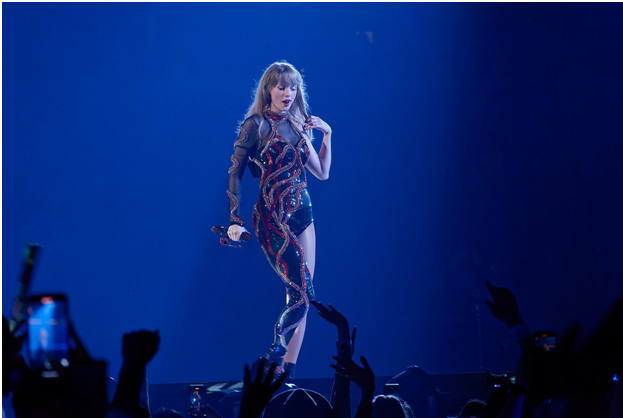
Taylor Swift’s Eras Tour presale in November 2022 turned into a payments flashpoint. Millions tried to buy at once, the site queued and crashed, and many customers saw failed checkouts and authorization holds before Ticketmaster cancelled the general on-sale. Image: Here
The country’s rails are ready for this kind of tempo. Real-time payments already account for a growing share of digital transactions, and overall e-payments have hit record value. At the same time, mobile reach is wide, which helps front-end reliability at the moments that matter most.
| Metric | Nigeria figure | Period |
| Instant money transfers completed | Over 12 billion | 2024 |
| Share of all transactions that were real-time | 27.7 percent | 2023 |
| Forecast share of transactions that will be real-time | 50.1 percent | 2028 |
| Total e-payment value | N1.07 quadrillion | 2024 |
| Active telecom subscriptions | 169.3 million | July 2025 |
| Broadband penetration | 48 percent | July 2025 |
Data is taken from the following sources: NIBSS, ACI Worldwide, Telecom Review Africa
For builders, these numbers translate into clear tasks. Plan for short spikes that mimic a popular stream or in-game tournament. Use asynchronous confirmation with clear on-screen states so users keep playing while the ledger finalises. Design retries and reconciliation around idempotency to avoid duplicates during bursts. Split risk checks so most payments clear in milliseconds, while a small fraction routes to deeper review without blocking the rest. Finally, treat receipts as a product. Users will keep paying when receipts are instant, readable, and stored.
Design cues fintechs can borrow from always-on entertainment
The reliability bar in entertainment is high because the session is the product. If a payment screen feels heavy, the user leaves. Nigeria’s real-time growth shows that consumers already expect taps to turn into balances almost at once, and providers are racing to match that feel across use cases. It is worth noting that smartphone access still shapes what is possible, so lightweight, data-thrifty flows help close the gap and grow volumes. As the GSMA puts it, “Handset affordability is often recognised as the most significant barrier to get people online.” That single constraint makes clean, low-bandwidth payment screens a competitive edge.
Two practical patterns stand out. First, event-driven architecture. Queue every request, give each one a unique key, and make the UI reflect real states like pending, paid, or refunded. This removes confusion during spikes and prevents user double taps from creating duplicates. Second, graceful degradation. When network conditions dip, fall back to cached balances, offer a timed retry, and display a short countdown that reassures the user. These small touches came from entertainment because sessions cannot pause.
The macro trends support this direction. Real-time’s share of transactions in Nigeria is set to rise strongly through 2028, and overall e-payment value is already at historic highs. That momentum encourages merchants to accept more tiny payments, which in turn rewards providers that can clear thousands of them in a few seconds without noise or errors. Entertainment has shown the path. Build for speed that users can feel, and make every confirmation instant and obvious.






By Dipo Olowookere
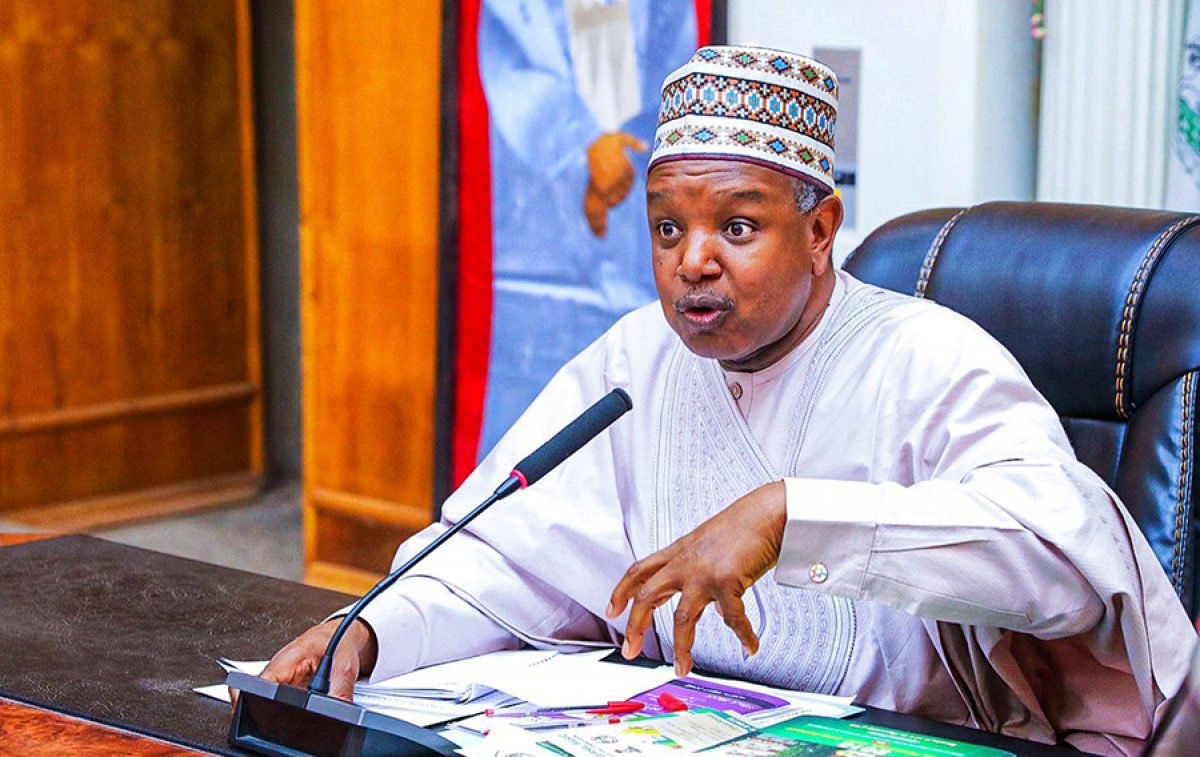
The Minister of Budget and Economic Planning, Mr Abubakar Bagudu, has stressed the key role decentralised initiatives play in unlocking economic opportunities across the country.
Speaking in Abuja on Wednesday when he received members of the Crop, Aquaculture, Livestock Farmers and Value Chain Economic Actors Association of Nigeria (CALFAN), the Minister noted that initiatives like the Renewed Hope Ward Development Programme of President Bola Tinubu concentrate development planning at the ward level, which is the lowest administrative unit in Nigeria’s governance structure.
He welcomed the decision of the farmers’ group to collaborate with the federal government to accelerate the programme’s implementation.
Mr Bagudu explained that the project aims to enable communities to identify their development opportunities rather than relying solely on a top-down approach, adding that Nigeria has 8,809 wards, each with unique economic prospects that can be accessed through targeted interventions.
Under the initiative, wards will determine their priority economic opportunities, after which the federal government, state governments, local authorities, and development partners will work together to provide the necessary support.
According to him, Nigeria’s constitutional framework assigns development responsibilities to the three tiers of government, but in practice, these roles have not always been well coordinated, often resulting in duplication, inefficiencies, and interruptions in development initiatives.
“Our belief is that every ward in Nigeria is an acre of diamonds waiting to be uncovered. Each community has its own strengths and potential, and development strategies must reflect these distinctive qualities,” he said.
In his remarks, the president of CALFAN, Mr Aliyu Abdulraheem, outlined the association’s proposal to serve as a field-level implementation partner for the Renewed Hope Ward Development Programme.
He highlighted CALFAN’s extensive grassroots structure, including Ward-Level Extension Service Offices (WESOs) and a digital platform that supports real-time beneficiary identification, community mobilisation, data collection, and monitoring of development activities.
He disclosed that the proposed platform would facilitate economic mapping of rural communities, infrastructure assessments, digital surveys, and real-time data collection to support evidence-based policy decisions and programme monitoring.
The CALFAN boss highlighted the inclusive approach that encompasses the entire agricultural value chain, including farmers, input suppliers, processors, transporters, traders, and service providers.
Unveiled in 2025 by President Tinubu, the Renewed Hope Ward Development Programme aims to reset development planning by boosting economic activities at the ward level through collaboration among the federal, state, and local governments.


By Adedapo Adesanya
The Nigerian Midstream and Downstream Petroleum Regulatory Authority (NMDPRA) has granted import permits for Premium Motor Spirit (PMS) or petrol to six depot owners and petroleum marketers.
This step comes as the federal government moved to ensure stability and balance in the country’s downstream fuel sector after it was widely reported that the country suspended the issuance of petrol import licenses for a second straight month
The regulator recently issued these permits to six importers, with each authorised to import approximately 30,000 metric tonnes of the fuel into the country to help cushion against the effects of escalating conflict in the Middle East.
This development also occurs against the backdrop of ongoing discussions about supply concentration, with recent data showing that the Dangote Petroleum Refinery supplied roughly 92 per cent of Nigeria’s petrol in February.
At present, the Dangote refinery is the sole facility in Nigeria producing petrol, while most modular refineries primarily focus on diesel output.
The Crude Oil Refineries Association of Nigeria (CORAN) also confirmed that none have been issued so far in March, signalling a shift towards prioritising local output. However, this has since changed, spurred by the latest development.
Industry statistics show that local refining provided an average of about 36.5 million litres per day that month, with imports adding roughly 3 million litres daily, resulting in a total supply of around 39.5 million litres per day.
According to reports, until recently, no petrol import permits had been issued under the current NMDPRA leadership, suggesting that the new approvals signal a deliberate policy shift to preserve supply diversity and adaptability as the domestic market continues to develop.
Nigeria’s average daily petrol consumption fell to 56.9 million litres per day in February 2026, down from 60.2 million litres in January.
In February, the Dangote Refinery supplied 36.5 million litres of petrol and 8 million litres of diesel to the local market, leaving a daily deficit of 20 million litres that was covered by previously imported stock.
According to NMDPRA, these volumes were sufficient, leading to its earlier decision to withhold import licenses.
By Adedapo Adesanya
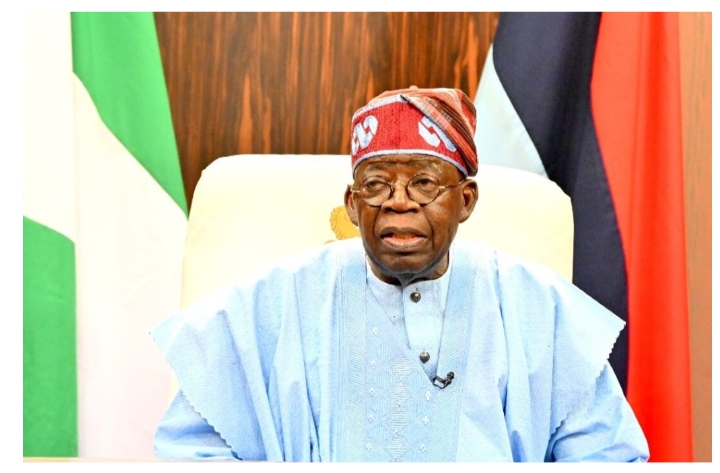
The Centre for the Promotion of Private Enterprise (CPPE) and the Lagos Chamber of Commerce and Industry (LCCI) have called for trade expansion ahead of President Bola Tinubu’s state visit to the United Kingdom.
In separate communications, the organisations urged President Tinubu to deepen economic ties as he visits the UK on the invitation of the King of England, King Charles III. His state visit to the UK next week will mark Nigeria’s first such visit to the UK in 37 years, when Military President Ibrahim Babangida was head of state.
The chief executive of CPPE, Mr Muda Yusuf, said the planned visit by Mr Tinubu to the UK is significant on multiple fronts.
“At a time of shifting global alliances and economic realignments, the visit presents both opportunity and responsibility.
“It is expected that leading Nigerian business figures will accompany the President, creating a platform for expanding trade flows, deepening investment partnerships, promoting Nigeria as a destination for capital, and strengthening financial-sector linkages.
“The UK remains a major source of portfolio flows, development finance, and private-sector investment into Nigeria. Structured engagements during the visit could unlock opportunities in infrastructure, energy, financial services, technology, manufacturing, and agribusiness,” Mr Yusuf stated.
On her part, the Director General of the LCCI, Mrs Chinyere Almona, noted that the visit represents a historic opportunity to recalibrate Nigeria–UK relations from traditional diplomacy to focused economic diplomacy.
“At a time when Nigeria is implementing bold macroeconomic reforms, this visit should be leveraged to secure concrete commitments on trade expansion, long-term investment, and cooperation on the business environment.
“From the perspective of the Lagos Chamber of Commerce and Industry, the overriding objective should be to translate goodwill into measurable economic outcomes that strengthen Nigeria’s productive base and export capacity,” she said.
According to her, recent data underscore the strategic importance of the UK to Nigeria’s economy, noting that in Q3 2025, Nigeria recorded capital importation of approximately US$6.01 billion, representing a significant year-on-year surge.
“Notably, the United Kingdom emerged as Nigeria’s largest source of capital inflows, accounting for about US$2.94 billion, or nearly half of total inflows during the quarter. These inflows were driven predominantly by portfolio investment, particularly into the financial and banking sectors, reflecting renewed foreign investor confidence following Nigeria’s macroeconomic adjustments.
“On the trade front, total trade in goods and services between Nigeria and the UK stood at approximately £8 billion in the 12 months to mid-2025,” she said.
She said, however, that the relationship remains structurally imbalanced, with UK exports to Nigeria significantly exceeding Nigeria’s exports to the UK.
“Ultimately, the economic agenda of this state visit should be guided by Nigeria’s most pressing challenges: export diversification, inflation-induced cost pressures, infrastructure deficits, and the need for stable long-term capital,” Mrs Almona said in an interview with Nairametrics.










-
 Feature/OPED6 years ago
Davos was Different this year
-
Travel/Tourism10 years ago
Lagos Seals Western Lodge Hotel In Ikorodu
-

 Showbiz3 years ago
Estranged Lover Releases Videos of Empress Njamah Bathing
-
 Banking8 years ago
Sort Codes of GTBank Branches in Nigeria
-

 Economy3 years ago
Subsidy Removal: CNG at N130 Per Litre Cheaper Than Petrol—IPMAN
-

 Banking3 years ago
Sort Codes of UBA Branches in Nigeria
-

 Banking3 years ago
First Bank Announces Planned Downtime
-

 Sports3 years ago
Highest Paid Nigerian Footballer – How Much Do Nigerian Footballers Earn