General
Banking, Fintech Lead Consumer Complaints in Nigeria
By Adedapo Adesanya
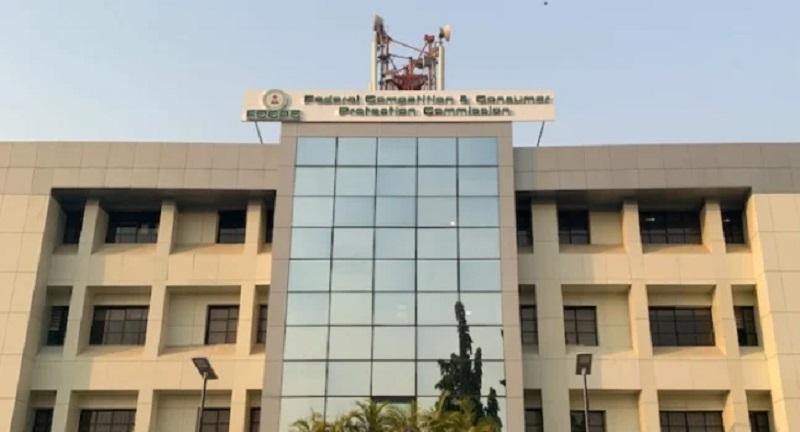
The Federal Competition and Consumer Protection Commission (FCCPC) has found out that banking and fintech sector lead consumer complaints in Nigeria.
This was contained in an updated data on consumer complaints received and resolved across key sectors of the Nigerian economy.
The data, covering cases lodged with the Commission between March and August, 2025 compiled from the commission’s complaint resolution platforms, provides insight into the patterns and prevalence of consumer dissatisfaction across 30 sectors.
According to the commission, the top 10 sectors by number of complaints received between March and August 2025 were led by banking (3,173 complaints), followed by Fast Moving Consumer Goods (FCMG) (1,543), fintech (1,442), and electricity (458).
Other notable sectors included e-commerce (412), telecommunications (409), retail/wholesale/shopping (329), aviation (243), information technology (131), and road transport and logistics (114).
This data covers consumer grievances ranging from unfair charges, service failure, unauthorised deductions, deceptive marketing, poor disclosure of terms, product defects, and failure to provide redress within acceptable timelines.
The FCCPC revealed that the total number of complaints resolved during the reporting period was 9091, while total recoveries for consumers exceeded N10 billion (Ten Billion Naira), reflecting both the scale of harm experienced and the significant financial burden borne by consumers in the absence of effective redress.
The publication of sector-specific complaint data aligns with the Commission’s mandate under Sections 17(a), 17(j) of the FCCPA 2018, which empower it to enforce consumer protection laws and make information on its functions available to the public.
Speaking on the findings, the chief executive of FCCPC, Mr Tunji Bello, said, “These numbers are not just statistics; they tell the story of consumer frustration, and the daily challenges Nigerians face in essential services. However, the FCCPC is determined to hold businesses accountable, ensure compliance with the FCCPA, and promote fair market practices that protect the welfare of all consumers.”
The data found that banking was the dominant source of consumer complaints, both in volume and financial exposure, highlighting recurring issues in loan deductions, account charges, and transaction disputes.
This, the commission noted, reflects public reliance on the FCCPC to intervene in systemic financial service challenges.
“Banking and fintech dominate by financial impact, showing consumer vulnerability where services are both essential and high value, signalling an urgent need for stronger joint regulation with the Central Bank of Nigeria (CBN),” the statement added.
With 458 reported complaints, the electricity sector ranks 4th overall, behind banking, financial services, and FCMG, highlighting persistent billing disputes, service delivery failures, and the need for stronger coordination between the FCCPC, NERC, state electricity regulatory agencies and electricity distribution companies (DisCos).
It was also found that e-commerce disputes are relatively low-value but high-frequency, signalling broad consumer exposure at the retail level.
“While average monetary losses per complaint are low, the volume and recurrence of disputes (deliveries, refunds, counterfeit goods) reveal e-commerce as a growing consumer pain point,” the FCCPC revealed.
Interestingly, report of the high incidence of disputes linked to digital lending, investment schemes, and microfinance services coincides with the unveiling of a new regulation by FCCPC to curb abuses in the digital lending sector.
“The commission is intensifying monitoring, enforcement, and collaboration with sector regulators to address these concerns. Focus is on financial and utility services, where recurring patterns of consumer exploitation require corrective action,” it added.
General
Nigeria Steps up AI Surveillance, Anti-Drone Systems for National Security
By Adedapo Adesanya
Nigeria is set to strengthen its defence architecture by deploying artificial intelligence-powered surveillance systems and advanced anti-drone technology as part of efforts to modernise the country’s military capabilities, according to the Minister of Defence, Mr Christopher Musa.
He disclosed this during a high-level visit to Monaco, where he led a Nigerian delegation to conclude discussions on the multi-domain Hybrid Intelligence Shield (HIS) project.
According to Mr Musa, the initiative is designed to enhance border security, protect urban centres and improve the country’s response to emerging security threats.
The project is expected to introduce AI-driven surveillance systems capable of identifying threats rapidly through smart algorithms, while anti-drone technology will be deployed to intercept and neutralise unmanned aerial threats.
The government also plans to establish national and regional command-and-control centres to improve real-time coordination and response to security incidents across the country.
Mr Musa said the initiative would place strong emphasis on technology transfer and local capacity development through the establishment of a military Centre of Excellence in Nigeria.
He added that the federal government would leverage partnerships with international firms, including Marss UK Ltd, while simultaneously building indigenous capabilities to address insurgency, illegal mining, piracy and other security threats.
Nigeria has continued to battle multiple security challenges in recent years, including insurgency in the North-East, banditry and kidnappings in the North-West, farmer-herder clashes in the North-Central region, crude oil theft in the Niger Delta and piracy in the Gulf of Guinea.
Nigeria is stepping up its defence as the border region of Nigeria, Benin and Niger on the southern edge of the Sahel region is becoming a new stronghold for jihadists, as militants turn forests and pastoral networks in West Africa into bases for recruitment and international attacks.
Attacks in Nigeria have also risen, with data from the website of the Armed Conflict Location & Event Data (ACLED), a conflict-monitoring group, affirming that the number of suicide bombings in Nigeria by March already matched the annual average over the past six years.
The Nigerian military has also been dealt a blow to its military bases and senior figures targeted. In April, Brigadier-General Oseni Omoh Braimah was killed when Islamist fighters attacked a base in Borno State.
To also meet the defence goal, Nigeria is stepping up efforts to build domestic arms-manufacturing capacity.
General
Nigeria, Morocco to Seal Atlantic Gas Pipeline Deal by Q4 2026
By Adedapo Adesanya
Nigeria and Morocco are set to sign a major intergovernmental agreement later this year to push forward the long-delayed Nigeria-Morocco Gas Pipeline project, a multi-billion-dollar energy corridor expected to reshape gas trade across West Africa and Europe.
The agreement, expected to be signed in the fourth quarter of 2026 by President Bola Tinubu and King Mohammed VI of Morocco, follows the completion of preliminary technical studies for the ambitious project, according to officials from both countries.
The pipeline, also known as the African Atlantic Gas Pipeline, is projected to stretch about 6,900 kilometres along offshore and onshore routes across West Africa, making it one of the largest gas infrastructure projects on the continent.
With an estimated cost of $25 billion, the pipeline is designed to transport up to 30 billion cubic metres of gas annually once completed.
Discussions on the project gained fresh momentum during a telephone conversation between Nigeria’s Minister of Foreign Affairs, Mr Bianca Odumegwu-Ojukwu, and her Moroccan counterpart, Mr Nasser Bourita.
The project would not only strengthen energy cooperation between the two countries but also improve regional economic integration and expand Africa’s access to European energy markets.
According to Morocco’s hydrocarbons and mining agency, ONHYM, part of the gas supply will support Morocco’s domestic energy demand, while large export volumes will be directed to Europe.
The project, first proposed about a decade ago, is seen as a strategic alternative gas supply route amid rising global energy security concerns and Europe’s search for more diversified energy sources.
Beyond the pipeline, Nigeria and Morocco are also exploring broader economic partnerships, particularly in fertiliser production and distribution to support food security across Africa.
Both countries also agreed on the need to revive the Nigeria-Morocco Business Council to strengthen trade and investment relations under the African Continental Free Trade Area framework.
Analysts noted that the project could significantly boost gas monetisation opportunities for Nigeria, expand regional infrastructure development, and deepen economic ties between West African nations and Europe if successfully executed.
General
Impact Investors Foundation Launches GESI Baseline Report
The Impact Investors Foundation (IIF), Nigeria’s leading platform for unlocking impact capital, today hosted the 4th Gender Impact Investment Summit (GIIS). The landmark event featured the historic unveiling of the Inclusive Capital Scorecard, a Gender Equity and Social Inclusion Baseline report, which establishes a foundation and clear understanding for GESI integration practices in impact investment.
The summit, themed “From Commitment to Action: Strengthening Inclusive Gender Lens Investment for Nigeria’s Growth,” convened at a critical juncture for deepening Nigeria’s National Women Economic Empowerment policy. Building on the momentum of previous years, where over 50 organisations pledged support for inclusive capital, the 4th GIIS serves as the definitive platform to translate high-level pledges into tangible, measurable results for women, youth, and the over 35 million Nigerians living with disabilities.
The centrepiece of this year’s summit was the GESI baseline survey, which serves as a reference point for tracking progress, informing interventions, and strengthening accountability toward achieving the national inclusive capital roadmap. It also features a policy roundtable, where regulators, ministries and government agencies made actionable commitments to strengthen cross-sector collaboration, and accelerate policy implementation for women, youths and persons with disabilities (PwD) in key economic sectors, including climate resilient industries. “The GESI Baseline Report is more than a document; it is the data-driven foundation required to fix structural barriers in our financial system,” stated Etemore Glover, CEO of the Impact Investors Foundation. “While women own nearly 40% of Nigerian businesses, they receive a disproportionately small share of formal credit. This report empowers stakeholders to identify acute gaps and benchmark progress as we move toward a truly inclusive economy.”
Ibukun Awosika, Chair of GSG Nigeria Partner and Vice Chair of GSG Impact, emphasised the significance of this milestone at the 4th GIIS: “By providing the data-driven foundation needed to benchmark progress, it demands that stakeholders not only mobilise inclusive capital at scale but also embed GESI and gender lens investment principles into every investment decision and policy. This summit is the definitive platform to close investment gaps, unlocking Nigeria’s full economic potential and ensuring our growth is truly equitable and transformative.”
The 4th Gender Impact Investment Summit (GIIS) acts as a vehicle to dismantle obstacles for women, serving as a catalyst for growth by actively driving impact to accommodate women, including those in the informal labour market. It moves beyond rhetoric to institutionalise accountability by encouraging organisations to not only track how capital is raised, but also the type of capital deployed, jobs created, enterprise growth, geographic reach, and measurable inclusion outcomes.
Gender Equality and Social Inclusion (GESI) are increasingly recognised as critical leverage points; by addressing the institutional gaps that leave women, youths and persons with disabilities-led businesses under-resourced, Nigeria can catalyse a new wave of data-driven investment and productivity.
The keynote address, ‘Turning Gender Equity into Economic Advantage,’ presented by His Highness Khalifa Muhammad Sanusi II CON, Sarkin Kano, stressed the need for the intentional dismantling of structural barriers that hinder women’s financial inclusion, noting that gender equality is not merely a social imperative but a critical economic lever for national prosperity.
To facilitate immediate economic impact, the 4th GIIS introduced enhanced Deal Rooms, operating both virtually and in-person. These rooms are specifically designed to provide a direct matchmaking pipeline, connecting investors with ready-to-scale, women-led enterprises, leading to a soft commitment of about $250,000 from investors.
In addition, the summit featured technical sessions which emphasised institutional capacity building, equipping both public and private sector actors with the GESI diagnostic tools, investment readiness tools and data capturing frameworks necessary to mainstream GESI and gender lens investing (GLI) into their core operations.
The economic urgency of this intervention is underscored by current data showing a stark inclusion gap: only 23% of Nigerian women have bank accounts, compared to 77% of men. By providing credible, first-of-its-kind data, the IIF is positioning the GESI Roadmap as a strategic necessity for sustainable national growth.
The summit featured high-level participation from financial institutions, Development Finance Institutions (DFIs), and policymakers. Through interactive panels and policy conversations, leaders were invited to move beyond discourse and lead in GESI integration, utilising the new report to influence future policy and investment strategies.
The 4th Gender Impact Investment Summit reaffirms IIF’s role as a strategic architect in the Nigerian investment market, dedicated to establishing actionable interventions that ensure no one is left behind in the pursuit of prosperity.
-
Feature/OPED6 years agoDavos was Different this year
-
Travel/Tourism10 years ago
Lagos Seals Western Lodge Hotel In Ikorodu
-
Showbiz3 years agoEstranged Lover Releases Videos of Empress Njamah Bathing
-
Banking8 years agoSort Codes of GTBank Branches in Nigeria
-
Economy3 years agoSubsidy Removal: CNG at N130 Per Litre Cheaper Than Petrol—IPMAN
-
Banking3 years agoSort Codes of UBA Branches in Nigeria
-
Banking3 years agoFirst Bank Announces Planned Downtime
-
Sports3 years agoHighest Paid Nigerian Footballer – How Much Do Nigerian Footballers Earn

Pingback: Entertainment as Payments Stress-Test: What High-Volume Microtransactions | Business Post Nigeria