Economy
Expectations of More Barrels Continue to Hurt Oil Prices
By Adedapo Adesanya
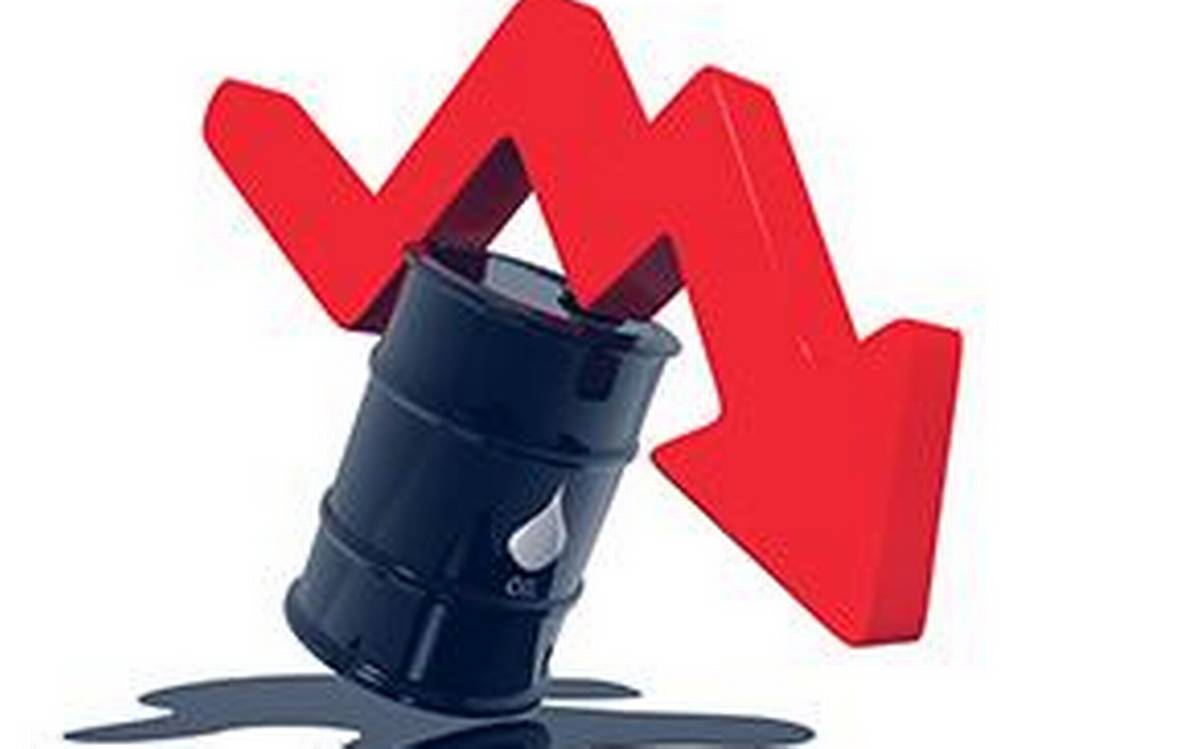
Oil prices continued to drop as expectations of more supply coming to the market amid expectations that demand is returning as more countries recover from the pandemic continue to confuse the market.
Brent crude dropped 1.7 per cent or $1.29 to trade at $73.47 per barrel while the West Texas Intermediate (WTI) lost $1.4 or 2.2 per cent to settle at $71.65 per barrel.
Discussions among members of the Organization of the Petroleum Exporting Countries and its allies (OPEC+) over a supply policy ended without agreement this month after the United Arab Emirates (UAE) objected to extending the output policy beyond April 2022.
However, there were reports that Saudi Arabia and the UAE had reached an accord that should pave the way for a deal to supply more crude to a tight oil market but the UAE energy ministry said deliberations were continuing.
This indicated that a deal had not been solidified, throwing the market into more puzzlement.
Due to this, even a large drop in crude inventories could not help the market as finalising an agreement that would bring more supply seems like the only thing that could improve prices.
OPEC now sees a gradual recovery in surpassing the 100 million barrels per day mark in the second half of 2022 in its Monthly Oil Market Report released on Thursday.
The group sees global oil demand growing by 6 million barrels per day this year, unchanged from last month’s assessment. Total oil demand is projected to average 96.6 million barrels per day in 2021.
Next year, global oil demand will rise by a further 3.3 million barrels per day over 2021 to average 99.86 million barrels per day, roughly returning to the average demand of 2019, before the pandemic.
Oil demand in developed economies is set to rise by 1.5 million barrels per day in 2022 over 2021 while China and India will lead oil demand in developing economies which has been projected to increase by 1.8 million barrels per day in 2022 and exceed pre-pandemic levels.
This growth will be supported by the recovery in transportation fuels and firm industrial fuel demand, including petrochemical feedstocks. In terms of fuels, gasoline and diesel are expected to lead oil demand growth in 2022, OPEC said.
Economy
Sell-Offs in PZ Cussons, BUA Cement Shrink Nigerian Exchange by 0.84%
By Dipo Olowookere
The Nigerian Exchange (NGX) Limited further depreciated by 0.84 per cent on Monday as a result of sell-offs in PZ Cussons, BUA Cement and others.
During the session, apart from the consumer goods index, which closed higher by 0.59 per cent, every other index closed lower, with the industrial goods sector the heaviest loser after shedding 3.28 per cent. The insurance space declined by 2.18 per cent, the banking sector depleted by 1.44 per cent, and the energy segment shrank by 0.09 per cent.
Consequently, the All-Share Index (ASI) retreated by 2,049.65 points to 241,749.11 points from 243,798.76 points, and the market capitalisation contracted by 1.315 trillion to N155.130 trillion from N156.445 trillion.
The market was under selling pressure yesterday, as reflected in the market breadth index, which was negative after closing with 48 price losers and 22 price gainers, indicating weak investor sentiment.
PZ Cussons was the worst-performing stock after shedding 10.00 per cent to finish at N81.00, BUA Cement lost 9.99 per cent to settle at N306.20, Red Star Express declined by 9.98 per cent to N22.10, RT Briscoe depreciated by 9.70 per cent to N12.10, and C&I Leasing dropped 9.38 per cent to trade at N28.12.
The best-performing equity for the day was International Breweries, which chalked up 9.77 per cent to quote at N14.60, NAHCO improved by 8.36 per cent to N177.00, UAC Nigeria expanded by 8.11 per cent to N199.95, DAAR Communication grew by 6.67 per cent to N1.76, and Vitafoam Nigeria gained 5.87 per cent to close at N194.80.
During the session, investors bought and sold 523.5 million shares worth N22.3 billion in 59,945 deals compared with the 441.3 million shares valued at N19.4 billion traded in 44,938 deals last Friday, indicating an increase in the trading volume, value, and number of deals by 18.63 per cent, 14.95 per cent, and 33.40 per cent, respectively.
FCMB closed the day as the most traded stock, with 102.2 million units valued at N1.0 billion. International Breweries sold 26.8 million units worth N387.2 million, Access Holdings exchanged 24.8 million units for N618.2 million, McNichols traded 20.3 million units worth N95.0 million, and Stanbic IBTC transacted 18.4 million units valued at N2.9 billion.
Economy
Nigeria Again Meets OPEC Output Quota, Climbs 74-Month High in June
By Adedapo Adesanya
Nigeria met its production quota set by the Organisation of Petroleum Exporting Countries (OPEC) as crude oil and condensate production soared to an average of 1,735,398 barrels per day in June 2026, representing positive growth for a fourth consecutive month.
This is according to a statement released by the Nigerian Upstream Petroleum Regulatory Commission (NUPRC) and signed by its Head of Media and Corporate Communications, Mr Eniola Akinkuotu, on Sunday.
The regulator noted that in June, crude oil production hit 1.56 million barrels per day while 0.18 million barrels per day of condensates were produced. The commission revealed that Nigeria met 104 per cent of the 1.5 million barrels per day crude oil production quota set by OPEC.
Business Post reports that OPEC quota doesn’t account for condensates in its count.
In strict crude oil terms (excluding condensates), the 1.56 million daily average production Nigeria witnessed in June is the highest that Africa’s biggest oil producer has recorded since April 2020, thus representing a 74-month high.
In June, NUPRC noted that the peak combined crude oil and condensate production was 1.89 million barrels per day, reflecting Nigeria’s potential to reach 2 million barrels per day in the near term. However, the lowest production was 1.57 million barrels per day for the period in review.
According to the upstream regulator, the improved performance was primarily driven by stable production operations across most producing assets and the absence of any major pipeline outages during the period under review.
This enhanced operational stability supported improved production uptime and crude evacuation efficiency.
Nigeria, which is Africa’s biggest oil producer, has not been able to top its record-high production of 2.5 million barrels per day recorded in 2025 due to challenges ranging from underinvestment to oil theft.
Economy
Financial Stocks Account for 79.48% of Total Weekly Trading Volume on NGX
By Dipo Olowookere
On the Nigerian Exchange (NGX) Limited last week, investors transacted 3.648 billion shares worth N220.568 billion in 251,861 deals compared with the 3.821 billion shares valued at N154.393 billion traded in 258,567 deals a week earlier.
Analysis showed that financial stocks led the activity chart with 2.899 billion units sold for N147.360 billion in 106,603 deals, accounting for 79.48 per cent and 66.81 per cent of the total trading volume and value, respectively.
Services equities recorded a turnover of 164.914 million units valued at N3.615 billion in 16,375 deals, and the consumer goods shares exchanged 157.451 million units worth N7.777 billion in 27,950 deals.
First Holdco, Zenith Bank, and Fidelity Bank were the busiest stocks for the five-day trading week, trading 1.745 billion units valued at N121.828 billion in 31,053 deals, contributing 47.85 per cent and 55.23 per cent to the total trading volume and value, respectively.
Business Post reports that 60 equities appreciated during the week versus 22 equities in the previous week, 28 shares depreciated versus 57 shares of the preceding week, and 58 stocks closed flat versus 67 stocks of the previous week.
International Breweries gained 40.00 per cent to trade at N13.30, RT Briscoe expanded by 32.02 per cent to N13.40, Livestock Feeds improved by 28.47 per cent to N9.25, First Holdco chalked up 25.82 per cent to close at N69.20, and Abbey Bank rose by 23.65 per cent to N9.15.
On the flip side, McNichols lost 28.57 per cent to finish at N5.00, Thomas Wyatt gave up 11.64 per cent to quote at N2.43, Geregu Power declined by 10.00 per cent to N825.70, CAP shed 9.99 per cent to settle at N157.60, and Guinness Nigeria also slipped by 9.99 per cent to N329.00.
Customs Street was under buying pressure last week, making the All-Share Index (ASI) and the market capitalisation close higher by 6.35 per cent to 243,798.76 points and N156.445 trillion, respectively.
In the same vein, all other indices finished higher apart from the growth and sovereign bond indices, which depreciated by 7.43 per cent and 0.02 per cent, respectively.