Economy
FEC Approves N895.8bn Draft 2021 Supplementary Budget
By Modupe Gbadeyanka
A draft 2021 supplementary budget of N895.8 billion has been approved by the Federal Executive Council (FEC).
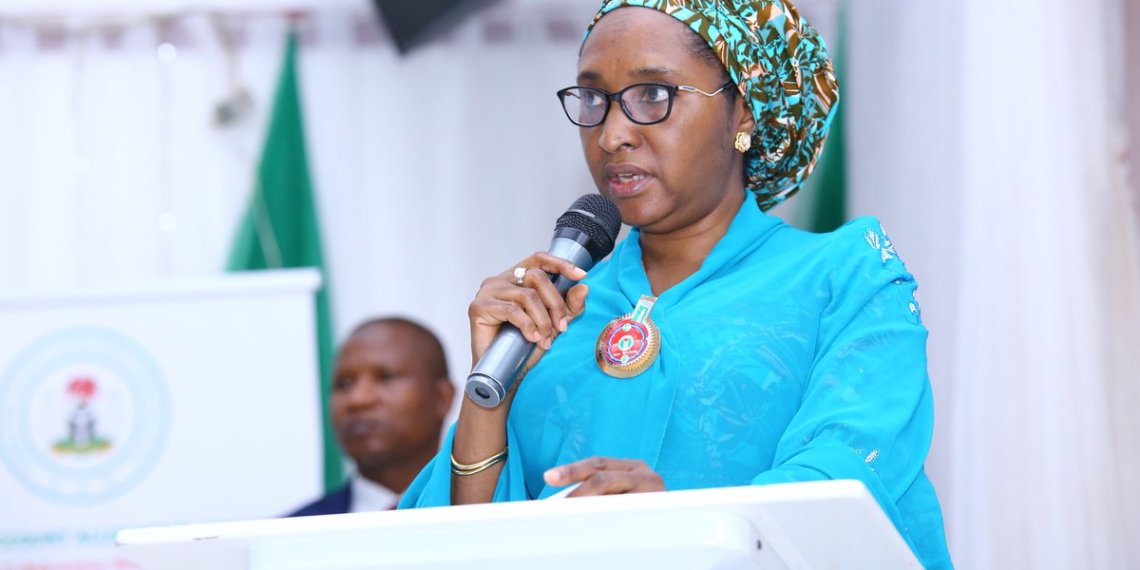
The Minister of Finance, Budget and National Planning, Mrs Zainab Ahmed, confirmed this on Wednesday when she addressed State House correspondents in Abuja at the end of the weekly FEC meeting presided over by President Muhammadu Buhari.
“Today, the Federal Ministry of Finance, Budget and National Planning presented to the council a proposal to seek approval for the draft Federal Government of Nigeria 2021 Supplementary Budget.
“The council deliberated on our proposal and approved as follows: Having noted the need for the urgent procurement of vaccines and also the need for funding to ensure that Nigeria is able to meet its commitment under the HIV, the Nigeria Progressive AIDS Programme in State, Council approved that we should be able to proceed to the National Assembly with the bill in the total sum.
“Also, the council noted the urgent need to specifically enhance the capacity of our military and paramilitary agencies to tackle the various security challenges that we currently have in the country, council on this note approved the 2021 Supplementary Appropriation Bill in an average expenditure of N895,842,462,917,” the Minister.
Giving details of the extra budget, Mrs Ahmed said it comprises an aggregate sum of N770.60 billion to further enhance the capacity of the defence and the security agencies to address current and emerging security challenges in the country.
In addition, the draft has N83.6 billion earmarked for expenditure for the COVID-19 vaccine programme, covering 30 million vaccines from Johnson and Johnson and the logistics costs related to the deployment of the vaccines.
Also, N40 billion was earmarked to take care of the needs for allowances to the health, education sectors and other wage-related issues, while N1.7 billion was set aside for the Nigeria Comprehensive AIDS Programme.
“The total of this expenditure is made up of at N83.6 billion for COVID-19 vaccine programme, covering 30 million vaccines from Johnson and Johnson and the logistics costs related to the deployment of that 30 million vaccines.
“It also contains the sum of N1.7 billion for the Nigeria Comprehensive AIDS Programme that is currently operating in the states and an additional contingency provision of N40 billion under the public service-wide adjustments to take care of the needs for allowances to the health sector, to the education sector and other wage-related issues. This is an incremental provision of over N100 billion that is already provided in the 2021 budget.
“The council also approved an aggregate sum N770.6 billion to further enhance the capacity of the Defense and the security agencies to address current and emerging security challenges in our country,” the Minister said.
She disclosed that government will draw from N39.6 billion to finance the supplementary budget just as it will withdraw N135 billion from special levy accounts for the same purpose.
“In line with this approval, we have also been given the approval to draw down on some existing World Bank loans totalling about N39.6 billion as part of the financing source for this supplementary budget.
“We will be working with the World Bank to restructure some of the existing facilities to realise this N39.6 billion.
“We’ve also been given the approval to withdraw N135 billion from some special reserve levy accounts to part-fund this supplementary budget, but specifically related to COVID-19 vaccine, salaries and other health-related expenditure as well as the recurrent component of the Defence and Security expenditures.
“Finally, this approval also contains an approval to borrow the sum of 722.5 billion for security expenditures and these are the capital components of the security expenditure in the absence of any other additional supplementary sources of borrowing. This borrowing would be done from the domestic international capital market,” she stated.
Economy
Unlisted Securities Market Further Suffers 0.33% Loss
By Adedapo Adesanya
The NASD Over-the-Counter (OTC) Securities Exchange further depreciated by 0.33 per cent on Wednesday, May 14, with the Unlisted Security Index (NSI) down by 13.76 points to 4,130.21 points from the previous day’s 4,143.97 points, and the market capitalisation dropping N8.23 billion to close at N2.471 trillion compared with Wednesday’s N2.479 trillion.
The unlisted securities market ended yesterday’s session with four price losers and one price gainer, led by Food Concepts Plc, which chalked up 9 Kobo to sell at N2.35 per unit, in contrast to midweek’s closing price of N2.26 per unit.
On the flip side, FrieslandCampina Wamco Plc depreciated by N1.58 to quote at N144.76 per share versus N146.34 per share, Central Securities and Clearing System (CSCS) Plc crumbled by N1.00 to trade at N71.00 per unit versus N72.00 per unit, First Trust Mortgage Bank Plc slid by 25 Kobo to N2.27 per share from N2.52 per share, and UBN Property Plc declined by 21 Kobo to N2.04 per unit from N2.25 per unit.
During the trading day, the volume of securities traded decreased by 70.2 per cent to 417,349 units from 1.4 million units, the value of securities dropped 36.9 per cent to N23.2 million from N36.8 million, and the number of deals stumbled by 13.9 per cent to 31 deals from 36 deals.
At the close of trades, Great Nigeria Insurance (GNI) Plc remained the most active stock by value on a year-to-date basis, with 3.4 billion units valued at N8.4 billion, followed by CSCS Plc with 60.7 million units exchanged for N4.1 billion, and Okitipupa Plc with 27.9 million units traded for N1.9 billion.
GNI Plc was also the most active stock by volume on a year-to-date basis, with 3.4 billion units worth N8.4 billion, followed by Resourcery Plc with 1.1 billion units sold for N415.7 million, and Infrastructure Guarantee Credit Plc with 400 million units sold for N1.2 billion.
Economy
Mobile-First Platforms Like DeFi Hash Reflect Growing Investor Interest in AI-Driven Cloud Infrastructure and Automated Digital Asset Engagement
As the cryptocurrency market enters a new phase of global growth, investor behavior is moving beyond the “buy and hold” strategy common in previous cryptocurrency cycles. Across the digital asset industry, a growing number of users are exploring AI-driven cloud infrastructure, automated computing systems, and mobile-based digital engagement models.
Industry analysts say the convergence of AI and blockchain infrastructure is becoming one of the defining trends of 2026.
With the accelerating global demand for AI computing resources, technology companies around the world are investing heavily in cloud infrastructure, data centers, and intelligent automation systems. Meanwhile, blockchain-based infrastructure platforms are increasingly positioning themselves at the intersection of decentralized finance, cloud computing, and AI-driven resource management.
Among the many emerging platforms, DeFi Hash is attracting significant attention. DeFi Hash is a mobile-centric digital infrastructure platform focused on intelligent cloud computing services and automated infrastructure engagement.
The Transition to AI-Driven Digital Infrastructure
For years, many cryptocurrency investors have relied primarily on market appreciation and speculative trading opportunities. However, the evolving market environment and the rapid development of artificial intelligence are prompting a shift towards infrastructure-centric platforms that offer alternative participation models.
Users no longer need to purchase expensive mining hardware or manage physical systems; instead, they are increasingly seeking simplified, mobile-accessible solutions for remote participation in digital infrastructure.
DeFi Hash states that its platform aims to lower traditional barriers to entry by combining cloud architecture, automation, and distributed infrastructure systems to create a seamless user experience. These platforms are accessible via mobile devices and web platforms.
According to company information, the platform has attracted over 3.5 million registered users globally.
Flexible Participation Options
To encourage new user onboarding and streamline the access process, DeFi Hash offers various infrastructure participation models and cloud-based automated contracts.
The company states that new registered users receive promotional rewards upon registration and can participate in an entry-level program designed for short-term participation.
The platform also offers various infrastructure contract categories designed to meet the needs of different participation levels.
Stable Return Contracts
Contract Range: $500 – $2,600
Estimated Daily Return: $6.25 – $36.40
Contract Duration: 7 – 15 days
Estimated Total Return: $43 – $546
Professional Profit Contracts
Contract Range: $5,000 – $15,000
Estimated Daily Return: $77.50 – $270
Contract Duration: 20 – 25 days
Estimated Total Return: $1,550 – $6,750
Advanced Long-Term Profit Contracts
Contract Range: $30,000 – $150,000
Estimated Daily Return: $570 – $3,750
Contract Duration: 30 – 45 days
Estimated Total Return: $17,100 – $168,750
The company states that users can choose one or more participation options based on their own strategies and goals.
The convergence of artificial intelligence and blockchain is expected to accelerate.
Industry insiders believe that the integration of artificial intelligence infrastructure and blockchain-based computing networks may become one of the most influential technological developments in the coming years.
With the global proliferation of artificial intelligence, the demand for scalable computing resources and automated digital infrastructure services is expected to continue to grow. Platforms integrating blockchain, cloud computing, and intelligent automation technologies will play an increasingly important role in shaping the future digital economy.
DeFi Hash states that its goal is to make cloud projects more accessible to ordinary users worldwide while continuously expanding its AI-driven infrastructure ecosystem.
For more information, please visit the company website or mobile app download page.
Official Website: https://defihash.com/
Mobile App Download: https://defihash.com/download/
Economy
Official FX Market Sees Minor Naira Decline Against Dollar
By Adedapo Adesanya
The Naira lost 33 Kobo or 0.02 per cent against the United States Dollar in the Nigerian Autonomous Foreign Exchange Market (NAFEX) on Thursday, May 14, to trade at N1,370.89/$1 compared to the preceding day’s N1,370.56/$1.
However, the local currency further appreciated against the Pound Sterling in the official FX market during the session by N1.61 to close at N1,851.38/£1 versus N1,852.99/£1, and improved its value against the Euro by N2.21 to trade at N1,602.98/€1 versus Wednesday’s closing price of N1,605.19/€1.
Also, at the GTBank forex counter, the Nigerian currency gained N1 against the Dollar yesterday to sell for N1,381/$1 compared with midweek’s rate of N1,383/$1, and at the black market, it closed flat at N1,385/$1.
Data from the Central Bank of Nigeria (CBN) indicated that interbank FX turnover fell to $78.783 million across 103 deals from $130.549 million the previous day.
The Naira is forecast to be broadly stable, supported by dollar sales by the central bank and steady, higher oil receipts, with the market settling into a balance.
As of May 12, 2026, the country’s external reserves increased by $150 million or 0.2 per cent to $48.48 billion from $48.33 billion on May 5, 2026, providing support for the domestic currency.
In the cryptocurrency market, major digital coins closed mixed amid broader macroeconomic selling pressure.
Also, the US Senate Banking Committee approved the bipartisan Clarity Act, a key step toward comprehensive crypto market structure legislation that now heads toward a merger with a similar Agriculture Committee bill.
Investors bet that clearer US rules, including the Clarity Act’s separation of payment stablecoins from investment assets, will ease regulatory overhangs on its use case.
On the geopolitical scene, President Trump said the US does not need to reopen the Strait of Hormuz, changing an earlier stance and deepening concerns about elevated energy costs feeding into inflation.
Ripple (XRP) grew by 1.8 per cent to $1.46, Binance Coin (BNB) jumped 1.0 per cent to $676.37, Bitcoin (BTC) improved by 0.7 per cent to $80,371.72, and TRON (TRX) gained 0.6 per cent to sell at $0.3529.
But Dogecoin (DOGE) slid by 1.3 per cent to $0.1134, Ethereum (ETH) depreciated by 0.9 per cent to $2,247.38, Solana (SOL) went down by 0.7 per cent to $90.65, and Cardano (ADA) weakened by 0.1 per cent to $0.2656, while the US Dollar Tether (USDT) and the US Dollar Coin (USDC) remained unchanged at $1.00 each.
-
Feature/OPED6 years agoDavos was Different this year
-
Travel/Tourism10 years ago
Lagos Seals Western Lodge Hotel In Ikorodu
-
Showbiz3 years agoEstranged Lover Releases Videos of Empress Njamah Bathing
-
Banking8 years agoSort Codes of GTBank Branches in Nigeria
-
Economy3 years agoSubsidy Removal: CNG at N130 Per Litre Cheaper Than Petrol—IPMAN
-
Banking3 years agoSort Codes of UBA Branches in Nigeria
-
Banking3 years agoFirst Bank Announces Planned Downtime
-
Sports3 years agoHighest Paid Nigerian Footballer – How Much Do Nigerian Footballers Earn