Connect with us

Economy

FG Completes $70m Yearly Concessionaire of Zungeru Plant to Penstock

Published

on

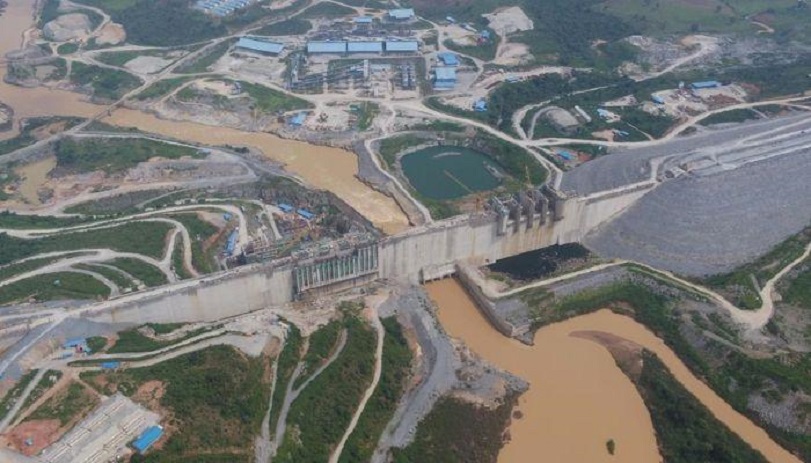
Zungeru Plant

By Adedapo Adesanya

The federal government has completed the transfer of the operations of the Zungeru Hydroelectric Power Plant (ZHPP) to a concessionaire, Penstock Limited, in a move that will see the country earn $70 million yearly from the deal.

The Vice President, Mr Kashim Shettima, confirmed this during the first meeting of the National Council on Privatisation (NCP) for the year 2024 at the Presidential Villa, Abuja on Tuesday.

A concession is a kind of partnership between the public sector and often private companies that have shown its added value in a specific area, for example developing infrastructure. The handing of the plant to Penstock will see it handle the operations instead of the government.

The concessionaire would pay FG $70 million per year over the next three decades for managing the complex. This brings the estimated revenue to $2.1 billion for the next 30 years.

The VP said the move was expected to boost Nigeria’s power generation capacity and contribute significantly to meeting the country’s growing energy demands.

The NCP also announced significant progress in the ZHPP concession, including the official transfer of the plant’s operations to Penstock Limited.

According to the council, the Concession Agreement was signed on December 13, 2023, by the Bureau of Public Enterprises (BPE) and Penstock Limited.

Following Council approval, the concessionaire fulfilled its obligation by paying 50 per cent of the commencement fees on January 5, while the official handover was done on January 23.

Penstock Energy Limited financed the 700MW Zungeru hydropower plant- the second largest hydropower plant in Nigeria with a staggering $1.3bn loan from China.

Penstock Energy Limited is a subsidiary of Mainstream Energy Solution Limited, the concessionaire of Kainji and Jebba Hydro Power Plants (HPP) with an installed capacity of 760MW and 578.4MW.


Adedapo Adesanya is a journalist, polymath, and connoisseur of everything art. When he is not writing, he has his nose buried in one of the many books or articles he has bookmarked or simply listening to good music with a bottle of beer or wine. He supports the greatest club in the world, Manchester United F.C.

Click to comment

Leave a Reply

Your email address will not be published. Required fields are marked *

Economy

Oil Prices Slide 6% as Trump Says Iran Talks in Final Stages

Published

on

oil prices fall

By Adedapo Adesanya

Oil prices fell about ​6 per cent on Wednesday after US President Donald Trump said that negotiations with Iran were in the final stages.

Brent crude futures went down by $6.26 or 5.63 per cent to $105.02 a barrel, and the US West Texas Intermediate (WTI) crude futures decreased by $5.89 or 5.66 per cent to $98.26 per barrel.

Despite saying talks with Iran were in the final stages, Mr Trump warned of further attacks unless Iran ​agreed to a deal, making investors remain ‌wary about the outcome of peace talks as disruption to Middle Eastern supply continued.

Iranian foreign ministry spokesperson, Mr Esmaeil Baghaei, said Iran was ready to develop protocols for safe shipping traffic ​in cooperation with other coastal states.

Iran and the US have been in a stalemate for weeks now as Tehran blockades the Strait of Hormuz and Washington blockades Iranian ports. Hormuz is one of the world’s most important trade routes for oil and gas supplies.

Three supertankers crossed the Strait ​of Hormuz on Wednesday, carrying ⁠oil bound for Asian markets, after waiting in the Gulf for more than two months with 6 million barrels of Middle East crude on board. The number of vessels crossing the strait ​remains well below the 130 or so ships that crossed daily before the war.

Analysts at Citi said that they expect Brent crude to rise to $120 a barrel in the near term, stating that oil markets are underpricing the risk of prolonged supply disruption, ​and Wood Mackenzie estimated that it could approach $200 if the Strait of Hormuz stays largely shut until the end of the ​year.

The CEO of ​the state oil company of the United Arab Emirates (UAE), Mr Sultan Al ⁠Jaber, said on Wednesday that it will take at least four months to get back to 80 per cent of pre-conflict flows.

Crude oil inventories in the US decreased by 7.9 million barrels during the week ending May 15, according to new data from the US Energy Information Administration (EIA) released yesterday. The EIA’s data release follows figures by the American Petroleum Institute (API) that were released a day earlier, which reported that crude oil inventories saw a draw of 9.1 million barrels in the period.

Continue Reading

Economy

Investors Eye Investment Opportunities in Dangote Refinery

Published

on

South African investors dangote refinery

By Aduragbemi Omiyale

The planned listing of the Dangote Petroleum Refinery & Petrochemicals on the Nigerian Exchange (NGX) Limited is already attracting interest from South African investors and others.

The leadership of South Africa’s Government Employees Pension Fund (GEPF), alongside the Public Investment Corporation and Alterra Capital Partners, were recently at the Lagos-based facility.

The chairperson of GEPF, Mr Frans Baleni, said that the refinery stands as evidence that Africa can execute transformational infrastructure projects when backed by visionary leadership, long-term investment and strong technical expertise.

According to him, the significance of the project extends well beyond Nigeria’s borders, noting that it should reshape how Africa thinks about itself.

“The Dangote Refinery and Petrochemicals Complex is a powerful demonstration that, with visionary leadership and long-term capital, that perception no longer holds. This is the kind of African-led industrial scale that institutional investors on this continent should be backing,” he said.

Also speaking, the chief executive of PIC, Mr Patrick Dlamini, described the refinery as one of the most transformative industrial projects undertaken on the continent, saying it is reshaping global perceptions about Africa’s industrial capabilities and economic potential.

He said PIC, which manages about $230 billion in assets largely on behalf of South Africa’s Government Employees Pension Fund, is actively seeking long-term partnerships aligned with infrastructure development, industrialisation and economic transformation across Africa.

“There is real strategic alignment between Dangote’s industrial agenda and how we are positioning our portfolio, and we look forward to exploring meaningful avenues for collaboration,” he stated.

While receiving his visitors, the chief executive of Dangote Group, Mr Aliko Dangote, said the proposed listing is designed to democratise wealth creation and give Africans direct access to participate in the continent’s industrial transformation.

“We are opening the doors for investors to participate directly in Africa’s industrial future and the prosperity it will create,” Mr Dangote said, adding that the refinery project reflects the scale of untapped opportunities within Africa’s energy market, particularly as most countries on the continent remain dependent on imported refined petroleum products despite growing industrial demand and rising consumption.

The billionaire industrialist noted that demand for products such as polypropylene, aviation fuel and refined petroleum products has exceeded earlier projections, reinforcing the commercial viability of the refinery and shaping future expansion plans.

Continue Reading

Economy

Nigeria’s Oil Exploration Declines 41.7% as Rig Counts Falls to 12 in April

Published

on

rig count

By Adedapo Adesanya

Nigeria’s oil exploration and drilling activities declined by 41.7 per cent in April 2026, following reduced upstream operations and investment activities.

According to the May 2026 Monthly Oil Market Report (MOMR) of the Organisation of the Petroleum Exporting Countries (OPEC), Nigeria’s rig count, a major indicator of upstream oil and gas activities, dropped to 12 in April 2026 from 17 recorded in March 2026.

The decline came amid persistent upstream investment and operational challenges, according to the latest monthly report released by OPEC.

Earlier data contained in the May 2026 edition of the MOMR also showed that Nigeria’s average rig count declined to 13 in 2025 from 15 recorded in 2024, indicating reduced exploration and drilling activities in the upstream petroleum sector.

The report showed that Nigeria’s rig count fell by five rigs month-on-month, from 17 rigs in March 2026 to 12 rigs in April 2026.

Rig count is widely regarded in the petroleum industry as a key indicator of exploration, field development and investment activities.

The decline comes despite ongoing efforts by the Nigerian government and industry operators to raise crude oil production, boost reserves and attract fresh upstream investments under the Petroleum Industry Act (PIA)

Nigeria’s performance contrasted with the broader African trend, where total rig count increased marginally from 42 in March 2026 to 48 in April 2026.

However, Nigeria accounted for a significant share of the continent’s decline in operational rigs during the period.

Within OPEC, Nigeria remained behind major producers such as Saudi Arabia, which recorded 265 rigs in April 2026, the United Arab Emirates with 66 rigs, and Iraq with 19 rigs.

The development also comes at a time when Nigeria is struggling to meet its crude oil production quota allocated by OPEC consistently.

Continue Reading

Trending