Connect with us

Economy

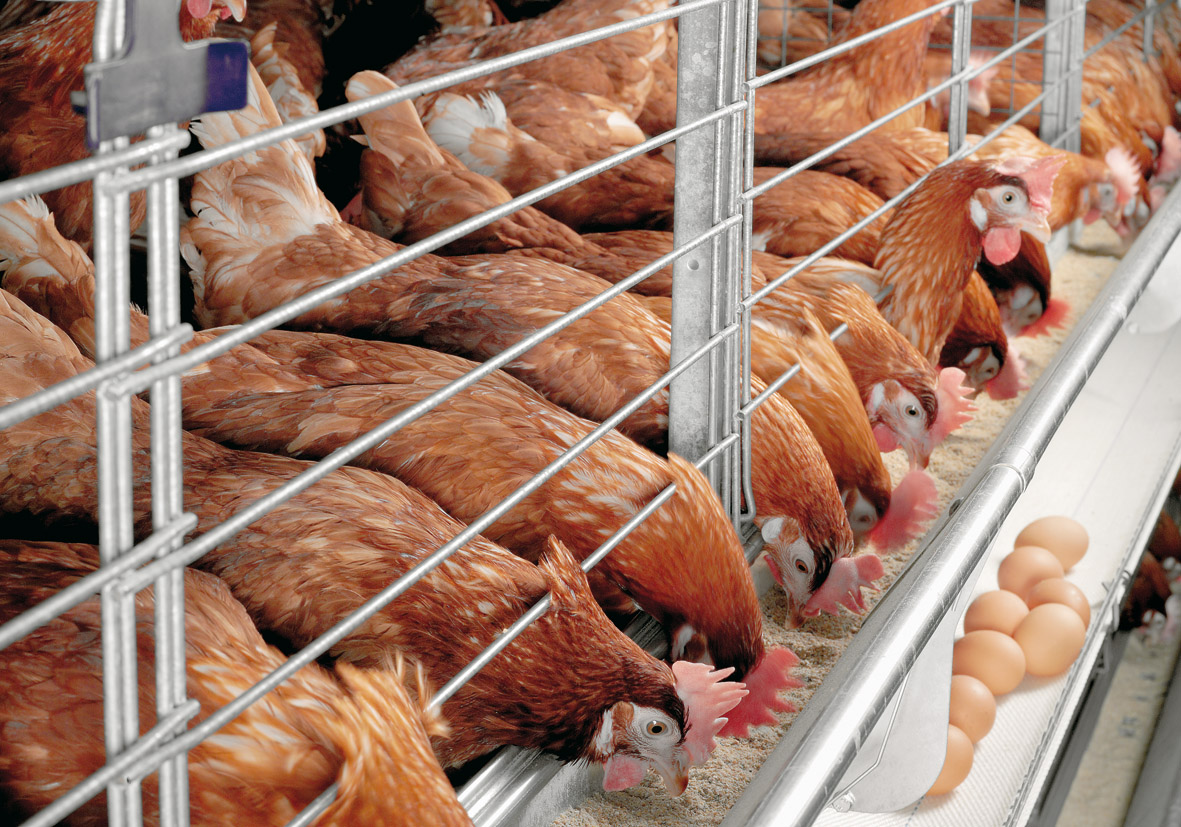
FG Plans Relief Package for Poultry Industry

Published

on

poultry-farming-eggs

By Modupe Gbadeyanka

Acting President, Mr Yemi Osinbajo, says he is leading an urgent effort by the Federal Government to address challenges in the agricultural sub-sector and thereby offer relief measures to the ailing industry.

He made this in his second meeting with representatives of the poultry industry in a week.

The poultry industry has had to contend with a number of challenges including an outbreak of Avian Influenza which affected almost 4 million birds in 2015, non-allocation of Foreign Exchange for the importation of needed machinery and other critical inputs, and high production costs in the industry.

Mr Osinbajo who had met with members of the Poultry Association of Nigeria (PAN) last week Thursday, summoned another meeting today where relevant ministers and agency heads came together to fashion out how to bail-out the industry.

“The poultry industry is a local industry that needs to be protected urgently,” the Acting President said at the meeting where specific measures were tabled and considered on how the FG can be of help.

He said the industry should be a major plank of the agriculture sector and as such the Buhari administration will ensure that it gets help regarding the challenges being faced by operators of the sub-sector.

He added that by supporting the local industry, poultry related importation which is currently a drain on the country’s Foreign Exchange could be a thing of the past.

In his remarks, Dr Ayoola Oduntan, who led the delegation of the Poultry Association of Nigeria to present industry challenges to the meeting, noted that poultry presently contributes 25% of the Agricultural Gross Domestic Product of the Nigerian economy amounting to N1.6Trn. He added that Nigeria is rated as the number one egg-producing nation in Africa, and number 4 poultry meat producer in the continent.

The FG is now in the process of concluding decisions on specific lines of action targeted at the challenges facing the industry, a sub-sector that is said to generate over 14 million direct and indirect jobs in the country.

Present at the meeting were the Finance Minister, Mrs Kemi Adeosun; Agriculture & Rural Development Minister of State, Heineken Lokpobiri; Comptroller-General of the Nigerian Customs Service, Col. Hameed Ali; and the Central Bank Governor, Mr Godwin Emefiele.


Modupe Gbadeyanka is a fast-rising journalist with Business Post Nigeria. Her passion for journalism is amazing. She is willing to learn more with a view to becoming one of the best pen-pushers in Nigeria. Her role models are the duo of CNN's Richard Quest and Christiane Amanpour.

Click to comment

Leave a Reply

Your email address will not be published. Required fields are marked *

Economy

Naira Slips to N1,343/$ at NAFEX

Published

on

Naira-Dollar exchange rate gap

By Adedapo Adesanya

The Naira sold at N1,343.64/$1 Nigerian Autonomous Foreign Exchange Market (NAFEX) on Friday, April 17, after shedding N1.34 or 0.10 per cent against the greenback from the previous day’s rate of N1,342.30/$1.

In the same vein, the Nigerian currency depreciated against the Pound Sterling in the same market window during the session by N5.03 to quote at N1,824.39/£1 versus the previous rate of N1,819.36/£1, and lost N10.05 against the Euro to sell at N1,591.14/€1 versus N1,581.09/€1.

At the GTBank FX desk, the exchange rate of the Naira to the Dollar remained unchanged at N1,355/$1, and it also maintained stability in the parallel market at N1,375/$1.

Interbank liquidity increased to N124.34 million from N74.255 million the previous day, data from the Central Bank of Nigeria (CBN) showed.

Meanwhile, external reserves remain at $48.70 billion, down from the 2009 peak of $50 billion amidst uncertainties in the global commodities market.

Global oil prices dropped sharply on Friday after Iran signalled that the Strait of Hormuz would remain open to commercial shipping during a temporary ceasefire in the Middle East.

Crypt assets also gained on the news from Iran’s foreign minister, who declared the Strait of Hormuz open, drawing a positive response from President Donald Trump. The development helped ease worry around risky assets like crypto.

Meanwhile, the cryptocurrency market was bullish, as traders weighed possible scenarios ahead of next week’s US-Iran cease-fire deadline.

Ethereum (ETH) appreciated by 3.2 per cent to $2,410.53, Bitcoin (BTC) jumped by 2.8 per cent to $77,124.22, Ripple (XRP) rose by 2.7 per cent to $1.47, Binance Coin (BNB) expanded by 2.5 per cent to $643.97, Dogecoin (DOGE) added 1.0 per cent to close at $0.0988, Cardano (ADA) improved by 0.9 per cent to $0.2578, Solana (SOL) soared by 0.4 per cent to $88.53, and TRON (TRX) gained 0.4 per cent to sell at $0.3275, while the US Dollar Tether (USDT) and the US Dollar Coin (USDC) traded flat at $1.00 apiece.

Continue Reading

Economy

Brent, WTI Tumble Over 9% on Hormuz Reopening Signal

Published

on

Brent crude futures

By Adedapo Adesanya

Oil prices plunged by 9 per cent on Friday after Iran said passage for all ​commercial vessels through the Strait of Hormuz was open for the remaining ceasefire period.

Brent crude futures lost $9.01 or 9.07 per cent to trade at $90.38 a barrel, while the US West Texas Intermediate (WTI) crude futures depreciated by $10.48 or 11.45 per cent to finish at $83.85 a barrel.

Iran said Friday that the Strait of Hormuz is “completely open” for the remainder of the Israel-Lebanon ceasefire, bolstering hopes of a breakthrough in the weeks-long crisis over the crucial oil route.

Iran had maintained its blockade of the strait despite a two-week ceasefire with the US, which expires on Tuesday, and previously said it would not open the key waterway while Israel continued to strike Lebanon.

Business Post had reported that oil prices weakened to around $88 per barrel after Iranian Foreign Minister Seyed Abbas Araghchi posted on X that “all commercial vessels” would be allowed to pass through the strait throughout the remainder of the ten-day ceasefire in Lebanon.

US President Donald Trump thanked Iran on Truth Social, but stressed that the US naval blockade of the regime’s ports would remain “in full force and effect” until a peace deal was completed. “This process should go very quickly in that most of the points are already negotiated,” he added.

A second round of truce talks between the US and Iran is expected to take place as oil tankers are beginning to test the waters at the Strait of Hormuz.

Despite the fact that all ships can sail through the Strait of Hormuz, this passage needs to be coordinated with Iran’s Islamic Revolutionary Guard Corps (IRGC).

Market analysts noted that if these initial tankers make it through, flows will begin to partially normalise. However, a handful of vessels does not equal restored capacity. The backlog alone will take significant time to clear, and producers across the region are still dealing with disrupted output and logistics.

Prices had already fallen earlier in the Friday session as possible ​further talks between the US and Iran over the weekend and a 10-day ceasefire between Lebanon and Israel raised investors’ hopes that the war in the Middle East could be ‌nearing an ⁠end.

The American President also said on Friday that the US has banned Israel from further bombing in Lebanon, using a harsher tone than usual with the ​longtime US ally.

Continue Reading

Economy

Nigerian Exchange Extends Stock Trading Hours to 4:00 pm

Published

on

exposure to Nigerian stocks

By Dipo Olowookere

The daily stock trading hours on the floor of the Nigerian Exchange (NGX) have been expanded by an hour to 4.00 pm after extensive stakeholder engagement, ensuring alignment and operational readiness ahead of the go-live date.

A statement from the bourse on Friday said the extension was approved by the Securities and Exchange Commission (SEC).

Before now, trading activity on Customs Street resumed from 9.30 am to 2:30 pm, but from Monday, April 27, 2026, the resumption time would be 9.00 am, and the closing gong would be struck by 4.00 pm from Monday to Friday.

It was explained that this action was taken “to deepen market liquidity, enhance price discovery, and broaden investor access.”

The NGX has witnessed renewed investor interest due to increased awareness of equities lately, especially as the nation and the global community await the much-anticipated listing of Dangote Refinery shares later in the year, all things being equal.

The statement also noted that this extended trading window would provide greater flexibility for investors, improve responsiveness to market-moving information, and support broader participation across the market.

The development builds on the momentum of Nigeria’s recent reclassification to Frontier Market status by FTSE Russell, reinforcing NGX’s global positioning and enhancing its attractiveness to a broader pool of domestic and international investors.

It further stated that this reform reflects strong regulatory collaboration and underscores the SEC’s continued commitment to advancing market development initiatives. Alongside Nigeria’s Frontier Market reclassification, it signals a deliberate shift towards a more accessible, liquid, and globally competitive market.

With this development, NGX reinforces its position as a leading multi-asset exchange, deepening liquidity, improving market access, and supporting efficient capital formation within Nigeria’s financial markets.

Continue Reading

Trending