
Economy
FG to Implement Outcome of Revenue Allocation Debate


By Adedapo Adesanya
The federal government has promised to implement the outcome of the ongoing review of the current Vertical Revenue Allocation Formula being carried out by the Revenue Mobilization Allocation and Fiscal Commission (RMAFC).
This is even as there have been proposals of new figures for allocation between the three tiers of government, which would reduce its share.
The promise was made by the Secretary to the Government of the Federation (SGF), Mr Boss Mustapha, who was represented by the Permanent Secretary in charge of political and economic affairs, Mr Andrew David Adejoh.
While giving the federal government position on the review at the public hearing for the Federal Capital Territory (FCT), he assured that the FG was committed to doing the needful once it is ratified by the National Assembly.
He said, “On behalf of President Muhammadu Buhari, I wish to re-assure all Nigerians that the federal government will implement the final outcome of the conclusion of this exercise as soon as the National Assembly enacts the relevant legislation to complete the processing.”
The new allocation recommends that the federal government should have 50.65 per cent, state government 25.62 per cent, local government 23.73 per cent while derivation still stands at 13 per cent.
The new proposed formula is a shift from the current method that runs thus: FG – 52.68 per cent, state government – 26.72 per cent, local governments – 20.60 per cent while derivation is 13 per cent.
It advised that states should up their Internally Generation Fund counselling, adding that it was important to restart that revenue application. This, according to proponents, should be done constructively in the face of a dwindling national revenue base and the imperative for states to generate their IGR.
The SGF admitted that the present revenue allocation formula, both vertical and horizontal is long overdue for a review not only because the last one was done in 1992.
“Equally important is the fact this review should culminate in improved national development.
“Most importantly, contemporary issues since then, such as heightened insecurity, decaying infrastructure, need for appropriately matching statutory functions and tax powers, need to be taken into consideration,” the SGF stated.
He commended RMAFC for the consultative process it adopted in ensuring that the diverse views across all spectrums of the society were taken into consideration.
He cautioned that review of revenue cannot and should not be an emotional or sentimental discussion and should not be done arbitrarily. It submitted that to have an endearing vertical review of the presentation revenue allocation formula, the responsibilities to be carried out by all must be agreed upon.
On his part, the chairman of RMAFC, Mr Elias Mbam informed that the commission relied on its statutory powers of the 1999 constitution as amended to embarrass on the review.




By Aduragbemi Omiyale
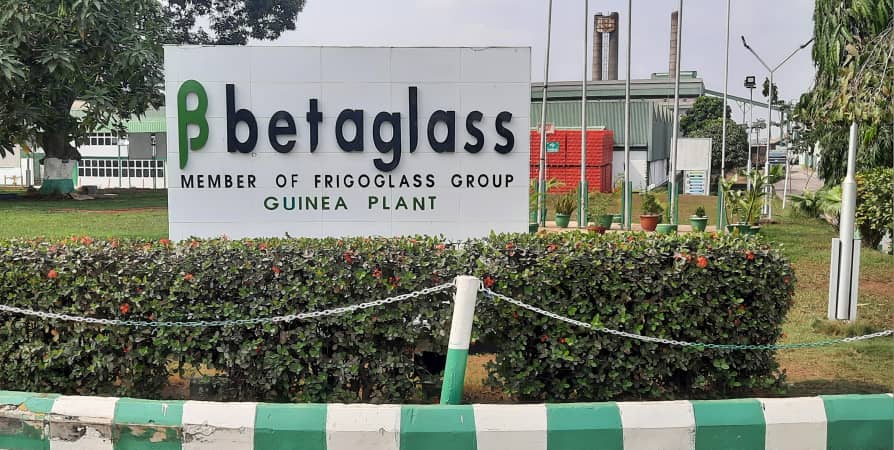
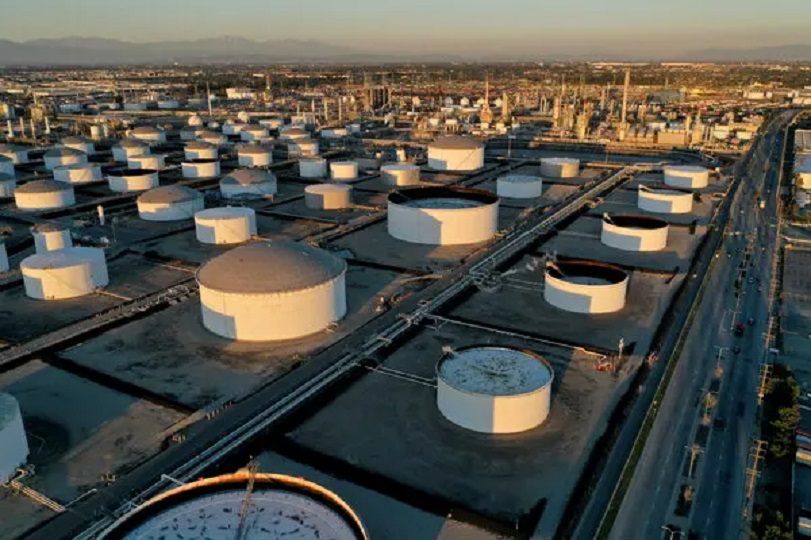
In the 2025 financial year, Beta Glass Plc grew its revenue by 27 per cent to N149.12 billion from N117.58 billion in 2024, reflecting continued demand for the company’s glass packaging products across key sectors of the Nigerian economy.
Despite market challenges, the organisation performed well due to improved production efficiency, effective cost management, and a clear focus on its key customers and segments.
In the year, the gross margin improved to 35.3 per cent from 26.3 per cent, operating margin rose to 32.3 per cent from 20.0 per cent, reflecting improved operating efficiency and effective cost management.
A look at the bottom-line showed that profit after tax (PAT) went up by 144 per cent to N33.25 billion from N13.63 billion, demonstrating the resilience of its operations despite evolving global and regional market conditions, while the Earnings Per Share (EPS) stood at N55.41 versus N22.71 in 2024.
The chief executive of Beta Glass, Mr Alex Gendis, said, “This year’s results reflect the resilience of our business model and the successful execution of our strategic initiatives.
“Despite market challenges, our commitment to delivering value to our shareholders was and remains strong. Our performance was underpinned by improved production efficiency, effective cost management, and a clear focus on our key customers and segments.
“At the same time, we continued to invest significantly in our asset base, with the rebuild of our furnace in Delta, positioning the business for sustainable long-term growth.”
By Adedapo Adesanya
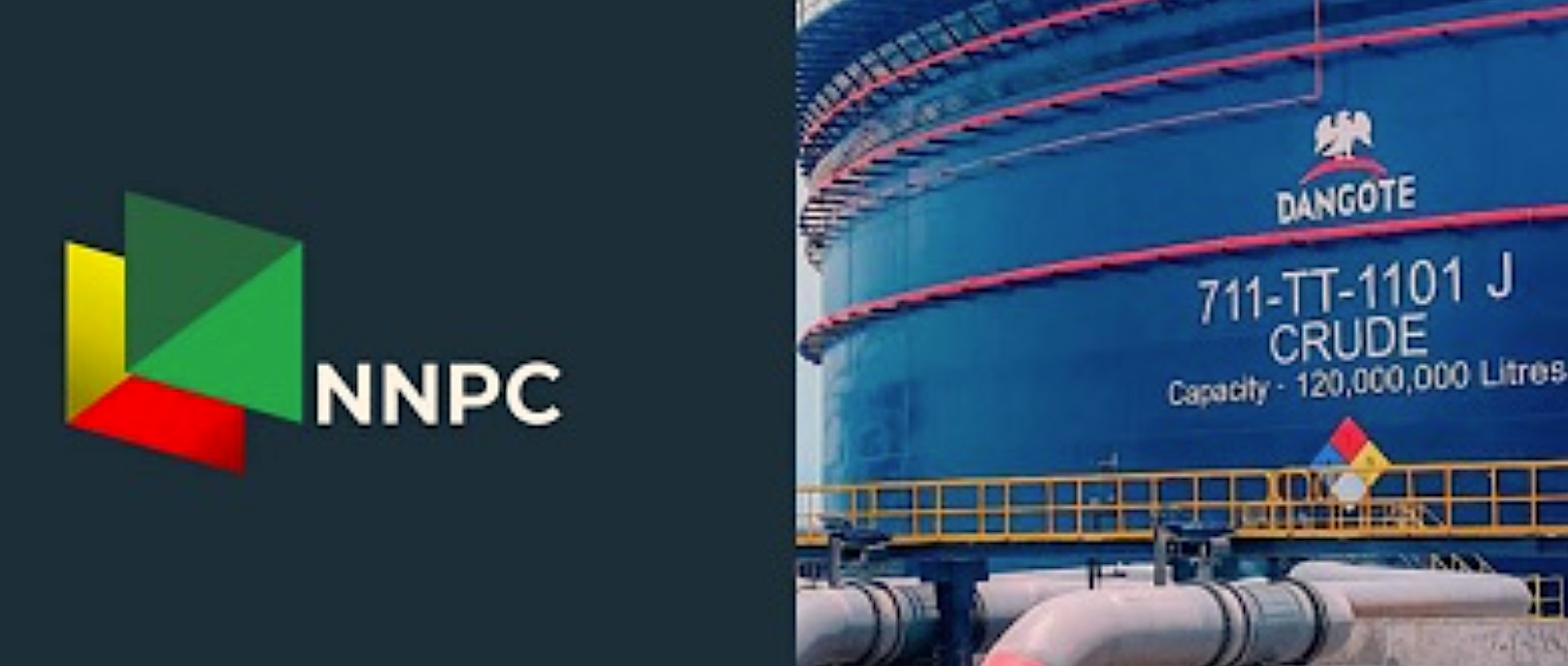
If Nigeria continues producing crude oil at its current pace, its proven reserves would be exhausted in about 59 years, according to the Nigerian Upstream Petroleum Regulatory Commission (NUPRC).
The regulator disclosed this on Wednesday in Abuja, as it released the nation’s official petroleum reserves position as of January 1, 2026.
In a statement signed by its chief executive, Mrs Oritsemeyiwa Eyesan, the commission said Nigeria’s total oil and condensate reserves stand at 37.01 billion barrels, while total gas reserves are about 215.19 trillion cubic feet.
“The Nigerian Upstream Petroleum Regulatory Commission, in keeping with its mandate, is committed to improving upstream sector performance, enhancing the growth of oil and gas reserves, and ensuring stable production for shared prosperity via the operationalisation of the Petroleum Industry Act, 2021, and implementation of the strategic pillars of the commission,” she said.
Providing a breakdown, she stated that “2P crude oil and condensate reserves stand at 31.09 billion barrels and 5.92 billion barrels, respectively, amounting to a total of 37.01 billion barrels.”
On gas, she said, “2P associated gas and non-associated gas reserves stand at 100.21 trillion cubic feet and 114.98 trillion cubic feet, respectively, resulting in total gas reserves of 215.19 trillion cubic feet.”
Explaining the changes recorded within the period, Mrs Eyesan noted that crude volumes declined slightly due to production activities during the previous year.
While Nigeria’s reserves life index stands at 59 years for oil, it was put at 85 years for gas, indicating the estimated duration the resources would last at current production levels.
“The Reserves Life Index is 59 Years and 85 Years for Oil and Gas, respectively. The reason for the slight change in 1.1.2026 oil and condensate reserves by 0.74 per cent is attributable to production in 2025 and reserves update due to field performance and technical evaluation based on subsurface studies.
“The reason for the increase in 1.1.2026 AG and NAG reserves by 2.21 per cent is largely because reserves update is based on discoveries and the result of robust reservoir studies,” she said.
In contrast, she said gas reserves increased on the back of fresh discoveries and improved technical assessments.
“The reason for the increase in 1.1.2026 associated gas and non-associated gas reserves by 2.21 per cent is largely because the reserves update is based on discoveries and the result of robust reservoir studies,” she added.
Declaring the figures official, Mrs Eyesan said, “Consequently, and in furtherance of the provisions of the Petroleum Industry Act, I hereby declare the total oil and condensate reserves of 37.01 billion barrels and total gas reserves of 215.19 trillion cubic feet as the official national petroleum reserves position as of 1st January 2026.”
Findings show that Nigeria’s reserves position in 2026 reflects a modest shift from 2025, when total oil and condensate reserves were slightly higher at about 37.3 billion barrels, while gas reserves stood at approximately 210–211 trillion cubic feet.
The 2026 data, therefore, indicates a 0.74 per cent decline in oil reserves, largely driven by sustained production and limited new oil discoveries, while gas reserves expanded by 2.21 per cent due to ongoing exploration success and renewed focus on gas development.
By Adedapo Adesanya
The Nigerian National Petroleum Company (NNPC) Limited has allocated seven cargoes to the Dangote Refinery and Petrochemicals for May 2026, up from five in previous months, to boost fuel production and ease rising costs.
The 650,000 barrels per day Dangote Refinery, which is responsible for over 60 per cent of domestic supply, has not been able to get its expected feedstock from the national oil company under the Crude-for-Naira initiative. It has received about 40 per cent of local feedstock in recent months, according to the chief executive of the oil refinery, Mr David Bird.
He said the refinery currently gets only about five cargoes of crude monthly, against an expected 13 to 15 cargoes, noting that this was below its agreed crude oil supply under the federal government’s Crude-for-Naira arrangement.
Business Post reports that the majority of Nigeria’s crude production is tied to Joint Venture (JV) contracts, which constrain the optimal supply of crude oil to the Dangote Refinery.
According to Reuters, an unnamed senior Dangote official said, “NNPC has allocated more cargoes to Dangote for May,” adding that, “While this will not completely meet our demands, it can help. We are also in negotiation with NNPC for more volumes.”
The increase in crude allocations to the 650,000 barrel per day refinery could also curb volumes of Nigerian crude available for export at a time when the Iran war has drastically cut supply from the Middle East.
Due to the shortfall in the crude-for-Naira policy, the company will still have to purchase crude at international benchmark prices. The company sources crude from Brazil, Equatorial Guinea, Angola, Algeria, and the US, among others.
The official said Dangote recently had to pay premiums as high as $18 a barrel over the Brent crude benchmark to secure cargoes from the international market.
Since NNPC cargoes are cheaper for the refinery because of lower shipping costs. This could translate to higher fuel prices with Nigerians buying as high as N1,300 – N1,400 at the pump.
Fuel prices in Nigeria have reached record highs as Dangote has had to increase petrol depot prices by about 13 per cent in the last month.










-
 Feature/OPED6 years ago
Davos was Different this year
-
Travel/Tourism10 years ago
Lagos Seals Western Lodge Hotel In Ikorodu
-

 Showbiz3 years ago
Estranged Lover Releases Videos of Empress Njamah Bathing
-
 Banking8 years ago
Sort Codes of GTBank Branches in Nigeria
-

 Economy3 years ago
Subsidy Removal: CNG at N130 Per Litre Cheaper Than Petrol—IPMAN
-

 Banking3 years ago
Sort Codes of UBA Branches in Nigeria
-

 Banking3 years ago
First Bank Announces Planned Downtime
-

 Sports3 years ago
Highest Paid Nigerian Footballer – How Much Do Nigerian Footballers Earn