

Economy
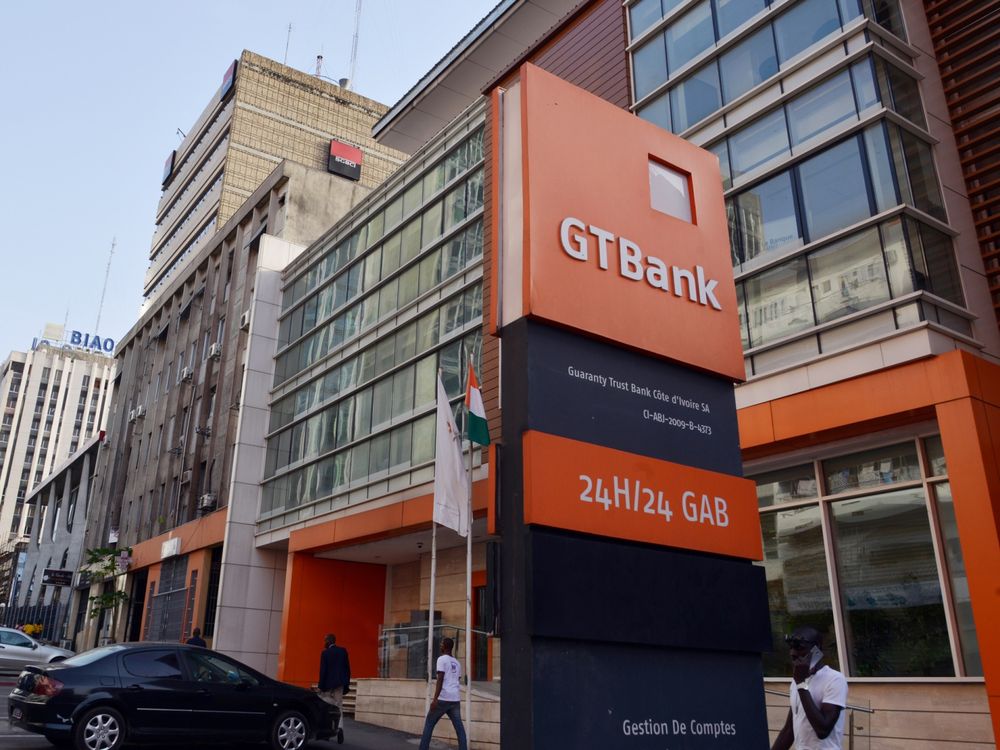
GTBank Closes as Most Attractive Stock at Midweek Session

By Dipo Olowookere
GTBank shares were the most attractive to investors at the Nigerian Stock Exchange (NSE) on Wednesday.
A total of 69.4 million units of the lender’s equities worth N1.7 billion were traded at the midweek session and was followed by Mutual Benefits Assurance, which transacted 51.8 million stocks valued at N12.4 million.
Also, at the market yesterday, investors traded 31.2 million units of FBN Holdings stock worth N167.7 million, Japaul Oil sold 18.7 million units valued at N4.3 million, while Zenith Bank transacted 16.4 million shares worth N274.9 million.
At the end of the day, a total of 260.5 million equities valued at N3.1 billion exchanged hands in 3,883 deals compared with the 265.4 million shares worth N1.1 billion traded in 4,054 deals the previous day, representing 1.85 percent and 4.22 percent decline in the volume of shares and number of deals respectively and 186.89 percent rise in the trading value.
Business Post reports that the local bourse depreciated on Wednesday by 0.47 percent, while the market breadth was at equilibrium on Wednesday with 19 price gainers and losers.
BUA Cement sat on top of the losers’ chart with a price depreciation of N1.70 to settle at N41.50 per unit, while UAC Nigeria lost 75 kobo to close at N7.50 per share.
C&I Leasing depreciated by 50 kobo to sell at N4.80 per share, Guinness Nigeria declined by 50 kobo to trade at N17.50 per unit, while Zenith Bank dropped 30 kobo to finish at N16.60 per share.
At the other side of the coin, Okomu Oil gained N3 to claim the top spot on the gainers’ table, closing at N67 per unit.
Berger Paints improved by 70 kobo to sell at N7.70 per unit, UPDC REIT rose by 30 kobo to N3.80 per unit, Neimeth grew by 21 kobo to quote at N2.34 per share, while GTBank increased its value by 15 kobo to N24.20 per share.
Yesterday, the All-Share Index (ASI) decreased by 120.11 points to 25,215.04 points, while the market capitalisation depreciated by N62 billion to N13.154 trillion.
The best performing sector of the market on Wednesday was insurance as it gained 1.44 percent, while the oil/gas sector grew by 0.20 percent.
The industrial goods sector was the worst performing with 2.54 percent loss. The consumer goods index declined by 0.27 percent, while the banking space fell by 0.14 percent.




By Adedapo Adesanya
BudgIT, a leading civic-tech organisation promoting transparency and accountability in Nigeria’s public finance, has called on the federal government to be transparent after it deferred the implementation of 70 per cent of capital projects initially appropriated in the 2025 fiscal year to 2026.
“From our analysis, while this development is not entirely surprising, we hold cautious reservations about the implications of this decision,” it said in a statement.
The group said the deferment suggests the federal government intends to limit the number of capital projects under implementation, to use available funds more efficiently, prioritise critical projects, and reduce the long-standing problem of abandoned projects.
“In this sense, the move appears to be an attempt to retain the 2025 capital projects—many of which are based on existing economic plans and strategies—rather than introduce an entirely new set of projects in the next fiscal year.
“We view this as an effort by the federal government to restructure the sequencing of capital project implementation. Rather than rolling out a fresh budget filled with new capital projects, the government appears to be attempting a reset by carrying forward existing projects and improving implementation discipline,” it said.
BudgIT said this approach, if properly managed, could help salvage a challenging fiscal situation and strengthen budget credibility.
Recall that BudgIT has consistently raised concerns about Nigeria’s budgeting process, particularly the government’s failure to adhere to the approved budget calendar and its practice of running multiple fiscal programmes concurrently.
“We have maintained that budget timelines must be treated as sacrosanct and that unfinished but still relevant projects should be consolidated through a supplementary budget passed within the same fiscal year, rather than endlessly rolled over,” it said.
“Consequently, the continued inclusion of numerous uncoordinated and low-priority projects has bloated federal capital expenditure and increased public debt, often without clear developmental value.
“This pattern weakens the impact of capital investment, as spending decisions increasingly appear driven by project insertions rather than sound planning, prioritisation, and fiscal discipline. This is compounded by the fact that the federal government does not publish disaggregated reports on capital expenditure implementation. So, citizens are at a loss in knowing precisely what has or has not been implemented,” the statement added.
This challenge, it said, is further illustrated by developments during the 2024 fiscal year, in which the federal government extended the implementation of capital expenditure components of both the 2024 Appropriation Act and the 2024 supplementary Appropriation Act into mid-2025, and subsequently to December 2025.
“As a result, although the 2025 Appropriation Act was duly passed and assented to, it appears that only its recurrent components—such as personnel and overhead costs—were implemented in 2025. This is further evidenced by the absence of federal budget implementation reports for the 2025 period and official statements indicating that revenues from the 2025 fiscal year were used to fund the implementation of the 2024 budget.”
It revealed that it remains unclear whether the 2024 fiscal year has been formally closed.
“The recently published Q4 2024 federal budget implementation report is explicitly described as “provisional,” raising concerns about proper fiscal closure. Formal closure of fiscal accounts is essential, as failure to do so undermines financial reporting, fiscal transparency, and consolidation standards.”
In light of these, BudgIT stressed that this decision to defer capital project implementation must be robustly defended during the upcoming budget defence sessions at the National Assembly.
“The Executive arm of government must clearly demonstrate to the Legislature that this action is necessary to restore order to Nigeria’s fiscal framework and to end the damaging practice of implementing multiple budgets concurrently. By the time the annual Appropriation Act is passed by the National Assembly and transmitted for presidential assent, it is often heavily bloated with additional projects. While the National Assembly’s power to increase or decrease the budget is constitutionally recognised, BudgIT has long argued that this power has been widely abused, often disregarding fiscal planning and national development priorities.”
Commenting, BudgIT’s Deputy Country Director, Mr Vahyala Kwaga, underscored the need for discipline and clarity in implementing the deferment.
“Deferring 70 per cent of capital projects is neither a solution nor a setback on its own. What matters is whether this decision marks a clear break from the cycle of bloated budgets, overlapping fiscal years, and weak project implementation. Without strict adherence to budget timelines, proper fiscal closure, and transparent payment processes, the risk is that we simply postpone inefficiencies rather than resolve them,” Mr Kwaga said.
In addition, BudgIT urged the federal government to fully adhere to its “Bottom-Up Cash Plan” as outlined by the Federal Ministry of Finance.
“This approach—where payments are made directly to verified contractors rather than routed through MDAs—has the potential to improve efficiency and accountability in capital project implementation. The government must ensure strict compliance with payment protocols, contractor verification processes, and timely disbursement of funds.
“To this end, we call on the Ministry of Finance, the Ministry of Budget and Economic Planning, the Budget Office of the Federation, the Bureau of Public Procurement, relevant MDAs, and the President of the Federal Republic of Nigeria, Bola Ahmed Tinubu, to uphold the principles of transparency, legal compliance, and accountability in the management of public funds and public projects.
“We also encourage citizens, civil society, the private sector, and the media to actively support and scrutinise capital expenditure implementation, as the benefits of effective public spending ultimately accrue to all Nigerians.”


By Aduragbemi Omiyale
The N1.3 billion rights issue of The Initiates, which commenced on Wednesday, November 5, 2025, has been extended.
The exercise, which is on the basis of one new ordinary share for every existing five ordinary shares held as of the close of business on Friday, August 1, 2025, was scheduled to close on Friday, December 12, 2025.
However, the period of the rights issue has been stretched by an addition month, leaving the new closing date at Monday, January 12, 2026.
This extension was approved by the Securities and Exchange Commission (SEC), the highest regulatory agency for the Nigerian capital market.
The Initiates, which operates as an environmental and waste management organisation, is offering in the rights issue a total of 177,996,310 units of its stocks to existing shareholders at a unit price of N7.00.
By Adedapo Adesanya
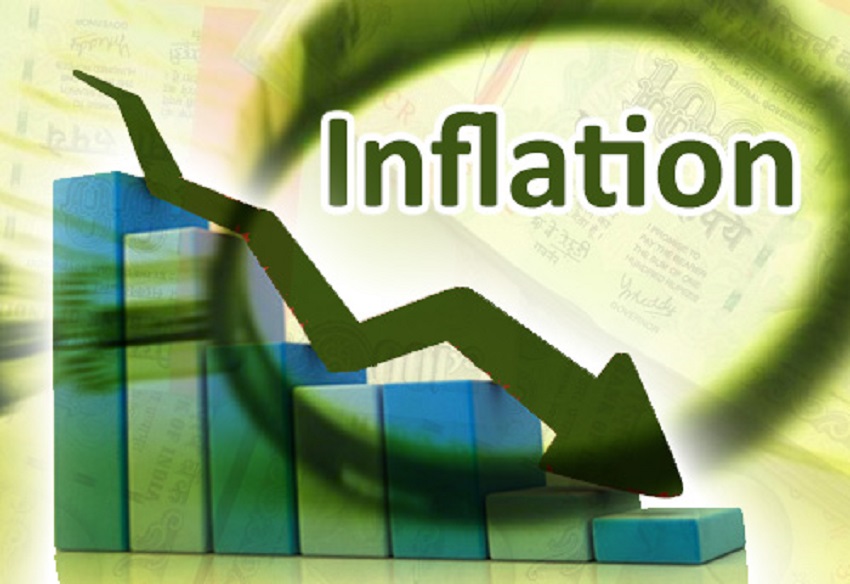
Nigeria’s headline inflation rate eased for the eighth consecutive month in November as it printed 14.45 per cent relative to the October 2025 headline inflation rate of 16.05 per cent.
According to the data released by the National Bureau of Statistics (NBS) on Monday, on a month-on-month basis, the headline inflation rate in November 2025 was 1.22 per cent, which was 0.29 per cent higher than the 0.93 per cent recorded in October 2025.
Consumer inflation peaked at 34 per cent last December before dropping after the stats office revised its base year from 2009 to 2024 and adjusted the weight of items in its price basket.
On a month-on-month basis, the food inflation rate in November 2025 was 1.13 per cent, up by 1.5 per cent from the -0.37 per cent achieved in the preceding month. The increase can be attributed to the rate of increase in the average prices of tomatoes (dried), cassava tuber, periwinkle (shelled), grounded pepper, eggs, crayfish, melon (egusi) unshelled, oxtail, and onions (fresh), among others.
The average annual rate of food inflation for the 12 months ending November 2025 over the previous 12 months’ average was 19.68 per cent, which was 18.99 per cent points lower than the average annual rate of change recorded in November 2024 at 38.67 per cent.
For the urban inflation rate, it stood at 13.61 per cent versus 23.49 per cent in the previous month and compared with the 37.10 per cent recorded in November 2024.
On a month-on-month basis, the urban inflation rate was 0.95 per cent in the review month, down by 0.18 per cent from the 1.14 per cent in October 2025. The corresponding 12-month average for the urban inflation rate was 20.80 per cent in November 2025, which was 14.27 per cent lower than the 35.07 per cent reported in November 2024.
The rural inflation rate in November 2025 was 15.15 per cent on a year-on-year basis, standing 17.12 per cent lower than the 32.27 per cent recorded in November 2024. On a month-on-month basis, the rural inflation rate in November 2025 was 1.88 per cent, up by 1.43 per cent when compared with the 0.45 per cent achieved in October 2025. The corresponding 12-month average for the rural inflation rate in November 2025 was 19.46 per cent. This was 11.24 per cent lower than the 30.71 per cent recorded in November 2024.








-
 Feature/OPED6 years ago
Davos was Different this year
-
Travel/Tourism9 years ago
Lagos Seals Western Lodge Hotel In Ikorodu
-

 Showbiz3 years ago
Estranged Lover Releases Videos of Empress Njamah Bathing
-
 Banking7 years ago
Sort Codes of GTBank Branches in Nigeria
-

 Economy3 years ago
Subsidy Removal: CNG at N130 Per Litre Cheaper Than Petrol—IPMAN
-

 Banking3 years ago
First Bank Announces Planned Downtime
-

 Banking3 years ago
Sort Codes of UBA Branches in Nigeria
-

 Sports3 years ago
Highest Paid Nigerian Footballer – How Much Do Nigerian Footballers Earn