Economy
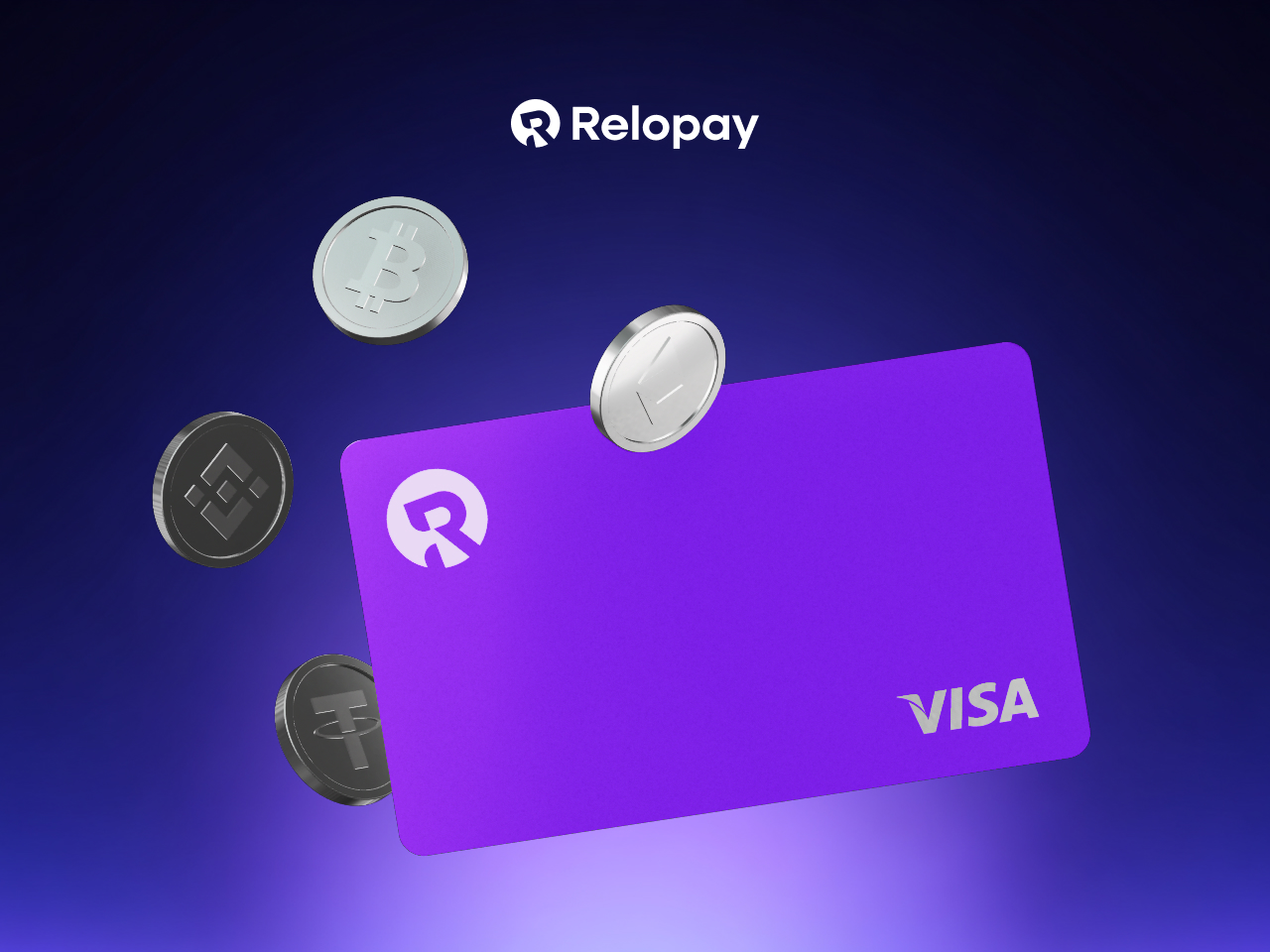
Introducing the Relopay Crypto Card: Spend Your Digital Assets Like Cash
As cryptocurrencies increasingly shift from niche investments toward everyday tools, one breakthrough is making them truly spendable: crypto cards. With Relopay, users can instantly top up via Bitcoin, Ethereum, USDT, or other supported coins and spend them anywhere Visa cards are accepted. This blend of ease, security, and financial independence positions crypto cards as a powerful force in modern finance.
What Is a Crypto Card?
A crypto card functions like a traditional debit or credit card, but its funding source is your crypto wallet. When you pay, the card’s backend converts the crypto into fiat at the point of sale, so you never need to manually exchange beforehand. With Relopay, this process is fast and seamless, letting you shop globally using your digital holdings.
Why Are Crypto Cards Gaining Traction?
Three core advantages are fueling adoption: convenience, accessibility, and control.
- Convenience: Transactions are processed instantly, without going through traditional bank rails or long delays.
- Accessibility: You don’t need a conventional bank account to use a crypto-backed card.
- Control: You retain control over your crypto holdings and spend them on your terms.
Relopay’s model underscores these benefits—top-ups, spending, and account management are all handled within their Telegram mini app and platform interface.
Instant Access to Your Crypto
One of the greatest strengths of crypto cards is enabling real-time spendability. Rather than locking your funds away on an exchange or in a cold wallet, a crypto card allows you to fluidly shift between holding and spending. Relopay supports instant issuance of virtual Visa cards and real-time balance top-ups.
Global Spending with No Borders
Because the card converts crypto to local fiat at checkout, Relopay cards work at over 130 million merchants worldwide—wherever Visa is accepted. This makes them ideal for travelers, remote workers, and users who want frictionless global access to their funds.
Security and Privacy
Relopay implements several layers of protection:
- 3D Secure and PIN protections on transactions
- Advanced encryption to safeguard user data
- Limited identity verification for prepaid cards (no KYC required for certain prepaid usage)
By relying on blockchain transparency and tamper-resistant ledgers, the risk of fraud is reduced compared to traditional payment systems.
Fees, Limits & Use Constraints
While crypto cards offer flexibility, there are trade-offs and boundaries to consider:
- Top-up Fee: 1% of amount
- Crypto Conversion Fee: Around 1.9% when converting crypto to fiat during purchase
- Transaction Fee: $1 per transaction, in addition to the conversion cost
- Limits: Virtual cards are issued for 3 years, have a maximum balance of $4,000, and a monthly spending cap of $50,000
- No Annual, Inactivity, or Cancellation Fees: Relopay waives these
Do note: different card types (virtual vs. prepaid) might have different KYC obligations or restrictions.
Potential Drawbacks to Keep in Mind
- Volatility in your crypto holdings could reduce your purchasing power depending on timing
- Some merchants and jurisdictions still lag in accepting crypto-based payments
- Spending and balance caps might limit large or frequent transactions
- Conversion and transaction fees can add up, especially with smaller payments
The Future of Crypto Cards
As blockchain infrastructure and crypto adoption evolve, we can anticipate:
- Wider acceptance by major retailers
- More competitive rewards programs (cashback in crypto, staking bonuses)
- Deeper integration with DeFi (crypto lending, staking, yield generation)
- All-in-one financial cards blending traditional and crypto services
Relopay is already pushing in that direction: by enabling instant issuance, low-fee top-ups, and global acceptance, it aims to redefine payments for Web3 users.
Final Thoughts
Crypto cards aren’t just another fintech novelty—they represent a shift in how money works. With Relopay, everyday spending with digital assets becomes practical and secure. Instant access, global usability, strong privacy, and transparent fees make crypto cards a compelling step toward a future where crypto becomes truly usable in daily life.
Economy
OTC Securities Exchange Falls 2.48%
By Adedapo Adesanya
The NASD Over-the-Counter (OTC) Securities Exchange was down by 2.48 per cent on Friday, June 19, with the Unlisted Security Index shedding 108.36 points to close at 4,252.73 points compared with the previous day’s 4,361.09 points.
During the trading day, the market capitalisation of the OTC securities exchange dropped 2.18 per cent or N67.29 billion to settle at N2.552 trillion, in contrast to Thursday’s N2.609 trillion.
The alternative stock market was in the red yesterday after finishing with three price losers led by Central Securities Clearing System (CSCS) Plc, which gave up N8.57 to trade at N77.77 per share versus the preceding day’s N86.34. FrieslandCampina Wamco Nigeria Plc lost N8.19 to quote at N170.00 per unit compared with the previous session’s N178.19 per unit, and Food Concepts Plc crashed by 26 Kobo to end at N2.51 per share versus N2.77 per share.
Business Post reports that there were also three price gainers during the session, led by Golden Capital Plc, which chalked up 67 Kobo to sell at N13.67 per unit versus N13.00 per unit. Afriland Properties Plc gained 65 Kobo to trade at N16.85 per share compared with the previous price of N16.20 per share, and MRS Oil added 3 Kobo to close at N142.23 per unit versus N142.00 per unit.
The volume of trades was up by 20.3 per cent on Friday to 954,106 units from 792,835 units, and the number of deals increased by 75 per cent to 35 deals from 20 deals, while the value of transactions went down by 12.9 per cent to N42.7 million from N49.0 million.
The most traded stock by value on a year-to-date basis was Great Nigeria Insurance (GNI) Plc, with 3.4 billion units worth N8.4 billion, followed by Infrastructure Credit Guarantee (Infracredit) Plc with 2.3 billion units sold for N6.5 billion, and CSCS Plc with 67.8 million units exchanged for N4.7 billion.
The most traded stock by volume on a year-to-date basis was also GNI Plc, with 3.4 billion units valued at N8.4 billion, followed by Infracredit Plc with 2.3 billion units traded for N6.5 billion, and Resourcery Plc with 1.1 billion units transacted for N415.7 million.
Economy
Sell-Offs in GTCO, First Holdco Crash NGX All-Share Index by 0.62%
By Dipo Olowookere
The local stock exchange remained in the red on Friday after it further depreciated by 0.62 per cent due to panic sell-offs in some bellwether equities.
NAHCO lost 10.00 per cent to trade at N148.50, Royal Exchange depreciated by 10.00 per cent to N1.53, GTCO slumped by 9.97 per cent to N115.55, First Holdco dropped 9.84 per cent to quote at N55.00, and Neimeth slipped by 9.60 per cent to N28.12.
On the flip side, Deap Capital increased by 9.89 per cent to N4.89, RT Briscoe expanded by 9.62 per cent to N13.10, International Energy Insurance advanced by 7.43 per cent to N5.06, Jaiz Bank gained 7.14 per cent to sell for N9.00, and Living Trust Mortgage Bank rose by 5.26 per cent to N4.00.
During the session, the energy index chalked up 2.35 per cent, but this was not enough to lift the Nigerian Exchange (NGX) Limited when the closing gong was struck by 4 pm to signify the close of trading activities.
This was because the banking sector lost 4.41 per cent, the insurance counter shed 1.52 per cent, the industrial goods space declined by 0.71 per cent, and the consumer goods segment tumbled by 0.13 per cent.
Consequently, the All-Share Index (ASI) contracted by 1,463.45 points to 235,941.27 points from 237,404.92 points, and the market capitalisation retreated by M939 billion to N151.327 trillion from N152.266 trillion.
The activity chart was topped by Access Holdings, which posted a turnover of 65.0 million shares valued at N1.5 billion. Zenith Bank sold 35.2 million stocks worth N3.9 billion, Sterling Holdings exchanged 28.4 million equities for N217.8 million, UBA transacted 16.3 million shares valued at N650.7 million, and GTCO traded 14.0 million stocks worth N1.8 billion.
In all, investors transacted 440.4 million equities for N24.7 billion in 50,273 deals, in contrast to the 691.6 million equities valued at N116.9 billion traded in 50,025 deals on Thursday, implying an uptick in the number of deals by 0.50 per cent, and a decrease in the trading volume and value by 36.32 per cent and 78.87 per cent, respectively.
Economy
Naira Crashes to N1,370/$ at Official Market, N1,390/$1 at Black Market
By Adedapo Adesanya
The Naira again depreciated against the United States Dollar by N7.16 or 0.53 per cent in the Nigerian Autonomous Foreign Exchange Market (NAFEX) on Friday, June 19, to N1,370.46/$1 from the previous day’s N1,363.30/$1.
In the same vein, the Nigerian currency lost N9.07 against the Pound Sterling at the official market yesterday to trade at N1,814.76/£1 compared with Thursday’s closing price of N1,805.69/£1, and crashed against the Euro by N6.43 to settle at N1,571.50/€1 versus N1,565.07/€1.
Also, the Naira weakened against the greenback in the black market during the session by N5 to sell for N1,390/$1, in contrast to the preceding day’s N1,385/$1, and at the GTBank FX desk, it shed N3 to close at N1,376/$1 versus N1,373/$1.
The official market’s FX liquidity has been facing pressure over the last three trading sessions, contributing to a decline in the official exchange rate due to rising demand for foreign payments.
FX reserves rose to $51.03 billion, the highest level since January 20, 2009, according to data obtained from the Central Bank of Nigeria (CBN). The figure also represents the highest since the beginning of the year and under the administration of the current Governor of CBN, Mr Yemi Cardoso.
The latest figure underscores the steady strengthening of Nigeria’s external buffers, which continues to reinforce investor confidence in the Nigerian economy and support exchange rate stability.
Meanwhile, the cryptocurrency market was mixed, with Bitcoin (BTC) up by 0.8 per cent to $63,225.80 after trading activity was relatively subdued due to a US federal holiday, as the absence of stock and bond market activity led to quieter conditions across crypto markets, even though digital assets continue to trade around the clock.
Further, TRON (TRX) also gained 0.8 per cent to sell at $0.3230, Binance Coin (BNB) jumped 0.5 per cent to $579.84, and Ethereum (ETH) appreciated by 0.1 per cent to $1,704.23.
On the flip side, Ripple (XRP) declined by 0.9 per cent to $1.13, Cardano (ADA) shed 0.8 per cent to trade at $0.1611, Solana (SOL) fell by 0.1 per cent to $69.23, and Dogecoin (DOGE) slipped by 0.1 per cent to $0.0831, while the US Dollar Tether (USDT) and the US Dollar Coin (USDC) remained unchanged at $1.00 each.
-
Feature/OPED6 years agoDavos was Different this year
-
Travel/Tourism10 years ago
Lagos Seals Western Lodge Hotel In Ikorodu
-
Showbiz3 years agoEstranged Lover Releases Videos of Empress Njamah Bathing
-
Banking8 years agoSort Codes of GTBank Branches in Nigeria
-
Economy3 years agoSubsidy Removal: CNG at N130 Per Litre Cheaper Than Petrol—IPMAN
-
Banking3 years agoSort Codes of UBA Branches in Nigeria
-
Banking3 years agoFirst Bank Announces Planned Downtime
-
Sports3 years agoHighest Paid Nigerian Footballer – How Much Do Nigerian Footballers Earn