Connect with us

Economy

Investors Prepare for Nigeria’s $500m Bond Sale August 19

Published

on

Nigerian Eurobonds

By Adedapo Adesanya

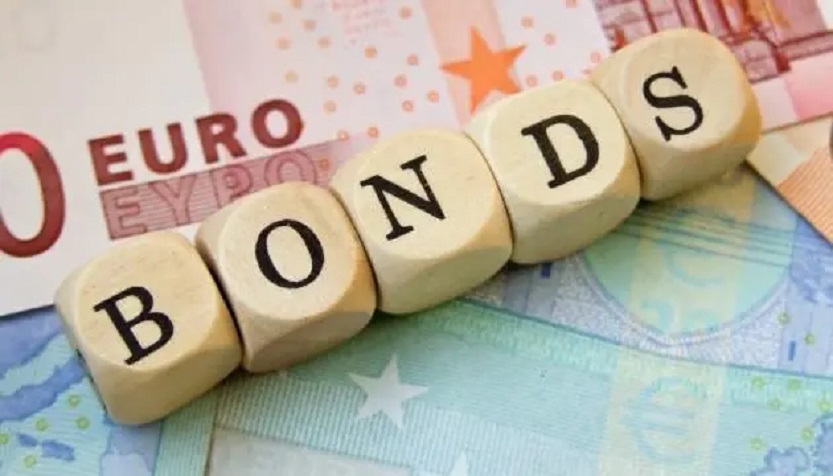
Investors are already anticipating the issue of a Dollar-denominated bond worth $500 million by the federal government of Nigeria on Monday, August 19.

Proceeds from the exercise, targeted at local and foreign investors, would be used to fund the country’s budget deficit and boost the weakening Naira.

This development is a change from an earlier plan to issue a Eurobond this year, indicating that it will be opting for the cheaper Dollar bond instead.

This Dollar bond is the first of its kind in the country, with the bond offering bullet repayment at maturity in US Dollars and full repayment of the principal amount at the end of the five-year term.

Speaking on Thursday at a hybrid roadshow with investors organised by the Debt Management Office (DMO), the Minister of Finance and Coordinating Minister of the Economy, Mr Wale Edun, stressed that the bond is a strategic move to channel funds into sectors that will catalyse economic growth in the country.

He affirmed that the country alongside its financial advisors is ready to launch the bond.

“In the financial market, you never know. When you wake up and you see an event that helps the issue, you will take advantage of it. But we can assume that we are imminently about to launch.

“We are eagerly looking forward to not just the funds but the experience of Nigerians taking leadership in this all-important area. We must also mention that it is another arrow in the quiver,” he stated.

Giving more details of the bond, the Managing Director of Investment Banking at United Capital Group, Mr Gbadebo Adenrele, disclosed that, “The auction will open next week on Monday. Next week Monday, we will have that open, and the details of that will be communicated to the market.”

“One of the key aspects of this bond issuance is that it will be listed on platforms such as the Nigerian Exchange and FMDQ, making it accessible to a variety of investors.

“The principal will be repaid after five years, with interest payments made every six months. This structured repayment schedule is designed to provide confidence to investors,” he further explained.

On her part, the Director General of the Debt Management Office (DMO), Ms Patience Oniha, noted that the settlement date for the domestic Dollar bond auction will likely be in 10 days after the auction date.


Adedapo Adesanya is a journalist, polymath, and connoisseur of everything art. When he is not writing, he has his nose buried in one of the many books or articles he has bookmarked or simply listening to good music with a bottle of beer or wine. He supports the greatest club in the world, Manchester United F.C.

Click to comment

Leave a Reply

Your email address will not be published. Required fields are marked *

Economy

Crude Oil Slips to $88 Per Barrel as Iran Reopens Strait of Hormuz

Published

on

Utapate crude oil blend

By Dipo Olowookere

The price of crude oil on the global market dropped below the $90 per barrel mark on Friday after Iran announced the reopening of the Strait of Hormuz.

About 20 per cent of the world’s total oil and liquefied natural gas (LNG) consumption passes through this narrow body of water between Iran and Oman.

It was shut down by Iran after the United States and Israel launched airstrikes on it in late February 2026.

For the past few days, there have been talks between the US and Iran over the reopening of the Strait. The Middle East country reopened it after Israel and Lebanon struck a deal.

This action crashed the price of crude oil today, with the Brent grade selling at about $88 per barrel and the West Texas Intermediate (WTI) grade trading at $83 per barrel as of the time of filing this report.

Iranian Foreign Minister, Mr Abbas Araghchi, announced the reopening of the Strait of Hormuz, with the move already welcomed by President Donald Trump of the United States.

It will remain open during the ceasefire while further negotiations continue between America and Iran.

“In line with the ceasefire in Lebanon, the passage for all commercial vessels through the Strait of Hormuz is declared completely open for the remaining period of the ceasefire, on the coordinated route as already announced by Ports and Maritime Organisation of the Islamic Republic of Iran,” the Minister posted on X, formerly Twitter, on Friday.

This news will surely excite Nigerians, who have been forced to pay more to buy petroleum products since the war started, despite living in an oil-producing country.

The price of petrol jumped from about N827 per litre before the war to N1,250 and almost N1,300 per litre because of the Middle East crisis.

Dangote Refinery, which majorly supplies the local market, claimed it was buying crude oil at an international price.

Continue Reading

Economy

Tinubu Signs N68.32trn 2026 Budget into Law, Extends Implementation Period

Published

on

Tinubu 2026 budget

By Adedapo Adesanya

President Bola Tinubu has signed the 2026 Appropriation Bill into law, authorising an aggregate expenditure of N68.32 trillion for the current fiscal year.

He also signed a separate bill extending the implementation period of the 2025 budget from March 31 to June 30, 2026.

The budget allocates N4.799 trillion for statutory transfers and N15.8 trillion for debt service.

It further sets aside N15.4 trillion for recurrent expenditure and N32.2 trillion for capital expenditure through the Development Fund.

In a statement signed by Special Adviser to the President on Information and Strategy, Mr Bayo Onanuga, on Friday, it was that, “The N68.32 trillion budget for this year earmarks N4.799 trillion for statutory transfers and N15.8 trillion for debt service. It allocates N15.4 trillion to recurrent expenditure and N32.2 trillion to the Development Fund for Capital Expenditure.”

“With capital expenditure accounting for about 50 per cent, the 2026 budget underscores the administration’s continued commitment to economic stability, national security, infrastructure development, and inclusive growth.

“The allocations reflect a strategic balance between statutory obligations, debt servicing, recurrent expenditure, and capital investments critical to driving productivity and improving the quality of life for Nigerians,” it added.

The 2026 Appropriation Act took effect on April 1, with the federal government commencing full implementation in line with what the presidency describes as the Renewed Hope Agenda.

President Tinubu also assented to the Appropriation (Repeal and Enactment) (Amendment) Bill, 2026, which extends the capital component of the 2025 Appropriation Act by three months to June 30.

The presidency said the extension would ensure the full utilisation of appropriated funds, particularly for critical infrastructure projects at advanced stages of implementation.

“The extension will ensure the full and effective utilisation of appropriated funds, particularly for critical infrastructure and development projects that are at advanced stages of implementation across the country.

“It will enable Ministries, Departments, and Agencies (MDAs) to consolidate ongoing works, enhance project completion rates, and maximise value for public expenditure,” the statement read.

He directed MDAs to ensure disciplined, transparent, and efficient utilisation of allocated resources, with strong emphasis on value for money and timely project delivery.

The President reaffirmed the importance of sustained collaboration between the Executive and Legislative arms of government in advancing national development objectives, the statement noted.

President Tinubu also assured Nigerians of his administration’s resolve to deepen fiscal reforms and boost revenue generation.

Continue Reading

Economy

Decades-Long Ogoni Shutdown Costs Nigeria $226bn in Oil Revenue—PINL

Published

on

oil spills NNRC NOSDRA

By Adedapo Adesanya

Pipeline Infrastructure Nigeria Limited (PINL) says Nigeria has lost an estimated $226.734 billion in revenue from stalled crude oil production in Ogoniland over the past 32 years.

The group at the company’s monthly stakeholders’ meeting in Port Harcourt called for an urgent, structured restart of operations in the region.

PINL described the resumption of oil production in Ogoniland as a “strategic national priority,” stressing that the process must be driven by host communities and grounded in environmental sustainability.

Speaking at the event, Mr Akpos Mezeh, General Manager, Community and Stakeholder Relations at PINL, said the scale of losses highlights both the cost of inaction and the opportunity ahead.

“Available data shows that over $226.734 billion has been lost due to the suspension of crude oil production from 96 oil wells in Ogoniland over the past 32 years. This clearly underscores both the economic cost of inaction and the immense opportunity that lies ahead,” he said.

Ogoniland, covered under Oil Mining Lease (OML) 11, has the capacity to produce over 500,000 barrels of crude oil per day. Production was halted in 1993 following unrest and environmental concerns linked to oil exploration activities.

PINL outlined key conditions for restarting operations, including active community participation, sustained environmental remediation, adoption of community-based security models, and prioritisation of economic inclusion.

“The position of PINL aligns with growing calls from stakeholders in the Niger Delta for the Federal Government to restart oil production in Ogoniland in a manner that balances economic benefits with environmental justice and community interests,” Mr Mezeh added.

He further affirmed the company’s readiness to support the process, stating: “At PINL, we stand ready to support this process by applying our experience in stakeholder engagement and infrastructure protection to ensure a peaceful, secure, and sustainable resumption.”

PINL maintained that with the right framework, resuming production in Ogoniland could significantly boost Nigeria’s crude output, increase government revenues, and support broader economic growth.

Continue Reading

Trending